 By
By 
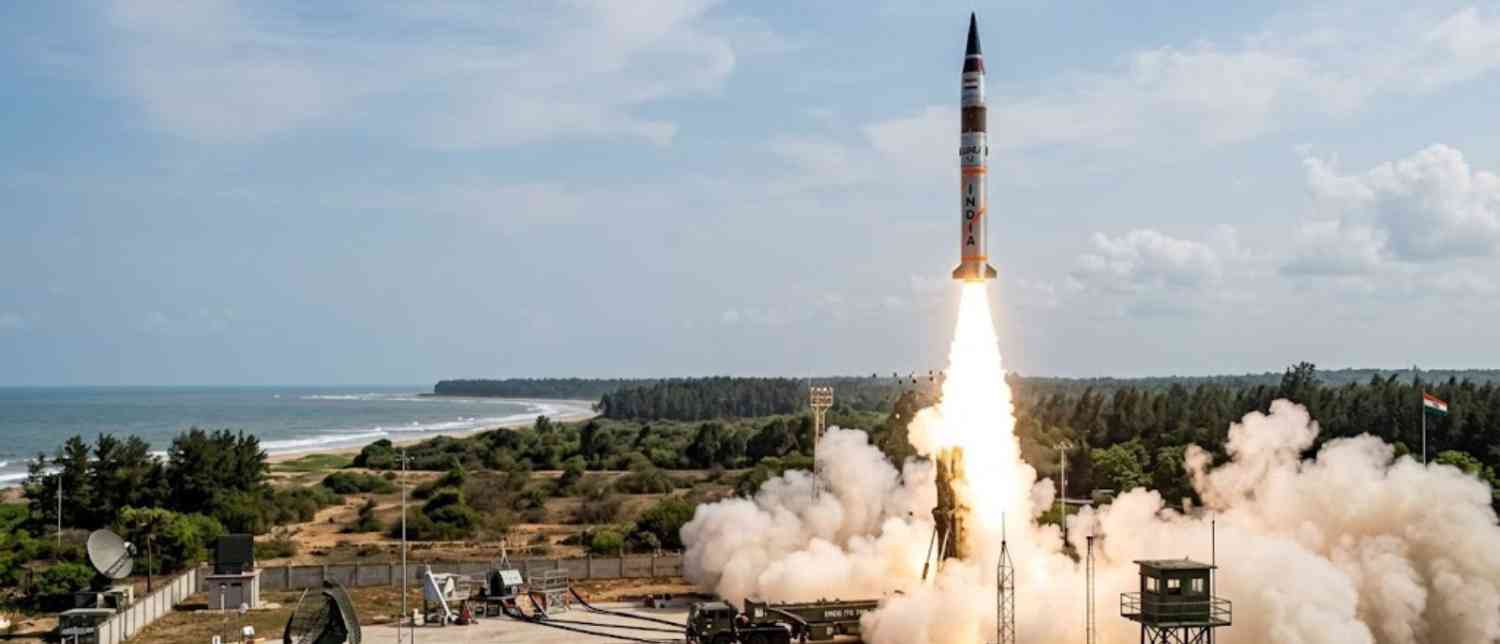
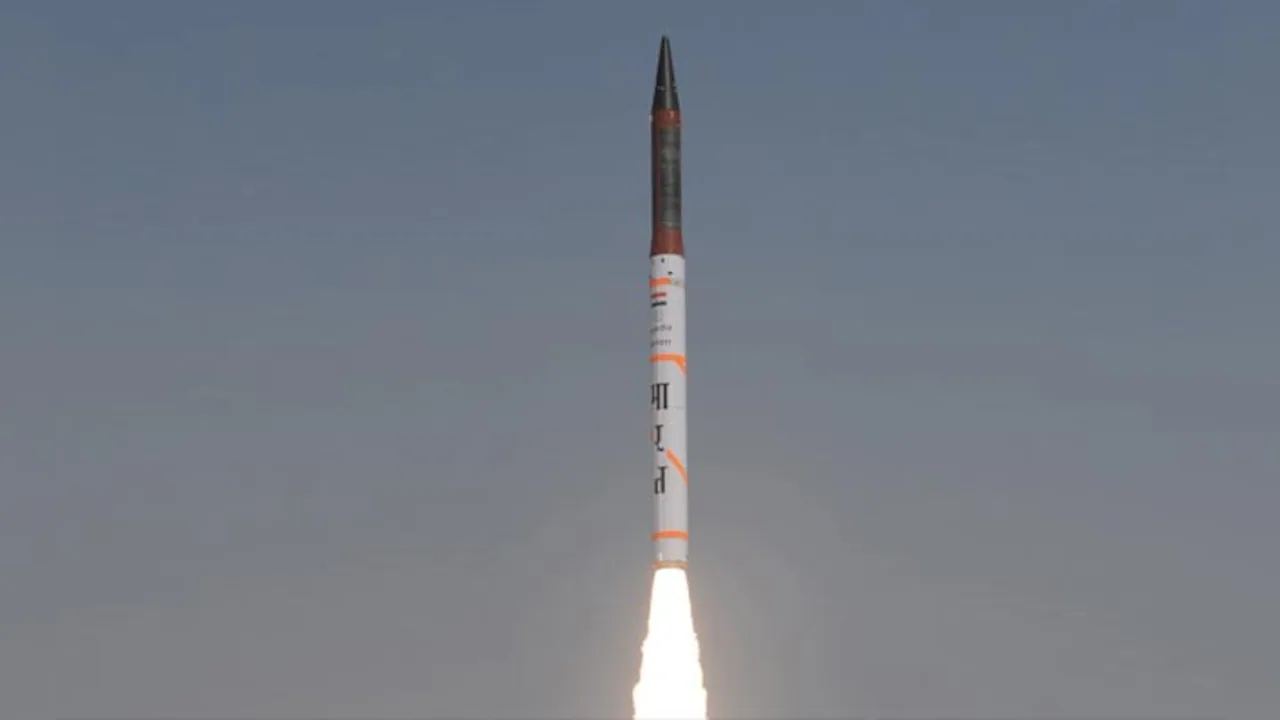
India has once again demonstrated its growing strategic missile capabilities with the successful test-firing of the Agni-4 ballistic missile from the Integrated Test Range (ITR) at Chandipur in Odisha.
The test, conducted on August 6 under the aegis of the Strategic Forces Command (SFC), validated the missile's operational and technical parameters. The Ministry of Defence described the launch as a successful exercise, highlighting the continued readiness of India's strategic forces.
The latest launch is significant not simply because another missile has completed a successful flight. The Agni-4 occupies an important position in India's strategic arsenal, combining a roughly 4,000-km strike range with road mobility, advanced navigation systems and nuclear capability.
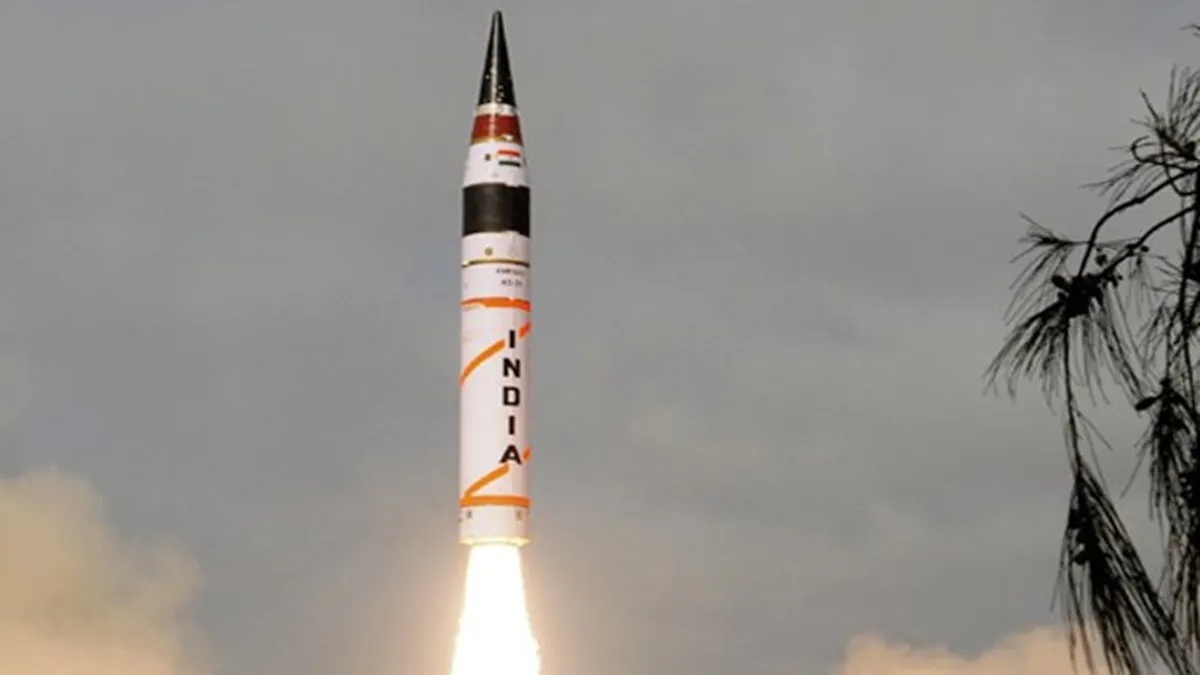
Agni-4 missile test conducted from Odisha
The Agni-4 test was carried out from the Integrated Test Range at Chandipur, Odisha, on August 6, 2026. According to the Ministry of Defence, the launch successfully validated all operational and technical parameters of the missile system. The exercise was conducted under the Strategic Forces Command, the organisation responsible for India's strategic nuclear forces.
The launch was described as a user trial, an important distinction from an early-stage developmental test. Such trials are intended to establish the reliability and operational performance of weapon systems that are already part of the country's strategic inventory.
During the test, the missile's flight was monitored through an integrated network of radars, telemetry stations and electro-optical tracking systems. Scientists from the Defence Research and Development Organisation (DRDO) and officials associated with the Strategic Forces Command were involved in monitoring the launch and its performance.
The successful test therefore served two purposes: it demonstrated the missile's technical performance while also reinforcing the operational preparedness of India's strategic forces.
What makes the Agni-4 missile important?
The Agni-4 is a nuclear-capable intermediate-range ballistic missile developed by the DRDO. It has an estimated range of around 4,000 km and can carry a substantial payload.
Its position within India's Agni missile family makes it particularly important. It provides a capability between shorter-range systems and India's longer-range strategic missiles, giving the country an additional option for maintaining deterrence against potential regional threats.
The missile is also capable of carrying either a conventional or nuclear payload, according to information cited in reports on its capabilities. Its approximately 4,000-km range gives it a much broader reach than earlier systems in the series.
However, range alone does not explain the significance of Agni-4. One of its most important characteristics is mobility.
Road-mobile launch capability gives Agni-4 greater survivability
Unlike missiles deployed from fixed silos, the Agni-4 is designed to operate from a road-mobile launcher. This gives India's strategic forces greater flexibility in where the missile can be deployed and launched.
Mobility also has an important strategic consequence: it can make the missile more difficult for an adversary to locate and target before launch.
The missile's canister-based, road-mobile configuration allows it to be transported and deployed on mobile platforms, improving operational flexibility and survivability.
For a nuclear deterrent, survivability is crucial. The credibility of a strategic force depends not only on its ability to reach a target but also on its ability to remain available after an adversary attempts to neutralise it.
This is where road mobility becomes particularly important. A missile that can be moved between locations presents a more complicated targeting problem than a weapon permanently stationed at a known fixed position.
The Agni-4's mobility therefore adds another layer to India's deterrence posture.
Advanced technology gives Agni-4 an edge
The Agni-4 also represents an important step in India's indigenous missile technology programme.
The missile incorporates several advanced technologies, including a Ring Laser Gyroscope-based Inertial Navigation System, micro-navigation technology, advanced avionics, digital controls and an onboard computing system. These systems are intended to improve guidance, accuracy and reliability during flight.
The missile uses a two-stage solid-fuel propulsion system. Its relatively lighter and compact configuration, including the use of composite materials, supports its road-mobile deployment.
Another important feature is redundancy in its navigation and avionics architecture. The combination of different navigation systems provides an additional layer of reliability, while advanced onboard computing and digital control systems assist in guiding the missile throughout its flight.
These technologies have broader significance for India's missile programme because developments introduced through one generation of missiles can contribute to subsequent systems.
Why the 4,000-km range matters
The Agni-4's approximately 4,000-km range places it firmly in India's intermediate-range strategic missile category.
That reach is significant because India's security environment extends well beyond its immediate borders. The missile's range gives policymakers another strategic option when considering the country's deterrence requirements.
The weapon is therefore not simply about striking a distant target. Its larger role is to ensure that India has credible and survivable capabilities capable of deterring potential adversaries.
This is particularly relevant to India's stated doctrine of credible minimum deterrence. The basic principle is that India should possess sufficient nuclear capability to deter an adversary from launching a nuclear attack, without pursuing an unlimited arsenal.
The successful Agni-4 user trial reinforces that objective by demonstrating that an important component of India's strategic missile force remains operationally ready.
Strategic Forces Command plays key role
The latest Agni-4 launch was conducted under the Strategic Forces Command, which forms the operational component of India's Nuclear Command Authority.
The SFC is responsible for managing India's strategic nuclear assets and their operational readiness. Its involvement in user trials is therefore particularly important because these exercises are not merely demonstrations of technological capability.
They are also intended to ensure that strategic systems remain reliable when required.
The Agni-4 test thus provides an indication of India's continuing emphasis on maintaining the readiness of its nuclear delivery systems while ensuring that command, control and operational procedures remain robust.
Agni-4 and India's broader missile programme
The latest test also needs to be viewed within the larger evolution of India's ballistic missile programme.
The Agni series has progressively expanded India's strategic reach, with different variants designed to provide different ranges and operational capabilities. Agni-4 occupies an important middle ground, offering a combination of range, mobility and technological sophistication.
The missile has undergone multiple tests and user trials over the years, helping establish confidence in its design and operational characteristics. The latest launch adds another successful validation to that record.
The significance extends beyond one missile system. Technologies developed for Agni-4—including advanced navigation, avionics, composite propulsion and digital control—reflect India's broader effort to reduce dependence on foreign technology and strengthen indigenous defence manufacturing.
The latest test therefore represents both an operational exercise and a demonstration of India's progress in developing sophisticated strategic systems domestically.
What the latest Agni-4 test means for India
The successful launch comes at a time when strategic stability in the wider region remains a major consideration for India's defence planners.
For New Delhi, the objective is not necessarily to use the missile but to ensure that the capability exists and remains credible. In nuclear strategy, that distinction is fundamental: deterrence depends on the belief that a retaliatory capability would survive and function if required.
Agni-4 contributes to that equation through its combination of range, mobility, accuracy, survivability and nuclear capability.
The missile's road-mobile configuration makes it harder to track, while its advanced navigation and avionics are designed to improve reliability and precision. Together, these features make Agni-4 an important component of India's layered strategic deterrence.
The successful user trial from Odisha consequently sends a broader message about India's preparedness: its strategic missile systems continue to be tested under operational conditions, even after entering service.
For India's defence establishment, that continuing validation is as important as the original development of the weapon.
Final Words
The successful Agni-4 missile test from Odisha marks another step in India's effort to maintain a credible and technologically advanced strategic deterrent.
With a range of around 4,000 km, nuclear capability, road-mobile deployment and sophisticated navigation and avionics systems, Agni-4 provides India with a flexible strategic missile option.
More importantly, the August 6 test demonstrated that the system continues to meet its operational and technical objectives under a user-trial framework.
As India continues to modernise its strategic forces, the Agni-4's importance lies not merely in the distance it can travel. Its real value is the combination of survivability, mobility, accuracy and reliability that strengthens India's broader deterrence architecture.
The latest successful launch therefore represents more than another missile test. It is a reaffirmation of India's continuing focus on strategic preparedness, indigenous defence technology and a credible minimum deterrence posture.
With input from agencies
Image Source: Multiple agencies
© Copyright 2026. All Rights Reserved. Powered by Vygr Media.