 By
By 
On a quiet Monday morning, the skies over eastern Afghanistan roared with the terrifying sound of jet engines, ushering in a wave of destruction that has once again ignited the volatile and heavily militarized border between Afghanistan and Pakistan. In what Islamabad enthusiastically described as a surgical counter-terrorism operation, the Pakistan Air Force launched a series of deadly airstrikes across three Afghan provinces. However, the ground reality paints a fundamentally different, significantly darker picture—one of civilian slaughter, shattered homes, and the highly controversial use of a military maneuver known as the "double tap."
As the dust and smoke settle over the rubble, the geopolitical and diplomatic fallout is rapidly expanding. The Afghan Taliban has furiously condemned the strikes, labeling them a cowardly aggression, while neighboring India has stepped in to fiercely denounce Pakistan's "reckless behaviour." With at least 36 civilians reported dead—a vast majority of them women and children—and over 160 others critically injured, the strikes highlight a deepening humanitarian crisis in South Asia, even as Pakistan ironically attempts to position itself as a peacemaker on the broader global stage.
The Horror of the 'Double Tap'
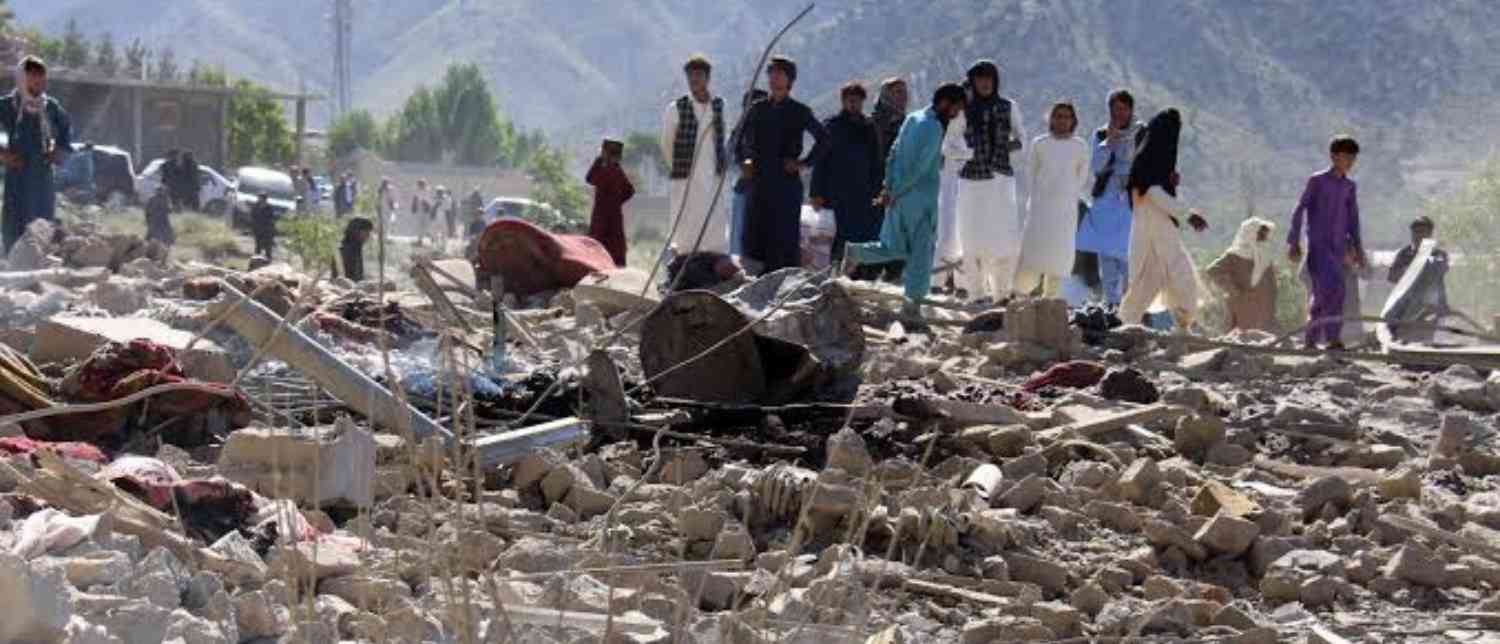
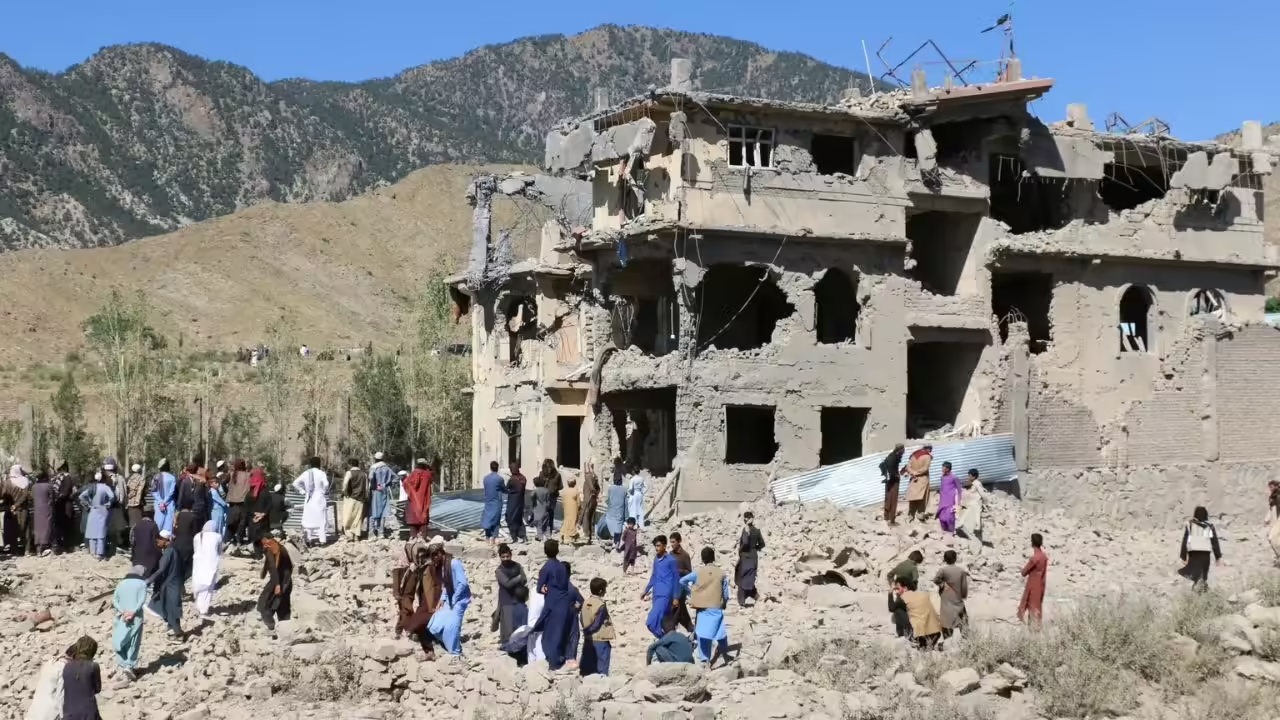
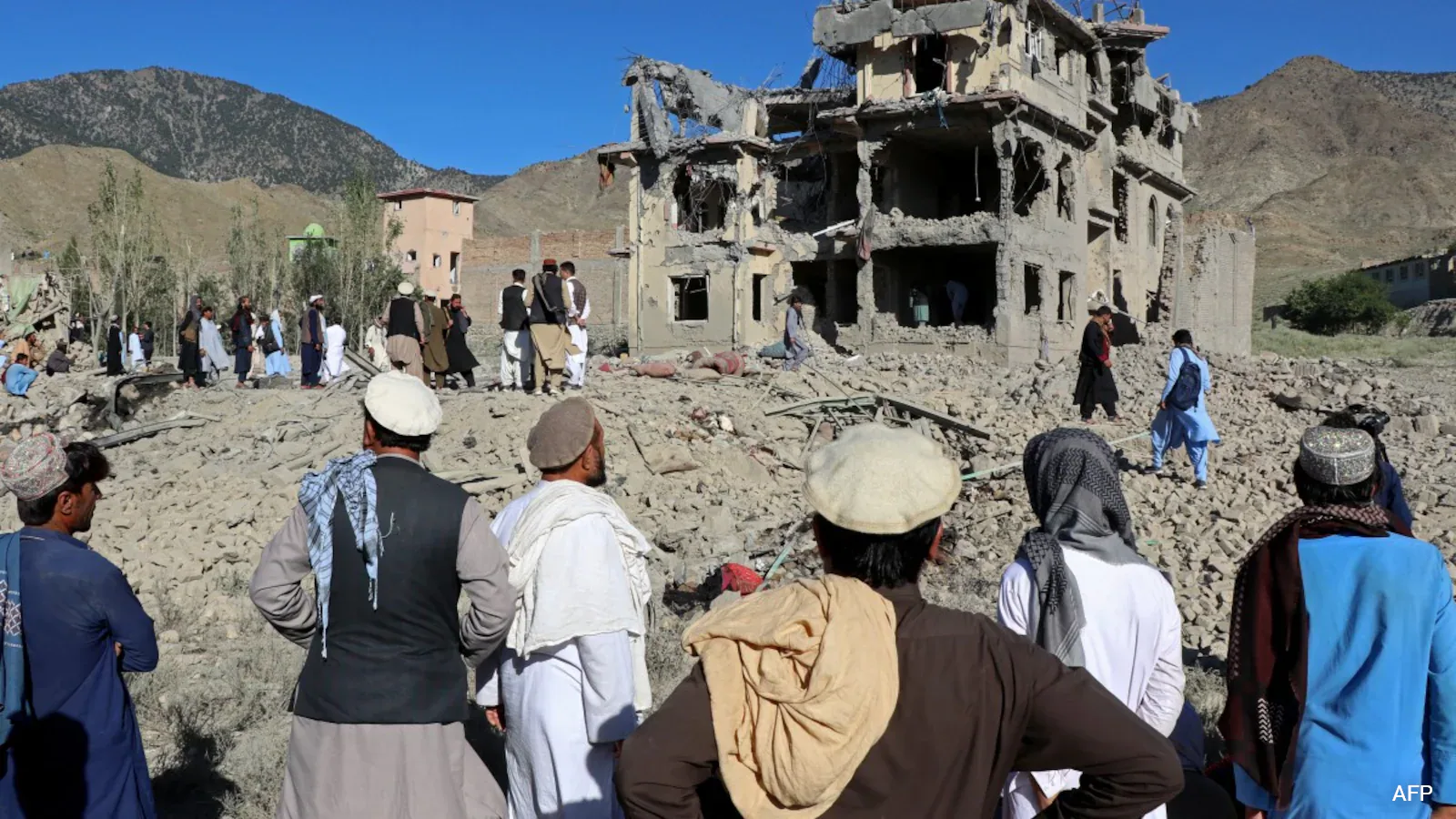
At approximately 12:30 AM (IST), Pakistani military jets breached Afghan airspace under the cover of darkness. They systematically targeted residential neighborhoods and local mosques across three districts: Gyan in Paktika province, Chamkani in Paktia province, and Marawara in Kunar province. The initial bombardments obliterated homes, leaving sleeping villagers trapped under smoking, twisted wreckage.
What followed, however, transformed a tragic military escalation into what many observers are calling an alleged war crime.
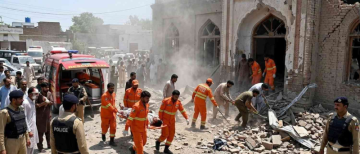
Exactly 25 minutes later, at 12:55 AM, as desperate locals, first responders, and frantic neighbors scrambled through the debris to pull out screaming children and bleeding women, the Pakistani jets returned. In a display of calculated military brutality, they dropped a second wave of bombs directly onto the unarmed rescue crowds.
This maneuver is known in modern warfare as a "double-tap" strike. It is an internationally condemned tactic deliberately timed to coincide with the arrival of emergency responders, medics, and civilians who rush to the aid of the initial victims. By weaponizing basic human empathy, the double tap ensures maximum casualties, effectively blowing apart those trying to save lives.
The human toll of this tactic was devastating. According to Taliban deputy spokesperson Hamdullah Fitrat, the strikes claimed the lives of at least 36 civilians. In the Mandokhail village of Chamkani alone, the sequence was horrifying. An initial strike killed an elderly man and a child. When the village rushed to the site for a rescue operation, the second strike hit, wiping out 28 villagers and injuring 158 others in a single blow.
Survivors pulled from the wreckage vehemently disputed Islamabad’s official narrative. "When the bombing started, there were no TTP [Tehreek-e-Taliban Pakistan] militants or military personnel anywhere near this area," one survivor told reporters, demanding anonymity for safety. "Pakistan is lying to the world to justify this slaughter. Every single person affected by this strike is an ordinary local citizen trying to survive."
Another resident, who had recently returned from working in Dubai, recounted the absolute horror: "The airstrike flattened my neighbor Badshah Khan's house. We ran to the rubble to pull out women and children buried underneath. Minutes later, the Pakistan military dropped another bomb right on top of our rescue crowd. Dozens died before my eyes."
The Trigger: The Karachi Attack and Islamabad's Justification
Pakistan has staunchly defended the midnight operation, claiming it was a precise, intelligence-based response to a surge in cross-border terrorism that threatens its internal stability. The immediate catalyst for the airstrikes was a brazen assault on the regional headquarters of the paramilitary Pakistan Rangers in the southern port city of Karachi on Saturday night.
During that incident, armed fighters stormed the heavily guarded facility with automatic weapons and explosives, resulting in a fierce gunfight that left three Pakistani soldiers dead. Security forces neutralized three of the attackers and apprehended a fourth, whom the military quickly identified as a wounded Afghan national. Shortly after, Jamaat-ul-Ahrar (JuA), a violent breakaway faction of the Pakistani Taliban, claimed full responsibility for the Karachi assault.
In the aftermath, Pakistan's Information Minister Attaullah Tarar took to social media to announce the military's retaliation. He declared that Pakistani security forces had successfully eliminated 29 fighters in ground operations and airstrikes along the Afghan border. Tarar claimed that "three targets in Paktia, Paktika, and Kunar were destroyed during precision strikes" aimed squarely at the safe havens of JuA and the TTP.
Islamabad maintains that it is conducting Operation Ghazab lil-Haq, a massive military campaign launched in February aimed at eradicating militant networks. Pakistani officials persistently argue that the Afghan Taliban provides sanctuary to the TTP—a charge Kabul vehemently and repeatedly denies.
Kabul’s Outrage and the Mounting Civilian Toll
The double-tap strikes have pushed Islamabad and Kabul dangerously close to the brink of an all-out open war. Taliban spokesperson Zabihullah Mujahid strongly condemned the bombings, describing them as a "cowardly act of aggression" and a blatant crime against humanity. The Afghan Foreign Ministry swiftly summoned the Pakistani chargé d'affaires in Kabul, handing over a strongly worded protest note regarding the blatant violation of their airspace and the slaughter of innocent civilians.
In a predictable diplomatic tit-for-tat, Pakistan reciprocated by summoning the Afghan envoy in Islamabad, reiterating its uncompromising demand that Afghanistan physically dismantle terrorist infrastructure within its borders.
But for the Afghan people, the geopolitical bickering offers no solace. Over the past nine months, Pakistan has repeatedly violated Afghan airspace under the guise of counter-terrorism. According to local authorities and international observers, these reckless military operations have largely missed militant training camps. Instead, Pakistan's ordnance has repeatedly struck residential neighborhoods, local schools, and civilian infrastructure.
Estimates suggest that nearly 570 innocent Afghan civilians have perished in Pakistani cross-border strikes since September alone. Disturbing footage emerging from Afghan hospitals in the wake of the latest strikes shows overwhelmed medical staff tending to bloodied infants, toddlers aged 4 to 9, and elderly victims on makeshift stretchers—stark visual evidence that directly contradicts Pakistan's claims of surgical "precision targeting."
India Condemns Pakistan’s ‘Reckless Behaviour’
The ripple effects of the border strikes have drawn sharp and immediate reactions from neighboring India, fundamentally altering the regional diplomatic calculus. In the frantic hours following the Karachi Rangers attack, several Pakistani officials reflexively attempted to deflect blame onto New Delhi, insinuating Indian intelligence involvement in the assault.
India swiftly and fiercely rejected the allegations as completely "baseless." Taking a hardline stance, New Delhi unequivocally condemned Pakistan’s "reckless behaviour" in Afghanistan. Indian officials slammed Islamabad for its habitual tendency to deflect attention from its own monumental internal security failures.
For India, the situation highlights a profound hypocrisy: Pakistan, a state widely documented by global intelligence agencies as a historical sanctuary for international terror networks, is now playing the victim while dropping bombs on sleeping Afghan civilians. The diplomatic exchange echoed a familiar, tired pattern. Whenever Pakistan's internal security falters, Islamabad reflexively shifts the blame to India or Afghanistan, refusing to acknowledge the homegrown, systemic roots of its own militant insurgency.
A Region on the Brink: Failed Diplomacy and Border Chaos
The current escalation is not an isolated flare-up but a continuation of a bloody, months-long campaign that has raged across the porous Durand Line. Operation Ghazab lil-Haq has involved sustained artillery exchanges, drone operations, and ground incursions.
The humanitarian impact of this campaign has been catastrophic. In northern Afghanistan, prolonged Pakistani shelling has forced the closure of vital roads, cutting off approximately 100,000 residents from essential food and medical supplies for nearly two months, according to United Nations reports. In the south, Pakistan has controversially fenced off vast swathes of Afghan territory, citing "tactical" necessity—an act Kabul views as a blatant, illegal land grab.
International efforts to mediate the crisis have repeatedly collapsed. A brief Eid al-Fitr truce brokered by Saudi Arabia, Qatar, and Turkey held only momentarily before the guns resumed firing. Subsequent diplomatic interventions hosted by China in Ürümqi and Uzbekistan in Termez ended in deadlock.
Pakistan remains steadfast, refusing to halt its military operations until Afghanistan formally designates the TTP as a terrorist organization and provides verifiable proof of its dismantling. Kabul, equally stubborn and protective of its sovereignty, refuses to bow to Pakistani military coercion.
The tragic irony of the situation has not been lost on global observers. Right now, Islamabad is actively attempting to mediate a truce between the United States and Iran in the Middle East. Yet, its domestic and regional policies remain bathed in blood. The glaring juxtaposition of Pakistan acting as a global peacemaker while employing ruthless "double-tap" tactics against innocent rescuers in a neighboring country exposes a profound contradiction in its foreign policy.
The Weaponization of Counter-Terrorism
The midnight carnage in Paktia, Paktika, and Kunar is a grim, heartbreaking reminder of the true cost of the Pakistan-Afghanistan border conflict. While cross-border militancy remains a genuine and complex threat in South Asia, the weaponization of counter-terrorism to justify the slaughter of civilians violates fundamental human rights and international law.
Using tactics like the double-tap strike—designed specifically to kill those brave enough to help the injured—erodes any moral high ground Islamabad claims to hold. As mothers mourn their children and rescuers are buried alongside the very people they tried to save, the political rhetoric of "precision strikes" rings entirely hollow. Until there is genuine accountability and a monumental shift away from militarized finger-pointing, the skies over the Durand Line will remain a source of terror, and the cycle of violence will continue to claim the lives of those who can least afford it.
With inputs from agencies
Image Source: Multiple agencies
© Copyright 2026. All Rights Reserved. Powered by Vygr Media.