 By
By 
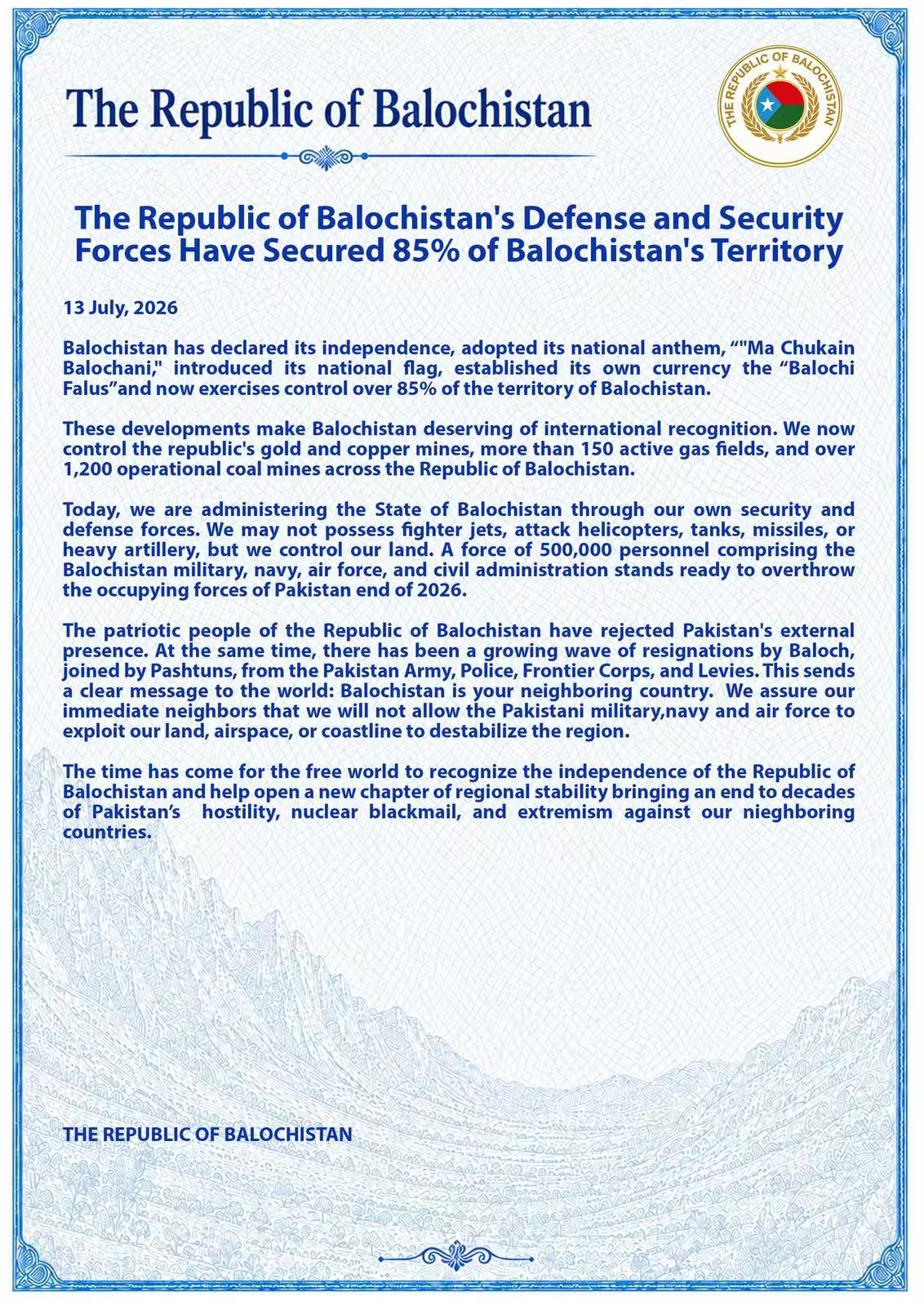
Claims that Balochistan has declared independence from Pakistan have sparked intense international attention after a viral statement circulated online, asserting the formation of the "Republic of Balochistan." The document, shared widely across social media platforms, claims that Baloch nationalist forces now control nearly 85% of the region, have established a provisional government, adopted a national flag, anthem, and currency, and are seeking diplomatic recognition from the international community.
However, despite the growing online discourse and statements by prominent Baloch activists, there is currently no official confirmation from Pakistan, the United Nations, or any foreign government recognizing Balochistan as an independent state. Reports across multiple media outlets have consistently noted that the declaration remains unverified.
Viral Declaration Sparks Worldwide Attention
The controversy gained momentum after a letter issued in the name of the "Republic of Balochistan" surfaced online. The statement claims that Baloch defense and security forces have secured control over approximately 85% of the province and established functioning administrative institutions.
Among its most notable assertions are:
-
Adoption of a national anthem titled Ma Chukain Balochani.
-
Introduction of a national flag.
-
Launch of a proposed currency called the Balochi Falus.
-
Control over key natural resources, including gold and copper mines, gas fields, and coal reserves.
-
Appeals for diplomatic recognition from governments across the world.
The document also alleges that several members of Pakistan's military, police, Frontier Corps, and Levies have defected to support the Baloch nationalist movement. None of these claims has been independently verified.
Baloch Leaders Intensify Calls for International Support
The renewed spotlight follows statements made by Baloch separatist leader Mir Yar Baloch, who has repeatedly argued that Balochistan was never a legitimate part of Pakistan and has appealed to India, the United Nations, and democratic nations worldwide to recognize what he describes as the region's right to self-determination.
According to his public statements, Baloch nationalists contend that Pakistan's control over the resource-rich province has been maintained through military force since 1948. They accuse Islamabad of widespread human rights abuses, enforced disappearances, political repression, and economic exploitation of Balochistan's vast natural resources.
These assertions have long formed the core narrative of Baloch nationalist organizations, although Pakistan strongly rejects such allegations and maintains that Balochistan is an integral part of the country.
Why Balochistan Matters
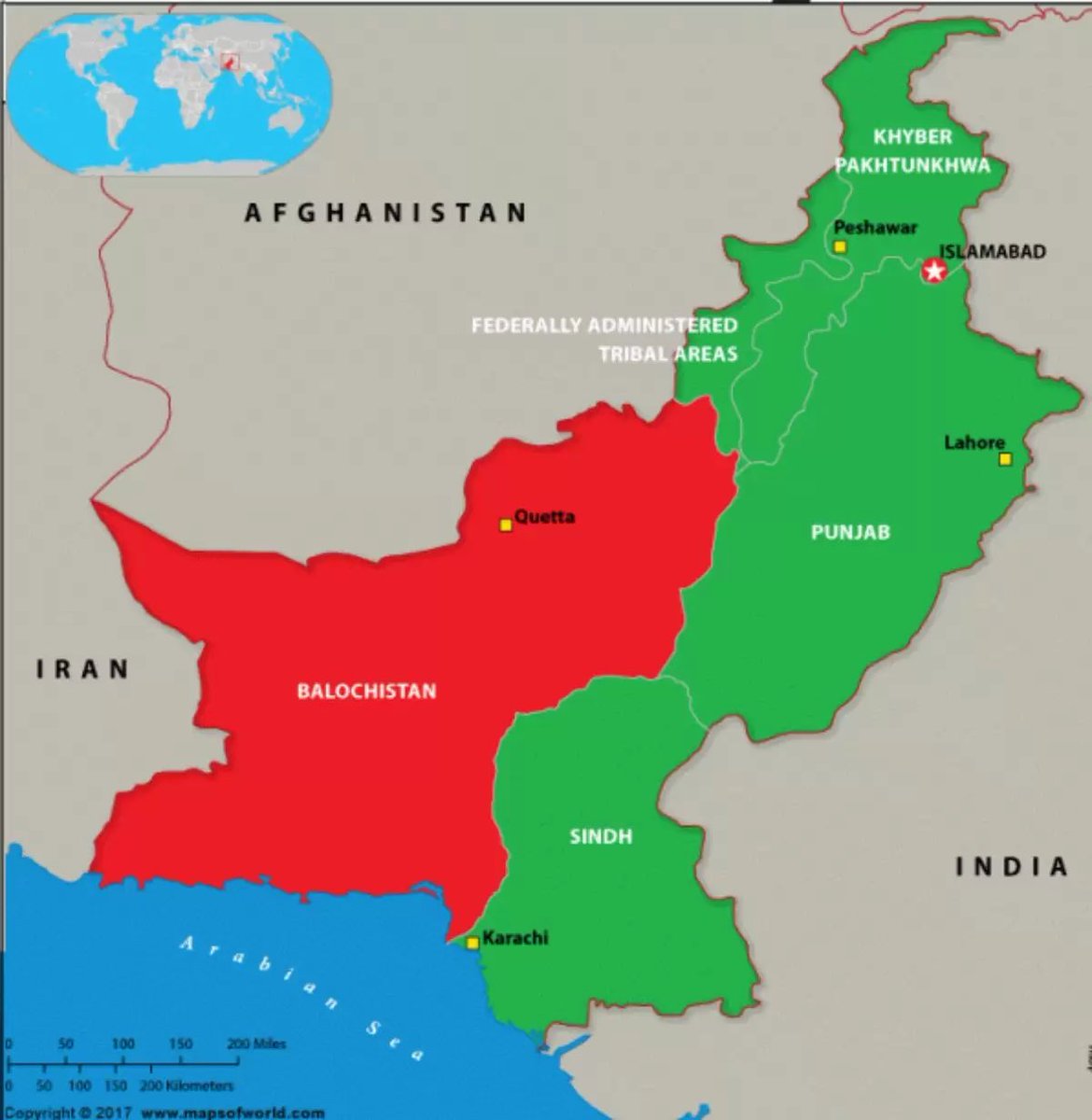
Balochistan is Pakistan's largest province by area, accounting for nearly 44% of the country's landmass, while remaining its least populated region. It borders Iran and Afghanistan and possesses a long coastline along the Arabian Sea.
Its strategic importance extends well beyond geography.
The province is home to enormous reserves of natural gas, copper, gold, coal, and other minerals. It also hosts Gwadar Port, one of the flagship projects under the China-Pakistan Economic Corridor (CPEC), a multi-billion-dollar infrastructure initiative backed by China.
Any instability in Balochistan therefore carries significant geopolitical implications, not only for Pakistan but also for China, whose investments in the province have repeatedly been targeted by insurgent groups.
Analysts believe that any credible shift in control over the region could have far-reaching consequences for regional trade, energy security, and South Asian geopolitics.
A Long-Running Insurgency
The latest developments come against the backdrop of a decades-old separatist insurgency.
Various Baloch nationalist groups have sought greater autonomy—or complete independence—from Pakistan for decades, arguing that the province's natural wealth has benefited Islamabad while local communities remain underdeveloped.
Pakistan, meanwhile, describes many armed separatist organizations as terrorist groups responsible for attacks on civilians, security personnel, and infrastructure.
Violence has intensified periodically over recent years, with several militant attacks and subsequent military operations reported across the province. Pakistani authorities maintain that security forces continue to conduct operations against insurgent groups operating in Balochistan.
Conflicting Narratives Continue
The viral declaration has generated considerable confusion because of the gap between online claims and official confirmation.
Supporters of the independence movement argue that developments on the ground have fundamentally altered the balance of power and that the declaration reflects an evolving political reality.
However, independent verification remains absent.
Neither Pakistan's federal government nor international organizations have acknowledged that Balochistan has become an independent nation. Likewise, there has been no indication of diplomatic recognition by any country.
Experts note that under international law, declarations of independence alone do not automatically create a sovereign state. Recognition typically depends on effective territorial control, functioning governance, and acceptance by other nations—conditions that have not been independently established in Balochistan's case.
Why China Is Watching Closely
China's interest in Balochistan extends far beyond diplomacy.
Gwadar Port serves as a critical component of Beijing's Belt and Road Initiative and is viewed as a strategic gateway connecting western China to the Arabian Sea.
Chinese investments in roads, ports, energy projects, and industrial infrastructure across Balochistan run into billions of dollars.
Over the years, Chinese engineers and projects have frequently been targeted by separatist militants opposed to what they describe as the exploitation of local resources without adequate benefits for the Baloch people.
Consequently, any escalation in separatist activity—or any perceived weakening of Islamabad's control over the province—could significantly affect China's regional strategic interests.
What Happens Next?
For now, the claims surrounding Balochistan's independence remain unverified despite widespread circulation online.
The viral statement has undoubtedly reignited international discussion about one of South Asia's longest-running separatist movements and drawn renewed attention to the political, economic, and security challenges facing Pakistan's largest province.
Whether these developments evolve into a broader diplomatic issue will depend on future events on the ground, official responses from Pakistan, and whether any credible international recognition emerges.
Until then, the declaration remains part of an unfolding story marked by competing narratives, limited independent verification, and high geopolitical stakes.
While Baloch nationalist leaders continue to press their case before the international community, Pakistan maintains that the province remains an inseparable part of the country and continues security operations against armed separatist groups.
As the situation develops, governments, regional powers, and international observers are likely to closely monitor events in Balochistan, where local aspirations, strategic resources, and global geopolitical interests increasingly intersect.
With input from agencies
Image Source: Multiple agencies
© Copyright 2026. All Rights Reserved. Powered by Vygr Media.