

 By
By 
The Supreme Court has issued a stern ultimatum to the Centre and the Food Safety and Standards Authority of India (FSSAI) over the long-running delay in introducing front-of-pack warning labels on packaged foods high in sugar, salt and saturated fat. During a hearing on August 13, the bench made it clear that the government’s next step could determine whether the issue is settled through regulatory action or through directions from the court itself.
A bench of Justices JB Pardiwala and K Vinod Chandran gave the Union government two weeks to place its final decision on record. The court warned that if the government does not act, it may proceed to issue further directions. The unusually sharp exchange brought the debate over nutritional labelling back into focus, placing public health, consumer choice and the interests of the packaged-food industry at the centre of the dispute.
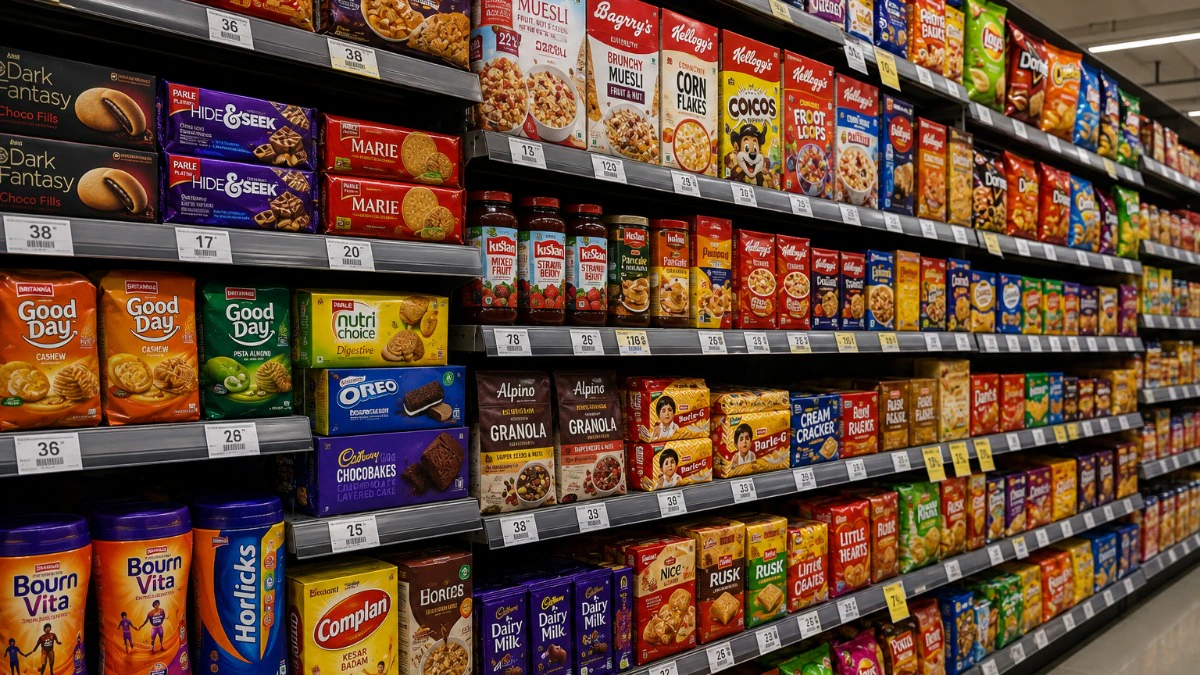
Supreme Court questions FSSAI over delay
The immediate trigger for the court's displeasure was the position taken by FSSAI on front-of-pack nutritional warnings. The bench was referred to minutes of an FSSAI meeting held on March 7, which the petitioner argued appeared inconsistent with the Supreme Court's earlier directions and observations on the issue.
The court questioned the Centre over what it had done since the earlier proceedings and expressed concern that the regulator had not moved decisively towards a system that would allow consumers to identify products containing excessive amounts of potentially harmful nutrients.
The judges also raised the possibility of pressure from food companies influencing the regulatory approach. The court said the matter was being considered in the public interest and stressed that the health of citizens, particularly children, could not be secondary to commercial considerations.
The court's message was unmistakable: the government now has a limited window to resolve the matter itself. Otherwise, the judiciary may step in more directly.
What are front-of-pack warning labels?
Front-of-pack labelling is designed to give consumers an easily understandable nutritional signal before they buy a packaged food product. Instead of requiring shoppers to study detailed nutritional tables on the back of a packet, prominent warnings on the front could indicate when a product contains high levels of nutrients such as sugar, salt or saturated fat.
The argument in favour of such labels is straightforward: consumers should be able to understand important nutritional risks quickly, particularly when purchasing products for children. Supporters say conventional nutrition panels can be difficult for many shoppers to interpret, whereas prominent warnings could make the information more visible at the point of purchase.
The Supreme Court has previously considered the issue in the context of the broader right to health, following a petition that raised concerns about rising consumption of packaged and ultra-processed foods and its possible relationship with non-communicable diseases.
Centre raises concerns over Indian food habits
The government, however, has argued that nutritional standards and warning systems used internationally cannot simply be transplanted into India without considering the country's dietary patterns and food diversity.
During Thursday's hearing, Additional Solicitor General Brijender Chahar highlighted concerns about how a warning-label regime could affect traditional Indian foods. He referred to products such as namkeen and also cited eggs while explaining how certain foods could potentially cross thresholds for nutrients such as fat.
The government's position, as reported during the hearing, is that applying nutritional thresholds without sufficient consideration of Indian dietary habits could produce confusing outcomes. It also raised concerns about the impact on small and medium enterprises, particularly businesses involved in traditional foods.
The Centre reportedly submitted that a substantial portion of MSME revenue is linked to traditional food products, suggesting that a warning system could have economic consequences beyond large packaged-food manufacturers.
Supreme Court rejects business concerns as a reason for delay
The bench did not appear persuaded that such concerns justified prolonged inaction. The judges emphasised that the purpose of warning labels would not be to prohibit consumers from purchasing particular foods, but to ensure that people have clearer information before making that choice.
The court also questioned why consumers should not be given more prominent nutritional information simply because manufacturers might dislike the consequences.
In one pointed observation, the bench contrasted expensive foods such as dry fruits with popular packaged snacks consumed by children, underscoring the importance of affordability and actual consumption patterns when considering food policy.
The judges stressed that the court was not targeting a specific product or category. Rather, the central question was whether consumers should have a clear understanding of what they are consuming.
Court raises concern over children's health
Children emerged as a particularly important concern during the hearing.
The Supreme Court repeatedly linked the need for nutritional transparency to the health of growing children, questioning whether commercial or regulatory difficulties should take precedence over public health.
The issue has become increasingly significant as packaged foods form a larger part of everyday diets. The petition before the court has highlighted concerns about the spread of lifestyle-related diseases and the increasing consumption of foods containing high levels of sugar, salt and saturated fat.
For the court, therefore, the debate is not merely about how information is printed on a packet. It is about whether consumers, especially children and their parents, have enough information to make informed dietary choices.
FSSAI's approach has also come under scrutiny
The dispute reflects a broader disagreement over what the most effective nutritional labelling system for India should look like.
FSSAI has considered approaches involving more detailed nutritional information and further research into packaged-food categories and consumer behaviour. One proposal reported separately involved presenting recommended daily intake information for nutrients such as added sugar, saturated fat and salt through a tabular format rather than relying exclusively on prominent warning symbols.
The regulator has also indicated the need for systematic mapping of packaged foods, consumer surveys, international comparisons and wider consultation with stakeholders, including micro, small and medium enterprises.
However, the Supreme Court's latest intervention suggests that the court is no longer satisfied with an open-ended process of research and consultation. The two-week deadline puts pressure on the government to translate deliberations into a concrete position.
Industry's role questioned during hearing
The hearing also highlighted the tension between public health objectives and the interests of food manufacturers.
A senior advocate appearing for a manufacturer sought to make submissions before the bench, but the judges questioned why manufacturers should have a decisive role in an issue fundamentally concerned with public health.
The court's comments indicate that while industry concerns may be relevant when designing practical regulations, they cannot determine whether consumers receive meaningful nutritional information.
That distinction could become important if India ultimately introduces mandatory front-of-pack warnings. Manufacturers would likely face changes to packaging, product formulations and possibly consumer perceptions, while regulators would have to establish scientifically defensible thresholds and categories.
India and the international standards debate
Another major point of contention is whether India should follow nutritional labelling approaches used in other countries.
The Centre has expressed reservations about directly adopting international standards, arguing that dietary patterns differ across countries. The Supreme Court, however, questioned whether differences between India and developed economies should become a reason for maintaining weaker safeguards.
The bench made a broader point: India should not treat international public-health standards as unattainable simply because the country's food habits and economic conditions are different.
The court said the country should demonstrate that it is serious about protecting the health of its citizens, particularly children.
What happens next?
The Centre now has two weeks to place its final decision before the Supreme Court. The government could choose to move ahead with a front-of-pack warning system, modify the proposed approach, or present a different regulatory framework that addresses the court's concerns.
If it fails to do so, the Supreme Court has indicated that it may issue further directions itself.
The next stage could therefore have significant implications for India's packaged-food industry. Mandatory warning labels could change how products are marketed and packaged, while potentially giving consumers a simpler way to identify foods high in sugar, salt and saturated fat.
For consumers, the larger question is equally important: will nutritional information remain something that shoppers have to search for on the back of a packet, or will key health warnings become impossible to miss?
For now, the Supreme Court has put the decision firmly back in the government's court. But with the deadline set and the bench warning that it may act next, the prolonged debate over front-of-pack food warning labels in India appears to be approaching a decisive moment.
With input from agencies
Image Source: Multiple agencies
© Copyright 2026. All Rights Reserved. Powered by Vygr Media.