 By
By 
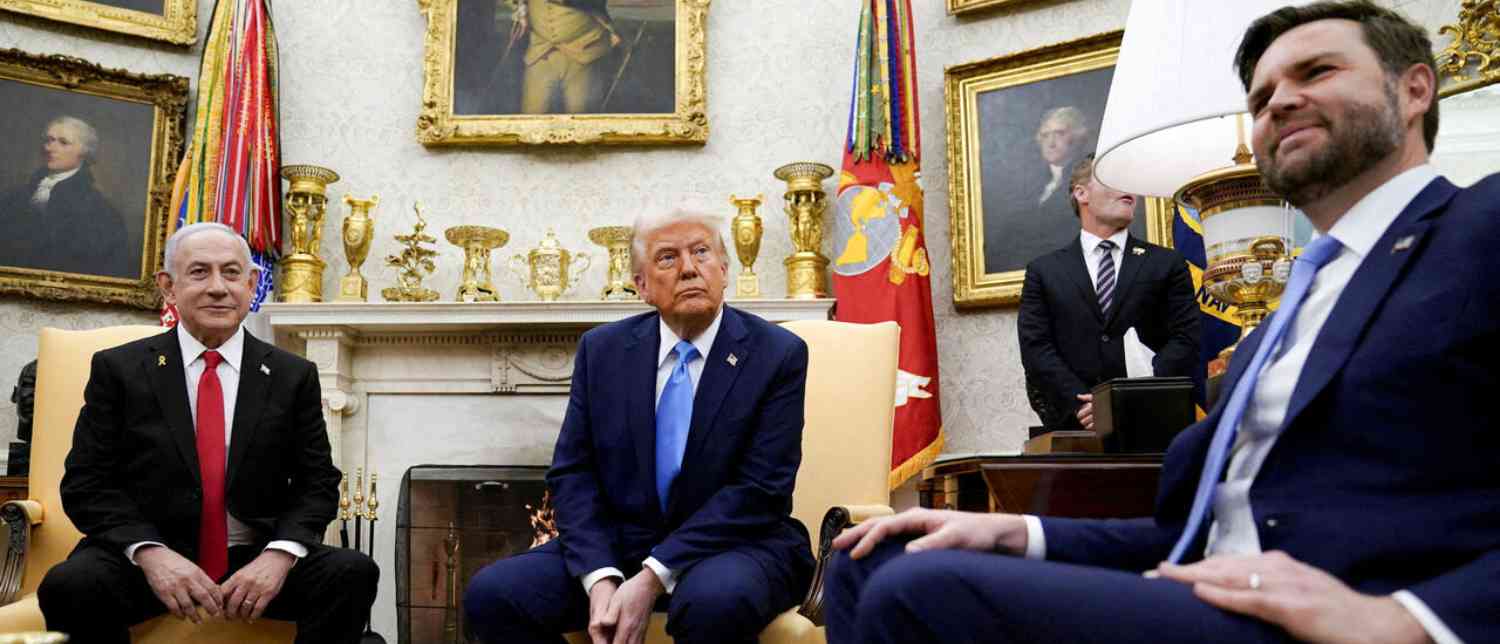
Israel has rejected US President Donald Trump’s 15-point roadmap for Gaza, dealing a major blow to Washington’s latest effort to move the war-torn territory towards a longer-term ceasefire and political transition.
Prime Minister Benjamin Netanyahu made the rejection explicit on Sunday, saying Israel would not withdraw its forces from Gaza unless Hamas is “genuinely disarmed”. His position puts the Israeli government at odds with the US-backed framework, which envisages a phased process in which Hamas gives up its weapons while Israeli forces gradually pull back.
“Israel rejects the 15-point document,” Netanyahu told his cabinet, making clear that Jerusalem does not accept the sequencing proposed under the latest plan. He also stressed that Israel was continuing discussions with Washington, suggesting that the disagreement with the Trump administration has not yet brought diplomatic contacts to a complete halt.
The Israeli leader's comments have nevertheless raised fresh questions over whether the proposed Gaza roadmap can actually be implemented, particularly when both sides appear to have different interpretations of what must happen first.
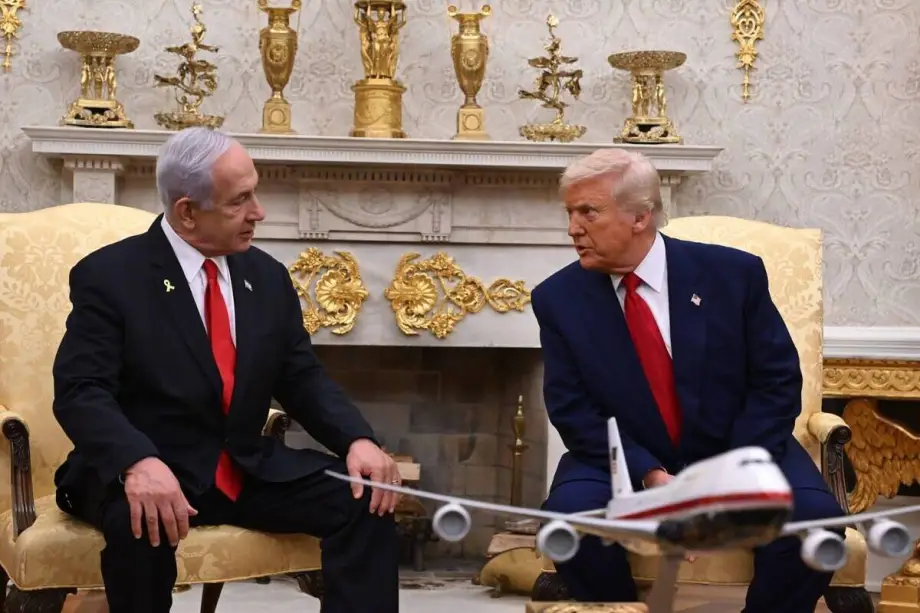
Netanyahu draws a red line over Hamas disarmament
At the centre of the dispute is Hamas's weapons and military infrastructure.
Netanyahu said Israel's demand was not for a symbolic or partial reduction in Hamas's military capabilities, but for complete disarmament. That would include heavy and lighter weapons as well as the wider military infrastructure that allows armed groups to operate in Gaza.
The Israeli prime minister also reiterated that his government would continue acting against threats to Israeli troops and citizens while the issue remained unresolved.
The distinction is important because the 15-point roadmap was designed around a phased process. Under the framework, Hamas would be disarmed in stages, with the process subject to international verification. Israeli forces would then withdraw progressively as agreed benchmarks were met, while an international stabilisation force would help maintain security and protect humanitarian operations.
For Netanyahu, however, the sequence appears unacceptable if it allows Israeli forces to withdraw before Hamas has been completely disarmed.
That difference has effectively created a new deadlock: Hamas has linked its implementation of the agreement to Israeli commitments, including an end to attacks and military withdrawal, while Israel is insisting that Hamas's disarmament must come first.
What is Trump's 15-point Gaza plan?
The 15-point roadmap emerged from the US-led Board of Peace as an implementation framework for Trump's broader Gaza peace initiative.
The proposal is intended to move Gaza away from the cycle of warfare and towards a transitional governing structure, reconstruction and eventual Palestinian self-administration. It calls for Hamas and other armed groups to surrender their military capabilities while civilian administration is transferred to a Palestinian technocratic body.
The plan also envisages international involvement in Gaza's security arrangements. An international stabilisation force would serve as a buffer and assist with security and humanitarian operations, while the Israeli military would gradually withdraw towards the Gaza perimeter as disarmament progresses.
The roadmap therefore depends heavily on reciprocity: progress by Hamas would be matched by corresponding steps from Israel and other parties.
That mechanism is now under severe pressure following Netanyahu's rejection.
Trump had described the emerging agreement at the end of July as a major breakthrough and a potential step towards lasting peace and security. Hamas had also indicated its commitment to the roadmap following negotiations with mediators and representatives of the Board of Peace in Cairo.
But the apparent agreement concealed a fundamental disagreement over implementation.
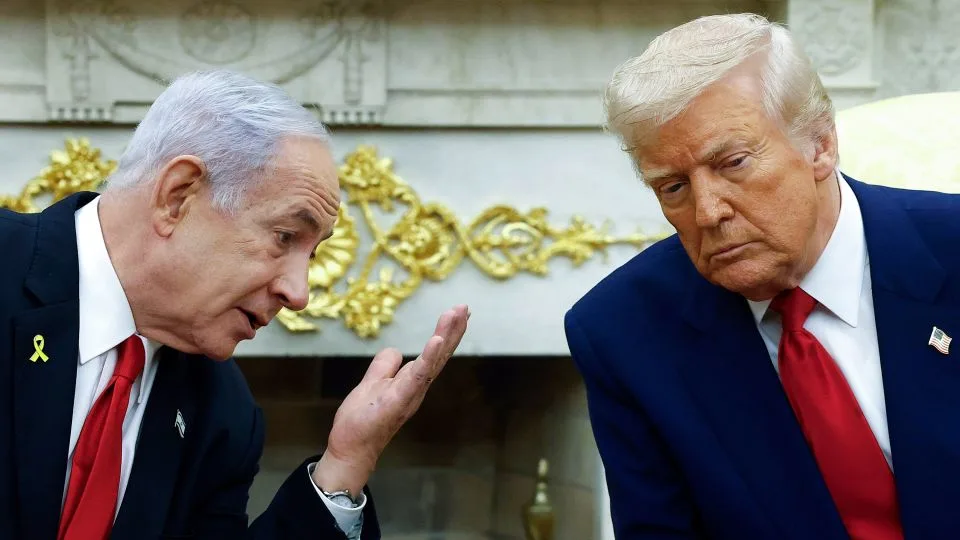
Hamas says it remains committed to the roadmap
While Netanyahu rejected the 15-point document, Hamas signalled that it had not abandoned the framework.
Senior Hamas official Basem Naim said the group remained committed to the roadmap agreed with mediators and representatives of the Peace Council in Cairo. He also called on mediators and the United States to pressure Netanyahu's government to follow through on the arrangement.
Hamas has previously maintained that it would only proceed with the next stage if Israel stopped its attacks and withdrew its forces to the “Yellow Line” established under the earlier ceasefire arrangement.
That position directly clashes with Netanyahu's latest demand.
In practical terms, the two sides remain locked in a sequencing dispute. Hamas wants Israeli military commitments to precede or accompany its own implementation, while Israel says there can be no meaningful military withdrawal until Hamas's weapons are completely removed.
Unless that gap is bridged, the roadmap risks remaining a diplomatic document rather than becoming an operational agreement.
Gaza faces renewed uncertainty
For Palestinians in Gaza, the Israeli rejection has brought another layer of uncertainty to an already devastating situation.
The 15-point framework had offered at least a proposed structure for the next phase: disarmament, an Israeli withdrawal, the deployment of international forces, a new Palestinian administrative arrangement and reconstruction.
With Israel now rejecting the plan in its current form, questions have emerged over what comes next and whether there is any agreed timetable for ending hostilities.
Al Jazeera reported from Gaza City that many Palestinians had expected Israel to oppose the proposal, but that the immediate concern was what the rejection would mean on the ground. The lack of agreement over sequencing could, in particular, make an Israeli withdrawal and the deployment of international stabilisation forces much harder to organise.
The humanitarian stakes are enormous. Gaza's health authorities have reported more than 73,000 Palestinian deaths since the war began in October 2023, while thousands more have been wounded. More than 1,200 people have also reportedly been killed since the October 2025 ceasefire arrangement, amid continued Israeli strikes.
The continuing violence has already undermined confidence in the durability of the ceasefire framework. The latest political confrontation could further complicate humanitarian relief, reconstruction and any attempt to establish a stable governing authority.
Netanyahu also rules out a Palestinian state
Netanyahu's rejection went beyond the immediate question of troop withdrawal.
The Israeli prime minister also said that, as long as he remains in office, there would be no Palestinian state in either Gaza or the occupied West Bank.
That position represents another major obstacle to the broader political vision associated with the US-backed framework.
The proposed transition for Gaza is centred on Palestinian civilian administration rather than continued Hamas rule. But the question of what political future Palestinians would ultimately have remains unresolved.
The rejection of Palestinian statehood by Netanyahu also highlights the deeper disagreement between the Israeli government's objectives and the wider international push for a political settlement that addresses Palestinian self-determination.
Netanyahu's domestic politics add another layer
The timing of the announcement is also significant.
Netanyahu is facing a difficult political environment ahead of Israel's October election, with his right-wing coalition under pressure from parties that oppose concessions to Hamas and resist any arrangement that could be interpreted as rewarding the group.
Analysts cited by Al Jazeera argued that domestic political calculations may be influencing Netanyahu's position. Israeli analyst Alon Pinkas linked the rejection directly to the upcoming election, suggesting that maintaining a hardline position on Gaza could serve Netanyahu politically.
Netanyahu's remarks that Israel knows how to “stand firm” even when dealing with American proposals also underline the political significance of the dispute.
For decades, the US-Israel relationship has been strategically close. But Netanyahu's latest comments demonstrate that Washington's influence has limits when the Israeli leadership believes core security and political interests are at stake.
What happens next?
The immediate question is whether Trump can persuade Netanyahu to return to negotiations over the 15-point roadmap.
Netanyahu has not completely closed the door on discussions with Washington. Instead, he has made clear that Israel considers several elements of the US proposal unacceptable and intends to negotiate from its own position.
The Board of Peace and other mediators now face the difficult task of reconciling three competing demands: Israel's insistence on complete Hamas disarmament, Hamas's demand for an Israeli withdrawal and cessation of attacks, and the international push for a political and humanitarian transition in Gaza.
The central challenge is therefore not simply whether Hamas will disarm. It is who moves first, how disarmament is verified, when Israeli forces withdraw and what happens to Gaza in the period between those steps.
The 15-point roadmap was designed to answer precisely those questions through phased implementation. Netanyahu's rejection has reopened them.
For Trump, the setback is particularly significant because his administration had presented the roadmap as evidence that the Gaza conflict could move towards a negotiated end. Hamas's continued commitment to the framework gives Washington a basis for further diplomacy, but Israel's refusal to accept the current sequencing means the US will have to bridge a widening gap between its proposed roadmap and Netanyahu's conditions.
For Palestinians, meanwhile, the consequences are much more immediate. Until the disagreement over disarmament and withdrawal is resolved, the prospect of a sustained end to hostilities, meaningful reconstruction and a stable political transition remains uncertain.
The latest development has therefore transformed what was being presented as a potential breakthrough into another test of US diplomatic leverage, Israeli political priorities and the viability of a post-war settlement for Gaza.
With input from agencies
Image Source: Multiple agencies
© Copyright 2026. All Rights Reserved. Powered by Vygr Media.