 By
By 
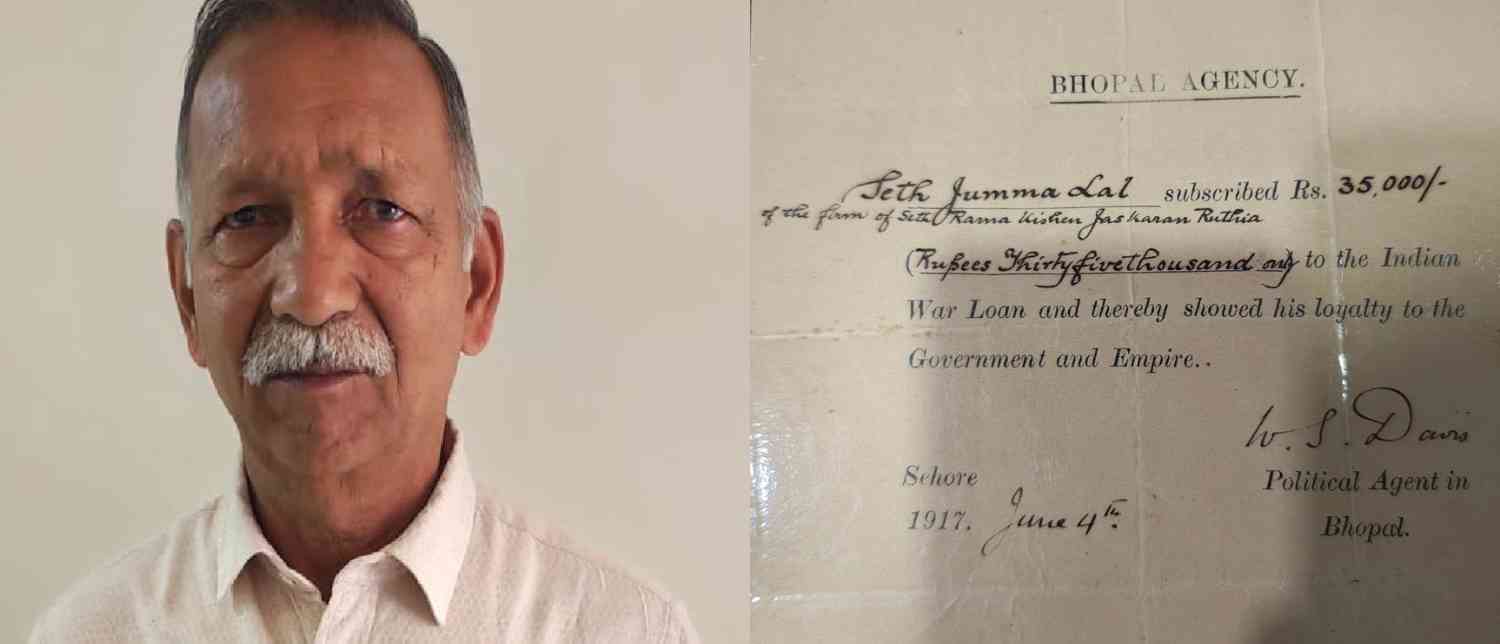
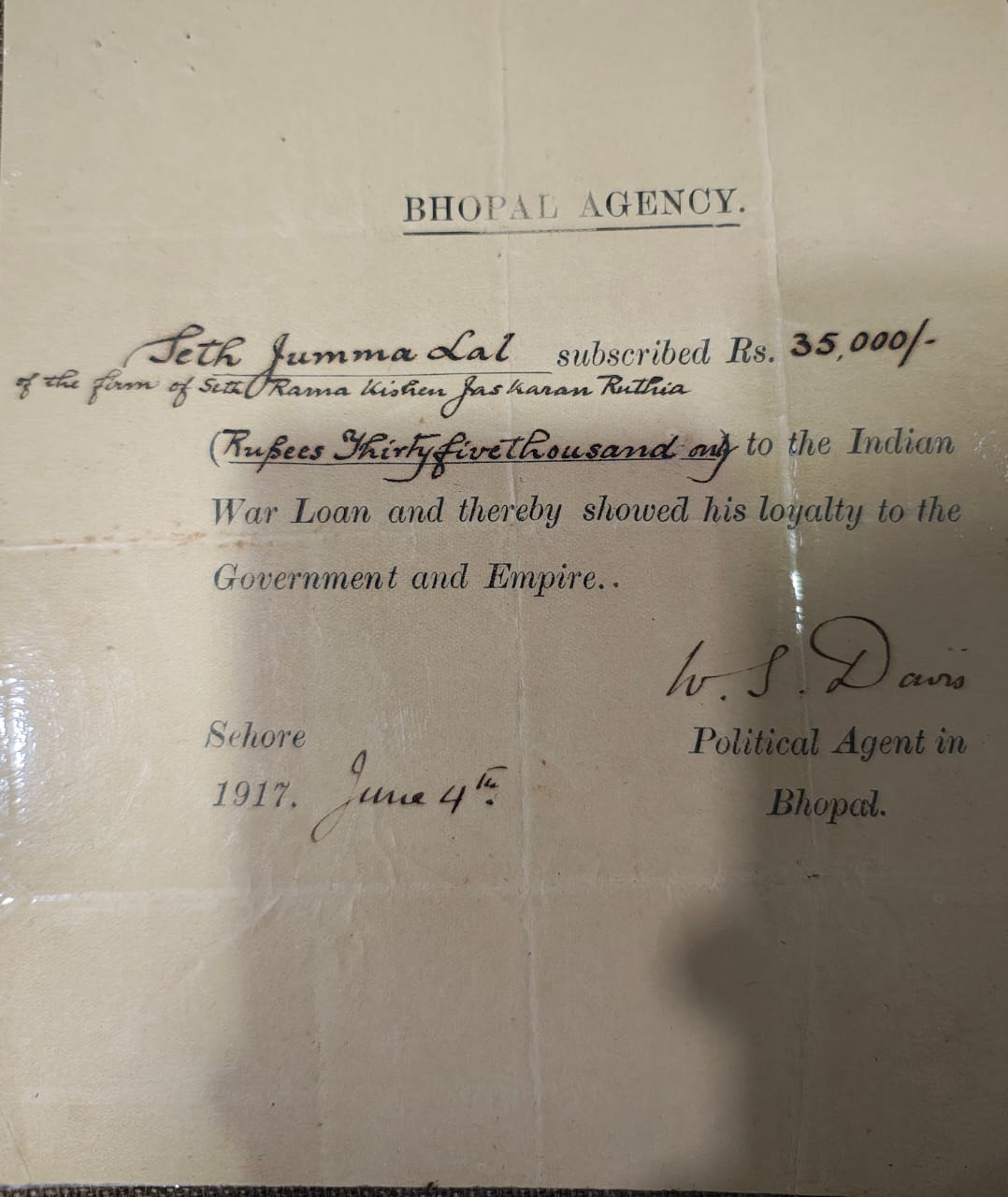
In an extraordinary case blending history, law, and legacy, a family from Sehore district in Madhya Pradesh has brought to light a 109-year-old financial document that could potentially reopen a colonial-era debt dispute. At the center of the matter is a ₹35,000 loan extended in 1917 by a prominent businessman, Seth Jumma Lal Ruthia, to the British administration during the First World War.
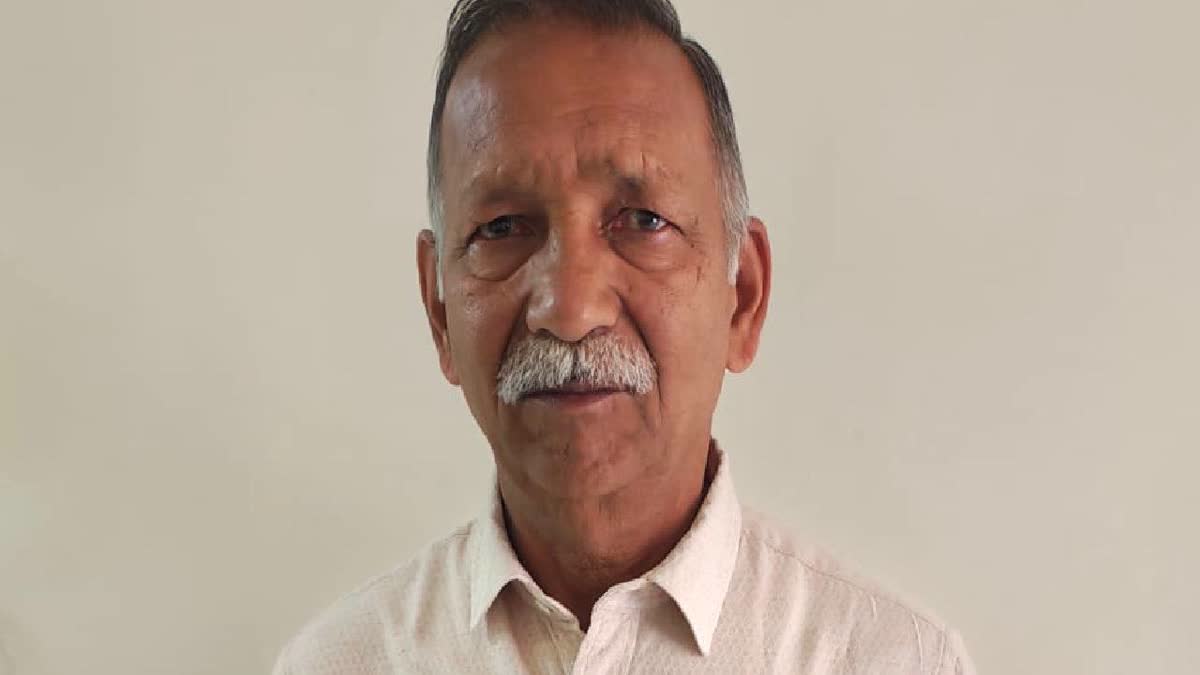
Today, his 63-year-old grandson, Vivek Ruthia, is exploring legal avenues to determine whether the modern-day United Kingdom can be held accountable for a debt incurred during British rule in India.
The question is as intriguing as it is complex: Can a sovereign government be asked to repay a century-old wartime loan?
The 1917 Indian War Loan: A Contribution During World War I
The story dates back to 1917, during the height of World War I, when the British Empire was grappling with severe financial strain. To support military expenses, the colonial government introduced the Indian War Loan, a debt instrument scheme floated in 1917 and 1918 to raise funds from the public in India.
These war bonds collectively raised more than £70 million from India, according to the Imperial War Museums. Citizens, traders, and organizations were encouraged to invest in these bonds, often enticed by what were described as “excellent” interest rates. In 1917, the loans reportedly offered 5.5 percent annual interest.
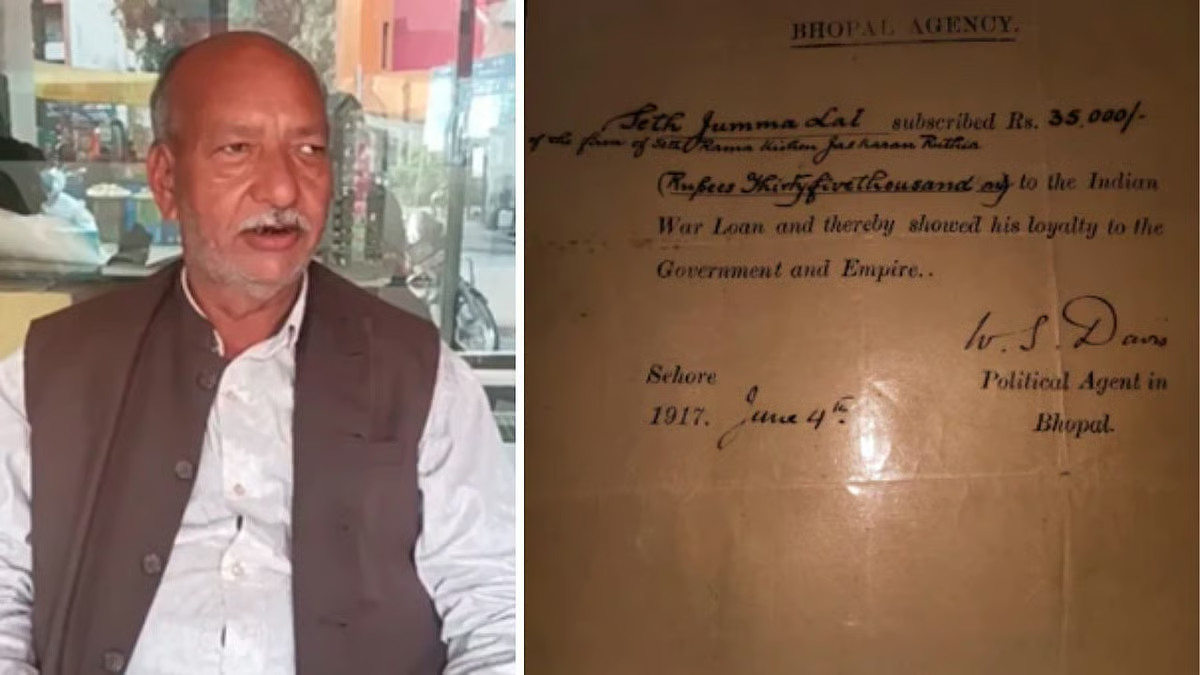
Seth Jumma Lal Ruthia, a prominent trader in cloth and grain in Sehore, was among those who contributed. According to a certificate dated June 4, 1917, he “subscribed Rs 35,000 to the Indian War Loan and thereby showed his loyalty to the Government and Empire.”
The document bears the signature of W S Davis (also referred to as W S Dawis in some accounts), who served as Political Agent in Bhopal under British rule.
Who Was W S Davis?
W S Davis was a British Political Agent stationed in Bhopal during the colonial period. Political agents were senior British officials responsible for managing relations with princely states, supervising governance matters, and ensuring alignment with British authority.
Beyond administration, Davis was also associated with literary activity in Bhopal. He translated Hayat-i-Qudsi: Life of the Nawab Gauhar Begum, a biography written by Sultan Jahan Begum. The translated work was published in 1918, underscoring Davis’s engagement with the region’s cultural landscape.
The Discovery of Century-Old Documents
The existence of the loan resurfaced only recently. Vivek Ruthia claims he discovered the certificate while reviewing old family documents and a will that had been preserved over three generations.
Seth Jumma Lal passed away in 1937, nearly two decades after extending the loan. After his death, the papers were safeguarded by his son, Seth Manak Chand Ruthia, until his demise in 2013. The documents were then handed over to Vivek.
According to Vivek, the papers remained in the family’s possession for over 22 years before the issue resurfaced during a recent family discussion. He believes that the matter was forgotten after India gained Independence in 1947, and no repayment was ever made or formally settled.
Was the Loan Ever Repaid?
The Ruthia family maintains that there is no record of repayment. The certificate explicitly acknowledges the ₹35,000 subscription to the Indian War Loan. However, there is no documentation indicating redemption or settlement of the debt.
Interestingly, historical reports suggest that the UK Treasury has redeemed certain war loans in the past. According to a report cited by the The Hindustan Times, the UK Treasury announced in 2015 that it would redeem £1.9 billion of debt from the 3½% War Loan on March 9, 2015. However, no verifiable update confirms whether specific colonial-era Indian contributions were individually addressed.
How Much Would ₹35,000 From 1917 Be Worth Today?
The financial implications of this claim are significant.
-
Inflation-adjusted estimate: Only accounting for inflation, ₹35,000 from 1917 would equal approximately ₹1.85 crore in today’s currency.
-
Compound interest calculation: If calculated at 5.5 percent annual compound interest for 109 years (1917–2026), the amount would rise to several crores of rupees.
-
Gold value indexation: The family also estimates that if measured against gold prices—which have reportedly increased more than 3,000 times since 1917—the equivalent value could exceed ₹10 crore.
These estimates, while theoretical, have intensified public interest in the case.
Legal Action Under Consideration
Vivek Ruthia initially indicated he was preparing to send a legal notice to the British government and was consulting lawyers to understand the scope of international law. He has even mentioned the possibility of taking the matter to an international judicial forum such as The Hague.
Advocate Dheeraj Kumar commented that under international law, a sovereign nation is theoretically responsible for previously incurred debts. However, he cautioned that critical factors would include:
-
The original repayment terms of the 1917 loan
-
Limitation laws
-
Sovereign immunity
-
Cross-border jurisdiction complexities
Establishing the authenticity and enforceability of a century-old document would present formidable legal hurdles.
A Shift in Stand: “All for Record, Not Recovery”
Interestingly, in a later development, the Ruthia family clarified that they do not currently intend to pursue financial recovery from either the UK or Indian governments.
“Our only aim is to bring this piece of history to the fore,” Vivek said. “We want it etched in history that Indian merchants stood by the administration in times of need.”
He added that many merchants of that era extended loans to the British government for administrative and wartime purposes. Even if repayment does not materialize, the family wants the historical record acknowledged in official archives.
The Legacy of Seth Jumma Lal Ruthia
Beyond the disputed loan, the documents reveal the stature of Seth Jumma Lal in Central India during British rule.
He was widely respected across Sehore, Bhopal, Indore, and Rajgarh. Known for his philanthropic activities, he built several schools and hospitals and contributed to social welfare causes. Additional documents found by the family include a formal letter of thanks from the British government acknowledging his contribution of ₹6,446 toward relief for the sick and poor.
Family members also recount his flamboyant lifestyle. According to Vivek’s son, Gautam Ruthia, Seth Jumma Lal owned and traveled in a Rolls-Royce—an extraordinary symbol of prestige during that era. British officials were reportedly impressed by his stature and presence.
The Broader Historical Context
The Indian War Loans were part of a broader strategy by the British colonial administration to mobilize financial resources from India during World War I. Advertisements and organized campaigns encouraged Indians to invest in war bonds, projecting it as both a patriotic and financially sound decision.
India’s contributions during the war extended beyond money—over one million Indian soldiers served overseas. Financial contributions from traders and businessmen like Seth Jumma Lal were integral to the war effort.
Yet, questions remain about the long-term settlement of such colonial-era financial instruments.
A Debt of Money or Memory?
The rediscovered certificate has sparked public curiosity not just because of its potential monetary value but because it symbolizes a forgotten chapter of India’s colonial economic history.
For the Ruthia family, the issue is as much about justice and historical acknowledgment as it is about money. Vivek Ruthia has repeatedly emphasized that the matter transcends financial gain.
“It’s not just about money, it’s about justice and history,” he has said.
Whether the claim evolves into a legal battle or remains a documented historical anecdote, the 1917 certificate stands as tangible proof of how Indian merchants participated in global events during colonial rule.
What Lies Ahead?
The legal path remains uncertain. Sovereign immunity doctrines, limitation periods, and jurisdictional barriers could make litigation extremely challenging. Even if pursued, proving the enforceability of a 109-year-old colonial financial instrument in modern courts would be unprecedented.
For now, the certificate remains in the custody of the Ruthia family—a relic of the First World War era and a reminder of India’s financial role in the British war effort.
More than a century later, a single document has reopened debate over colonial-era obligations, sovereign debt, and historical accountability. Whether it leads to courtroom proceedings or simply secures a place in history books, the story of Seth Jumma Lal Ruthia’s ₹35,000 loan has already captured national attention.
With inputs from agencies
Image Source: Multiple agencies
© Copyright 2025. All Rights Reserved. Powered by Vygr Media.