 By
By 
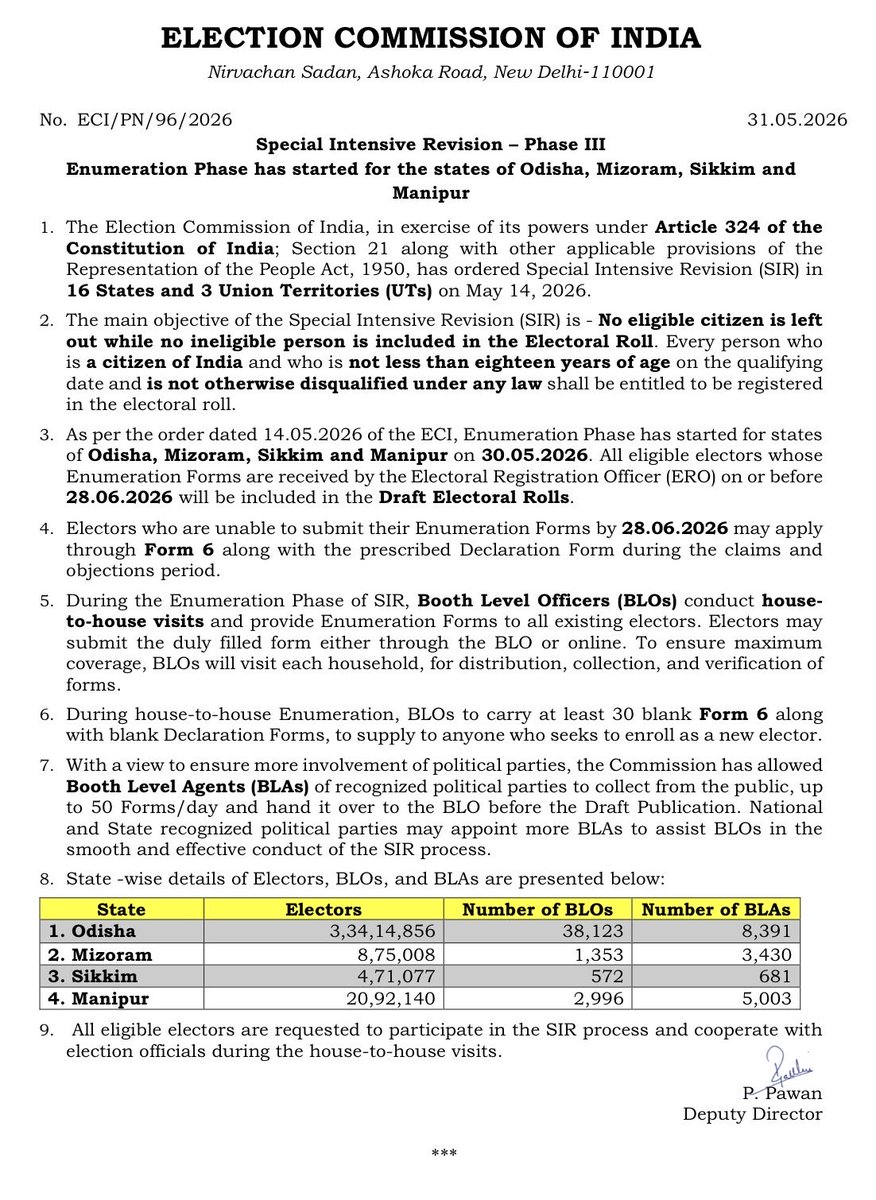
The Election Commission of India (ECI) has formally launched the enumeration phase of the Special Intensive Revision (SIR) of electoral rolls in Odisha, Mizoram, Sikkim and Manipur, marking the beginning of Phase III of one of the country's largest voter verification exercises. The latest phase is expected to cover nearly 3.7 crore electors across the four states and forms part of a much larger nationwide revision programme that will eventually verify the eligibility of over 36 crore voters across multiple states and Union Territories.
The exercise began on May 30, 2026, following the Election Commission's notification issued on May 14, under which Phase III of the SIR was scheduled to be conducted in a staggered manner across 16 states and three Union Territories. The poll body has said the revision is aimed at ensuring that electoral rolls remain accurate, updated and compliant with constitutional requirements governing voter eligibility.
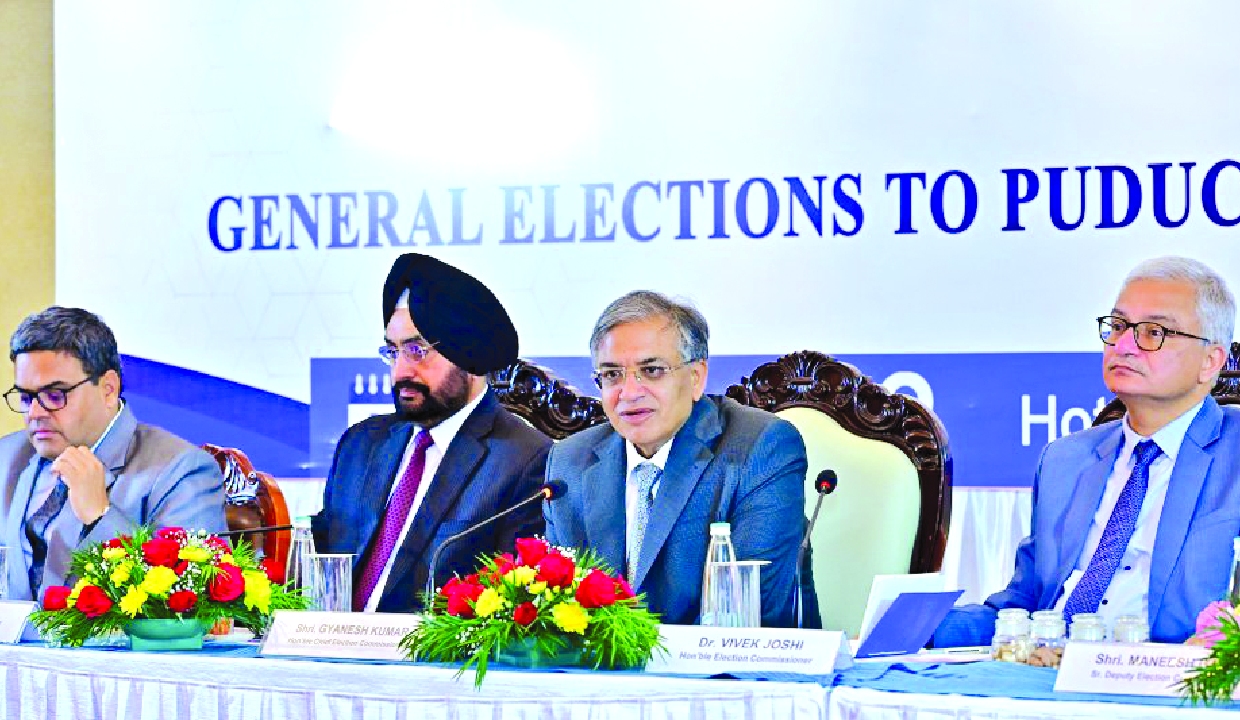
What Is the Special Intensive Revision?
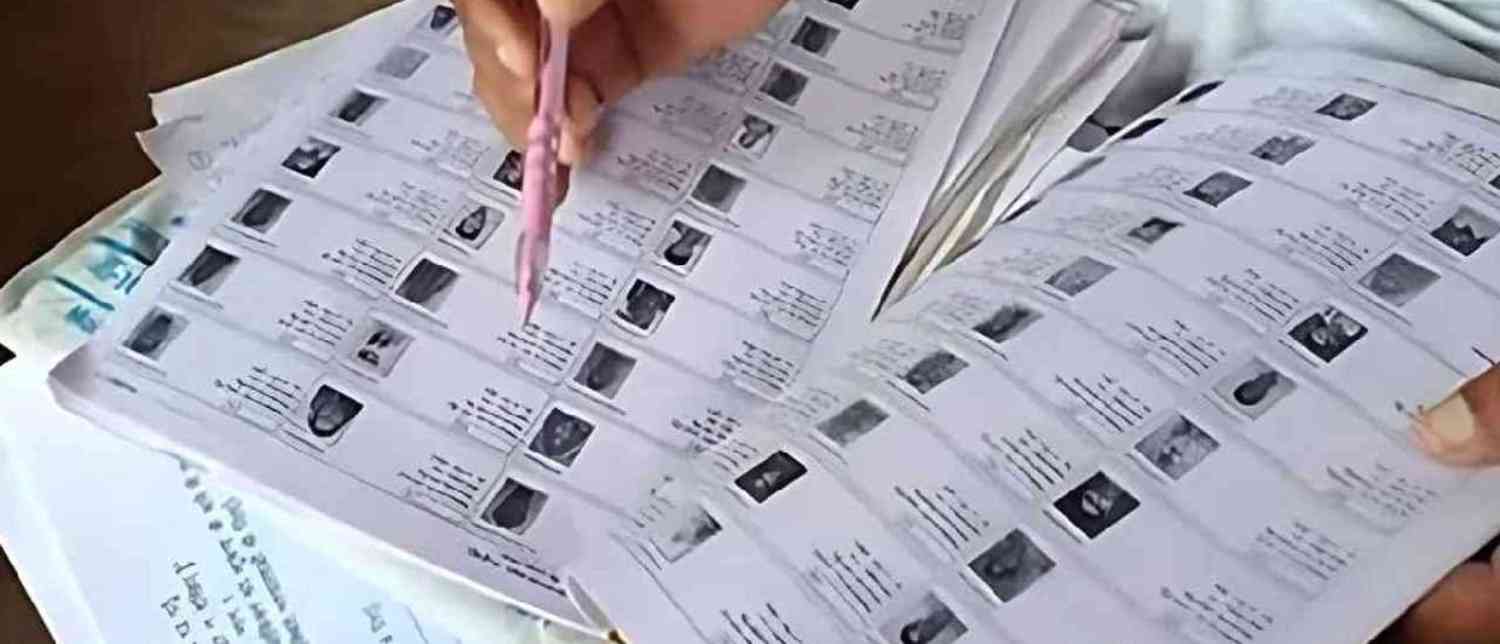
The Special Intensive Revision is a comprehensive verification exercise undertaken by the Election Commission to update electoral rolls and remove inaccuracies. Through the process, election authorities verify whether registered voters continue to satisfy the eligibility conditions laid down under Article 326 of the Constitution, which grants voting rights to Indian citizens aged 18 years and above who are not otherwise disqualified under any law.
According to the Election Commission, the revision seeks to ensure that voter lists remain free from duplication, inaccuracies and ineligible entries while also providing an opportunity for eligible citizens to be included in the rolls. The exercise is being conducted through a combination of field verification, form submission and scrutiny by electoral officials.
Enumeration Phase Begins Across Four States
With the launch of the enumeration phase, Booth Level Officers (BLOs) have started door-to-door visits across Odisha, Mizoram, Sikkim and Manipur. During these visits, BLOs will distribute enumeration forms, collect completed forms from electors and verify the details furnished by them.
The Election Commission has appealed to voters to cooperate with officials during the verification process and participate actively in the revision exercise. Officials have emphasized that the success of the programme depends heavily on citizen participation and timely submission of forms.
The poll body has clarified that all eligible electors whose enumeration forms are received by the concerned Electoral Registration Officers (EROs) on or before June 28, 2026, will be included in the draft electoral rolls prepared under the revision process.
Deadline and Inclusion Process
The Election Commission has fixed June 28, 2026, as the key deadline for submission of enumeration forms in the four states currently covered under the exercise.
Voters who complete the process before the deadline will have their names considered for inclusion in the draft electoral rolls. However, the Commission has also provided a mechanism for those who may miss the deadline. Electors unable to submit enumeration forms by June 28 will still be able to apply through Form 6, accompanied by the prescribed declaration form, during the claims and objections period that follows publication of the draft rolls.
The provision is intended to ensure that eligible voters are not excluded merely because they failed to complete the enumeration stage within the specified timeframe.
Phase III: A Massive National Exercise
While the current focus is on Odisha, Mizoram, Sikkim and Manipur, the Election Commission has already announced a much larger Phase III rollout covering 16 states and three Union Territories.
The broader revision programme will be implemented in phases across Odisha, Mizoram, Sikkim, Manipur, Uttarakhand, Andhra Pradesh, Arunachal Pradesh, Haryana, Telangana, Punjab, Karnataka, Meghalaya, Maharashtra, Jharkhand, Nagaland and Tripura. In addition, the exercise will also cover three Union Territories, including the National Capital Territory of Delhi.
According to Election Commission estimates, the larger Phase III exercise will involve verification of approximately 36.7 crore to 37.7 crore electors, making it one of the most extensive electoral roll revision programmes undertaken in recent years.
Ground-Level Machinery Mobilised
To execute the massive revision drive, the Election Commission has mobilised a large administrative network consisting of Electoral Registration Officers, Assistant Electoral Registration Officers and Booth Level Officers.
BLOs are at the forefront of the process and have been tasked with conducting house-to-house verification, distributing forms, collecting responses and assisting citizens with the enrolment and verification procedures. The field-level verification mechanism is designed to help identify changes in voter status and ensure that electoral rolls accurately reflect the eligible voting population.
Earlier announcements by the Commission indicated that lakhs of ground-level election personnel would be deployed across participating states and Union Territories to carry out the exercise efficiently.
Focus on Electoral Integrity
Election officials have repeatedly stressed that the Special Intensive Revision is intended to strengthen electoral integrity and maintain the credibility of voter lists.
The Commission has maintained that accurate electoral rolls are essential for conducting free and fair elections. By verifying voter eligibility through intensive field-level scrutiny, authorities aim to ensure that only eligible citizens remain on electoral rolls while facilitating inclusion of qualified voters who may not currently be registered.
The verification process also aligns with constitutional provisions governing elections and voter eligibility, reinforcing the legal framework underpinning India's electoral system.
Public Participation Crucial
The Election Commission has urged voters in Odisha, Mizoram, Sikkim and Manipur to engage actively with the revision process. Citizens have been encouraged to submit forms promptly and cooperate with officials during door-to-door visits.
Electors can provide their completed forms through Booth Level Officers and, where permitted, through online mechanisms made available by election authorities. The Commission believes active public participation will help complete the exercise smoothly and ensure that eligible citizens are reflected accurately in the final voter rolls.
Political Attention on the Exercise
The voter roll revision programme has attracted significant political attention in several states. In Odisha, Leader of Opposition and former Chief Minister Naveen Patnaik publicly participated in the process and emphasized that the democratic rights of every citizen should remain protected during the revision exercise.
As electoral rolls form the foundation of the democratic process, revisions of this scale often draw scrutiny from political parties, civil society groups and voters alike. Election authorities have maintained that the process will be conducted according to established legal procedures and constitutional requirements.
What Happens Next?
The ongoing enumeration phase will continue until the June 28 deadline for submission of forms in the four states currently under implementation. Following verification and scrutiny of the received data, draft electoral rolls will be prepared and published.
After publication of draft rolls, a claims and objections period will allow eligible voters to seek corrections, additions or modifications. Those who were unable to participate during the enumeration phase will also have an opportunity to apply through Form 6 and the prescribed declaration process.
With nearly 3.7 crore electors set to be covered in Odisha, Mizoram, Sikkim and Manipur alone, the current phase represents a significant milestone in the Election Commission's broader effort to update and verify voter databases across India. As the nationwide rollout progresses through additional states and Union Territories, the exercise is expected to play a key role in shaping the electoral rolls that will underpin future elections across the country.
With inputs from agencies
Image Source: Multiple agencies
© Copyright 2026. All Rights Reserved. Powered by Vygr Media.