
 By
By 
NEET Isn't Broken. It Was Built This Way.
By every measurable standard, NEET has succeeded. It has unified medical admissions across India, standardized eligibility criteria, and created a single benchmark for millions of aspirants. Yet, if success is measured by what happens to the people inside the system, the story is starkly different. Behind every rank list lies a generation battling anxiety, financial strain, parental expectations, and an education ecosystem that increasingly resembles an industry rather than a public service.
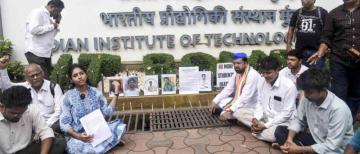
Every year, discussions around NEET erupt only when a paper leak, result controversy, or administrative lapse grabs headlines. The debate quickly narrows to tighter security, better invigilation, or stronger punishment for those responsible. These are necessary conversations, but they barely scratch the surface. Even a perfectly leak-proof examination would still leave untouched the deeper structural problems that have transformed India's largest medical entrance examination into an exhausting psychological marathon for more than 22 lakh students.
The real crisis is not confined to the examination hall. It begins years before students pick up their admit cards and often continues long after the results are declared.
The Coaching Economy That Replaced School Education
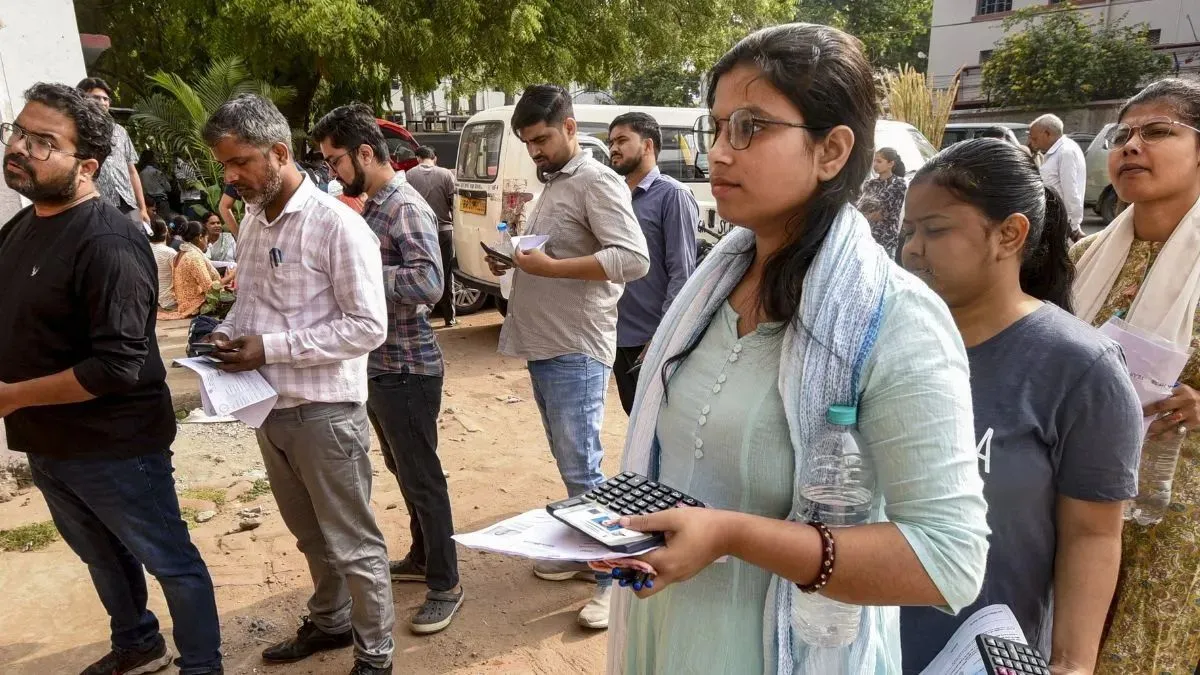
One of NEET's biggest paradoxes is that it is officially based on the NCERT curriculum—books available to every student in the country. In theory, this should make the exam accessible to anyone willing to study sincerely. In reality, success has become heavily dependent on expensive coaching institutes.
Over the past decade, a parallel education economy worth nearly ₹58,000 crore has emerged around a single examination. Kota became its symbol, but similar coaching hubs now exist across India. Students spend years memorizing shortcuts, solving endless mock papers, and chasing marginal score improvements, often at the cost of school education itself.
The consequence is obvious. Merit increasingly reflects access to coaching rather than access to quality education. Students from affluent urban families begin the race with specialized mentors, AI-powered test analysis, and years of structured preparation. Meanwhile, students from rural government schools struggle with teacher shortages, inadequate laboratories, and limited academic support.
An examination meant to equalize opportunity has quietly become a filter for economic privilege.
When Medicine Stops Being a Calling
Equally troubling is the cultural obsession surrounding medicine itself.
For countless Indian families, becoming a doctor is no longer merely a career choice. It has become a symbol of security, prestige, and social mobility. Parents often see an MBBS degree as insurance against economic uncertainty, encouraging children to pursue medicine regardless of their interests or aptitude.
This shifts the motivation dramatically. What should be an individual academic aspiration becomes a family project loaded with emotional expectations and financial sacrifices. Teenagers begin carrying the burden of fulfilling not only their own dreams but also the aspirations of parents and grandparents.
The emotional consequences are severe. Failure is no longer interpreted as an examination result; it becomes a perceived failure toward the entire family.
No competitive examination should possess that kind of emotional power.
The Human Cost of the 'Drop Year'
Perhaps no feature of the NEET ecosystem is more normalized than the drop year.
For many aspirants, repeating the examination once—or even multiple times—has become routine. Entire years are spent inside coaching hostels where every waking hour revolves around biology diagrams, chemistry reactions, and physics numericals.
These are years that should otherwise be spent discovering interests, building friendships, developing communication skills, or exploring careers. Instead, students exist in suspended animation, preparing for a single examination whose acceptance rate hovers around five percent.
The psychological consequences are immense. Isolation, chronic stress, comparison, and uncertainty slowly erode confidence. Repeated failures often create learned helplessness—the belief that effort no longer influences outcomes.
By the time many students leave the NEET ecosystem, they have gained examination expertise but lost valuable years of personal development.
A Test That Doesn't Fully Measure a Doctor
Medicine demands knowledge. But it demands much more than knowledge.
Doctors communicate difficult diagnoses, comfort grieving families, make ethical decisions under uncertainty, and remain calm in emergencies. Compassion, resilience, emotional intelligence, and critical thinking are as essential as scientific understanding.
Yet NEET primarily evaluates speed, recall, and pattern recognition. The ability to identify the correct answer among four options within seconds is undoubtedly useful, but it is hardly sufficient to predict who will become an empathetic physician.
Many countries supplement academic testing with assessments of judgment, reasoning, ethics, and interpersonal skills. India's selection process remains overwhelmingly dependent on memorization and multiple-choice accuracy.
The examination is selecting excellent test-takers. That is not necessarily the same as selecting excellent doctors.
The Silent Mental Health Emergency
Statistics tell only part of the story.
Student suicides linked to competitive examinations have become distressingly frequent, particularly in coaching hubs like Kota. Behind every tragedy lies an invisible ecosystem of relentless expectations, financial pressure, isolation, and fear.
Mental health support remains largely reactive instead of preventive. Counselling services are inconsistent, often underqualified, and rarely integrated into the preparation process itself.
Parents suffer alongside students. Years of savings disappear into coaching fees, hostel expenses, and repeated attempts. Every mock test becomes a family event. Every score influences household conversations. Every rumour about paper leaks or re-examinations amplifies collective anxiety.
The trauma extends far beyond individual candidates. It affects entire families.
Beyond Paper Leaks
The controversies following recent examination cycles exposed something deeper than administrative failure.
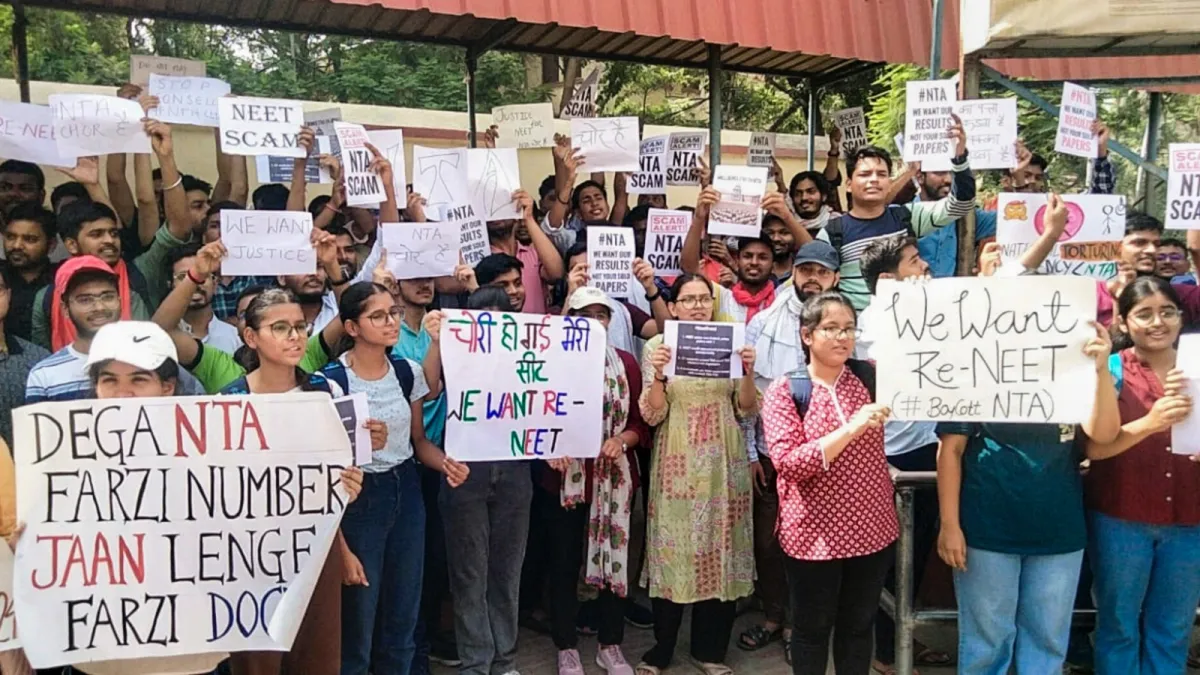
Even before entering examination halls, students carried memories of leaked papers, changing answer keys, legal disputes, and questions about institutional credibility. The result was a profound erosion of trust.
Preparation itself became psychologically different. Instead of believing that consistent effort would eventually produce success, many students prepared with a lingering fear that external factors might ultimately determine their fate.
When trust in institutions weakens, stress multiplies. The issue is no longer academic competition alone. It becomes an emotional contest against uncertainty itself.
The Myth of Only One Successful Career
Another overlooked failure lies in India's narrow definition of success.
The healthcare ecosystem extends far beyond MBBS. Nursing, physiotherapy, radiology, occupational therapy, laboratory sciences, public health, psychology, biotechnology, and physician assistance are all essential professions.
Yet public perception continues to reduce healthcare careers to a simple binary: MBBS or failure. This mindset funnels millions of students into one entrance examination while countless equally valuable professions remain overlooked.
Career counselling could fundamentally change this landscape. Students deserve realistic information about opportunities, employability, earnings, and personal suitability rather than being pushed into a singular national obsession.
Not every brilliant biology student must become a doctor. Many could become exceptional healthcare professionals in different capacities.
Reform Must Go Beyond Security
Strengthening examination security is essential, but it is only one piece of the solution.
India must expand quality medical education capacity, regulate the coaching industry, invest in government schools, strengthen career counselling, integrate mental health support into preparation, and redesign assessments to evaluate aptitude alongside knowledge.
Equally important is changing the national conversation around success.
Parents, educators, policymakers, and society must stop treating a medical seat as the sole measure of intelligence or worth. Children are not investment portfolios. Their futures cannot be reduced to percentile rankings.
A System Worth Healing
NEET was created to simplify admissions and promote fairness. Those remain worthy goals. But somewhere along the way, the examination became larger than education itself.
It now shapes childhoods, dictates family finances, fuels an enormous coaching economy, and determines the emotional well-being of millions.
India undoubtedly needs more doctors. It also needs doctors who enter the profession because they genuinely want to heal—not because they survived an industrial-scale elimination process.
The tragedy of NEET is not merely that it is stressful. Every competitive examination is. The tragedy is that the stress has become systemic, commercialized, and normalized to the point where emotional exhaustion is accepted as the price of ambition.
An entrance examination should identify talent, not consume it.
Until policymakers begin treating student well-being as seriously as examination integrity, every new reform will remain cosmetic. A stronger lock may protect the question paper, but it cannot repair a system that has confused endurance with merit and trauma with excellence.
India's future doctors deserve a better beginning than this.
With input from agencies
Image Source: Multiple agencies
© Copyright 2026. All Rights Reserved. Powered by Vygr Media.