
 By
By 
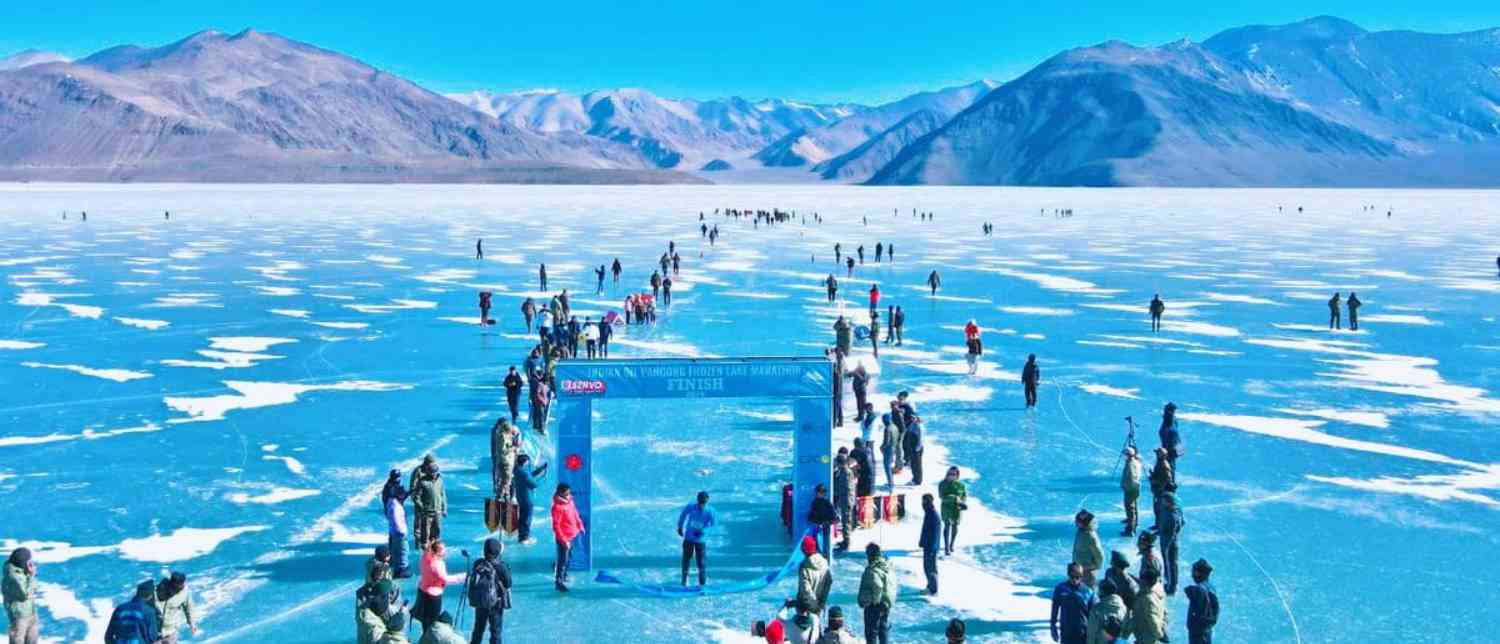
In a landmark moment for high-altitude sports and sustainable tourism, the Union Territory of Ladakh etched its name in history by successfully hosting the world’s highest frozen lake half marathon at Pangong Tso. Conducted in sub-zero temperatures at a staggering altitude of 13,862 feet, the 21-kilometre trail run was officially registered in the Guinness World Records as the “Highest Altitude Frozen Half Marathon.”
This extraordinary feat not only celebrated human endurance but also spotlighted climate awareness, winter tourism potential, and economic opportunities for border villages in eastern Ladakh.
A Historic First: Guinness World Record at 13,862 Feet
The maiden 21-km frozen lake half marathon unfolded on the icy surface of Pangong Tso, a breathtaking 700-square-kilometre saltwater lake that stretches across the border of India and China. During winter, temperatures in the region plummet to minus 30 degrees Celsius, causing the lake to freeze into a vast sheet of solid ice.
The four-hour-long marathon began at Lukung and concluded at Maan village, with all 75 participants completing the race without any reported injuries. Leh District Development Commissioner Shrikant Balasaheb Suse confirmed the successful execution of the event, emphasizing the meticulous planning and safety measures that ensured a smooth race despite extreme conditions.
Named the “Last Run,” the marathon was conceptualized to raise awareness about climate change and the urgent need to preserve the fragile Himalayan ecosystem. Following the successful completion of the race, Guinness officials issued an official certificate recognizing it as the highest altitude frozen lake half marathon in the world.
A Collective Effort: Organisers and Support System
The marathon was organised by the Adventure Sports Foundation of Ladakh (ASFL) in collaboration with the Ladakh Autonomous Hill Development Council (Leh), the Tourism Department of Ladakh, and the Leh district administration.
The event was flagged off by Chief Executive Councillor Tashi Gyalson, who later celebrated the achievement publicly, describing it as a milestone inspired by the Prime Minister’s Vibrant Villages Programme for border regions.
The initiative was not merely a sporting event; it was strategically aligned with the central government’s Vibrant Villages Programme aimed at strengthening infrastructure, tourism, and livelihood opportunities in remote border areas.
Safety First: Acclimatisation, Medical Checks, and Emergency Preparedness
Conducting a marathon on a frozen lake at nearly 14,000 feet demands exceptional safety protocols. Authorities ensured that every participant underwent a six-day acclimatisation process—four days in Leh and two days in Pangong—following Standard Operating Procedures set by the district administration.
Each runner was medically examined to confirm fitness levels before being cleared to participate. The race route itself was finalised only after thorough inspections of the ice layer’s thickness and stability.
Five energy stations were strategically placed along the route, offering energy drinks, medical support, and oxygen facilities. Mobile ambulances were stationed for rapid response.
Medical centres along the route were fully equipped with trained personnel and emergency equipment. The Indian Army and the Indo-Tibetan Border Police (ITBP) provided critical medical and logistical support. Additionally, personnel from the Union Territory Disaster Response Force and the Ladakh Mountain Guide Association were deployed to ensure runner safety.
Participants were required to wear specialized safety gear to prevent slipping on the icy surface, reflecting the administration’s commitment to zero-compromise safety standards.
Felicitations and Prize Distribution
Upon completion of the marathon, runners were honoured with medals and certificates. Cash prizes were awarded to first, second, and third-place finishers in both men’s and women’s categories.
The successful execution of the event, combined with official Guinness recognition, marked a significant achievement for Ladakh’s adventure sports ecosystem.
#WATCH | Pangong Frozen Lake Marathon 2026 concluded at the Pangong Tso lake in Leh, Ladakh, at an altitude of 14,272 feet. (25.02) pic.twitter.com/Nef4VtOIg9— ANI (@ANI) February 25, 2026
Pangong Frozen Lake Marathon 2026: Expanding the Vision
Building on the historic Guinness record event, the fourth edition of the Pangong Frozen Lake Marathon 2026 concluded successfully at Pangong Lake, further reinforcing Ladakh’s status as a premier destination for winter tourism and high-altitude adventure sports.
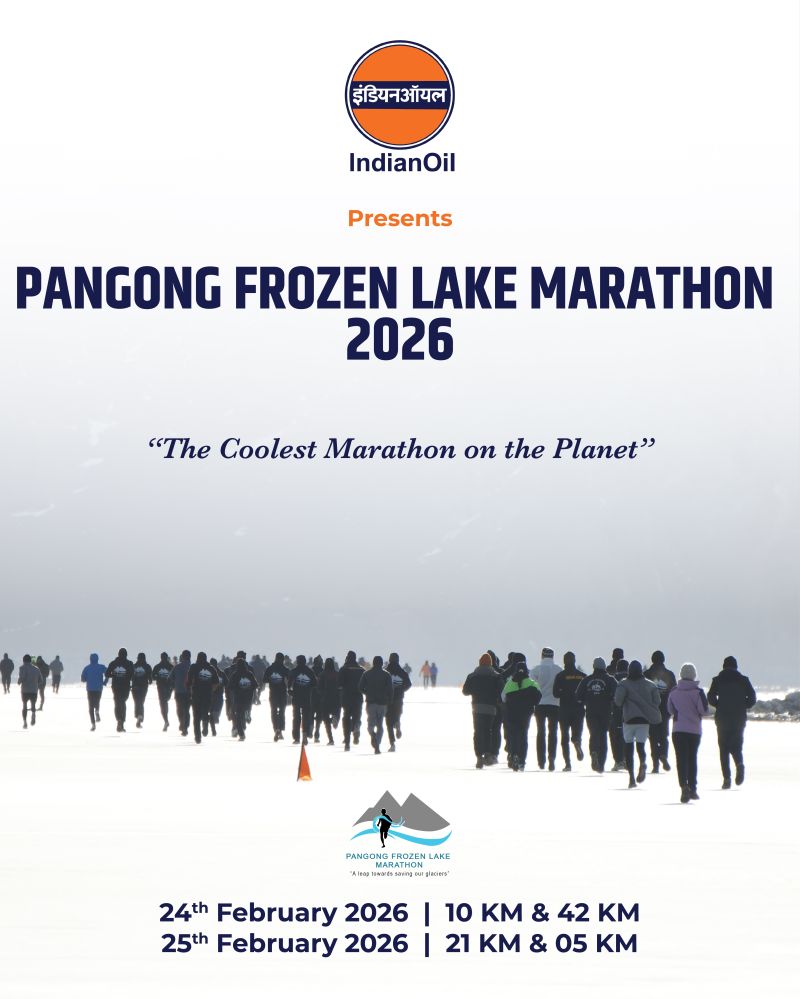
Held at an altitude of 14,272 feet above sea level, the two-day sporting spectacle took place on February 24 and 25 under extreme temperatures ranging between –15°C and –17°C.
Recognised globally as one of the highest and most challenging frozen lake races, the 2026 edition attracted 460 runners from 21 Indian states, along with international participants from the United Arab Emirates, Nepal, and Australia.
Community Participation and Organising Bodies
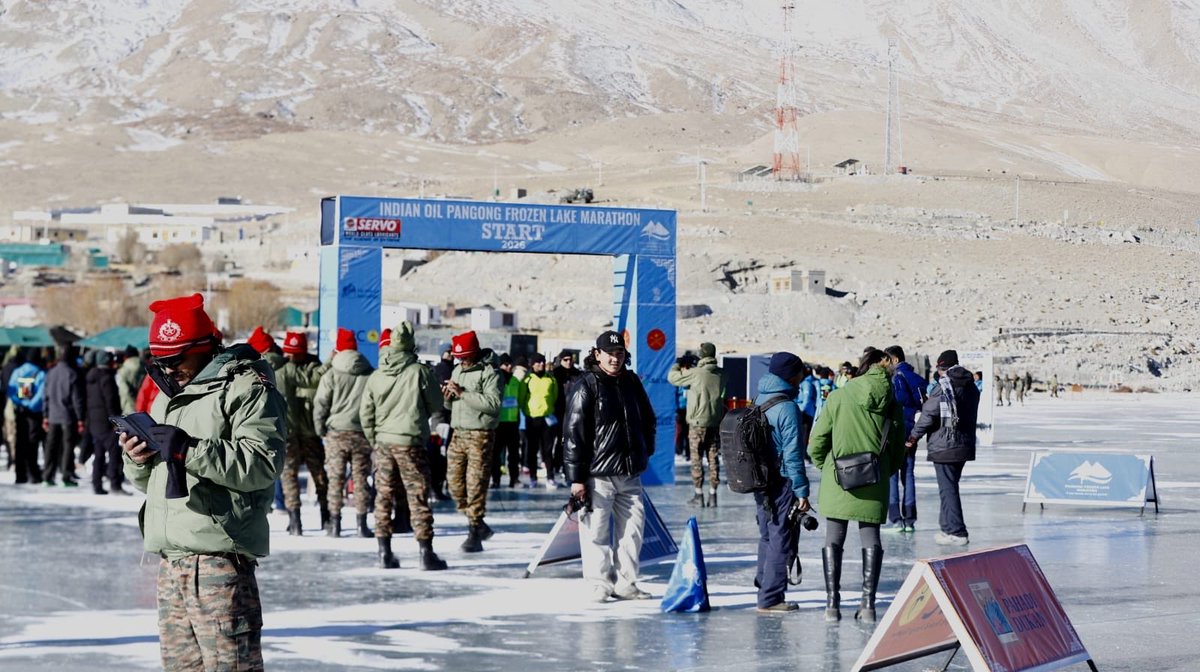
The marathon was organised by Thin Ice Adventures in collaboration with the Union Territory Administration of Ladakh and the Indian Army. The race commenced at 8:30 am from Maan village, flagged off by Durbuk Sub-Divisional Magistrate Mohammad Ismail and Commander Jagdish M.R. of the 114 Brigade.
The presence of Indian Army personnel, ITBP officials, local residents, and children from nearby villages added a powerful community dimension to the event, transforming it into a celebration of resilience and unity.
Race Categories and Participation Breakdown
The 2026 marathon featured multiple race categories over two days:
Day One Events:
-
10-km race: 186 participants
-
42-km full marathon: 46 participants
Women athletes made a strong impact, with 16 competitors in the 10-km category and six in the full marathon.
Day Two Events:
-
21-km half marathon
-
5-km race
The shorter categories saw enthusiastic participation from local youth alongside visiting runners.
Winners and Standout Performances
The competition showcased remarkable endurance across categories:
42-km Men’s Category
-
1st: Tsering Nurboo
-
2nd: Tsering Stobgais
-
3rd: Khadim Hussain
10-km Open Women
-
1st: Yeshi Sangdol (1:08:34)
-
2nd: Tashi Dolkar
-
3rd: Rinchen Dolkar
10-km Open Men
-
1st: Mehboob Ali (0:45:01)
-
2nd: Rinchen Gurmet
-
3rd: Jigmet Stobdan
21-km Open Women
-
1st: Nima Lhamo
-
2nd: Ishey Dolkar
-
3rd: Tsering Latso
21-km Open Men
-
1st: Tsetan Namgyal
-
2nd: Tashi Namgail
-
3rd: Sarfaraz Hussain
5-km Open Women
-
1st: Tsewang Dolma
-
Podium finishers: Dawa Chuzin and Rafket Dolma
5-km Open Men
-
1st: Kunchok Dhargyal
-
Podium finishers: Sonveer Singh and Rohit
These results reflected the increasing competitiveness and popularity of high-altitude winter racing in the region.
Scientific Backing and Environmental Assessment
Given the fragile ice conditions and unpredictable Himalayan weather, organisers adopted a science-backed approach to safety.
Teams from the National Disaster Response Force (NDRF) and UTDRF conducted detailed inspections of ice thickness before and during the race. Additionally, a scientific study based on 15 years of weather data was carried out in collaboration with the Indian Institute of Astrophysics to analyse environmental patterns and ensure safe execution.
This integration of science, disaster management, and adventure sports exemplified a responsible model for extreme sporting events in ecologically sensitive regions.
Boosting Winter Tourism and Local Economy
Race Director Chamba Tsetan, an accomplished ice hockey player, revealed that the marathon was launched in 2023 to promote winter tourism in Ladakh—a season traditionally marked by minimal visitor activity due to harsh weather.
Inspired by the Antarctica Marathon, the Pangong Frozen Lake Marathon has rapidly evolved into a major winter attraction.
The event has significantly boosted economic activity in the Changthang region of Eastern Ladakh. Homestays have seen increased bookings, local youth have found seasonal employment opportunities, and community participation has transformed the typically quiet winter months into a vibrant sporting season.
The initiative aligns with broader goals of sustainable tourism, encouraging responsible travel while generating livelihoods for residents of remote border villages.
A Symbol of Endurance, Awareness, and Opportunity
From setting a Guinness World Record for the highest frozen lake half marathon to hosting an internationally recognised multi-category winter race, Ladakh has demonstrated how adventure sports can intersect with environmental consciousness and economic empowerment.
The Pangong Frozen Lake Marathon is more than a race—it is a statement of resilience against extreme conditions, a call to protect the Himalayas from climate change, and a blueprint for sustainable winter tourism in high-altitude regions.
As temperatures plunge and the lake freezes each winter, Pangong Tso now stands not only as a natural wonder but also as a global stage for one of the world’s most challenging endurance events—an achievement that continues to redefine Ladakh’s identity on the international adventure tourism map.
With inputs from agencies
Image Source: Multiple agencies
© Copyright 2025. All Rights Reserved. Powered by Vygr Media.