
 By
By 
In one of India's most significant enforcement actions against deceptive online design practices, the Central Consumer Protection Authority (CCPA) has imposed penalties totalling nearly ₹20 lakh on nine digital platforms for using so-called "dark patterns"—interface designs that manipulate or mislead users into making decisions they may not have intended.
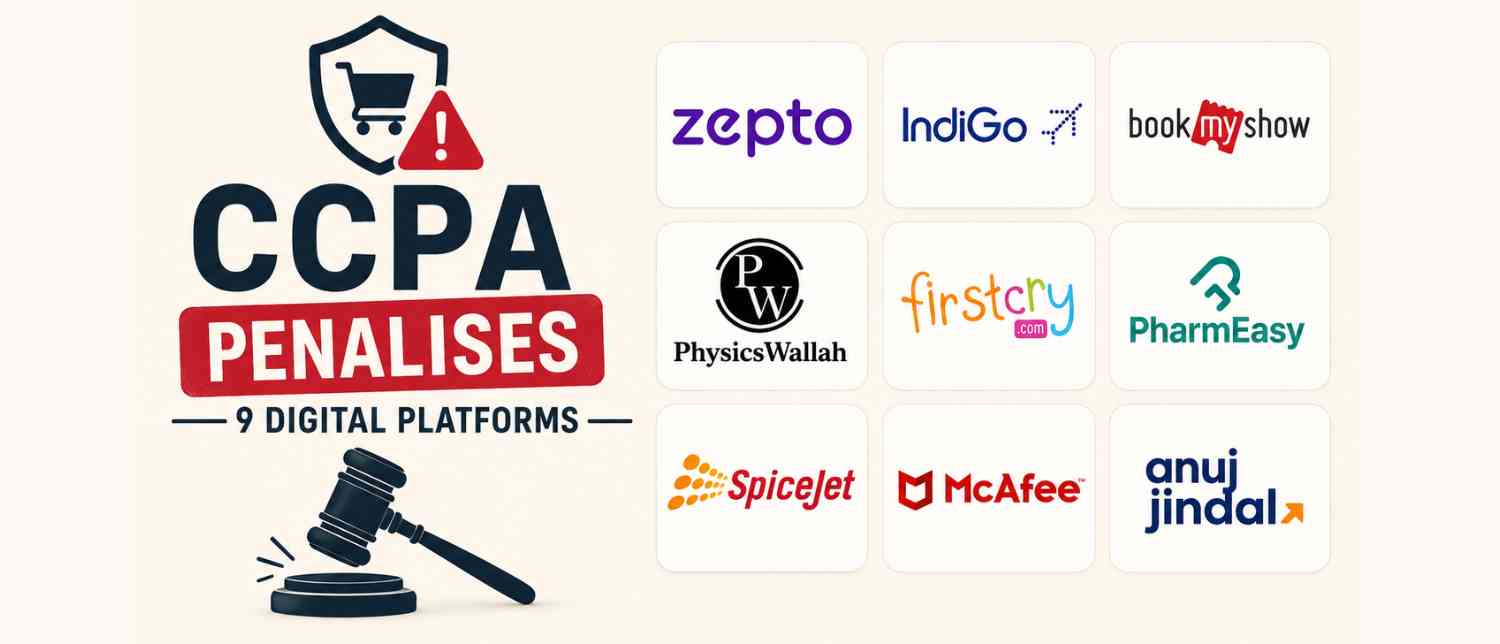
The action, disclosed by the government in a written reply in the Rajya Sabha, targets companies operating across sectors including quick commerce, aviation, ticketing, edtech, healthcare and e-commerce. Among those facing regulatory action are Zepto, IndiGo, BookMyShow, PhysicsWallah, FirstCry, PharmEasy, SpiceJet, McAfee Software India, and coaching platform Anuj Jindal. The regulator has also directed the companies to discontinue the identified practices and make their digital interfaces more transparent.
The crackdown marks a decisive shift in India's approach to digital consumer protection, signalling that misleading interface designs will now attract regulatory scrutiny alongside traditional unfair trade practices.

What are dark patterns?
Dark patterns are user interface designs deliberately created to influence or manipulate consumers into taking actions they might not otherwise choose. These may include hidden charges added during checkout, pre-selected subscriptions or donations, misleading countdown timers, guilt-inducing messages, or confusing options that discourage users from declining paid services.
India formally addressed the issue through the Guidelines for Prevention and Regulation of Dark Patterns, 2023, which identify 13 prohibited practices, including drip pricing, basket sneaking, confirm shaming, false urgency, subscription traps, interface interference, bait and switch, trick questions and disguised advertisements. The rules operate alongside the Consumer Protection Act, 2019, and the Consumer Protection (E-Commerce) Rules, 2020.
Zepto receives the highest penalty
Among the companies penalised, Zepto Marketplace received the largest monetary penalty of ₹7 lakh.
According to the government, the quick-commerce platform displayed product prices initially but added handling charges later during checkout, a practice classified as drip pricing. The regulator also found that a membership fee was automatically added to customers' carts without explicit consent, amounting to basket sneaking.
The government informed Parliament that the company has since removed these practices from its platform.
PhysicsWallah fined over pre-selected donations
Edtech platform PhysicsWallah was fined ₹5 lakh after the CCPA took suo motu cognisance of certain practices on its platform.
The regulator found that a ₹10 donation to the PW Foundation was pre-selected during checkout, requiring users to actively deselect it if they did not wish to contribute. The platform also displayed emotionally persuasive messages encouraging users to retain the donation, which the authority considered an attempt to influence consumer choice.
Additionally, the CCPA objected to the company's requirement that users submit personal details before accessing courses advertised as "free", concluding that the mandatory collection of user information was not necessary for accessing the content.
The company has deposited the penalty and discontinued the identified practices, according to the government.
IndiGo, BookMyShow and others directed to modify interfaces
Not every case centred on financial penalties alone. In several instances, the regulator's primary objective was to ensure companies redesigned interfaces that could influence consumer behaviour.
IndiGo faced action over a form of confirm shaming. Customers declining an optional add-on during flight booking were previously presented with the phrase "No I will take risk." Following regulatory intervention, the airline replaced it with the more neutral option, "No, I will not add to the trip," allowing users to opt out without being psychologically pressured.
Similarly, BookMyShow was directed to remove a pre-selected ₹1 contribution towards its charitable initiative, BookASmile. Since the contribution was automatically added unless users manually removed it, the regulator treated it as another instance of basket sneaking.
Other companies also penalised
Besides Zepto and PhysicsWallah, the CCPA also acted against several other digital platforms.
FirstCry was fined ₹2 lakh over pricing-related practices, while PharmEasy, McAfee Software India, and SpiceJet were each fined ₹1 lakh. Coaching platform Anuj Jindal received a penalty of ₹3 lakh for allegedly using misleading countdown timers that created false urgency among prospective students.
The cases collectively covered a wide range of dark patterns, including hidden charges, pre-selected memberships, manipulative renewal prompts, misleading urgency claims and emotionally persuasive interface designs.
Government steps up enforcement
The government informed the Rajya Sabha that consumer protection authorities have been strengthening enforcement against deceptive online practices since the notification of the Dark Pattern Guidelines in November 2023.
As part of these efforts, the CCPA issued an advisory in June 2025, asking e-commerce companies and digital platforms to conduct self-audits to identify and eliminate dark patterns from their websites and applications.
The regulator has since reviewed compliance and initiated enforcement wherever violations were detected, collecting nearly ₹20 lakh in penalties from companies found to have breached the guidelines.
The government also highlighted that 1,853 companies have voluntarily joined the National Consumer Helpline's Convergence Programme, enabling them to respond directly to consumer complaints and provide updates on grievance resolution.
Why the crackdown matters
The latest enforcement action reflects a broader evolution in digital consumer protection. Regulators are increasingly examining not only what companies sell but also how digital platforms influence purchasing decisions through interface design.
Practices such as automatically adding optional products, delaying the disclosure of charges until checkout, making cancellation difficult or using emotionally loaded language can all affect a consumer's ability to make informed decisions.
The CCPA's actions suggest that digital businesses will now be expected to design user experiences that prioritise transparency and explicit consent rather than maximising conversions through psychological manipulation.
Industry observers say the enforcement could encourage companies to review everything from subscription flows and pricing displays to donation prompts and insurance add-ons, ensuring that optional purchases genuinely remain optional.
What consumers should watch for
The government's action also serves as a reminder for consumers to pay close attention while shopping or booking services online.
Users should review checkout pages carefully for automatically selected memberships, donations or add-on services, verify whether additional charges appear late in the payment process, and be cautious of countdown timers or messages that create unnecessary pressure to complete a purchase immediately.
The CCPA has made it clear that consumer consent must be explicit, informed and free from manipulation, and that digital platforms cannot rely on confusing or deceptive interface designs to influence purchasing decisions.
A stronger message to India's digital economy
The penalties imposed on nine prominent digital platforms underline the government's intention to move beyond issuing guidelines and towards active enforcement of digital consumer rights.
While the cumulative financial penalties are relatively modest, the broader significance lies in the regulator's insistence that companies redesign their platforms to eliminate deceptive practices. As India's digital economy continues to expand across e-commerce, travel, education and financial services, businesses are likely to face greater scrutiny over how they present choices, obtain consent and communicate pricing.
For consumers, the crackdown promises a more transparent online experience. For digital platforms, it serves as a clear warning that growth strategies built on manipulative interface design may increasingly attract regulatory action rather than customer conversions.
With input from agencies
Image Source: Multiple agencies
© Copyright 2026. All Rights Reserved. Powered by Vygr Media.