 By
By 
India's food safety regulator has initiated one of its most significant actions against the alcoholic beverages industry, barring the sale of select variants of some of the country's most recognisable liquor brands over alleged violations of food safety norms.
The Food Safety and Standards Authority of India (FSSAI) has prohibited the sale of specific whisky and rum products manufactured by companies including United Spirits (Diageo India), INBREW Beverages and Mohan Rocky Springwater. The regulator claims laboratory investigations found these products contained artificial or "nature-identical" flavouring substances that imitate the inherent taste and aroma of whisky or rum.
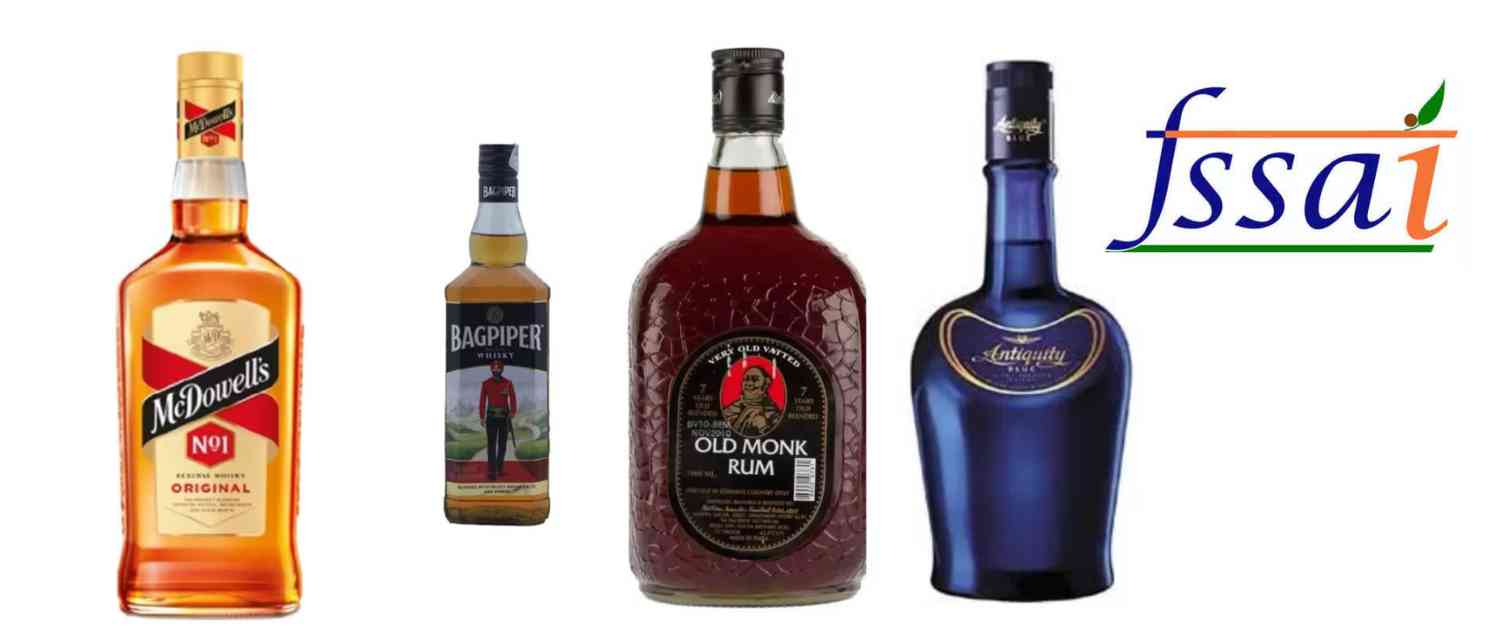
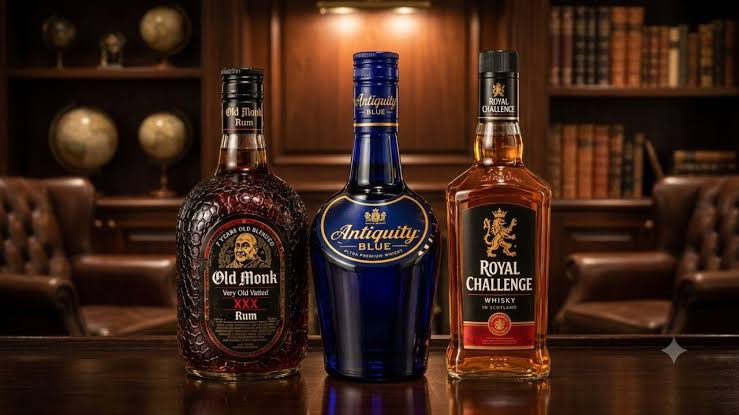
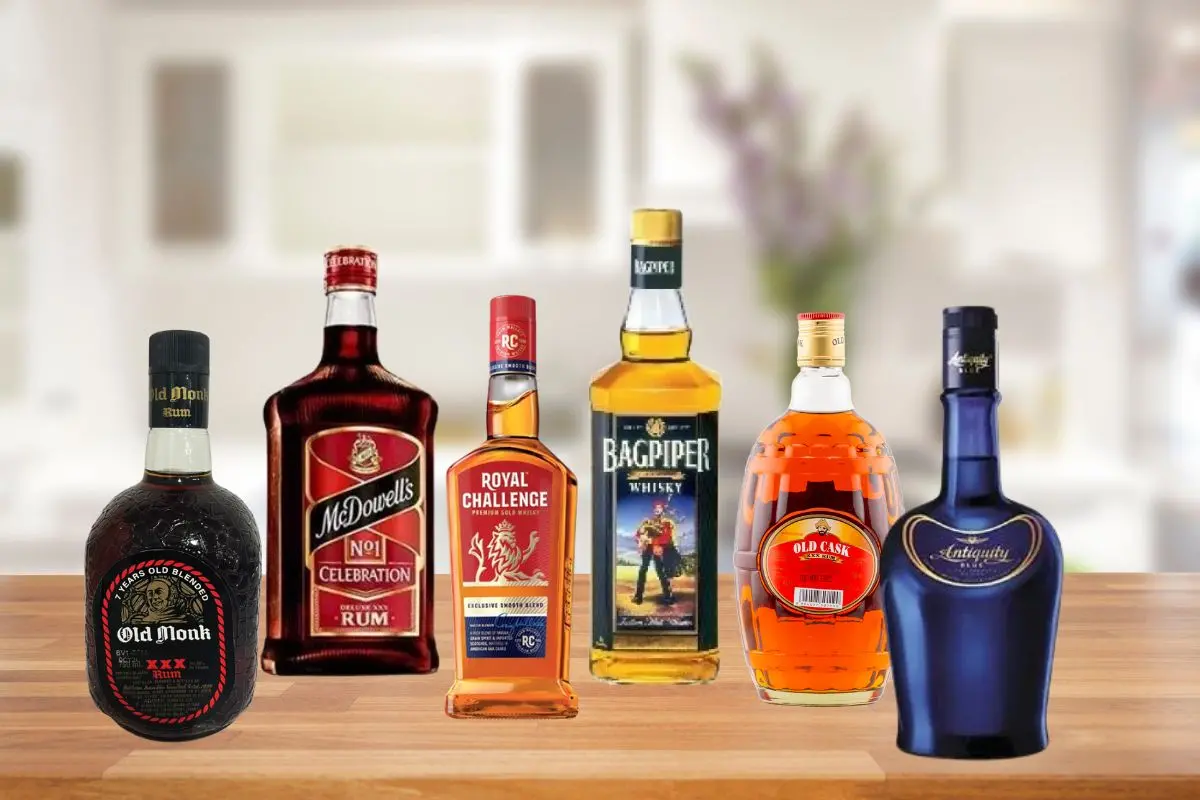
The action affects well-known brands such as Old Monk, Royal Challenge, Antiquity Blue, McDowell's No. 1 Rum, Bagpiper Deluxe Whisky and Old Cask Deluxe XXX Rum. While these brands have enjoyed widespread popularity among Indian consumers for decades, the regulator says certain variants failed to comply with prescribed manufacturing standards.
The move is being viewed as a major regulatory intervention that could reshape quality standards and manufacturing practices across India's multi-billion-dollar alcoholic beverages market.
Why has FSSAI banned these liquor brands?
The core issue revolves around the use of artificial flavouring substances.
According to FSSAI, some manufacturers allegedly added flavour compounds that recreate the characteristic aroma and taste of the spirit itself—for example, whisky flavour in whisky or rum flavour in rum.
The regulator argues that such practices are inconsistent with internationally accepted manufacturing methods.
In its official observations, FSSAI noted that there is no recognised global manufacturing practice that permits producers to add rum flavour to rum or whisky flavour to whisky. Instead, the authentic taste and aroma of these beverages are expected to develop naturally through fermentation, distillation, maturation and ageing.
Laboratory analysis reportedly found that some products contained external artificial or nature-identical flavouring agents that masked the natural flavour profile, leading the regulator to classify them as "substandard" under applicable food safety regulations.
Why does flavouring matter?
For consumers, the distinction may appear minor, but for regulators it goes to the heart of product authenticity.
Traditional whisky and rum derive their flavour through carefully controlled production processes involving natural ingredients such as malt, molasses or grains, followed by maturation in wooden barrels over varying periods.
FSSAI believes the addition of artificial flavouring that imitates the finished product enables manufacturers to shortcut this natural process while delivering a similar sensory experience.
The regulator argues that such practices may reduce reliance on ageing and natural raw materials while allowing products to resemble genuinely matured spirits.
This, according to FSSAI, can mislead consumers about the true nature and quality of the beverage they are purchasing.
Which liquor brands have been affected?
The current action covers select products manufactured at specific facilities.
The affected brands include:
-
Antiquity Blue Whisky
-
Royal Challenge Whisky
-
McDowell's No. 1 Rum (specific production units)
-
Bagpiper Deluxe Whisky
-
Old Cask Deluxe XXX Rum
-
Old Monk The Legend
-
Old Monk Gold Reserve
-
Old Monk XXX Matured Rum
Reports indicate that these products were manufactured at facilities located in Madhya Pradesh and Maharashtra that were inspected by FSSAI.
Importantly, regulators have not clearly stated whether the restrictions apply to every bottle sold nationwide or only to products originating from the identified manufacturing units.
That distinction remains one of the biggest unanswered questions for consumers and retailers.
The controversy surrounding Old Monk
Among all the affected brands, Old Monk has attracted the most public attention.
The iconic dark rum has remained one of India's most beloved alcoholic beverages for decades and enjoys a loyal consumer base across generations.
Apart from concerns over flavouring, reports suggest regulators also questioned certain age-related representations associated with some Old Monk variants.
According to regulatory findings cited in multiple reports, the "XXX Matured Rum" branding and references to ageing may not accurately reflect the composition of the final product because neutral spirit constitutes the overwhelming majority of the blend, while genuinely matured rum forms only a small proportion.
FSSAI believes such representations may not fully align with labelling standards governing alcoholic beverages.
Is artificial flavouring completely prohibited?
Not necessarily.
The issue is not the use of every flavouring substance.
Under existing food safety regulations, several natural flavouring agents remain permissible in alcoholic beverages. Ingredients that introduce flavours such as vanilla, coffee or spices may still be allowed depending on the applicable standards.
The regulator's objection specifically concerns flavouring substances that imitate the very identity of the spirit itself.
To explain the issue, FSSAI compared the practice to adding tea flavour to tea or coffee flavour to coffee instead of allowing those products to develop their own inherent characteristics naturally.
According to the authority, products relying on such additions should instead be marketed as flavoured alcoholic beverages rather than conventional rum or whisky.
Industry pushes back
The affected companies have not accepted the regulator's conclusions without challenge.
United Spirits, the Indian subsidiary of global liquor giant Diageo, has stated that its product labels comply with existing laws and regulations.
The company has argued that the concerns raised by FSSAI represent a broader industry issue rather than isolated violations.
Diageo has also approached the courts to challenge at least one of the regulatory orders relating to its products and is expected to contest additional directives.
Industry executives have also reportedly expressed concern that the interpretation adopted by FSSAI differs from long-standing manufacturing practices followed within the Indian liquor sector.
The legal outcome of these challenges could significantly influence future regulation of alcoholic beverages in India.
Could more brands face action?
Possibly.
Reports indicate that FSSAI has issued notices to several additional liquor manufacturers as part of the same enforcement exercise.
Some inspections have already taken place at other manufacturing facilities, while more companies are reportedly under scrutiny.
This suggests the regulator's latest action is not limited to a handful of brands but may represent the beginning of a broader compliance drive across the industry.
Part of a wider regulatory crackdown
The liquor industry is not the only sector witnessing increased regulatory oversight.
Over the past few months, FSSAI has intensified enforcement across multiple categories of food and beverages.
Recent actions have included scrutiny of misleading "100%" claims on packaged consumer products and directives relating to the labelling of high-caffeine beverages marketed as energy drinks.
Taken together, these measures indicate a stronger regulatory focus on truthful labelling, consumer transparency and compliance with food safety standards.
Officials maintain that the objective is to ensure consumers receive products that accurately represent their composition and manufacturing process.
What does this mean for consumers?
For consumers, the immediate impact may vary depending on location.
Since alcohol regulation in India involves both central and state authorities, availability could differ based on state-level implementation and the manufacturing source of individual products.
Retailers may temporarily remove affected batches while manufacturers respond to regulatory directions or pursue legal remedies.
However, experts note that the regulator has not alleged that the products pose an immediate health hazard. Instead, the issue primarily concerns compliance with manufacturing standards, product classification and consumer disclosure.
In other words, the current action is centred on authenticity and regulatory compliance rather than toxicity or contamination.
What happens next?
Several questions remain unanswered.
Among them are:
-
Will the ban eventually apply nationwide or remain limited to specific production units?
-
Will manufacturers reformulate products or modify labels?
-
How will the courts interpret existing food safety regulations?
-
Will additional liquor brands face similar action?
The coming weeks are likely to provide greater clarity as companies respond to regulatory notices, legal proceedings progress and FSSAI continues its inspections.
Given the popularity of the affected brands and the size of India's alcoholic beverages market—estimated at around $40 billion annually—the outcome of this dispute could have long-term implications for manufacturing standards, labelling practices and consumer expectations across the industry.
Bottom line
FSSAI's action against select variants of Old Monk, Royal Challenge, Antiquity Blue, McDowell's No. 1 Rum, Bagpiper Deluxe Whisky and other products marks one of the most high-profile interventions in India's liquor industry in recent years.
The regulator maintains that the affected products were manufactured using artificial or nature-identical flavouring that substitutes for authentic maturation, making them "substandard" under existing regulations. Manufacturers, meanwhile, dispute the interpretation and have begun challenging the orders through legal channels.
As investigations continue and courts examine the dispute, the episode is expected to shape future standards governing alcoholic beverage manufacturing, labelling and quality compliance in India. For consumers, it also serves as a reminder that regulatory scrutiny is increasingly focused not only on product safety but also on ensuring that labels and manufacturing practices accurately reflect what is inside the bottle.
With input from agencies
Image Source: Multiple agencies
© Copyright 2026. All Rights Reserved. Powered by Vygr Media.