 By

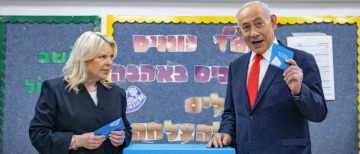
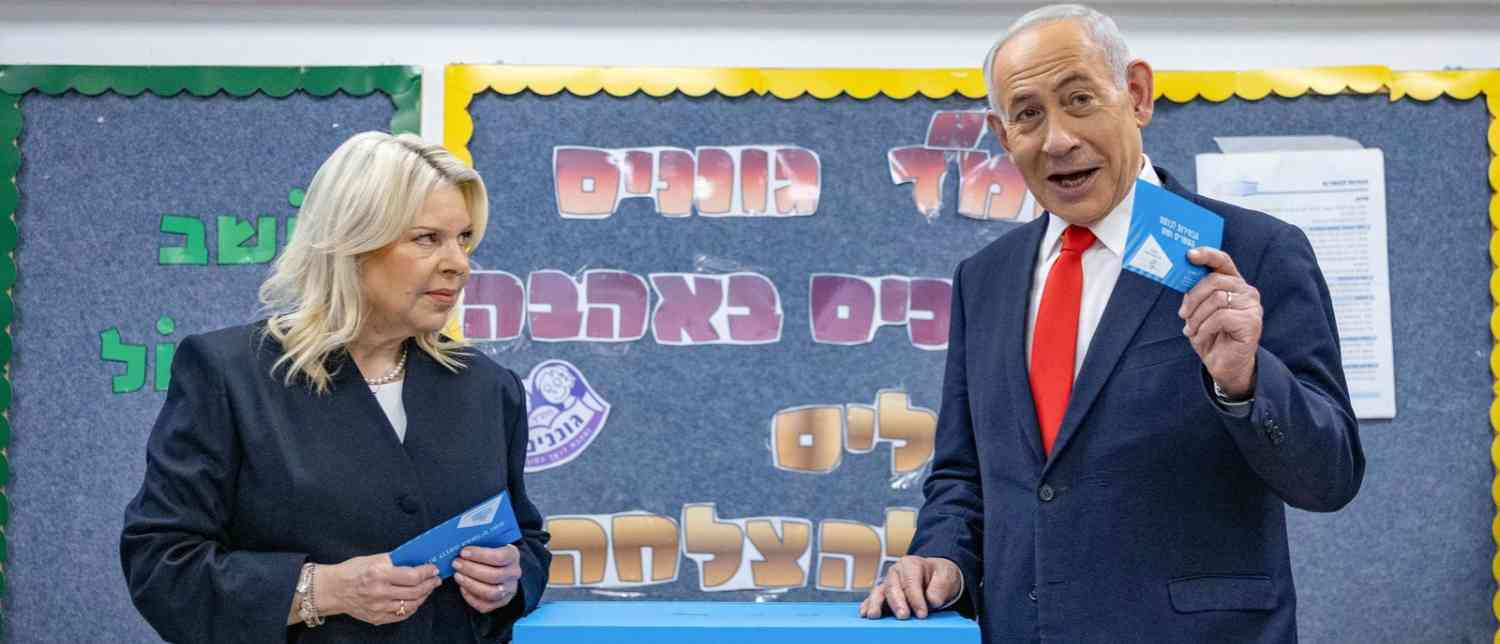
Israel’s October 27, 2026, election is about far more than the political survival of Benjamin Netanyahu. After years of war, deepening domestic divisions, questions over the October 7 security failures and growing international scrutiny, voters are confronting a larger question: what direction should Israel take next?
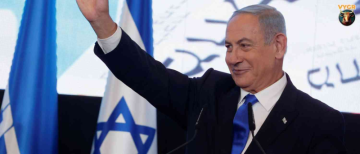
Netanyahu, Israel’s longest-serving prime minister, enters this contest facing a fragmented political landscape. The opposition hopes to end his tenure, but replacing a prime minister is not the same as building a government. With opinion polls suggesting that neither major bloc may secure an outright parliamentary majority, smaller parties, particularly Arab-led political parties, could play a decisive role in determining who governs.
The stakes extend well beyond one election. The outcome could influence Israel’s democratic institutions, relations with the Palestinians, military and diplomatic strategy, economic confidence, and relationships with its principal international partners.
Yet one distinction deserves attention: a change of government does not automatically mean a change of national policy. Israel’s political future will depend not only on who leaves office, but also on who forms the next coalition and what compromises that coalition is prepared to make.
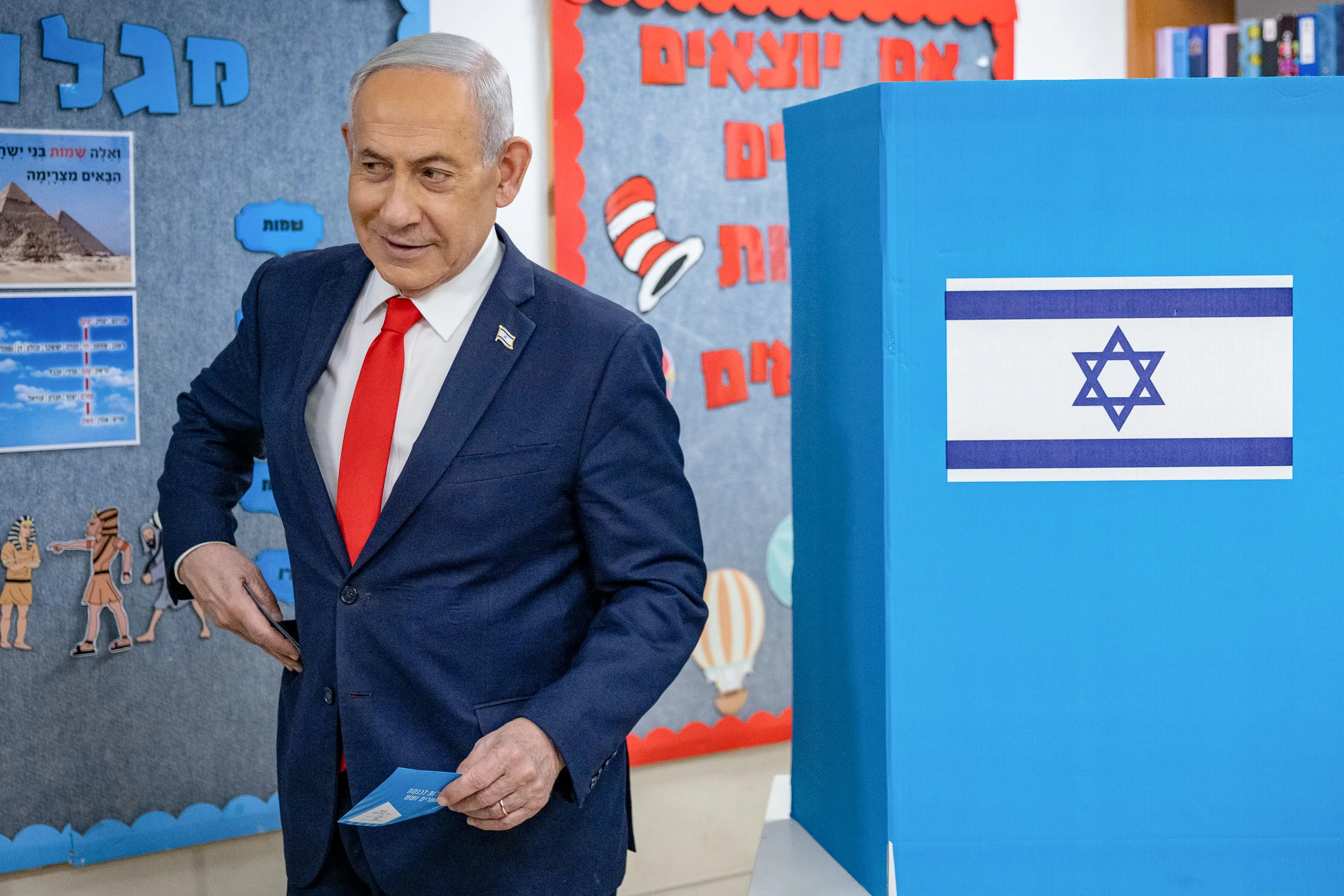
Israel Elections 2026: Why Netanyahu’s Political Future Is at Stake
The October 2023 Hamas-led attack fundamentally altered Israel’s political and security environment. The attack exposed serious failures in the country’s security preparedness and raised questions about the government’s ability to protect its citizens.
Since then, Netanyahu’s leadership has remained under intense scrutiny. Critics have demanded accountability for the security breakdown, questioned the government’s handling of the subsequent wars and called for an independent investigation into the events of October 7.
These concerns have intersected with other controversies, including judicial reform, settlement expansion in the occupied West Bank, the conduct of far-right coalition partners and Netanyahu’s ongoing corruption trial.
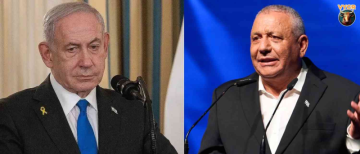
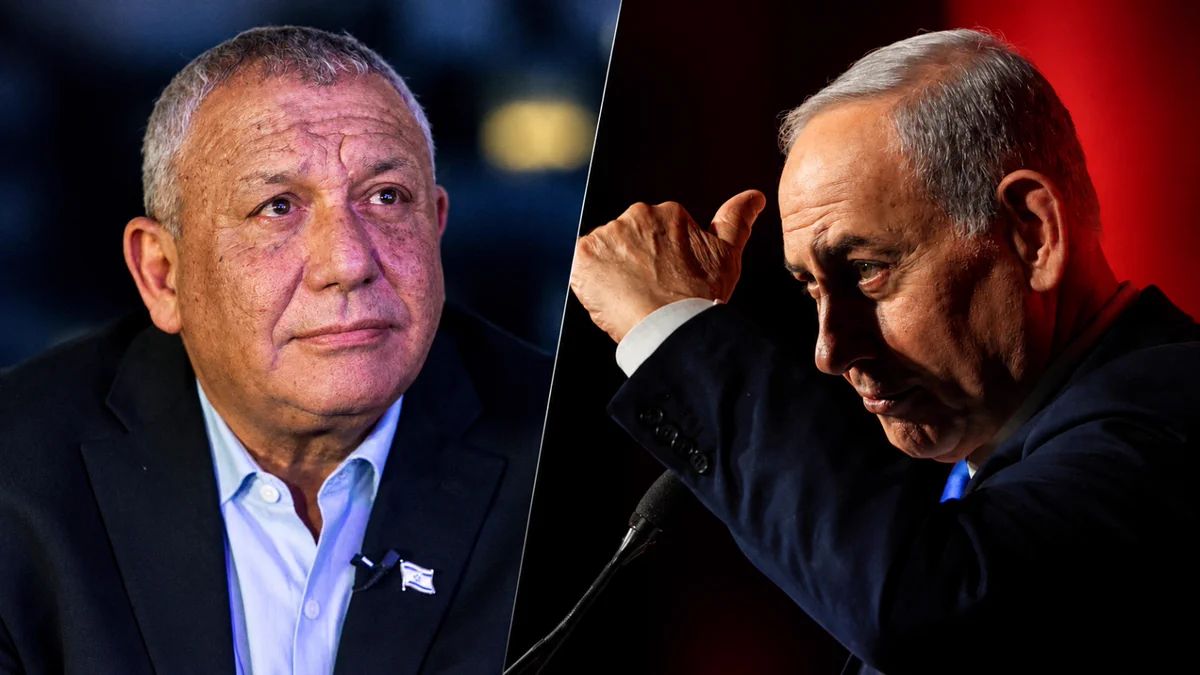
For the opposition, the election presents an opportunity to argue that Israel needs a different governing approach. Former military chief Gadi Eisenkot has emerged as a prominent challenger, drawing on his security credentials and positioning himself within a broad opposition movement.
However, Netanyahu’s political difficulties should not be mistaken for a guaranteed defeat. His Likud party retains an established political base, and his allies among religious and nationalist parties have their own constituencies and policy priorities.
The central question is whether these groups can collectively secure the parliamentary support required to govern.
That uncertainty makes the Israel election 2026 a test of both Netanyahu’s political resilience and the opposition’s ability to convert public dissatisfaction into a workable alternative.
Why Israel’s Electoral System Makes Coalition Politics Crucial
Unlike countries where the largest party can often govern with a relatively straightforward parliamentary advantage, Israel’s proportional representation system makes coalition-building central to the formation of a government.
Voters choose political parties rather than directly electing the prime minister. The 120-member Knesset, Israel’s parliament, requires the support of at least 61 lawmakers for a governing majority.
This creates a political reality in which winning the most votes does not necessarily mean winning the right to govern.
A party can emerge as the largest parliamentary force but still struggle to assemble enough allies. Meanwhile, a smaller party can gain considerable influence if its seats become essential to reaching the 61-member threshold.
The system also makes electoral thresholds important. Parties that fail to secure the required share of votes do not enter parliament, potentially changing the balance between rival political blocs.
Consequently, the final outcome may depend as much on coalition negotiations as on election-night results.
If neither Netanyahu’s allies nor the opposition can secure a majority independently, negotiations could become prolonged and politically complicated. Parties may demand influential ministries, policy concessions or agreements over the distribution of executive power.
A hung parliament could therefore leave Israel facing weeks of uncertainty, even after voters have delivered a clear message about their preferences.
This is the central complication of Netanyahu’s election battle: removing an incumbent politically and constructing a viable government are two very different challenges.
Arab Parties Could Become the Kingmakers in Israel’s Election
One of the most consequential dimensions of the election is the potential influence of Arab-led political parties representing Palestinian citizens of Israel.
Arab citizens constitute roughly one-fifth of Israel’s population, yet their political representation has frequently occupied a complicated position within national coalition politics. Their parties face questions about security, equality, public investment, discrimination and the future of Palestinian rights.
If the main Jewish-led political blocs fall short of a parliamentary majority, Arab-led parties could hold the balance of power.
Their influence would not necessarily require them to join a governing coalition or accept ministerial positions. They could instead provide external parliamentary support, helping an alternative government survive key votes without formally participating in the cabinet.
There is already a precedent. In 2021, the United Arab List, known as Ra’am, joined the coalition that brought together Naftali Bennett and Yair Lapid, helping end Netanyahu’s uninterrupted period in office at the time.
That experience demonstrated that Arab political representation can play a substantive role in determining Israel’s government.
However, the current situation presents a significant dilemma for the opposition. Some of its leaders have resisted depending on Arab parties, reflecting political sensitivities surrounding the October 7 attack, the war in Gaza and national security.
This reluctance could create a contradiction: opposition parties may seek to replace Netanyahu while rejecting the parliamentary cooperation required to achieve that objective.
Arab-led parties are not a single, unified political bloc. Their priorities and willingness to cooperate with Jewish-led parties differ. Any agreement would depend on the number of seats they win, the concessions available and whether cooperation delivers meaningful benefits for their voters.
Issues such as housing, municipal funding, public safety, employment opportunities and equal treatment could become important elements of negotiations.
The larger question is whether Arab political representation will be treated as a legitimate part of Israel’s democratic process or acknowledged only when parliamentary arithmetic makes it unavoidable.
Would Netanyahu’s Defeat Change Israel’s Domestic Politics?
A change in leadership could open the door to significant domestic reforms, but expectations need to remain realistic.
An alternative government could reconsider judicial reform, strengthen institutional oversight and establish a more credible process for investigating the October 7 security failures. It might also seek to reduce tensions between religious and secular communities, particularly over military service exemptions for ultra-Orthodox men.
These issues have become central to Israel’s internal political divisions.
For critics of Netanyahu’s governing coalition, the concern is not simply the concentration of political power but also the relationship between government authority, judicial independence and democratic accountability.
A new administration could attempt to rebuild trust by making institutional transparency and public accountability priorities.
However, coalition partners would have their own agendas. Centrist, right-wing and left-wing opposition parties do not agree on every constitutional, religious or economic question. Their shared opposition to Netanyahu may be sufficient to bring them together during an election, but sustaining a government would require more extensive compromises.
Judicial reform could remain contentious. So could military service requirements, religious education, welfare arrangements and the distribution of public spending.
The practical test of a post-Netanyahu government would therefore be whether it could turn a broad coalition into a coherent programme of governance.
Political change is possible, but it would depend on the strength of the coalition, the willingness of its members to compromise and the institutions available to hold the government accountable.
Gaza, the West Bank and Iran: What Would Change in Israel’s Foreign Policy?
The international consequences of Israel’s election are considerable, particularly because the country remains entangled in regional security conflicts.
Yet it would be misleading to assume that a new prime minister would automatically produce a dramatic change in Israeli foreign policy.
Security concerns command broad support across much of Israel’s political spectrum. Preventing Iran from acquiring nuclear weapons, limiting Hezbollah’s military capabilities and preventing renewed attacks by Hamas are priorities that extend beyond Netanyahu’s immediate political constituency.
An opposition government could therefore maintain a firm security posture even while changing its diplomatic approach.
The more meaningful differences might concern the relationship between military action and international diplomacy, coordination with allies, the treatment of Palestinians and the willingness to restrain extremist elements within Israeli politics.
In the West Bank, a different government might seek to curb settler violence, reconsider settlement-related policies and enforce the law more consistently. However, significant territorial concessions or a rapid return to comprehensive peace negotiations would face substantial domestic obstacles.
Gaza presents an even more difficult challenge. The devastation caused by the war, the future of Palestinian governance, reconstruction, security arrangements and the status of Hamas would confront any incoming administration.
The absence of a clear, widely supported political settlement remains a fundamental problem. Changing Israel’s leadership would not, by itself, resolve these questions.
Iran would remain another major concern. A new government might pursue closer diplomatic coordination with international partners, but it would still face difficult decisions about military deterrence, regional escalation and the risks of miscalculation.
The distinction is important: leadership change could alter the style, priorities and international coordination of Israeli policy without immediately transforming its underlying security doctrine.
Israel’s International Standing and Economic Confidence
Israel’s political direction also has consequences for its economic prospects.
The technology sector, international investment, financial relationships and access to overseas markets are sensitive to perceptions of stability and predictability. Prolonged conflict, diplomatic disputes and uncertainty over domestic institutions can increase the challenges facing businesses and investors.
Relations with European governments have deteriorated amid disagreements over the Gaza war and settlement policies. Israel’s traditionally bipartisan support in Washington has also faced pressure as domestic American political divisions increasingly shape discussions about the country.
A government seeking to repair these relationships could pursue more intensive diplomatic engagement, improve coordination with allies and attempt to reduce tensions with international institutions.
Such a reset could matter economically as well as diplomatically. Businesses benefit when political risks are manageable, international partnerships remain dependable and investors have confidence in the legal and institutional environment.
However, economic recovery cannot be guaranteed by a change of prime minister. Continued regional conflict, public expenditure pressures, security costs and domestic political instability could weigh on growth regardless of who leads the government.
Israel’s economic future will depend on the interaction between security, governance, investment and international relations.
A new administration could create opportunities to rebuild confidence, but it would need to demonstrate sustained policy consistency rather than rely on the symbolism of a leadership transition.
What Happens If Netanyahu Loses but the Opposition Cannot Form a Government?
This is perhaps the most important question surrounding the election.
Even if Netanyahu’s coalition falls short of a majority, the opposition may struggle to agree on an alternative administration. Its constituent parties differ over national identity, religious policy, judicial reform and cooperation with Arab-led parties.
If those disagreements prove insurmountable, Israel could enter a period of prolonged coalition negotiations. Alternative arrangements might include outside parliamentary support from Arab parties, defections from existing political blocs or agreements involving religious and centrist parties.
A temporary caretaker government could continue operating while negotiations proceed. If no viable majority emerges, another election could become necessary.
Such a scenario would expose the limits of an election fought primarily as a referendum on one individual.
An electorate can express dissatisfaction with an incumbent without agreeing on a replacement programme. Parties can unite around removing a prime minister while remaining divided over the policies that should follow.
For Israel, that distinction matters because the challenges facing the next government will require sustained decision-making, not merely a parliamentary majority assembled to defeat a rival.
The ability to form a government will be the first test. The ability to govern effectively will be the more consequential one.
Beyond Netanyahu: Will Israel’s Political Centre of Gravity Shift?
Israel’s election is an important moment, but its significance should be measured against what follows.
A Netanyahu defeat could change the composition of the governing coalition, the balance between religious and secular interests, the relationship between elected officials and judicial institutions, and the treatment of Arab political representation.
It could also create space for a different diplomatic approach to international partners and renewed scrutiny of policies affecting Palestinians.
But a new government would inherit the same regional dangers, many of the same domestic divisions and a deeply contested debate about national security.
Nor should an anti-Netanyahu vote automatically be interpreted as support for a two-state solution or a fundamental shift in the Israeli-Palestinian conflict. The opposition includes parties with differing positions, and security-focused politics remain influential across the political spectrum.
The more revealing question is whether Israel’s political centre of gravity moves towards institutional accountability, broader coalition-building and a more sustainable balance between security and diplomacy.
That shift would require more than replacing one leader. It would require political parties to make difficult compromises, democratic institutions to function credibly and the government to address the concerns of citizens who have felt excluded from the political process.
For Arab citizens, the election could test whether their parliamentary representation is recognised as an enduring part of democratic politics rather than a temporary instrument of coalition arithmetic. For Jewish opposition voters, it could test whether a diverse political movement can govern beyond its shared opposition to Netanyahu. For Israel’s international partners, it could reveal whether a new administration is prepared to pursue a different diplomatic course.
Ultimately, the October 27 election is not simply about whether Benjamin Netanyahu retains power. It is about what kind of political system emerges from years of conflict and division.
The decisive measure will not be the departure or survival of one prime minister. It will be whether Israel’s next government can deliver greater accountability, political stability and credible answers to the security and diplomatic challenges confronting the country.
That is the larger test facing Israel—and the one that will determine whether this election becomes a turning point or another chapter in its prolonged political deadlock.
© Copyright 2026. All Rights Reserved. Powered by Vygr Media.