
 By
By 
A major maritime drug-smuggling operation has been foiled in the Arabian Sea after the Indian Coast Guard, working with the Gujarat Anti-Terrorism Squad (ATS) and intelligence agencies, intercepted an Iranian dhow carrying approximately 526 kg of high-grade narcotics valued at more than ₹3,000 crore in the international market.
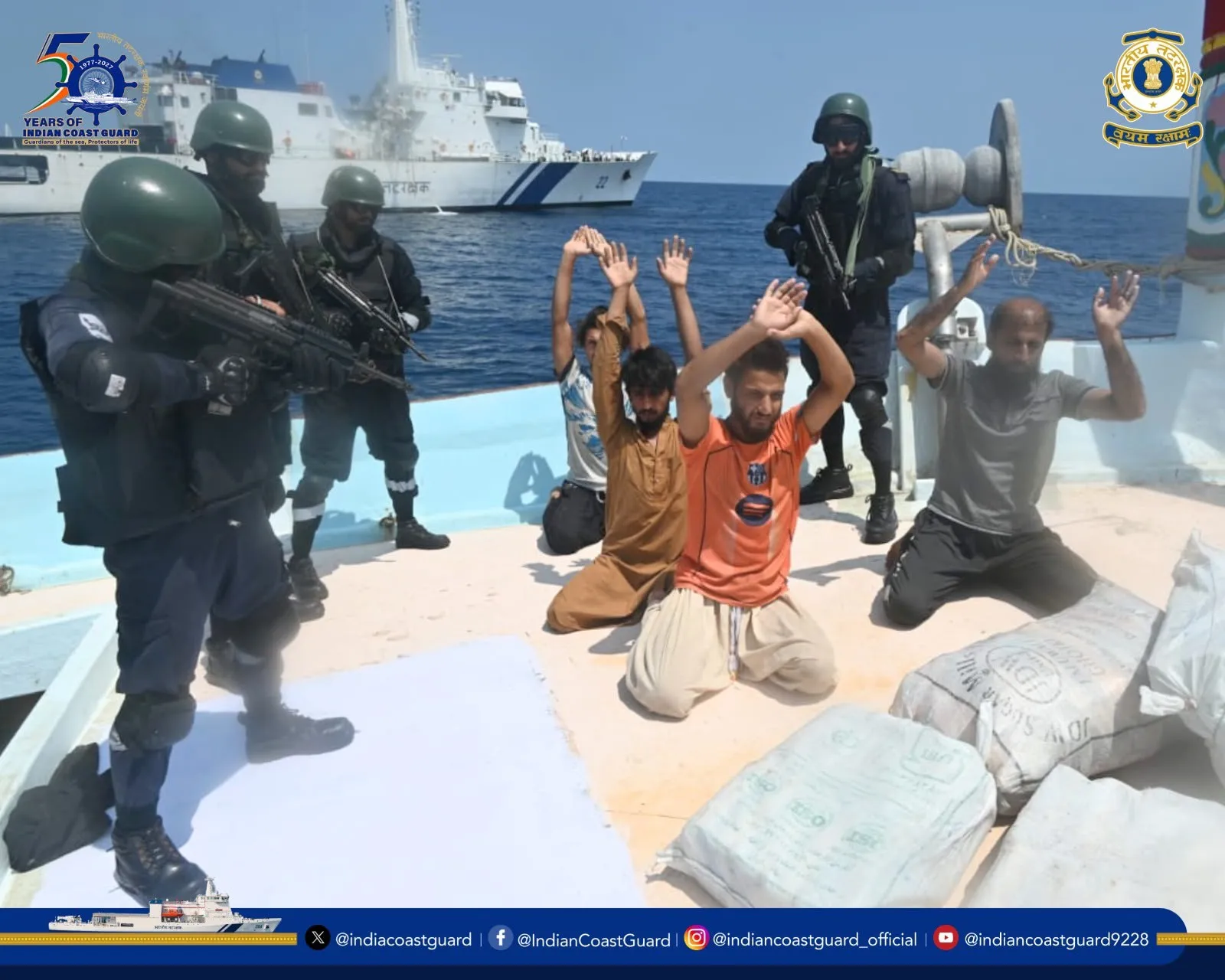
The operation, carried out west of Lakshadweep, also resulted in the apprehension of five Pakistani nationals who were operating the vessel. The seized consignment reportedly contained methamphetamine and heroin, two high-value narcotics that are frequently associated with international trafficking networks.
The Iranian boat, its crew and the seized drugs have since been brought to Mumbai under armed escort, where investigators are conducting joint questioning and pursuing further legal proceedings.
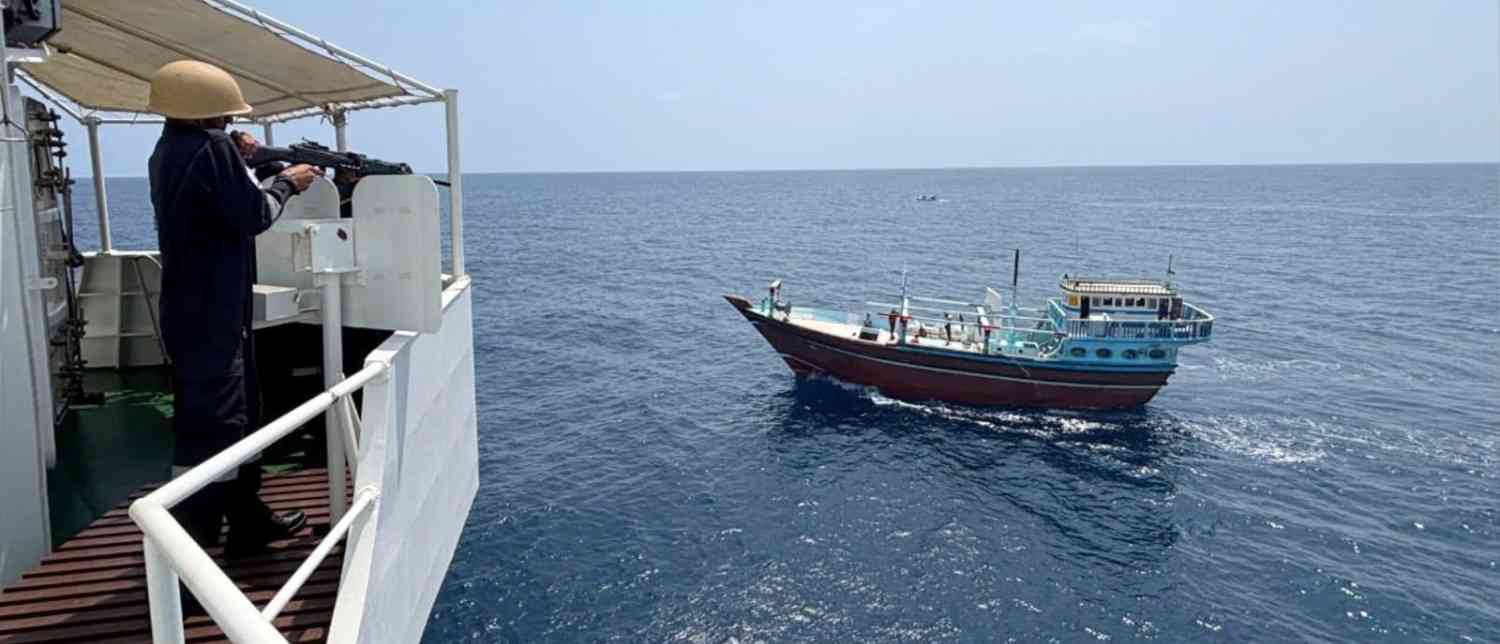
Indian Coast Guard Intercepts Iranian Dhow in Arabian Sea
The interception took place on September 25, 2026, following intelligence inputs about a suspected maritime narcotics-smuggling operation.
According to details released by the agencies, Coast Guard assets conducted sustained sea and air surveillance to identify and track the suspicious vessel. After maintaining surveillance, personnel launched a coordinated hot pursuit before boarding the Iranian dhow in the high seas.
The search of the vessel resulted in the recovery of approximately 526 kg of narcotics, comprising heroin and methamphetamine. Officials placed the value of the seized drugs at more than ₹3,000 crore in the international market.
The operation highlights the role of intelligence-led maritime surveillance in detecting suspicious vessels before large consignments of illegal drugs can reach India's coastline.
The five Pakistani nationals found aboard the Iranian boat were apprehended during the operation. Their identities and specific roles in the alleged smuggling network are subject to the ongoing investigation.
What Was Found on the Iranian Boat?
The drug haul consisted primarily of methamphetamine and heroin.
Later details emerging from the investigation indicated that the seizure included approximately 400 kg of methamphetamine and 126 kg of heroin. The combined quantity came to roughly 526 kg, with the drugs described as high-grade narcotics.
The enormous international-market valuation of the consignment has made the operation one of the significant recent narcotics interceptions in India's maritime domain.
Investigators are now examining where the drugs originated, who financed the shipment, who was supposed to receive the consignment and how the broader trafficking network operated across international and Indian waters.
How the Drug-Smuggling Operation Was Tracked
The operation was not a routine vessel check. It followed intelligence inputs that prompted agencies to monitor suspected maritime movements.
The Gujarat ATS and central intelligence agencies reportedly shared information regarding a planned narcotics shipment entering India through the sea route. Coast Guard surveillance assets were subsequently deployed to identify the suspected vessel.
The Iranian dhow was eventually tracked west of Lakshadweep. After sustained monitoring, the Coast Guard moved in and carried out the interception.
The sequence — intelligence gathering, sea-air surveillance, vessel tracking, hot pursuit and tactical boarding — allowed the agencies to stop the consignment before it could be transferred to another vessel or moved towards the mainland.
Once the operation was completed, the dhow, its crew and the narcotics were escorted to Mumbai under armed security.
Was the Drug Consignment Destined for India?
Investigators are examining the suspected route and intended destination of the drugs.
According to details emerging from the Gujarat ATS investigation, the consignment was allegedly being brought towards Indian waters with plans for a mid-sea transfer to a Tamil Nadu-based boat. The drugs were reportedly intended to be unloaded along the Tamil Nadu coast before being moved onward through smaller consignments.
Investigators are also examining alleged links involving individuals based in India and overseas.
One line of inquiry reportedly concerns a Nigerian national who allegedly met a wanted Gujarat-based accused in connection with the planned transaction. Investigators are also looking into the financial trail associated with the operation, including alleged payments routed through hawala channels.
These details remain part of the ongoing investigation, and authorities are expected to establish the precise roles of the individuals and organisations allegedly connected with the shipment.
Why the Lakshadweep Route Matters
The interception west of Lakshadweep has drawn attention to the Arabian Sea's role in international maritime trafficking.
Drug-smuggling networks can exploit long stretches of open sea to move consignments between countries before transferring them to smaller vessels closer to their intended destinations. Such operations can make detection more difficult because the final handover may take place far from a conventional port.
In this case, agencies reportedly suspected that the smugglers were attempting to avoid heavily monitored coastal routes and use a mid-sea transfer mechanism.
The successful interception therefore depended heavily on advance intelligence and coordinated maritime surveillance rather than relying solely on checks at India's ports or coastline.
Five Pakistani Nationals Detained
The presence of five Pakistani nationals aboard the Iranian dhow is another significant element of the case.
Officials have confirmed that the five were operating the vessel and were apprehended during the interception. However, their individual roles, the extent of their knowledge about the cargo and their alleged connections to the wider trafficking network will have to be established through investigation and legal proceedings.
The crew has been taken to Mumbai along with the vessel and narcotics for joint interrogation.
Investigators are expected to focus on several questions: where the drugs were loaded, who controlled the shipment, how the crew was recruited, who financed the operation, who was supposed to receive the consignment and whether other boats or individuals were involved.
The investigation could therefore extend beyond the five people detained at sea.
Agencies Probe International Drug Network
The ₹3,000 crore drug seizure is being investigated as a suspected transnational narcotics-smuggling operation rather than an isolated incident.
The involvement of an Iranian vessel, Pakistani crew members, suspected Indian recipients and possible overseas handlers points investigators towards a wider network operating across multiple jurisdictions.
Authorities are examining the origin and ownership of the narcotics as well as the intended destination and financial arrangements behind the shipment.
The drugs and the apprehended crew being brought to Mumbai will allow multiple agencies to coordinate questioning and evidence collection as the case progresses.
The investigation could also help authorities identify additional suspects and determine whether the seized shipment was part of a larger trafficking chain.
Arabian Sea Drug Bust Comes Amid Wider Crackdown
The latest Arabian Sea drug bust comes amid intensified efforts by Indian agencies to disrupt maritime narcotics trafficking.
The Coast Guard and Gujarat ATS have previously conducted joint operations targeting suspected drug shipments moving through the Arabian Sea. The agencies increasingly rely on intelligence sharing, surveillance and coordinated interception to identify suspicious vessels before narcotics reach the mainland.
The latest seizure also underscores the growing importance of synthetic drugs such as methamphetamine in international trafficking investigations.
By intercepting the shipment at sea, authorities prevented the seized narcotics from reaching the planned transfer point and potentially entering domestic distribution networks.
Investigation Continues After ₹3,000 Crore Seizure
For now, the focus remains on establishing the complete chain behind the 526 kg drug seizure.
The five Pakistani nationals are being questioned, while investigators examine the Iranian dhow, the narcotics recovered from it and the suspected financial and logistical arrangements behind the shipment.
Authorities are also working to identify the intended recipients and any additional members of the alleged international drug-smuggling network.
The seizure of 526 kg of heroin and methamphetamine worth more than ₹3,000 crore represents a major interception in India's maritime drug-enforcement efforts. But the larger objective for investigators now is to move beyond the seized consignment and uncover the network that allegedly arranged its movement from the international sea route towards India.
As the investigation progresses, further details about the source of the drugs, the intended recipients, financial transactions and possible accomplices are expected to emerge.
With input from agencies
Image Source: Multiple agencies
© Copyright 2026. All Rights Reserved. Powered by Vygr Media.