 By

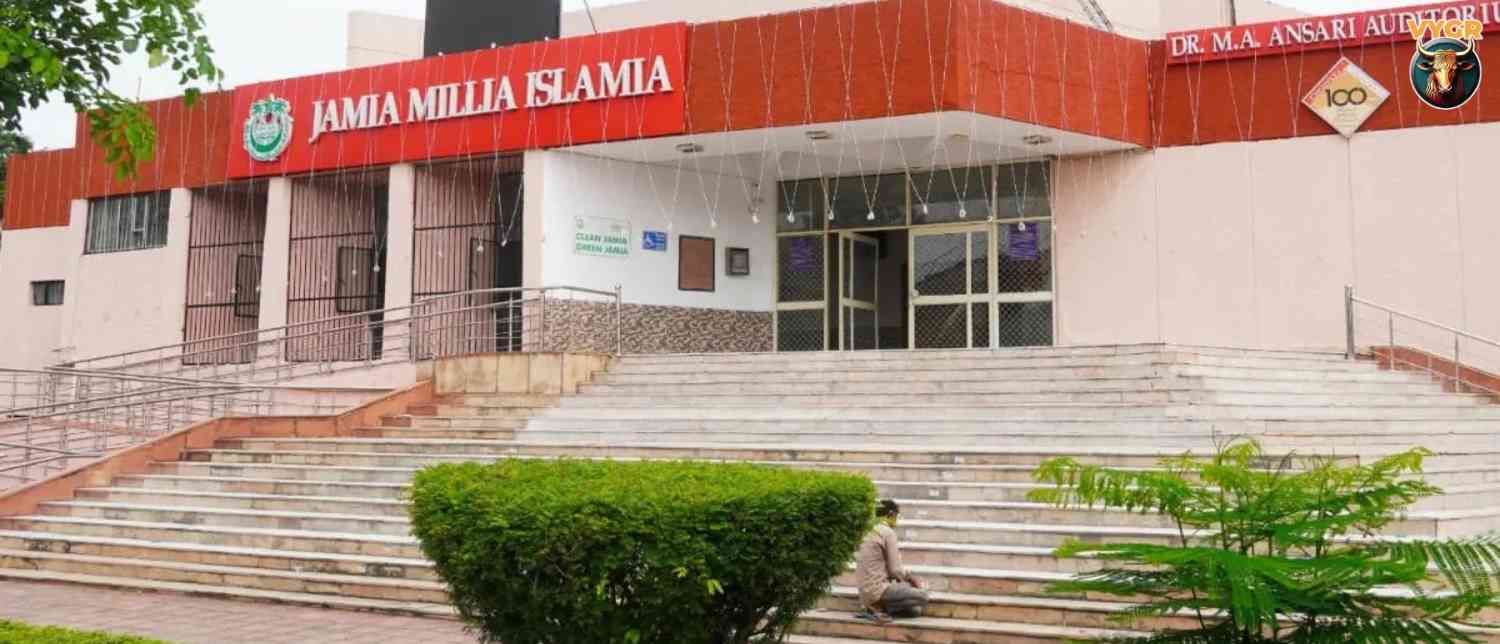
New Delhi: Drums beat, slogans rose, and rain fell over the Jamia Millia Islamia campus, but nobody ran for cover. More than 1,000 students spilled onto Jamia’s main road in a celebratory march after the university committed in writing to restore its elected students’ union, ending an 18-day agitation. “This is a moment history will remember,
The breakthrough came on October 29, the university’s 106th Foundation Day, a date normally reserved for official ceremonies. Students instead marked it with poetry, slogans, and public assemblies under heavy security.
The background: a union silent for two decades
Jamia last held student union elections in 2005. The administration dissolved the elected body on March 31, 2006, after a series of violent confrontations on campus, and it has stayed defunct for nearly two decades despite repeated demands. For a generation of students, that meant no elected body to put their academic, hostel, fee, or welfare concerns to the administration.
The trigger: a precedent from Aligarh
The immediate spark came from another Muslim-minority central university. On October 9, Aligarh Muslim University announced students’ union elections after a 19-day hunger strike by its students. Encouraged by that result, Jamia students announced an indefinite hunger strike of their own on October 12.
Day-by-day: how the agitation unfolded
| Date | What happened |
|---|---|
| Oct 9 | AMU announces union polls after a 19-day hunger strike. |
| Oct 12 | A handful of Jamia students begin an indefinite hunger strike and sit-in near the Ghalib statue lawns, demanding restoration of the Jamia Millia Islamia Students’ Union (JMISU), a poll timeline, and no disciplinary action. Hundreds soon join. |
| Early days | Police attempt to remove protesters from the protest site. Detentions follow, and disciplinary notices, including the suspension of student leader Ebin Basil, are issued. Police presence rises inside and around campus under Section 163 of the BNSS. |
| Around Oct 24-25 | The university moves classes and examinations online, restricts campus entry and closes key facilities as tension builds around the hunger-strike site. The hunger strikers’ health deteriorates. |
| Oct 24-25 | The Registrar accuses Congress MPs Imran Masood and Imran Pratapgarhi of entering the campus without authorisation and inciting unrest. Delhi Police register an FIR on October 25 at Jamia Nagar police station against them and others. |
| Oct 26 | The administration orders that elections be held 15 days after the union’s constitution is approved, revokes suspensions and show-cause notices, and promises an inquiry into the conduct of security staff. Students reject it as incomplete. |
| Oct 26-29 | Three days of talks between officials and a seven-member student delegation. Kerala MP Haris Beeram meets the Vice-Chancellor to convey the hunger strikers’ demands. |
| Oct 29 | A new order sets firm dates. Students call off the hunger strike and protest. |
Why the October 26 order failed
On paper, the first order delivered much of what students wanted. They rejected it for three reasons.
- No deadline for the constitution. The “15 days” clock would only start once the union’s constitution was approved, and nothing fixed when that would happen. Students feared the polls could be deferred indefinitely.
- No election machinery. They sought a definite schedule and the appointment of a chief election officer.
- An apology clause. Students objected to a condition tied to the withdrawal of disciplinary action.
Fresh protests broke out within hours, and police detained some demonstrators.
The October 29 agreement
The Registrar’s final order, issued after a formal letter from the student delegation, contains three directions.
- Constitution: The Jamia Millia Islamia Students’ Union Constitution will be approved and implemented by May 15, 2027.
- Elections: The polls will be notified and held under the Lyngdoh Committee guidelines within six weeks of the start of the 2027 academic session, which is expected to be around the last week of August 2027.
- Disciplinary action: All show-cause notices, suspensions, rustication and campus ban orders linked to the agitation are revoked with immediate effect.
The order asked protesting students to end their hunger strike and protest immediately. Offline classes resume from November 2. The Registrar said the administration had accepted all three student demands, and the students’ representatives said the same, calling off the agitation.
The delegation included representatives of the NSUI, AISA, Fraternity Movement and MSF, along with independent activists, while SFI-affiliated students were among those on hunger strike. That a mix of groups with differing politics stood together is one reason many on campus see the outcome as a collective win.
The FIR row
The dispute over the MPs’ visit ran alongside the protest. The administration’s complaint alleged unauthorised entry and incitement. The FIR was registered under BNS provisions covering criminal trespass, wrongful restraint, causing hurt, mischief, criminal intimidation and criminal conspiracy. Masood reacted sharply, questioning the Registrar’s authority, and Congress expressed solidarity with the students. The allegations remain the administration’s, and the information available does not say what happens to the FIR now that the agitation has ended.
What the Lyngdoh norms mean for the polls
The Lyngdoh Committee guidelines govern student union elections in universities across India. They set rules on matters such as candidates’ eligibility, attendance and age, expenditure limits and bars on candidates with criminal records. Having committed to them, Jamia must now frame a constitution that complies, appoint election officials and manage the process on a tight calendar.
What to watch next
- The constitution: who drafts it, how students are consulted, and whether it is approved by May 15, 2027.
- Election officials: the appointment of a chief election officer and the notification of a schedule.
- Security inquiry: whether the committee on security staff’s conduct is formed and what it finds.
- The FIR: whether the case against the MPs and others is pursued or withdrawn.
- Wider ripple effects: other campuses where students have long demanded unions are likely to watch closely.
The bottom line
The protest began as a small fast on a campus lawn and ended with dates, deadlines and a revocation of punishments. The agreement is a written commitment, not an election result, and students have said they will watch the deadlines closely. But for a university that has gone almost 20 years without electing its own representatives, the celebration on its main road on October 29 marked a real turning point.
© Copyright 2026. All Rights Reserved. Powered by Vygr Media.