
 By

Itanagar: Arunachal Pradesh Chief Minister Pema Khandu has said that transgressions along the border with China continue to happen and have become a routine feature of life on the frontier. He said Beijing does not consider the McMahon Line, which India treats as its eastern boundary.
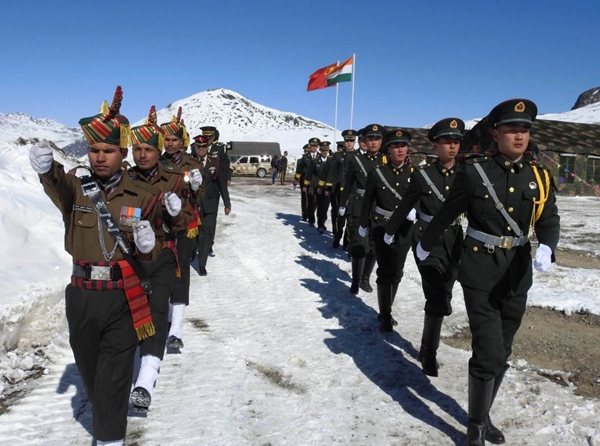
“China doesn’t consider the McMahon Line in Arunachal … our soldiers go that side, their patrolling parties also come this side sometimes,” Khandu said.
What the Chief Minister said
Khandu’s remark describes a frontier where patrols from both sides move into areas the other regards as its own, because the two countries do not agree on where the boundary runs. In the eastern sector, India treats the McMahon Line as its settled boundary. China does not.
Why China doesn’t accept the McMahon Line
The line originates from the 1914 Shimla Convention, where British India and Tibet agreed on a boundary that placed Tawang on the Indian side. China did not sign the accord and has rejected it ever since. Beijing calls the line a colonial-era imposition and argues that Tibet was not a sovereign state and so had no power to conclude such a treaty.
China’s stance has shifted in tone over the decades. In 1956, Premier Zhou Enlai described the line as an “accomplished fact” while insisting China had never formally recognised it. China also accepted the same alignment in 1960 when settling its boundary with Myanmar. It has not extended that treatment to the Indian stretch, and Chinese officials and commentators continue to say the line was never accepted.

Khandu’s long-standing position on Tibet
This is not the first time Khandu has framed the frontier this way. He has repeatedly said that Arunachal shares its border with Tibet, not China, putting the frontier at roughly 1,200 km with Tibet, 150 km with Bhutan and 550 km with Myanmar. His position has drawn criticism from political opponents at home, and Beijing continues to claim Arunachal as “South Tibet.”
Transgressions: an old pattern
Border crossings in the east are not new. Security agencies have long maintained records of such incidents, many of which never become public, and the pattern is widely expected to continue until the boundary is properly demarcated and the two countries reach an agreement. That unresolved question is the root of Khandu’s remark: without an agreed line on the ground, patrols on each side can end up in territory the other considers its own.
What it means
Khandu’s comment is a candid description of how the frontier works in practice, from the head of a state that sits directly on it. It also shows why the eastern sector remains sensitive even when public attention is on Ladakh, since routine patrolling in the absence of an agreed boundary carries a standing risk of friction.
© Copyright 2026. All Rights Reserved. Powered by Vygr Media.