
 By
By 
A man dies by suicide, and within hours the internet finds its villain: alimony.
A woman dies after alleged dowry harassment, and the conversation quickly shifts to why women still need protection.
Somewhere between these two reactions lies the uncomfortable truth India needs to confront: our matrimonial justice system must protect vulnerable women without turning vulnerable men into collateral damage.
That is not an anti-woman position. It is not an anti-man position either.
It is simply a pro-justice position.
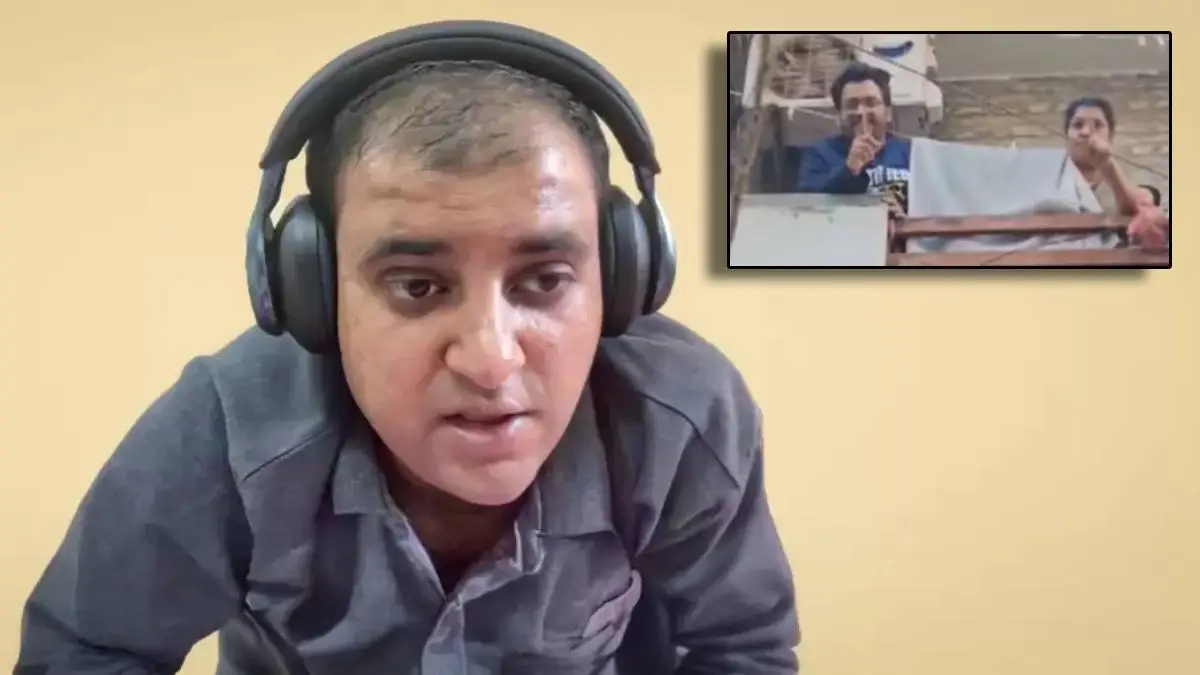
The recent death of 28-year-old software engineer Sambhav Jain in Noida has once again triggered an intense debate over alimony, divorce laws and matrimonial disputes in India. Jain died by suicide after jumping from a high-rise building. Police have said they were examining several factors, including financial stress, debt, marital discord and the medical expenses incurred for his prematurely born son. A court-ordered settlement reportedly required him to pay Rs 15 lakh to his estranged wife, of which around Rs 7-8 lakh had already been paid.
But one fact deserves to be underlined before social media turns tragedy into ideology: police have not said that alimony alone caused Jain's death.
That distinction matters.
So does another one. The widely circulated claim that Jain had been ordered to pay Rs 3 crore was not consistent with the amount cited by police.
Yet the larger question raised by the case is legitimate.
Can India's alimony and maintenance system be misused? Yes.
Can men suffer financially and psychologically during prolonged matrimonial litigation? Absolutely.
Does that mean alimony itself is unjust or should be abolished? No.
And perhaps most importantly: Can one man's tragedy become an excuse to dismiss the very real economic vulnerability faced by women leaving abusive marriages? Also no.

Alimony is not a prize for winning a divorce
There is a dangerous misunderstanding at the centre of India's alimony debate.
Alimony is often discussed online as though a woman simply gets divorced and walks away with a cheque because she is a woman.
That is not what maintenance or permanent alimony is supposed to be.
The Supreme Court has repeatedly made clear that maintenance is intended to prevent a financially dependent spouse from being pushed into destitution after a marriage breaks down. The amount is supposed to depend on factors such as the parties' financial position, reasonable needs, independent income, standard of living, children, liabilities and sacrifices made during the marriage. There is no automatic formula under which every wife receives a fixed percentage of her husband's income.
The Supreme Court's framework in Rajnesh v. Neha also requires parties in maintenance proceedings to disclose their assets and liabilities so that courts can make a more objective assessment.
That principle is important because marriage is not merely an economic transaction.
A spouse who spends years raising children, managing a household and sacrificing career opportunities can emerge from a divorce with far less earning capacity than the spouse who remained continuously employed.
Imagine a woman who leaves her job at 28, moves cities because of her husband's career, raises two children and spends ten years outside the workforce. At 40, the marriage collapses.
Telling her, "You are educated, so go and earn," ignores ten years of lost professional growth, promotions, savings and retirement benefits.
Maintenance exists partly to address that economic imbalance.
But the reverse situation must also be recognised.
If the wife is financially independent, earns substantially, owns assets, has a strong professional career or has concealed her actual income, the court should take those facts seriously.
Alimony should compensate genuine economic disadvantage, not manufacture permanent financial dependence.
But what about women facing dowry and domestic violence?
This is where the debate becomes much more complicated.
India recorded 5,737 dowry deaths in 2024, according to NCRB data roughly 16 deaths every day, or approximately one every 90 minutes. Dowry deaths are only the most extreme end of a much wider spectrum that includes domestic violence, financial coercion, harassment and threats.
That number should make one thing impossible to ignore: women leaving marriages are not always leaving ordinary disagreements.
Sometimes they are escaping violence.
Sometimes they are escaping a household where money, jewellery, vehicles or property are repeatedly demanded.
Sometimes they are leaving after years of unpaid domestic labour.
And sometimes they are leaving with children and no independent source of income.
The cases of Twisha Sharma and Deepika Nagar, both of which drew national attention in 2026 amid allegations of dowry harassment, illustrate why this context cannot simply be erased from the alimony debate.
In Twisha Sharma's case, her family alleged dowry-related harassment and abuse following her marriage. The investigation has seen significant developments, including a CBI probe and further medical examination; importantly, later medical findings did not establish injuries suggestive of assault before death. The legal investigation remains distinct from social-media narratives about what happened.
In the case of 24-year-old Deepika Nagar in Greater Noida, her family alleged that she faced sustained harassment over additional dowry demands, including money and a vehicle. Her death and the injuries reported in connection with the case prompted arrests and further investigation.
Neither case should be inaccurately labelled an "alimony case."
They are something else and something equally important.
They remind us why a woman who wants to leave an abusive marriage may need financial protection, legal assistance and a realistic path to independence.
If a woman has been financially isolated throughout a marriage, simply telling her to walk away may sound empowering in theory but can be terrifying in practice.
Where will she live?
How will she pay school fees?
How will she afford medical treatment?
What happens if she has no job because she spent years caring for the household?
A maintenance system that ignores these questions is not fair.

But men can be victims too, and society must stop pretending otherwise
The opposite truth is equally uncomfortable.
Men can experience emotional abuse.
Men can face false or exaggerated allegations.
Men can become financially overwhelmed by prolonged litigation.
Men can lose contact with their children.
And men can experience severe psychological distress during bitter matrimonial disputes.
The death of Atul Subhash in December 2024 became a particularly powerful example of why this side of the conversation cannot be dismissed.
Subhash left behind a lengthy suicide note and video in which he alleged harassment by his estranged wife and her family. His family subsequently accused them of demanding money to withdraw cases and for access to his child. Those allegations led to criminal proceedings, arrests and an investigation; they should not, however, be treated as judicially established facts merely because they appeared in a suicide note.
Subhash's case also demonstrated another problem: matrimonial litigation can become extraordinarily complicated when divorce, child custody, maintenance, criminal allegations and financial disputes all proceed simultaneously.
A family dispute can become a maze of cases.
And once that happens, the process itself can become punishment, regardless of who is ultimately right.
That is precisely why India's matrimonial justice system needs reform not because women should lose protection, but because everyone deserves protection from a system that can become excessively adversarial.
Misuse of law is real. But so is under-protection.
There is a temptation on both sides to choose only the evidence that supports their preferred conclusion.
Those defending women point to dowry deaths and domestic violence. Those defending men point to false cases, exaggerated financial demands and male suicides.
Both are real concerns. The mistake is believing that acknowledging one automatically requires denying the other.
Courts themselves have recognised situations where matrimonial laws and criminal proceedings can be misused.
In a 2026 Rajasthan High Court case, proceedings against a husband and his elderly parents were quashed after the former wife had accepted Rs 20 lakh as permanent alimony under a settlement and agreed to withdraw the criminal proceedings, but the case continued. The court concluded in the circumstances that continuation amounted to abuse of the legal process.
That is an important warning.
A legal right cannot become a licence for harassment.
But the existence of such cases does not prove that women generally use alimony to extort men.
Similarly, the existence of genuine dowry-death cases does not prove that every allegation of dowry harassment is automatically true.
The answer to false cases cannot be weaker protection for genuine victims.
The answer is better investigation.
The answer to genuine financial vulnerability cannot be unlimited financial demands.
The answer is evidence-based, proportionate maintenance.
The Sambhav Jain debate needs more facts, not more rage
Sambhav Jain's death has understandably triggered anger.
But anger is a poor substitute for evidence.
The tragedy is not proof that his estranged wife was responsible for his death. Police have described multiple financial and personal pressures, including debt and his child's medical expenses, while also examining the circumstances surrounding the court-ordered payment.
Nor does his death prove that alimony is inherently abusive.
At the same time, dismissing the concerns of men who fear financial ruin during divorce proceedings is equally irresponsible.
A man should not have to choose between bankruptcy and compliance with a financial order he genuinely cannot afford.
There must be mechanisms for review, modification and realistic payment schedules when circumstances change.
A maintenance order should provide security to the dependent spouse without pushing the paying spouse into financial destruction.
That is not too much to ask.
What India should actually reform
The answer is not to abolish alimony.
It is to make alimony fairer, faster, transparent and more evidence-based.
First, both spouses should disclose income, assets, investments, debts and significant financial interests. India's Supreme Court has already moved in this direction through the Rajnesh framework.
Second, courts should distinguish between maintenance for survival, child support, compensation for economic disadvantage and permanent wealth transfer. These are not necessarily the same thing.
Third, children's needs should remain a separate and serious consideration. A child should not become a bargaining chip in a dispute between two adults.
Fourth, courts should examine the actual earning capacity and financial position of both spouses, rather than beginning with the assumption that the husband must pay simply because he is the man.
Fifth, where allegations of domestic violence or dowry harassment are made, investigations should be swift, independent and evidence-driven.
Sixth, where deliberate fabrication, concealment of income or malicious prosecution is established, consequences should follow.
And seventh, there must be faster family courts.
Because justice delayed is uniquely destructive in matrimonial disputes.
A woman waiting three years for maintenance may be unable to pay her child's school fees.
A man waiting three years for the conclusion of multiple proceedings may lose his job, savings, health and relationship with his children.
Both forms of suffering matter.

We also need to stop comparing dowry and alimony as if they are the same thing
Dowry and alimony may both involve money, but morally and legally they are fundamentally different.
Dowry is a demand or transfer associated with marriage and is prohibited by law.
Alimony or maintenance is a financial remedy arising from marital breakdown and intended, depending on the circumstances, to support a spouse or child or address economic consequences of the marriage.
One cannot justify dowry by pointing to alimony.
And one cannot justify unlimited alimony by pointing to dowry.
That would be comparing two injustices instead of fixing either.
The more useful question is: What financial arrangement leaves the dependent spouse secure without unfairly destroying the other spouse's ability to live and rebuild?
That should be the benchmark.
The real problem is not women versus men
Perhaps India needs to retire the idea that every matrimonial dispute has a hero and a villain.
Sometimes the husband is wrong. Sometimes the wife is wrong. Sometimes both have behaved badly.
Sometimes one spouse is abusive, and the other is genuinely trapped. Sometimes allegations are exaggerated. Sometimes they are tragically true.
And sometimes the truth is far more complicated than a viral video can explain.
The cases of Twisha Sharma and Deepika Nagar remind us that dowry and domestic violence remain frightening realities. The cases of Atul Subhash and Sambhav Jain remind us that men can also experience enormous psychological and financial distress during matrimonial breakdown. None of these tragedies should be weaponised to declare an entire gender guilty.
India does not need an anti-alimony movement.
It does not need an anti-women backlash.
It does not need a culture in which every woman seeking maintenance is called a gold-digger, just as it does not need a culture in which every man challenging a financial demand is automatically branded misogynistic.
It needs something much harder: A justice system that believes women when evidence supports them, protects men when evidence supports them, protects children regardless of their parents' conflict, and punishes anyone male or female who deliberately weaponises the law.
A divorced woman should not be forced back into an abusive marriage because she has no money.
A divorced man should not be financially destroyed simply because he is a man.
A child should not become leverage in either direction.
And no human being should reach a point where a matrimonial dispute feels like a sentence from which there is no escape.
The most sensible position is therefore neither "abolish alimony" nor "women must always get alimony."
It is this:
Alimony should exist where there is genuine need, genuine economic disadvantage or genuine responsibility toward children. It should be proportionate to the paying spouse's actual capacity. It should be based on full financial disclosure. It should be decided quickly. And if either side deliberately abuses the law, the system should have the courage to say no.
That is not taking sides. That is what fairness looks like.
And perhaps that is the conversation India should have been having all along.
India does not need less justice for women. India does not need less justice for men. India needs better justice for both.
© Copyright 2026. All Rights Reserved. Powered by Vygr Media.