 By
By 
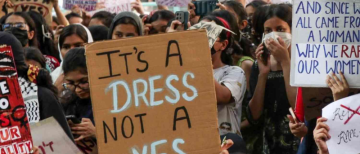
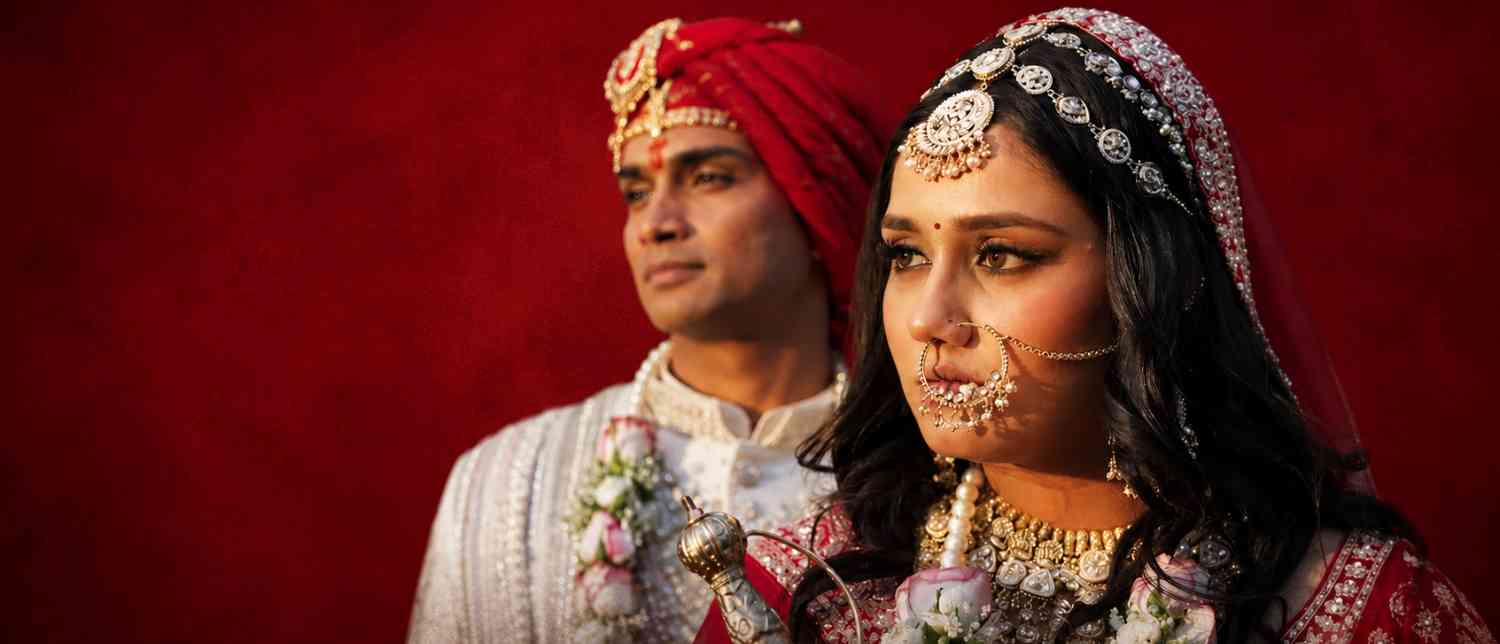
India likes to believe it has modernised beyond the cruelties of dowry. Urban skylines have changed, women are graduating from elite universities, middle-class families are spending crores on destination weddings, and matrimonial apps promise “progressive” matches built on compatibility rather than caste and cash. Yet, beneath this illusion of social advancement, dowry remains deeply woven into the architecture of marriage.
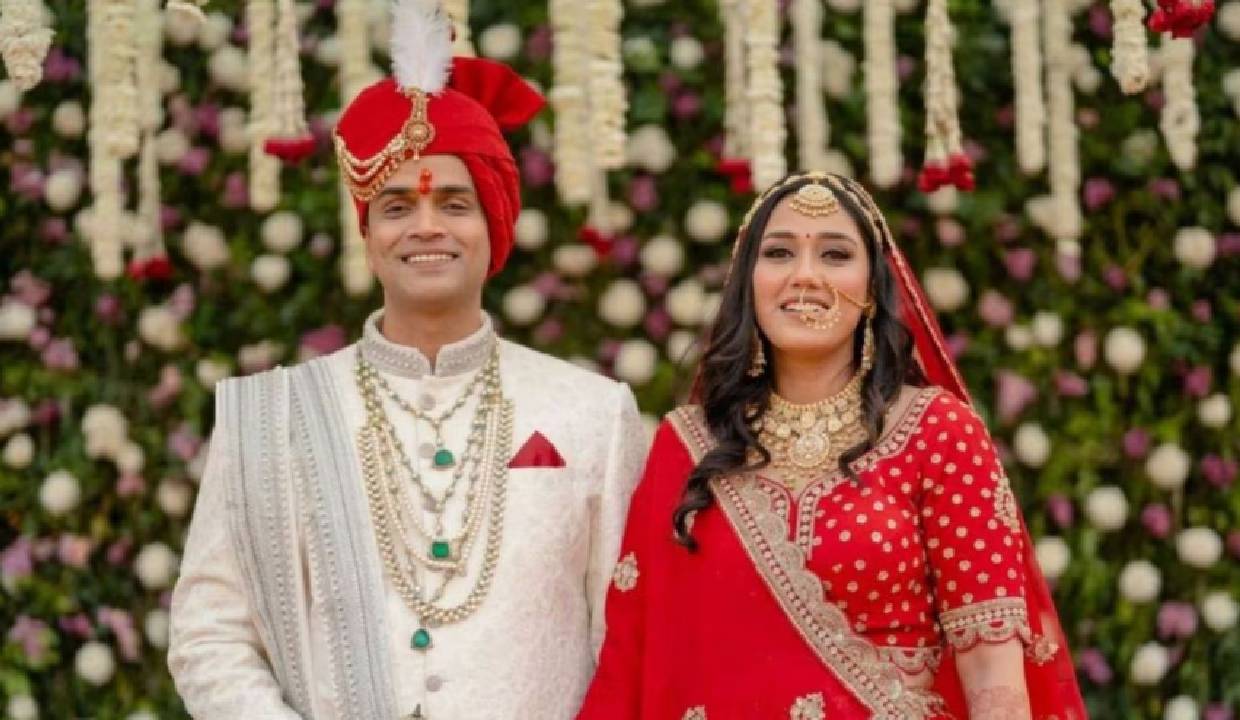
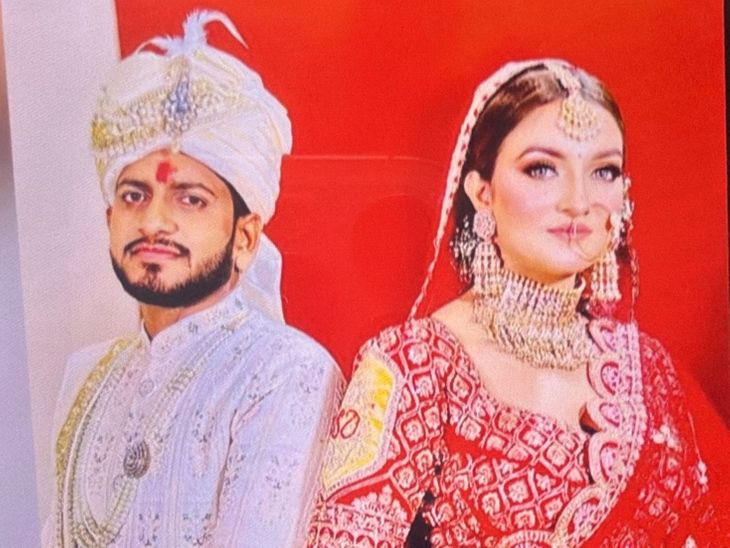
The recent conversations sparked by the deaths of Twisha Sharma in Bhopal and Deepika Nagar in Greater Noida shattered a comforting myth many Indians still hold onto: that dowry violence belongs only to poorer, less educated or rural households. Twisha Sharma was not socially vulnerable in the traditional sense. She was educated, urban, professionally qualified, and came from a family with resources. Yet her death forced the country to confront an uncomfortable truth that in India, privilege does not necessarily protect women inside marriage.
That contradiction sits at the heart of India’s dowry crisis. A woman can hold degrees, earn independently, live in a metropolitan city, and still be trapped inside a system where marriage becomes an economic transaction negotiated through emotional coercion. The modern Indian wedding may look sophisticated on Instagram, but its underlying expectations often remain disturbingly feudal.
The Statistical Paradox India Refuses To Face
The numbers expose a frightening contradiction. Around 5,700 dowry deaths continue to occur annually in India. At the same time, the National Family Health Survey (NFHS-5) reports that 31.9% of ever-married Indian women experience physical, sexual, or emotional spousal violence. Yet only a fraction of these experiences ever enter the legal system.
One of the most alarming findings emerging from the NFHS data is that only about 1% of abused women approach legal institutions for help. This means India’s official crime statistics do not capture the actual prevalence of domestic violence or dowry harassment. They merely reflect how many women manage to survive social stigma, family pressure, institutional indifference, and fear long enough to file a complaint.
This gap between lived reality and recorded crime reveals why dowry deaths continue despite decades of legal reform. The issue is not only criminality; it is systemic silence.
The contradiction becomes even sharper when wealth and education are examined. NFHS data shows that women belonging to both the poorest and the wealthiest sections of society report nearly equal exposure to physical violence. That single statistic destroys the assumption that prosperity automatically produces progressive households.
In affluent families, dowry does not disappear. It evolves.
Instead of crude demands, it is often disguised as “gifts,” lifestyle expectations, property transfers, luxury vehicles, jewellery, expensive weddings, or financial assistance presented as family obligations. The transactions become socially sanitised. The coercion becomes culturally acceptable.
This explains why highly educated women continue to die in marriages that society describes as respectable.
The Dangerous Myth That Education Alone Liberates Women
For years, India has promoted female education as the ultimate solution to gender inequality. Education is undeniably transformative, but the dowry crisis demonstrates that educational achievement alone cannot dismantle patriarchal power structures.
A woman may become financially independent, but marriage frequently reabsorbs her into a social system where obedience, compromise, and endurance are still treated as feminine virtues.
Many families continue raising daughters with contradictory messages. Girls are encouraged to study, work, and become independent, yet they are simultaneously trained to preserve marriage at any cost. The emotional conditioning begins early:
“Adjust a little.”
“Compromise.”
“Every marriage has problems.”
“Things will improve after children.”
“Don’t come back home.”
This culture of adjustment forms the invisible prelude to many dowry deaths.
The tragedy is not only the violence itself but the normalisation of suffering before the violence becomes fatal. In countless Indian homes, abuse is tolerated until it becomes impossible to hide.
Women are often sent back repeatedly into hostile environments because families fear social embarrassment more than danger. Parents who would spend lavishly on weddings sometimes hesitate to support their daughters through separation or divorce because failed marriages continue to carry a stigma.
In many cases, families attempt to “solve” harassment by paying additional money or fulfilling new demands, believing temporary compliance will restore peace. Instead, these concessions frequently deepen the cycle of extortion and control.
Dowry, therefore, survives not merely because of greed but because Indian marriage itself continues to operate as a deeply hierarchical institution where women are expected to absorb pain silently.
Urban India Has Modernised Its Lifestyle, Not Its Mindset
One of the strongest misconceptions surrounding dowry violence is that it is primarily a rural phenomenon. Data suggests otherwise.
NFHS figures indicate intimate partner violence remains pervasive across both rural and urban India, with prevalence rates of roughly 34% in rural areas and 27% in urban centres. The difference is far narrower than most people imagine.
Urban migration often creates another layer of vulnerability. When women relocate after marriage to unfamiliar cities, they frequently lose their immediate support systems. Friends and relatives remain far away while dependence on the marital household increases. The modern apartment can become an isolated site of control hidden behind professional appearances and curated social media lives.
In wealthy urban families, social reputation frequently matters even more intensely. The pressure to maintain an image of a successful marriage can discourage women from reporting abuse. Families that invest enormous amounts into weddings may perceive separation as public humiliation.
This creates a dangerous paradox: the more “respectable” the family appears externally, the harder it sometimes becomes for victims to seek help internally.
The obsession with status also intensifies financial expectations around marriage. Degrees, salaries, foreign jobs, luxury homes, and social standing become part of a hidden marketplace where men are informally valued according to earning potential.
The result is a sophisticated form of transactional marriage.
A groom with an MBA, government position, business empire, or international career often enters the marriage market carrying enormous social leverage. Dowry demands become tied to class aspiration rather than survival.
The language changes, but the power imbalance remains.
Why India’s Laws Are Not Enough
India is not legally indifferent to dowry. The Dowry Prohibition Act of 1961 criminalised the practice decades ago. Later amendments introduced stricter protections, including Section 304B of the Indian Penal Code, now Section 80 of the Bharatiya Nyaya Sanhita, specifically addressing dowry deaths.
Under the law, an unnatural death occurring within seven years of marriage, combined with evidence of dowry-related cruelty “soon before” death, allows courts to presume the husband and his family are responsible unless proven otherwise.
On paper, this framework appears powerful.
In practice, however, implementation remains deeply flawed.
Data from NCRB reports reveal that while charge-sheeting rates in dowry death cases remain high, often between 85% and 90%, conviction rates hover around 35% to 40%.
This enormous gap has triggered two competing narratives in public discourse.
The first argument points toward investigative failure. Dowry death cases often collapse because critical evidence is poorly collected, forensic procedures are delayed, witness statements are weak, or investigations become compromised by social pressure. When foundational evidence disappears, even strong legal presumptions become ineffective.
The second argument highlights concerns regarding misclassification or misuse of dowry laws. Critics argue that not every tragic marital death automatically qualifies as dowry death under the strict legal definition. Courts require a direct and provable connection between cruelty and dowry-related demands.
This debate has become highly polarised.
Men’s rights groups frequently cite low conviction rates to argue that anti-dowry laws are weaponised against husbands and their families. Discussions about false cases dominate online forums and public commentary. Simultaneously, women’s rights advocates argue that low conviction rates often reflect weak investigations, hostile social environments, poor prosecution, witness intimidation, and the enormous difficulty of proving sustained domestic abuse inside private homes.
Both concerns deserve serious engagement.
False accusations can destroy lives and undermine trust in the justice system. At the same time, genuine victims routinely fail to receive justice because evidence collection in domestic violence cases remains inconsistent and societal attitudes continue to favour male innocence.
The problem becomes dangerous when public discourse reduces the issue to a binary battle between “fake cases” and “false acquittals.” Such simplification obscures the deeper structural reality: India still lacks a reliable, sensitive, and efficient institutional response to marital violence.
The Presumption Of Male Innocence
One recurring pattern in high-profile dowry death cases is the rapid construction of narratives questioning the woman’s mental health, character, or emotional stability.
Before investigations conclude, speculation frequently emerges about depression, instability, substance use, or “difficult behaviour.” These narratives often spread through anonymous leaks, local gossip, and media sensationalism.
This reflex reveals how deeply Indian society still struggles to imagine respectable husbands and families as capable of sustained cruelty.
Even when women repeatedly communicate distress before death, those warnings are often minimised while the husband’s social image receives immediate protection.
The broader cultural assumption remains clear: marriages must be preserved, husbands deserve the benefit of the doubt, and women are expected to tolerate emotional suffering.
This is precisely why many victims hesitate to report abuse early. They fear disbelief, blame, and isolation.
By the time institutional intervention occurs, the violence has often escalated catastrophically.
Dowry is not merely a rural tradition; it is an economic system
To understand why dowry persists, India must stop viewing it only as a backward custom.
Dowry survives because marriage continues functioning as an economic exchange system tied to caste, status, inheritance, and social mobility.
Families negotiate marriages strategically. A highly educated groom becomes a status asset. Wealth transfers surrounding marriage are justified as love, support, custom, celebration, or parental duty.
The language may sound voluntary, but the underlying pressure is frequently coercive.
Many affluent families no longer openly demand dowry because legal awareness has increased. Instead, expectations are communicated indirectly:
A luxury car is “appropriate.”
A certain wedding standard is “necessary.”
Property transfers are “understood.”
Financial contributions become “family expectations.”
This social sophistication makes dowry harder to identify and prosecute.
The practice survives because it has adapted itself to modern consumer culture.
India’s wedding industry, celebrity culture, and social media spectacle have only intensified these pressures. Weddings increasingly function as public performances of wealth where families feel compelled to display status through spending.
Under such conditions, dowry becomes embedded within aspirational culture rather than existing as an isolated criminal act.
Why Families Continue Choosing Silence
Perhaps the most heartbreaking aspect of dowry violence is how often victims ask for help before tragedy occurs.
Women frequently confide in parents, siblings, relatives, or friends about emotional abuse, humiliation, financial demands, and threats. Yet intervention remains hesitant.
Why?
Because Indian society still treats divorce as a greater failure than abuse.
Families fear gossip.
Parents worry about their younger siblings’ marriage prospects.
Communities encourage reconciliation.
Economic dependence complicates exit.
Children create emotional pressure.
Women themselves internalise the belief that enduring hardship is part of marriage.
As a result, danger becomes normalised incrementally.
Each compromise delays confrontation.
Each silence protects appearances.
Each return to the marital home increases vulnerability.
By the time violence becomes fatal, the warning signs often appear painfully obvious in retrospect.
The Crisis Is Cultural Before It Is Legal
India cannot arrest its way out of dowry.
Legal reform remains essential, but criminal law alone cannot dismantle social structures that continue to reward patriarchal marriage arrangements.
Real change requires confronting uncomfortable cultural truths.
Parents must stop treating daughters as temporary members of their natal homes.
Families must stop equating marriage with social success.
Communities must stop glorifying extravagant weddings.
Educational achievement must be matched with emotional autonomy and social freedom.
Women must feel supported when leaving abusive marriages instead of being pressured to preserve them.
Boys must be raised without entitlement disguised as tradition.
Most importantly, Indian society must stop romanticising female sacrifice.
The idea that a “good woman” absorbs suffering quietly remains one of the most dangerous beliefs sustaining marital abuse.

The Future Of Marriage In India Depends On This Conversation
The deaths of women like Twisha Sharma and Deepika Nagar should not disappear into the endless archive of temporary outrage.
Their stories expose a national contradiction India can no longer ignore: a country that celebrates women’s educational achievements while still binding their social worth to marriage.
Dowry survives because Indian modernity has been selective.
The country modernised consumption but not gender relations.
It expanded women’s education without fully transforming domestic power structures.
It criminalised dowry publicly while tolerating it socially.
It celebrates successful daughters yet still expects them to endure unhappy marriages silently.
That contradiction is costing women their lives.
The real question India must ask is not whether dowry still exists. It clearly does.
The more urgent question is why a society that publicly condemns dowry continues privately accommodating it across class lines, educational backgrounds, and supposedly progressive households.
Until marriage stops functioning as a transaction shaped by status, patriarchy, and financial negotiation, dowry deaths will continue resurfacing under different names, in different cities, and among different classes.
And every time another woman dies, India will once again express shock at a problem it has spent decades refusing to confront honestly.
*Views expressed in the above piece are personal and solely those of the author. They do not necessarily reflect Vygr’s views.
With inputs from agencies
Image Source: Multiple agencies
© Copyright 2026. All Rights Reserved. Powered by Vygr Media.