 By
By 
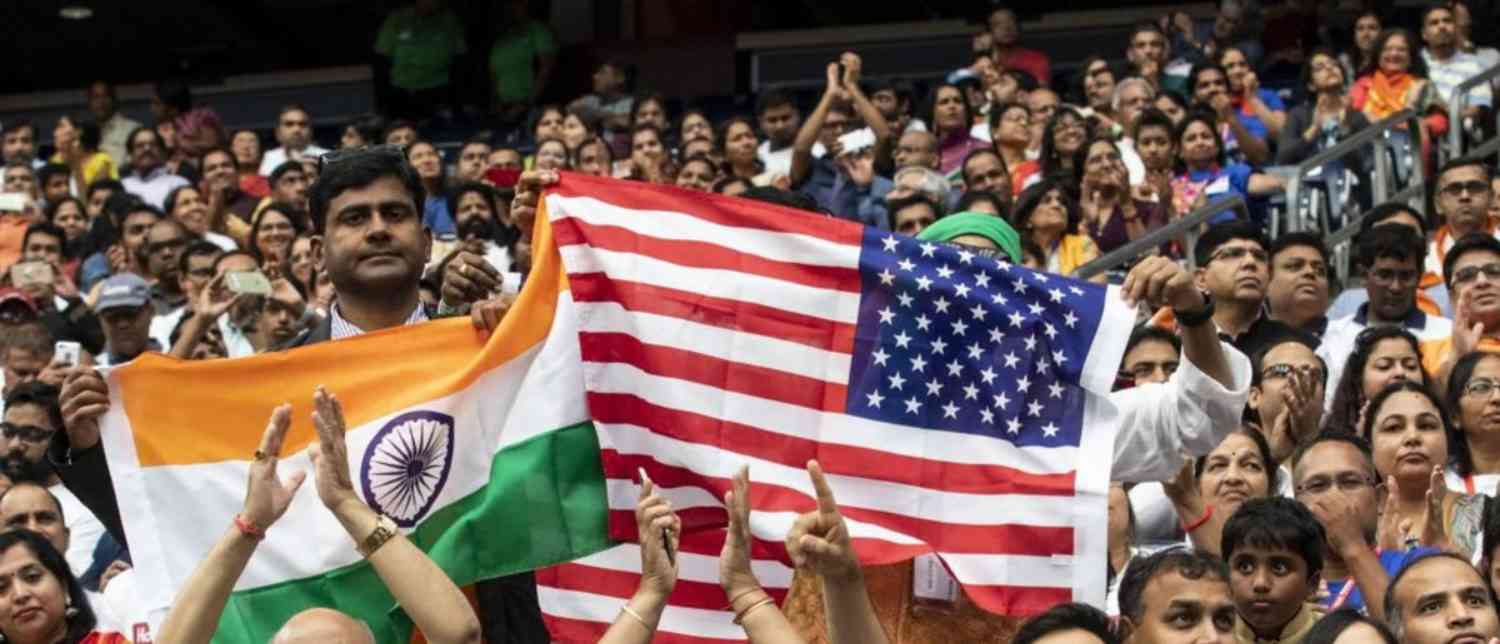
For generations, the United States has sold the world an extraordinary promise: work hard, pursue an education, build a career, and you can create a better future, regardless of where you were born. Millions of Indians believed in that promise. They crossed oceans to study at American universities, joined technology companies, established businesses, treated patients, conducted scientific research and raised families.
Many became American citizens. Their children grew up cheering for American football teams, attending local schools and participating in public life. Yet, an uncomfortable contradiction is becoming increasingly visible: being successful in America does not necessarily protect Indian Americans from being treated as outsiders.
Across political debates and social media, Indians are increasingly portrayed as job stealers, demographic threats, cultural intruders and people who do not belong. Some face demands to return to India despite being American citizens. Others encounter racial slurs, hostility towards Hindu religious institutions or suspicion based on their skin colour and surnames.
The concern is not that every American is hostile towards Indians, nor that every immigration restriction is racist. It is that a growing pattern of anti-Indian sentiment is using economic anxiety, cultural differences and political polarisation to legitimise hostility towards an entire community.
When an Indian-origin professional is judged by their ancestry rather than their abilities, or an American citizen is treated as a foreigner because of their appearance, the issue goes beyond immigration. It becomes a question of equality, identity, and what it means to belong in modern America.
The Growing Visibility of Anti-Indian Sentiment in America
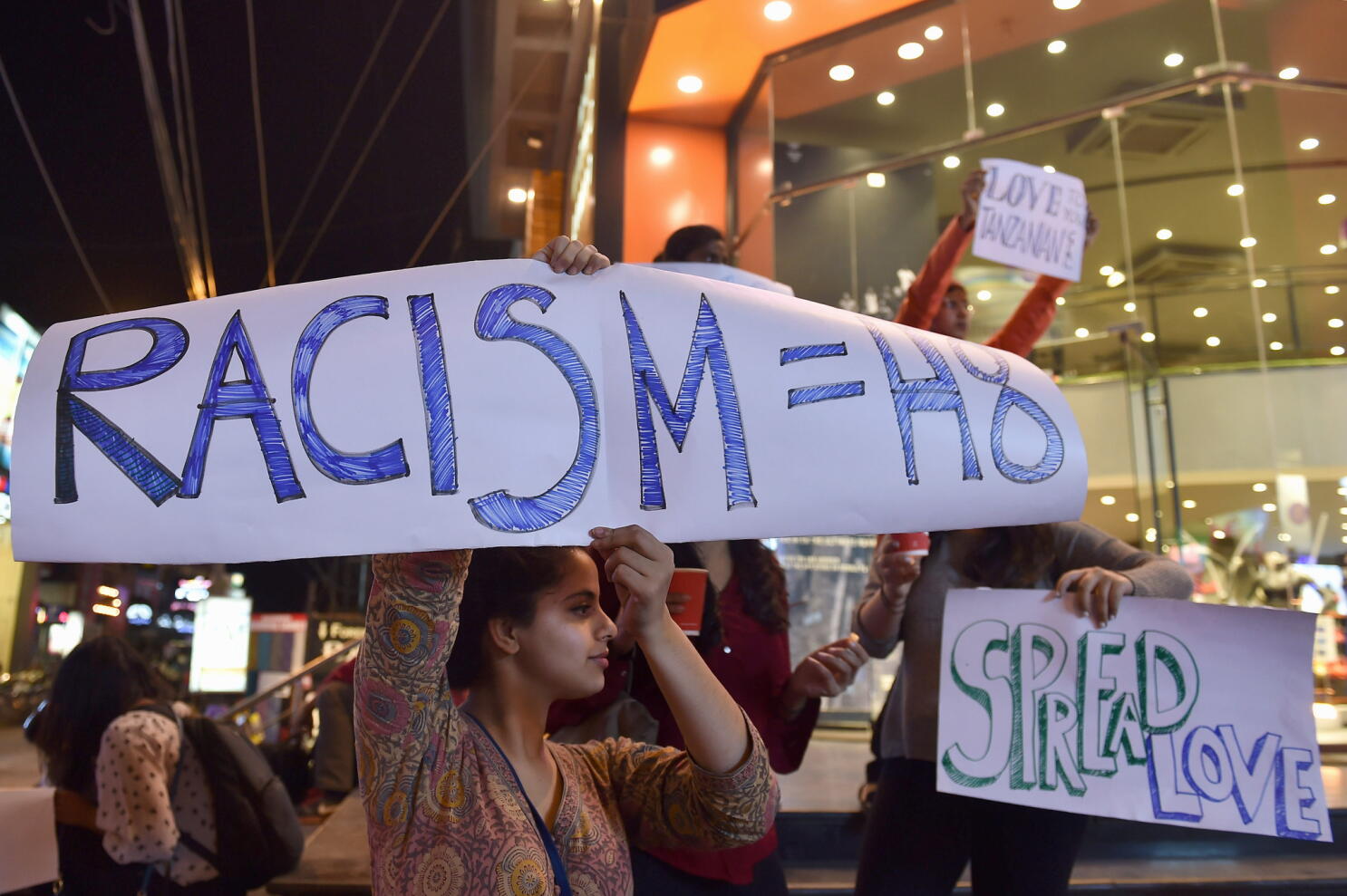
Anti-Indian racism is not a new phenomenon in American history. Indian immigrants and other Asian communities have faced exclusion and discrimination for generations. What makes the present moment troubling is the renewed visibility of hostility across political discourse, digital platforms and debates about immigration and national identity.
The year 2025 became a significant flashpoint, with anti-Indian rhetoric increasingly visible in public controversies. The trend has continued into 2026, as arguments over employment, immigration enforcement, religious identity and demographic change have placed Indian Americans under renewed scrutiny.
Research published in September 2026 by the Center for the Study of Organized Hate documented a 240% increase in anti-South Asian hate-related posts on X between January 2024 and June 2026. The study also identified more than half a million such posts between January 2025 and June 2026. These figures cover South Asians collectively, including Indians, Pakistanis, and Bangladeshis, not Indians alone. Nevertheless, the findings indicate a substantial escalation in online hostility towards the broader community. (Research report)
Another report, published in September 2026, found that the use of anti-South Asian slurs online increased by 109% between January 2023 and December 2025. Its survey also documented widespread experiences of hate among South Asian adults in the United States. These findings reinforce the need to take the problem seriously, while recognising that online activity and reported experiences are different measures of discrimination. (Research findings)
The pattern is particularly disturbing because hostile rhetoric increasingly reduces diverse communities to a single stereotype. The Indian software engineer, the American-born student, the Sikh shopkeeper, the Hindu family and the Indian-origin politician are all portrayed as representatives of an alleged foreign threat.
Such generalisations are the foundation of prejudice. They replace individual identity with collective suspicion and discriminate appear justified.
The H-1B Visa Controversy: When Economic Anxiety Becomes a Racial Issue
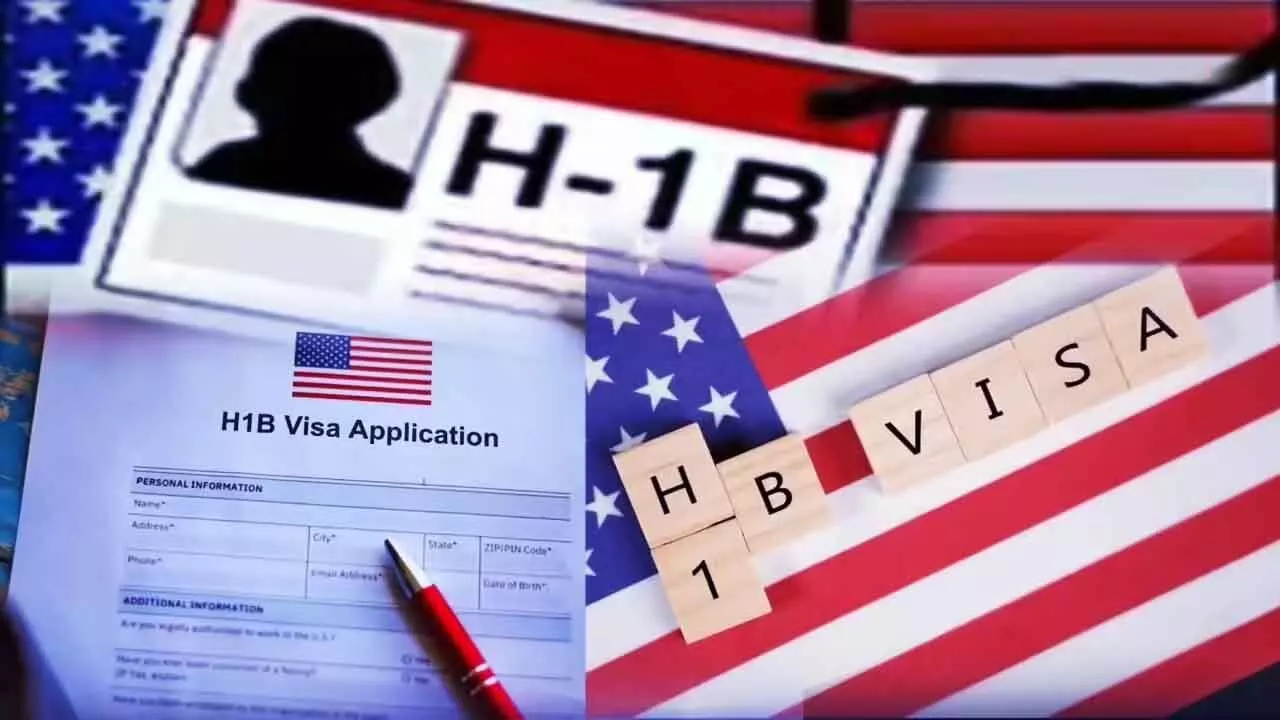
Few issues illustrate the growing tension more clearly than the debate over H-1B visas, which allow American employers to recruit foreign professionals for specialised occupations.
Indian nationals account for a substantial majority of approved H-1B petitions. Consequently, when the programme becomes a political flashpoint, Indian workers are particularly exposed to the backlash.
Critics argue that some employers exploit the visa system to reduce labour costs, weaken workers' bargaining power or restrict opportunities for American employees. These concerns deserve serious scrutiny. Visa programmes should operate transparently, employers should comply with wage requirements, and domestic workers should not be unfairly disadvantaged.
But a legitimate policy debate becomes discriminatory when Indian professionals are collectively branded as job thieves.
An engineer recruited for a specialised position is not personally responsible for every corporate hiring decision. An Indian employee who follows immigration rules cannot reasonably be blamed for the actions of employers who may misuse those rules. If companies violate labour regulations, enforcement should focus on the companies and the practices involved.
Instead, anti-Indian rhetoric frequently transforms a complicated economic debate into a simplistic accusation: foreigners are taking what belongs to Americans.
This argument overlooks the roles of corporate management, technological change, outsourcing, labour-market conditions and broader economic policy. It also ignores the contributions of skilled immigrants to research, entrepreneurship, healthcare and technological development.
The distinction is essential. Immigration policy can be debated without turning nationality into a reason for contempt.
When Indian professionals are treated as unwelcome regardless of their qualifications or legal status, the issue is no longer simply whether a visa programme needs reform. It is whether an entire ethnic community is being made a scapegoat for economic frustration.
Brown Skin Is Not Proof of Foreignness
Perhaps the clearest example of anti-Indian prejudice is the assumption that appearance determines nationality.
In Texas, Republican politician Bo French posted a photograph of South Asian students celebrating at a University of Texas football game and portrayed their presence as evidence that Americans were being displaced by foreigners. The controversy raised an obvious question: what evidence established that the students were foreign nationals rather than American citizens or residents? Their appearance alone could not answer it. The episode was subsequently criticised by political figures who rejected the suggestion that brown-skinned students did not belong at an American university. (Incident reporting)
The deeper problem is the racial assumption beneath the argument. A white student is often presumed to belong, while a brown student may be expected to explain their presence.
For Indian Americans, this can translate into a lifetime of questions about where they are really from, whether they speak English, or whether they are genuinely American. Their citizenship may be legally unquestionable, yet their belonging is treated as conditional.
Racism does not always appear as an explicit slur. It can emerge through stereotypes about accents, names, food, cultural practices or professional competence. It can also appear when a person's qualifications are overlooked because an employer makes assumptions about their ethnicity.
A February 2026 survey by the Carnegie Endowment for International Peace found that approximately half of surveyed Indian Americans reported experiencing discrimination during the preceding year. Among those reporting discrimination, skin colour was the most frequently cited factor, followed by country of origin and religion. The survey also found that one in four respondents had been called a slur since the beginning of 2025. (Survey results)
These findings provide a more grounded picture than social media controversies alone. They indicate that discrimination is a real concern for many Indian Americans, even though individual experiences vary and the survey does not establish that every form of hostility is increasing at the same rate.
The Far Right's Obsession With Indian Identity
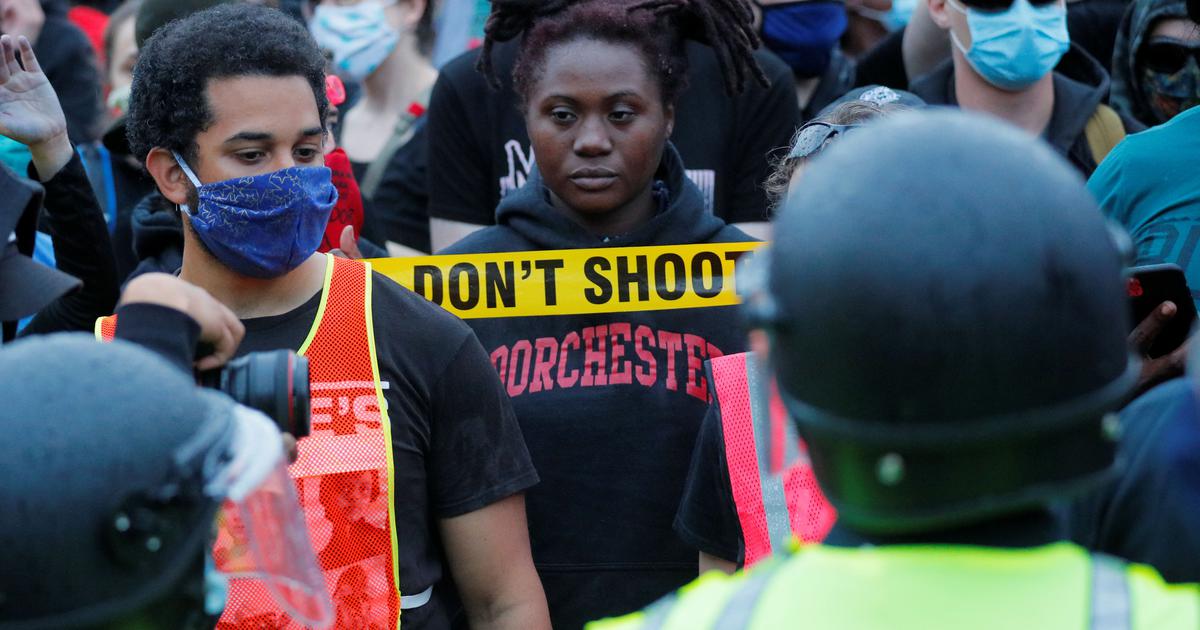
Anti-Indian sentiment has also become entangled with far-right nationalism and the belief that American identity should be defined by ancestry, religion or a narrow cultural tradition.
In this worldview, immigration is not merely a question of border control. It becomes a perceived struggle over who belongs in the country and who will shape its future.
Indian Americans have increasingly become targets of this rhetoric, including individuals who occupy prominent positions across the political spectrum.
Usha Vance, the American-born wife of Vice President JD Vance, has faced attacks directed at her Indian heritage and Hindu background. Vivek Ramaswamy, a prominent Republican politician, has also encountered racial abuse, including demands that he return to India. Similar hostility has been directed at other Indian-origin public figures, including Sikh and Muslim Americans. (Reporting on political and racial attacks)
These incidents expose a contradiction in the idea that political assimilation guarantees social acceptance. Supporting conservative policies, working within established institutions or holding influential government positions does not necessarily protect someone from racial hostility.
For some extremists, the issue is not what Indian Americans believe, how they vote or how they contribute. It is simply who they are.
This creates an impossible standard for minorities. They may be welcomed when their achievements serve a political purpose, yet rejected when their ancestry becomes inconvenient.
A democracy cannot demand loyalty from its citizens while allowing their legitimacy to be questioned on racial grounds. Political disagreement is part of democratic life; ethnic exclusion should not be.
Hindu Temples and the Politics of Religious Intolerance
Religious identity has become another focal point of anti-Indian hostility, particularly in controversies involving Hindu temples and public religious symbols.
In Texas, a video about the Hanuman Temple in Frisco generated a wave of anti-Indian and anti-Hindu comments online. The controversy intensified when a conservative activist posted a photograph of a 90-foot Hanuman statue and threatened to tear it down if his political side prevailed. Such rhetoric turned a religious structure into a symbol in a wider argument about immigration and demographic change. (Incident reporting)
There is nothing inherently discriminatory about residents asking questions about construction permits, traffic, zoning or public safety. Those concerns should be addressed through established rules that apply equally to every religious institution.
The problem begins when a Hindu temple is portrayed as an invasion simply because it represents a faith unfamiliar to some residents.
Religious freedom must extend to communities whose traditions are not part of the cultural majority. Hindu Americans should be able to build places of worship, celebrate festivals and display religious symbols without being treated as threats to national identity.
The same principle applies to Sikh and Muslim Americans, who may also face hostility when religious clothing, names or practices become markers of supposed foreignness.
When visible religious difference is treated as evidence that someone does not belong, the promise of religious liberty becomes conditional.
From Online Abuse to the Fear of Real-World Violence
The consequences of racial hostility can extend beyond insults and political arguments. Threats, intimidation and violent crimes can leave minority communities fearful for their safety.
In June 2026, Indian national Anshul Kuncha, a 28-year-old pizza delivery driver in Philadelphia, was fatally shot while making a delivery to a vacant property. Police later arrested a 14-year-old suspect and announced murder and robbery charges. The reported motive was robbery. The available reporting does not establish that Kuncha was targeted because he was Indian. (Incident reporting)
His death was tragic and deserves to be treated with the seriousness owed to every victim of violent crime. It also demonstrates why reporting must distinguish between a confirmed criminal motive and wider concerns about the safety of Indian nationals.
A crime involving an Indian victim is not automatically a hate crime. Equally, possible racial motives in other cases should not be dismissed without investigation. Evidence, rather than assumption, must determine how an incident is classified.
The broader context remains important. When online spaces repeatedly dehumanise a community, portray its members as invaders or encourage harassment, the resulting atmosphere can intensify fear and make intimidation seem socially acceptable.
Technology platforms must respond to credible threats and coordinated harassment. Universities and employers should provide effective channels for reporting abuse. Law-enforcement agencies must investigate potential hate crimes impartially and communicate their findings clearly.
No community should have to wonder whether reporting racial intimidation will be taken seriously.
Workplace and Housing Discrimination: The Less Visible Forms of Racism
High-profile political controversies attract attention, but discrimination often operates more quietly in workplaces, rental markets and everyday interactions.
Indian professionals may encounter stereotypes about their accents, communication styles or cultural backgrounds. Candidates may face unfair assumptions during recruitment, while employees may be overlooked for promotion because they are perceived as outsiders.
In housing, applicants can face prejudicial assumptions about their nationality, surname, religion or cultural practices. A landlord who makes decisions based on stereotypes rather than legitimate, lawful criteria can deny people fair access to accommodation.
These examples are important because discrimination is not always announced openly. A candidate may never discover why they were rejected. A tenant may be given an unconvincing explanation for a refusal. An employee may be told they are not a good cultural fit without receiving a meaningful account of the decision.
US federal law prohibits covered forms of employment discrimination based on race, colour and national origin. Federal fair-housing protections also prohibit discrimination on grounds including race and national origin.
Legal protections, however, are only part of the solution. Enforcement, accessible complaint mechanisms and a willingness to challenge prejudice are equally important.
When political discourse repeatedly portrays immigrants as threats, everyday discrimination can become easier to rationalise. Public rhetoric cannot explain every instance of individual prejudice, but it can influence what people believe they can say and do without consequences.
The Economic Contradiction: Welcoming Talent While Blaming Immigrants
The United States has benefited substantially from the contributions of Indian-origin professionals, entrepreneurs, researchers, doctors and technology workers.
Indian Americans have established businesses, created employment, participated in scientific research and helped connect American institutions with international markets. Their contributions form part of a broader history of immigration supporting economic growth and innovation.
Yet, when economic anxiety rises, immigrants can become convenient scapegoats. Rather than examining housing shortages, wage pressures, corporate hiring practices or the structural causes of unequal opportunity, some commentators direct their anger towards people whose ethnicity is readily identifiable.
This does not mean immigration has no economic trade-offs. Governments must consider domestic employment, enforce labour standards and ensure that recruitment systems operate fairly.
But those concerns require evidence-based solutions. An Indian engineer is not personally responsible for every difficulty facing an American worker. An international student is not the cause of every challenge confronting a university. An immigrant doctor cannot reasonably be blamed for all the shortcomings of the healthcare system.
If a company exploits a visa programme, investigate the company. If a recruitment practice violates labour law, enforce the law. If workers face unfair competition, examine the relevant employment practices.
Blaming an entire nationality is neither a serious economic argument nor a fair solution.
The contradiction is also strategically damaging. A country that makes skilled professionals feel unwelcome risks losing talent, investment and innovation to competitors willing to provide more predictable opportunities.
America cannot expect to benefit indefinitely from global talent while treating the presence of that talent as evidence of national decline.
What This Means for India-US Relations
The rise of anti-Indian sentiment has implications beyond the lives of Indian Americans. It affects educational exchanges, professional mobility, business relationships and the people-to-people connections that underpin India-US relations.
Indian-origin Americans have helped strengthen links between the two countries through technology, research, entrepreneurship, investment and public service. When members of this community face racial abuse or fear that their belonging will always be questioned, the effects can reach families and prospective students in India.
India has a legitimate interest in the safety and dignity of its diaspora. Appropriate consular assistance, diplomatic engagement and transparent investigations into serious incidents are important parts of that responsibility.
At the same time, the response must remain measured. It would be inaccurate to portray all Americans as racist or to conclude that every US immigration decision is motivated by hostility towards India. Many Americans have rejected racial discrimination and defended the rights of minority communities.
The objective should be to challenge documented prejudice, protect vulnerable people and preserve constructive bilateral relations without overlooking genuine concerns.
The strongest response to racism is not indiscriminate hostility towards another nation. It is a consistent demand for equal treatment under the law.
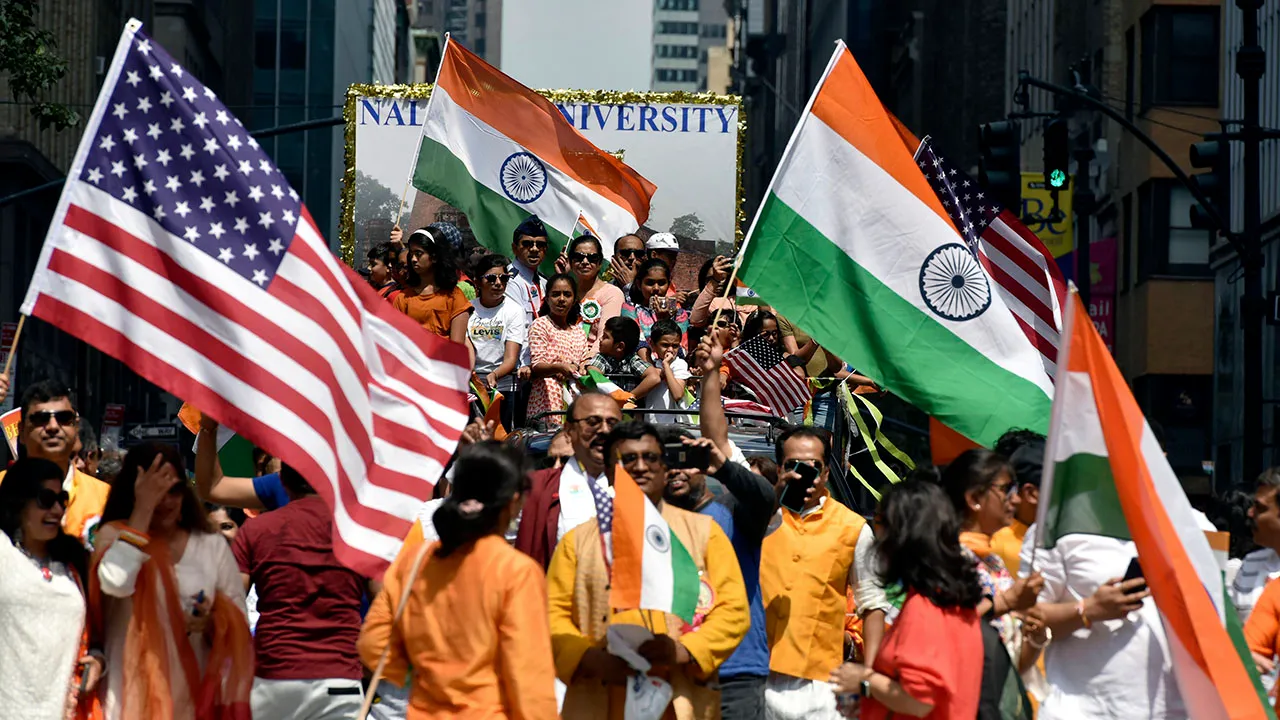
America Must Decide What Its Promise Really Means
The growing visibility of anti-Indian racism raises a fundamental question about the American dream.
For decades, Indian immigrants were encouraged to believe that education, hard work and professional achievement could help them build a secure future in the United States. Many fulfilled that promise, contributing to their workplaces, neighbourhoods and communities.
But success cannot guarantee acceptance in a society where some people continue to define belonging through skin colour, ancestry or religion.
The answer is not to demand that Indian Americans abandon their heritage, conceal their religious identities or prove their patriotism more aggressively than everyone else. Nor is it to dismiss legitimate debates about immigration, employment and public policy.
The answer is to draw a clear line between democratic disagreement and racial discrimination.
Political leaders must challenge dehumanising rhetoric rather than exploit it. Employers and landlords must apply fair standards. Universities must protect students from intimidation. Online platforms must take credible threats seriously, and law-enforcement agencies must investigate possible hate crimes impartially.
Indian Americans should be able to participate in public life, celebrate their traditions and pursue professional opportunities without having their identity treated as a permanent qualification they must overcome.
The real test of the American dream is not whether immigrants can succeed. It is whether they can succeed without being told that they will never truly belong.
Anti-Indian sentiment may be amplified by political polarisation, economic insecurity and online outrage, but its growth is not inevitable. The United States has legal protections, democratic institutions and citizens capable of resisting the politics of exclusion.
Whether those safeguards are effective will depend on the willingness of leaders, institutions and ordinary citizens to challenge racism consistently, rather than only when it becomes politically inconvenient.
A nation confident in its identity does not need to humiliate immigrants to defend it. A society committed to merit does not treat brown skin as evidence of foreignness. And a country that believes in equal opportunity cannot allow the contributions of an entire community to be overshadowed by prejudice.
Indian Americans should not have to choose between their heritage and their home. The promise of America should be large enough to accommodate both.
© Copyright 2026. All Rights Reserved. Powered by Vygr Media.