 By

India has cut extreme poverty from 27.1% to 2.6%, according to the World Bank. Both the cheerleaders and the sceptics are missing the more useful point.
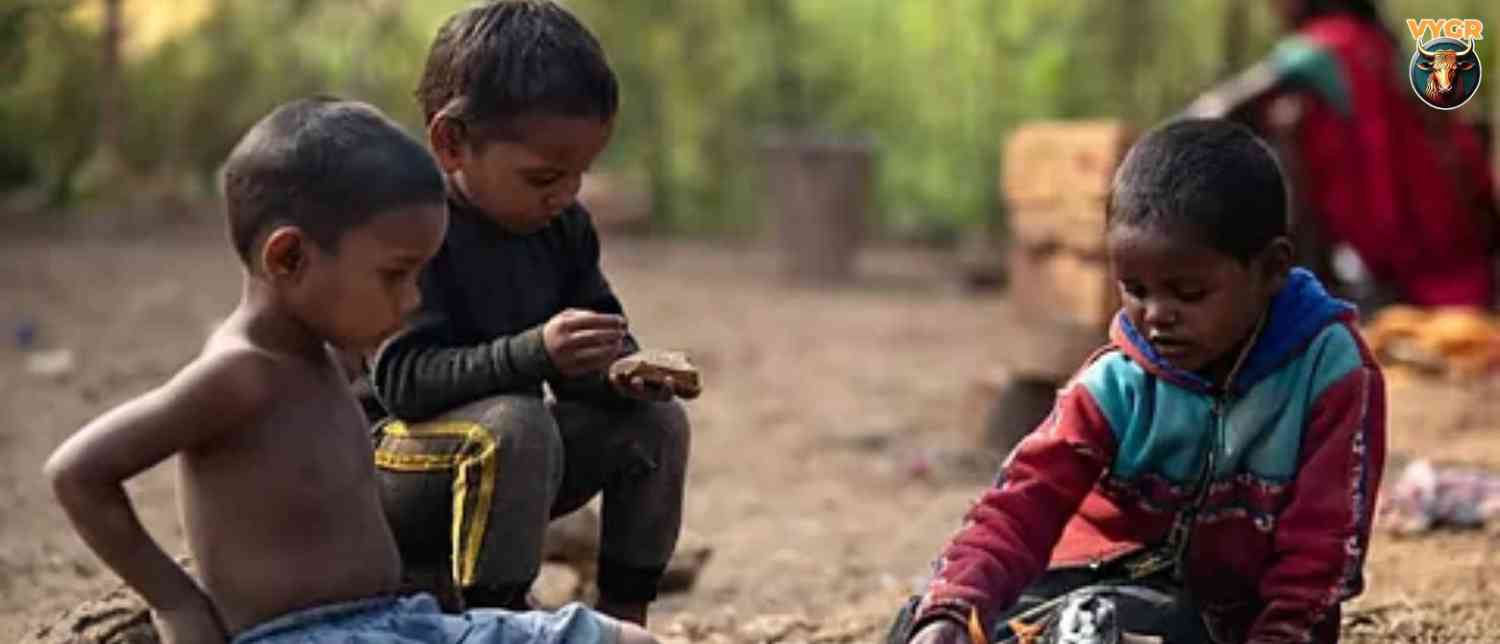
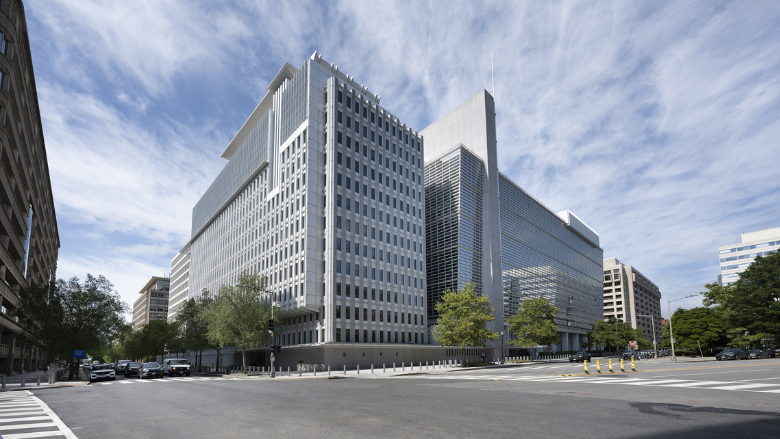
Every few months, a statistic arrives in India’s public debate and is immediately conscripted into a war it did not ask to join. The World Bank’s latest finding is the newest example. In its October 2026 Poverty and Equity Brief, the Bank says that the share of Indians living below its extreme poverty line of $3 a day fell from 27.1 per cent in 2011 to 2.6 per cent in 2023. That is a drop of more than tenfold in twelve years.
One side hears vindication. The other hears a trick. Both are reading the number too quickly.
Start with what is true
It is worth pausing on how large this is, because familiarity dulls it. In 2011, more than one in four Indians lived below the Bank’s extreme line. Extreme poverty, in plain terms, means a household that cannot reliably buy enough food, fuel, or shelter. To say that this condition has become rare is to say that a quiet transformation has taken place in hundreds of millions of lives.
The Bank also reports that the share of Indians living below $4.20 a day, the line it uses for lower-middle-income countries, fell from 57.7 per cent to 16.1 per cent, lifting an estimated 496 million people out of poverty. It credits strong consumption growth, a rise in employment, especially among women, and expanded social transfers such as free and subsidised food. India added roughly 13.4 crore employed people between 2017 and 2023, nearly twice the growth in its working-age population.
Cynicism is cheap, and it is wrong to wave this away. Whatever the debates over methodology, the direction of travel is not seriously in dispute. Even critics of the Bank’s numbers do not argue that India’s poorest are worse off than they were in 2011.
Then ask what the number measures
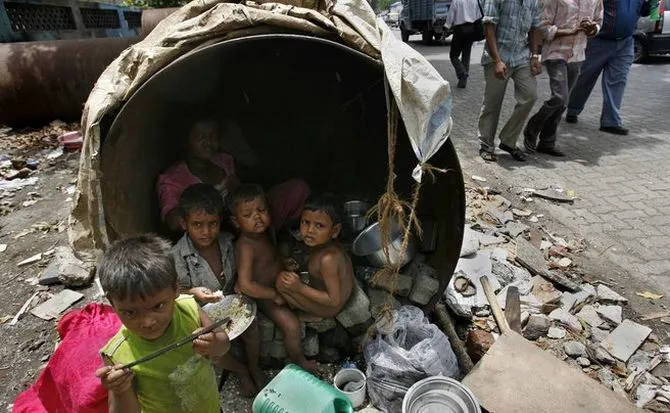
Here is where the victory lap gets awkward. A poverty line is not a measure of well-being. It is a measure of a threshold, and $3 a day is a very low one. At roughly ₹285 a day in purchasing power terms, it is designed to capture people at the edge of survival. Being above it does not mean being secure, nourished or one illness away from slipping back.
The Bank’s own numbers show how much sits just above that line. At $4.20 a day, 16.1 per cent of Indians are still poor, which is more than six times the extreme poverty figure. In rural areas the share below that line is 19.3 per cent, against 8.6 per cent in cities. The Bank’s multidimensional measure, which looks at things like health, schooling and living standards, puts poverty at 15.5 per cent in 2022-23. A separate Bank estimate suggests that more than a billion Indians live below $8.30 a day, the benchmark for upper-middle-income economies. India is not aspiring to be a lower-middle-income country forever.
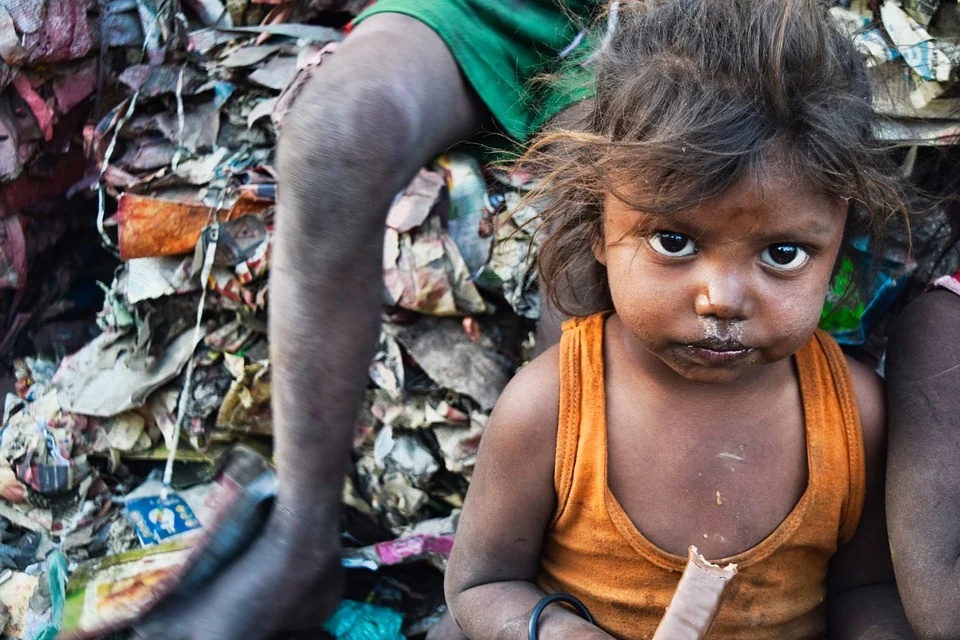
And the Bank notes who is left behind: as poverty fell, it became concentrated among households with less education, fewer assets, less stable work and more dependants. These are not people who will be lifted by the same forces that rescued the first wave. The easy gains have been banked.
The data problem is real, and it cuts in an uncomfortable direction
There is a second reason for restraint, and it concerns evidence. India went more than a decade without a comparable national consumption survey. The 2011-12 survey and the 2022-23 and 2023-24 surveys were designed differently, and the Bank itself acknowledges that their comparability is limited. The Bank has also dropped private-survey observations for 2015-21 because of comparability concerns.
That does not make the poverty decline fictional. Other approaches, including estimates from India’s own banking research arm, also find poverty far lower than a decade ago. But it does mean the exact figure of 2.6 per cent should be treated as an estimate with a wide shadow around it. It also helps explain why the Bank’s own numbers for roughly the same period have moved so much between briefs: its earlier 2025 brief put extreme poverty on the same $3 line at 5.3 per cent for 2022-23. The new 2.6 per cent is about half that, but that is more likely to reflect revised data and methods than a one-year miracle.
The same caution applies to inequality. Consumption surveys are known to miss the spending of the very rich, which is why India’s measured consumption Gini looks flattering compared with income and wealth data. The Bank itself cautions on this. A country can be reducing poverty rapidly and still be highly unequal at the top. Those two facts are not in conflict.
What the argument should be about
If I could change one thing about this debate, it would be to retire the question “Is the number true?” and replace it with “Is it the right number to be proud of?”
The government and its supporters are entitled to claim credit for a decade in which welfare delivery improved and growth continued. Public food distribution, direct transfers, rural roads and household infrastructure all matter, and it is hard to imagine the decline without them. But the same supporters would be doing the country a disservice if they let a $3 line become the finish line.
The sceptics, for their part, should resist the temptation to treat every improvement as a statistical artefact. Poverty reduction is one of the rare areas where India’s critics and defenders have often argued from the same direction, if with different magnitudes.
What would actually help is boring and bipartisan:
-
An official poverty line. India has not had a modern, widely accepted national one for years. Without it, every estimate is borrowed from someone else’s yardstick, and every debate becomes a fight over thresholds rather than people.
- Regular, comparable surveys, released on schedule, covering income as well as consumption.
- A shift in ambition. The goal for a country of India’s size is not the elimination of the worst deprivation but the creation of secure, higher-paying work. The Bank’s own conclusion is that more work alone will not close the gap; higher earnings and protection against shocks matter too.
The honest summary
Extreme poverty in India has fallen dramatically. That should be said plainly, and without an asterisk. Roughly 496 million people crossing the $4.20 line in a dozen years is among the great stories of the century so far.
But 2.6 per cent is not the measure of a good life. It is the measure of the absence of the worst one. The next test for Indian policy is whether the country can build an economy where being above the line means stability, not just survival.
© Copyright 2026. All Rights Reserved. Powered by Vygr Media.