 By
By 
Tesla has sharpened its India strategy with a decisive new launch—one that signals not just a product update, but a recalibration of how the American EV giant intends to compete in one of the world’s most complex automotive markets.
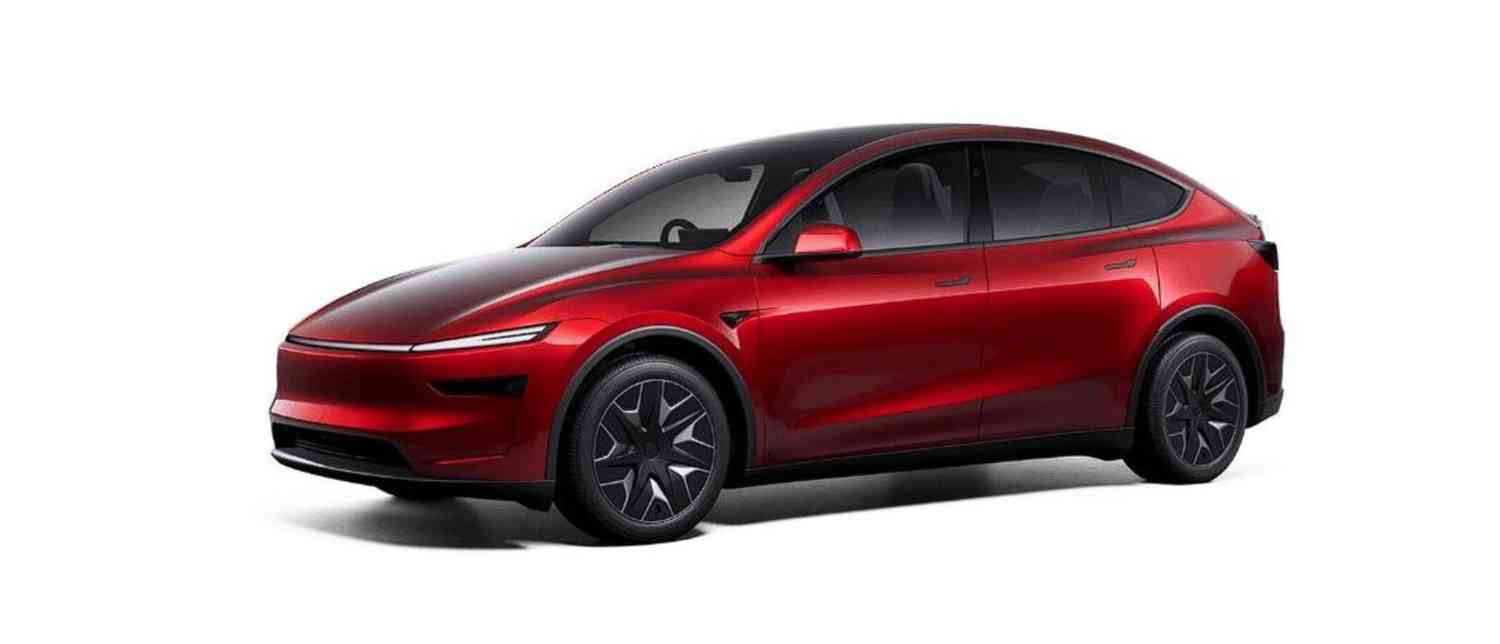
The company has officially introduced the long-wheelbase, six-seater Model Y L in India, priced at ₹61.99 lakh (ex-showroom), expanding its still-narrow portfolio in the country. Positioned between its existing variants, the new offering is both a response to market realities and a bid to tap into India’s growing appetite for premium, family-oriented electric SUVs.
A strategic expansion after a muted entry
When Tesla first entered India in July 2025 with the standard Model Y, expectations were sky-high. But the rollout remained relatively subdued, largely due to steep import duties—touching nearly 100 percent—which pushed prices far above global benchmarks. The base Model Y arrived at ₹59.89 lakh, placing it firmly in a niche segment where affordability remains a major barrier.
Against that backdrop, the launch of the Model Y L marks Tesla’s first major product intervention in the country since its debut. It is not merely a new variant—it is a repositioning.
The Model Y L introduces a longer wheelbase and a three-row, six-seat configuration, addressing a crucial gap in Tesla’s Indian lineup. While the standard Model Y catered to a relatively limited urban luxury audience, the new L variant aims to appeal to larger families and buyers seeking space, comfort, and practicality alongside cutting-edge electric mobility.
Built for space, tailored for families
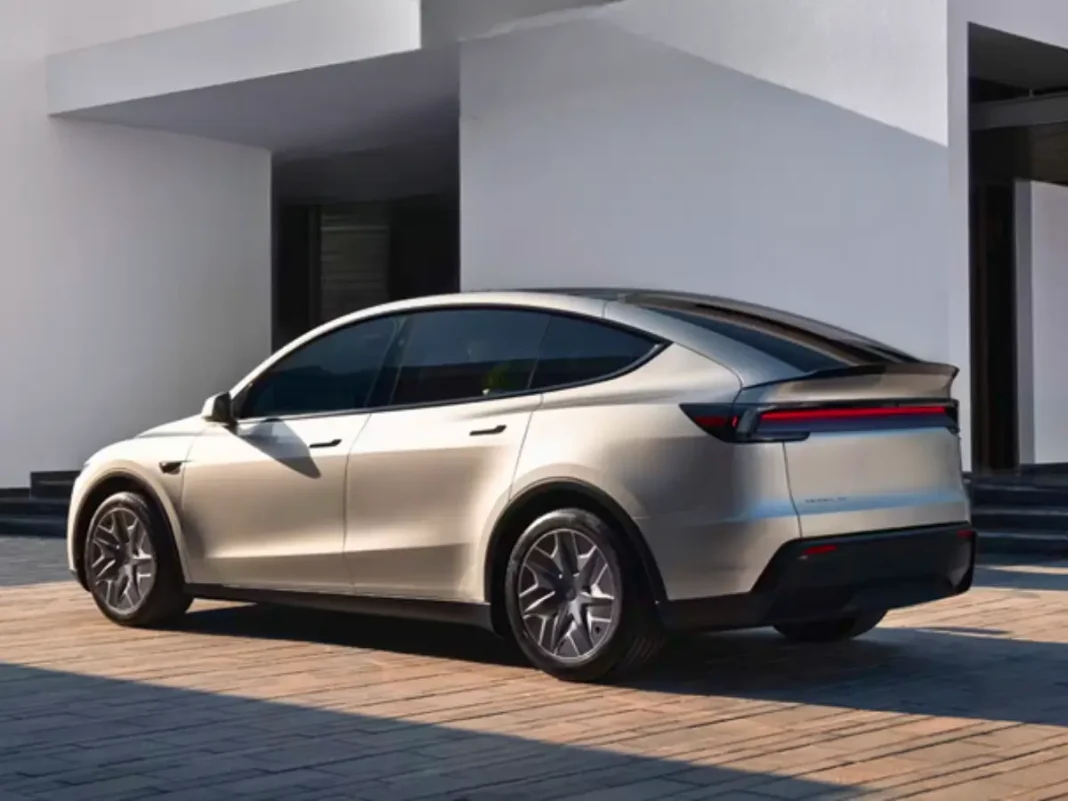
At the heart of the Model Y L’s appeal is its expanded footprint. The long-wheelbase architecture allows for a more spacious cabin, translating into improved legroom and a more comfortable third row—an area where many SUVs in India fall short.
Unlike the conventional five-seat layout of the standard Model Y, the L variant adopts a six-seater format, likely with captain seats in the second row. This configuration not only enhances comfort but also aligns with the expectations of Indian buyers who often prioritize rear-seat experience, especially in chauffeur-driven scenarios.
The addition of a third row transforms the vehicle into a full-fledged family SUV, a category that has been witnessing strong growth in India. Increasingly, buyers are gravitating toward larger vehicles equipped with premium features such as panoramic sunroofs, large touchscreen interfaces, and flexible seating layouts—trends that Tesla appears keenly aware of.
🌐 13 markets now list Tesla Model Y L
• 9 are right-hand-drive markets, so the 6-seat variant is already localized beyond China
• China, India, Australia, Japan and South Korea are all included
• Europe and North America are still absent, pointing to an Asia-Pacific first… pic.twitter.com/IUwDU7eHzG— TeslaTracker (@TeslaTrackerUS) April 22, 2026
Performance meets practicality
Beyond space, the Model Y L delivers on performance and range—two factors that remain central to EV adoption.
The SUV comes equipped with an all-wheel-drive (AWD) setup, offering improved traction and performance across varying driving conditions. While Tesla has not disclosed full acceleration figures in the India announcement, AWD configurations globally are known to deliver strong performance metrics.
More importantly, the Model Y L boasts a WLTP-certified range of up to 681 km on a single charge. This places it among the longest-range electric SUVs available in India today, surpassing even Tesla’s own long-range rear-wheel-drive Model Y, which offers up to 661 km.
In a market where range anxiety continues to influence purchasing decisions, the 681 km figure is a significant advantage. It positions the Model Y L not just as a luxury offering, but as a practical long-distance vehicle capable of handling intercity travel with fewer charging stops.
Pricing and positioning
At ₹61.99 lakh, the Model Y L sits slightly above the standard five-seater Model Y, which is priced at ₹59.89 lakh, but remains below Tesla’s higher-end variants. On-road pricing is estimated to reach around ₹63.12 lakh.
This positioning is deliberate. By slotting the Model Y L between existing offerings, Tesla is attempting to broaden its appeal without dramatically increasing entry barriers.
However, the pricing still places it in the premium bracket—far above the average car price in India, where most vehicles sell for under $22,000 (roughly ₹18 lakh). As a result, Tesla continues to operate within a niche segment, targeting affluent buyers rather than mass-market consumers.
Competing in a crowded luxury EV space
The Model Y L enters a competitive and rapidly evolving segment. It will go head-to-head with established luxury electric SUVs such as the Mercedes-Benz EQS SUV, Mercedes-Benz EQB, and other premium offerings priced between ₹70 lakh and ₹1.4 crore.
In this context, Tesla’s pricing could be seen as relatively aggressive, undercutting some rivals while offering comparable—or in some cases superior—range figures.
But competition is not just about specifications. Legacy luxury brands bring strong brand equity, extensive dealership networks, and localized manufacturing advantages—areas where Tesla still has ground to cover in India.
The cost equation: High upfront, lower running
One of Tesla’s key arguments for the Model Y L lies in its long-term cost benefits.
Despite the high initial price, the company has consistently emphasized lower operating costs associated with electric vehicles. Reduced fuel expenses, lower maintenance requirements, and fewer moving parts contribute to overall savings.
Tesla executives have previously suggested that buyers could recover up to one-third of the vehicle’s purchase cost within four to five years through these savings. While such claims depend on usage patterns and charging infrastructure, they form a crucial part of Tesla’s value proposition in a price-sensitive market.
Aligning with shifting consumer trends
The launch of the Model Y L also reflects broader shifts in Indian consumer preferences.
SUVs have steadily gained dominance in the market, driven by their commanding road presence, versatility, and perceived safety. Within this category, demand is increasingly skewing toward larger, feature-rich vehicles that can serve both personal and family needs.
At the same time, awareness and acceptance of electric vehicles are growing, supported by government incentives, expanding charging infrastructure, and rising fuel costs.
Tesla’s new offering sits at the intersection of these trends—a premium electric SUV designed for families, with a focus on space, technology, and long-range capability.
A global product with local relevance
Interestingly, the Model Y L is not entirely new on the global stage. The long-wheelbase version was previously introduced in China, where it caters to similar preferences for spacious rear seating and extended cabins.
However, it has yet to be launched in the United States, making India one of the key markets for this variant outside China. This underscores Tesla’s strategy of tailoring products to regional demands rather than adopting a one-size-fits-all approach.
Challenges remain
Despite the strategic intent behind the Model Y L, Tesla’s India journey is far from straightforward.
High import duties continue to inflate prices, limiting accessibility. The absence of local manufacturing further compounds the issue, making Tesla vehicles significantly more expensive than in other markets.
Additionally, charging infrastructure, while improving, is still developing—particularly outside major urban centers.
These challenges mean that while the Model Y L strengthens Tesla’s portfolio, it does not fundamentally alter the brand’s niche positioning in India—at least not yet.
A calculated step forward
The launch of the Model Y L represents a calculated move by Tesla—one that balances ambition with realism.
By introducing a six-seater, long-range, premium electric SUV, the company is addressing specific gaps in its lineup while aligning with evolving consumer preferences. It is a product designed not just to sell, but to signal intent: Tesla is adapting, learning, and refining its approach to India.
Whether this strategy translates into significant market share remains to be seen. But one thing is clear—the Model Y L is more than just another variant. It is Tesla’s clearest attempt yet to speak the language of the Indian buyer.
With inputs from agencies
Image Source: Multiple agencies
© Copyright 2026. All Rights Reserved. Powered by Vygr Media.