
 By
By 
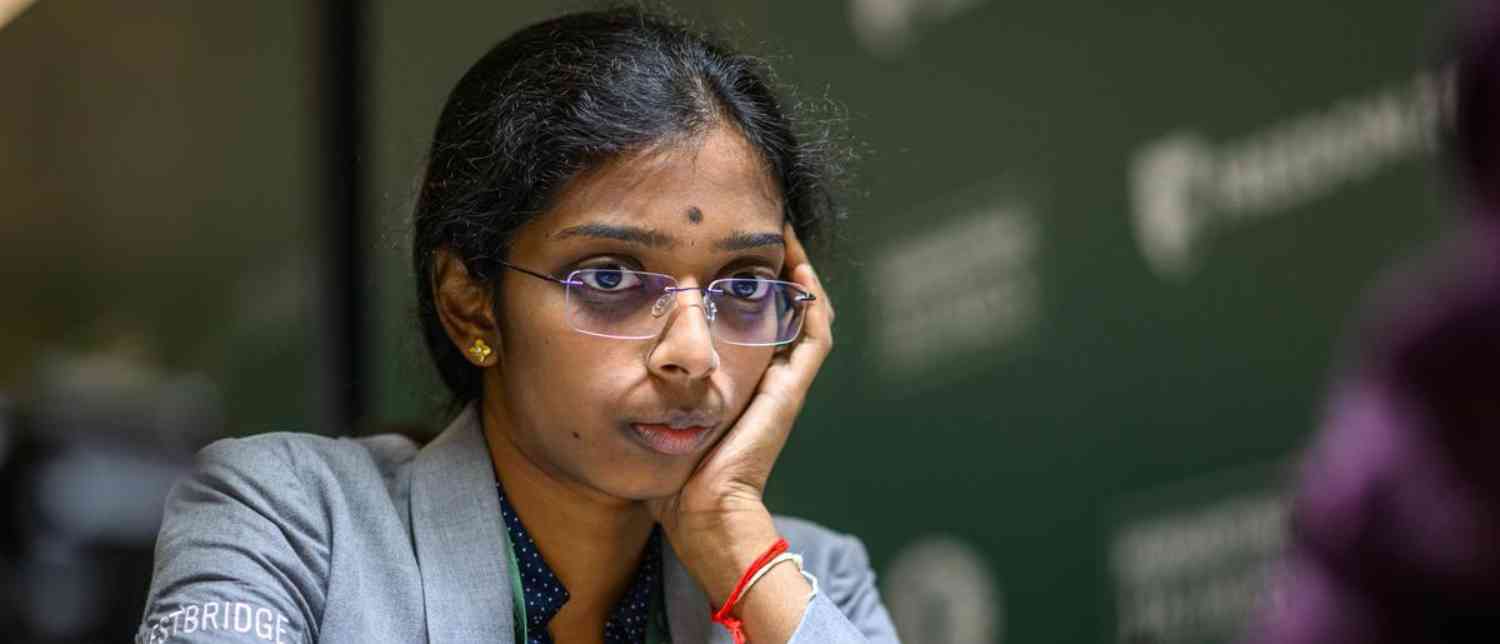
Indian chess enjoyed a historic double celebration as Grandmaster R Vaishali crowned herself champion of the inaugural WR Women’s Chess Tour Asia Leg in Tokyo, Japan, just hours after her younger brother, Grandmaster R Praggnanandhaa, became the first Indian to win the prestigious Norway Chess tournament. The sibling achievements on the same day marked another milestone for Indian chess, highlighting the growing dominance of the Chennai-based chess family on the global stage.
Vaishali, 24, emerged victorious in the first event of the newly launched WR Women’s Chess Tour, an international circuit aimed at elevating women’s chess through elite rapid and blitz competitions held across multiple continents. The Tokyo event, staged on June 6-7, served as the opening tournament of the global series and featured a strong field of eight players competing in a knockout rapid format with a time control of 15 minutes plus a 10-second increment per move.
The Indian Grandmaster entered the tournament as one of the headline attractions, arriving in Tokyo on the back of one of the biggest achievements of her career. Earlier this year, she won the 2026 FIDE Women’s Candidates Tournament, earning the right to challenge reigning Women’s World Champion Ju Wenjun for the world title. Her Candidates triumph made her the first Indian woman to win the event and secured India a place in the Women’s World Championship match after a gap of 15 years.
Dominant Run to the Title
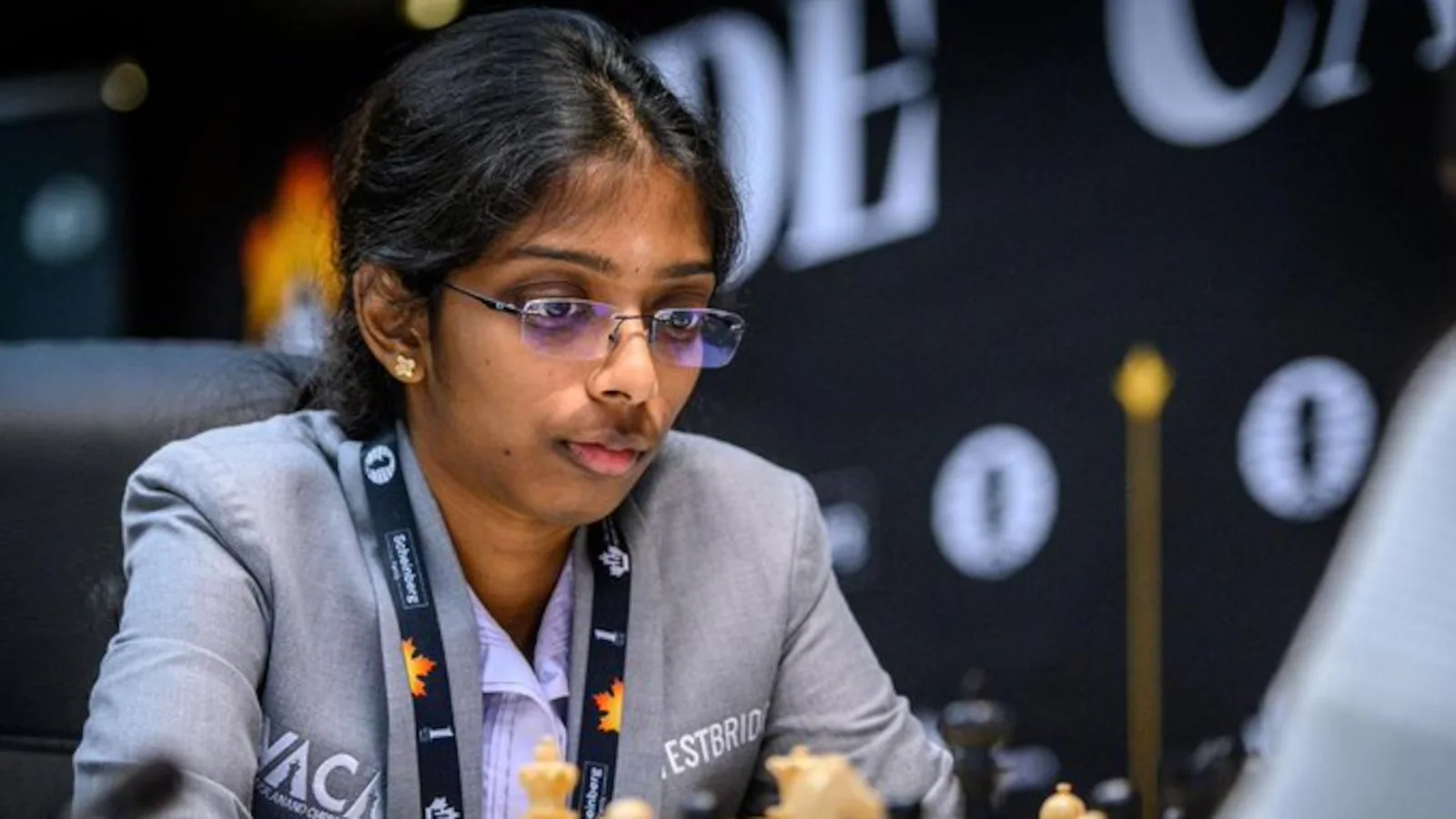
Vaishali showcased impressive consistency throughout the tournament, defeating every opponent she faced in the knockout stages.
She began her campaign with a convincing quarterfinal victory over Indonesian International Master Irine Sukandar. Vaishali won one game and drew the other to secure a 1.5-0.5 match victory and advance to the semifinals.
In the semifinal, she faced former Women’s World Champion Alexandra Kosteniuk of Russia. Once again, the Indian star produced a clinical performance, winning the match 1.5-0.5 to book her place in the final.
The title clash saw Vaishali take on Kazakhstan’s International Master Alua Nurman. Demonstrating composure under pressure, she repeated the same winning scoreline, defeating Nurman 1.5-0.5 across the two-game final and sealing the championship.
By winning the event, Vaishali finished ahead of several accomplished players, including Kosteniuk, Kateryna Lagno, and Bulgaria’s Antoaneta Stefanova, who held the Women’s World Championship title from 2004 to 2006. The tournament field also featured Anna Sargsyan, Irine Sukandar, Alua Nurman and Japanese player Azumi Sakai.
A New Era for Women’s Chess
The Tokyo competition marked the launch of the WR Women’s Chess Tour, an ambitious international initiative designed to increase the visibility, competitiveness and commercial appeal of women’s chess. According to details announced before the event, the tour will feature tournaments across Asia, South America, Africa and Europe before culminating in a Grand Final.
The inaugural Tokyo leg attracted significant attention because of the presence of elite players such as Vaishali, Kosteniuk and Stefanova. The event was also notable for being held in Japan, a country not traditionally associated with hosting major international chess tournaments. Community reactions from chess fans welcomed the creation of a dedicated women’s circuit, viewing it as an important step toward providing more high-level opportunities for female players.
Having already secured the rapid title, Vaishali’s campaign in Tokyo is not yet over. She will now attempt to complete a memorable double by competing in the blitz section of the tournament, which follows the rapid event.
From Candidates Champion to World Championship Challenger
Vaishali’s Tokyo triumph continues a remarkable year that has transformed her from a strong Grandmaster into one of the leading figures in women’s chess.
In April, she produced a historic performance at the 2026 FIDE Women’s Candidates Tournament. Entering the final round level on points with Kazakhstan’s Bibisara Assaubayeva, Vaishali defeated Kateryna Lagno to clinch the title. She finished the event with 8.5 points from 14 rounds, recording five victories, seven draws and only two defeats.
Her success was particularly impressive given that she entered the tournament as the lowest-rated participant. Despite setbacks earlier in the competition, including two losses against Zhu Jiner, Vaishali mounted a strong comeback and delivered when it mattered most.
The final-round victory over Lagno secured her place in the Women’s World Championship match against reigning champion Ju Wenjun. It also made her the first Indian woman ever to win the Women’s Candidates Tournament.
Her achievement received widespread praise across the chess community. Former World Champion Viswanathan Anand congratulated her for showing “excellent preparation and resilience,” describing it as a proud moment for Indian chess and expressing satisfaction that a player associated with his WestBridge Anand Chess Academy would now compete for the world title.
Chess fans also celebrated the accomplishment as a defining moment in her career, with many noting that Vaishali had established an identity independent of being known merely as Praggnanandhaa’s sister. Community discussions highlighted the emergence of an exceptionally strong chess family from Chennai and praised her resilience throughout the Candidates campaign.
A Historic Day for the Rameshbabu Family
Vaishali’s victory became even more special because it came on the same day her younger brother Praggnanandhaa achieved one of the greatest results of his career.
Competing in Norway Chess 2026, Praggnanandhaa completed a stunning comeback to become the first Indian ever to win the prestigious tournament. In the final round, he defeated Germany’s Vincent Keymer with the white pieces, capitalizing on key middlegame mistakes before securing victory on move 45.
The 20-year-old finished the event with 18 points, recording five wins, two losses and two draws, while also winning both of his Armageddon games. He ended one point ahead of American Grandmaster Wesley So, who finished on 17 points. Praggnanandhaa’s victory earned him the tournament’s top prize of $100,000.
The sibling successes underscored the extraordinary rise of Indian chess and further cemented Chennai’s reputation as a global chess powerhouse. Within a matter of hours, the Rameshbabu family celebrated two major international titles, with Praggnanandhaa making history in Norway and Vaishali lifting the trophy in Tokyo.
Indian Chess Continues Its Global Surge
Vaishali’s latest triumph adds to a broader wave of Indian success on the world chess stage. Alongside world champion challenger D Gukesh, Praggnanandhaa, Arjun Erigaisi, Divya Deshmukh and several other rising stars, she has become a central figure in India’s emergence as a global chess superpower.
For Vaishali, the Tokyo title is another significant step in a breakthrough year already filled with historic milestones. With the Women’s World Championship match against Ju Wenjun on the horizon and the blitz section of the WR Women’s Chess Tour still to come, the Chennai Grandmaster’s remarkable 2026 journey appears far from over.
With inputs from agencies
Image Source: Multiple agencies
© Copyright 2026. All Rights Reserved. Powered by Vygr Media.