
 By
By 
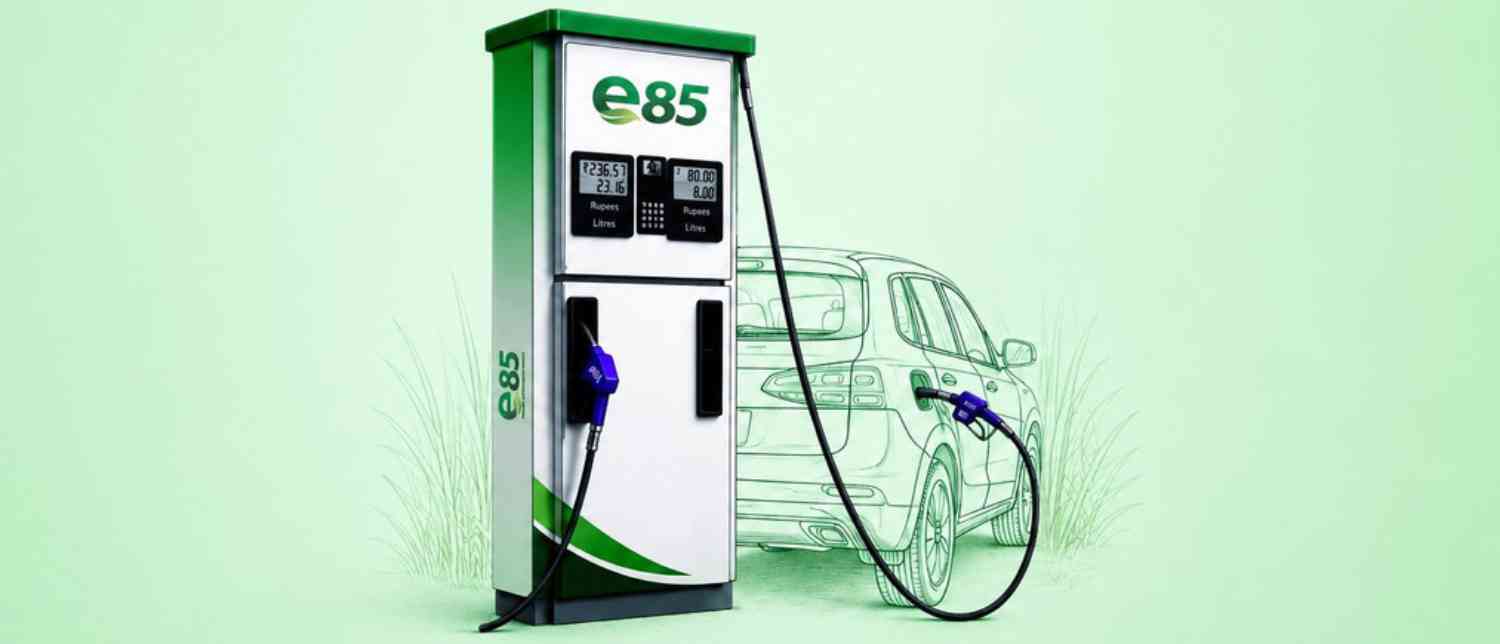
India has taken a major step in its clean-energy and energy-security journey with the launch of E85 fuel, an ethanol-blended petrol containing 80-85 per cent ethanol, marking a new phase in the country's ambitious flex-fuel mobility programme. The rollout comes as the government intensifies efforts to reduce crude oil imports, cut emissions, strengthen rural incomes, and expand the use of domestically produced biofuels.
Union Petroleum and Natural Gas Minister Hardeep Singh Puri launched E85 fuel in New Delhi, describing flex-fuel vehicles (FFVs) as a practical solution for reducing India's dependence on imported crude oil while simultaneously boosting farmer incomes and advancing low-carbon mobility.
E85 Fuel: The Next Stage of India's Ethanol-Blending Mission
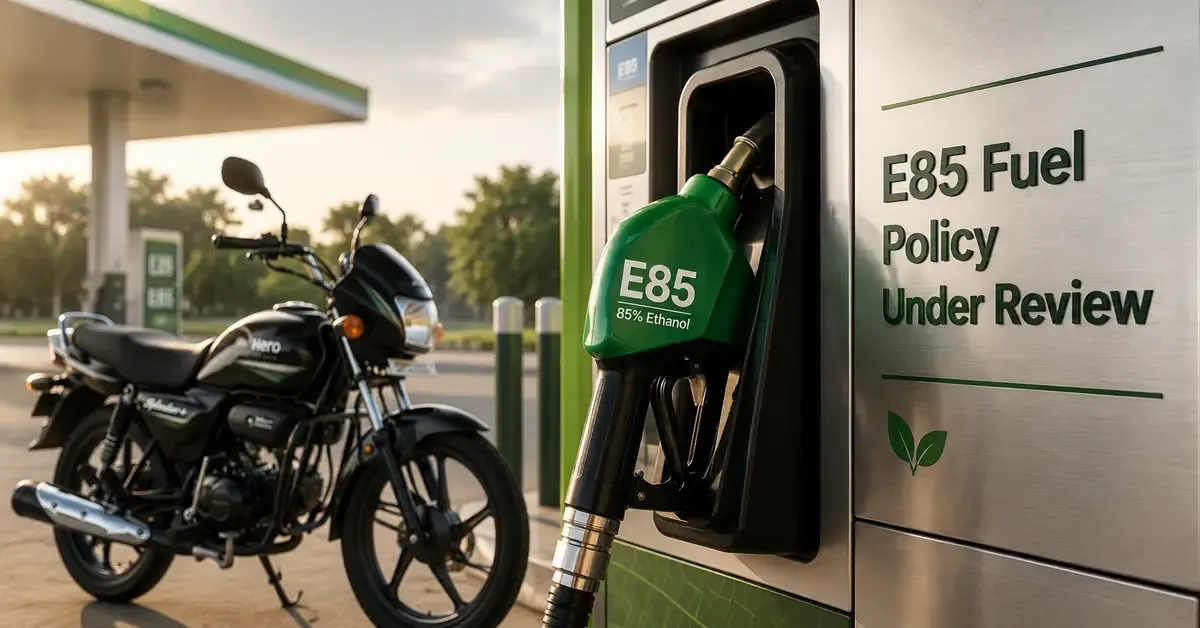
E85 fuel contains between 80 per cent and 85 per cent ethanol blended with petrol and is designed specifically for flex-fuel vehicles capable of operating on varying ethanol-petrol mixtures. The launch follows India's successful implementation of E20 petrol across the country and signals the government's intention to move towards higher ethanol blends in the transport sector.
The introduction of E85 is expected to help India reduce fossil-fuel consumption, lower carbon emissions, and strengthen energy security by increasing the use of domestically produced ethanol derived primarily from sugarcane and other biomass feedstocks.
According to Minister Puri, India's ethanol blending programme has already delivered transformational results, generating earnings of approximately ₹1.58 lakh crore for Indian farmers and helping convert "Annadatas" into "Urjadatas" through participation in the biofuel economy.
Government Targets Crude Oil Dependence
India remains one of the world's largest importers of crude oil, making energy security a critical national priority. The government sees flex-fuel technology as an effective pathway to reduce import dependence while supporting domestic agricultural production.
The Petroleum Minister emphasized that flex-fuel vehicles can simultaneously contribute to lower crude imports, rural economic growth, and environmental sustainability. Studies cited by the government indicate that if 50 per cent of all new two-wheelers and four-wheelers sold in India run on flex-fuel technology, farmers could earn an additional ₹12,403 crore.
Flex-Fuel Vehicles Move Into the Mainstream
The E85 rollout coincides with rapid developments in India's flex-fuel vehicle ecosystem.
Recently, Hero MotoCorp launched India's first mass-market flex-fuel motorcycles—the Splendor+ Flex Fuel and HF Deluxe Flex Fuel—which can run on ethanol blends of up to E85. The motorcycles were unveiled in the presence of Union Ministers Nitin Gadkari and Hardeep Singh Puri and are being positioned as affordable, environmentally friendly mobility solutions for millions of Indian commuters.
At the same time, Maruti Suzuki has launched India's first flex-fuel passenger vehicle, the WagonR Flex Fuel, marking a significant milestone in the country's automotive transition toward alternative fuels. The vehicle can operate on higher ethanol blends and represents one of the earliest large-scale efforts by a passenger vehicle manufacturer to support the government's biofuel agenda.
Flex-fuel vehicles are designed to run on multiple fuel blends, ranging from conventional petrol to high-ethanol mixtures such as E20, E85, and even E100 in certain applications. Their ability to adapt to different fuel compositions makes them a key component of India's strategy to diversify transportation fuels.
Massive Expansion of Ethanol Fuel Infrastructure Planned
To support the growing fleet of flex-fuel vehicles, the government is undertaking a major expansion of ethanol-fuel infrastructure.
Minister Puri announced that around 500 ethanol dispensing stations will be operational across the country by December 2026, with the number expected to rise to 5,000 by the end of 2027. Key urban centres, including Delhi-NCR, Mumbai, Pune and Nagpur, are among the locations earmarked for ethanol fuel availability.
The infrastructure push is intended to ensure that vehicle owners have access to higher ethanol blends while encouraging automakers to introduce more flex-fuel models. Industry leaders have repeatedly stressed that widespread fuel availability will be critical to the success of flex-fuel technology in India.
Economic Benefits for Farmers and Rural India
A central pillar of India's ethanol strategy is its potential to create new income opportunities for farmers.
Ethanol production relies heavily on agricultural feedstocks such as sugarcane and maize, creating additional demand for farm produce. Government estimates suggest that higher adoption of ethanol-based fuels can significantly strengthen rural economies while reducing India's energy import bill.
The ethanol programme has already emerged as a major source of rural income generation, with the government highlighting farmer earnings of ₹1.58 lakh crore through ethanol procurement and blending initiatives.
Environmental and Consumer Advantages
Apart from economic gains, E85 and flex-fuel technology are expected to contribute to lower vehicle emissions and support India's broader climate goals. By replacing a larger share of fossil fuels with renewable ethanol, policymakers aim to reduce the carbon footprint of the transport sector.
The government also believes ethanol-based fuels can offer cost advantages because ethanol is produced domestically and is generally less expensive than imported petroleum products. This could potentially translate into lower running costs for consumers over time.
Challenges Ahead
While momentum is building, experts and industry stakeholders acknowledge that widespread adoption of E85 will require a robust supporting ecosystem. Challenges include expanding fuel-distribution infrastructure, ensuring adequate ethanol supply, increasing the availability of compatible vehicles, and building consumer awareness about flex-fuel technology.
Automakers have emphasized that the long-term success of flex-fuel mobility depends on coordinated growth across vehicle manufacturing, fuel availability, and regulatory support.
A New Chapter in India's Energy Transition
The launch of E85 fuel represents one of the most significant developments in India's biofuel journey since the nationwide rollout of E20 petrol. Combined with the introduction of flex-fuel motorcycles and passenger vehicles, as well as the planned expansion of thousands of ethanol dispensing stations, the initiative signals a determined push toward cleaner mobility, stronger energy security, and enhanced farmer prosperity.
As India scales up ethanol production and flex-fuel infrastructure, E85 is expected to become a cornerstone of the country's strategy to reduce oil dependence, strengthen rural livelihoods, and build a more sustainable transportation ecosystem for the future.
With inputs from agencies
Image Source: Multiple agencies
© Copyright 2026. All Rights Reserved. Powered by Vygr Media.