

 By

OpenAI’s chief scientist, Jakub Pachocki, has put forward a new way to measure how fast artificial intelligence is advancing. In a proposal backed by CEO Sam Altman, he argues that AI developers should use a metric called perplexity as a common measure of progress and agree on shared limits for increasingly powerful models. The idea arrives at a time of growing concern, both inside and outside the industry, about the risks of AI systems whose capabilities are expanding quickly.
What Is Perplexity in AI?
Perplexity is a standard measure in language modelling. It describes how well a model predicts the next token, the basic unit of text a model reads and writes, on average. Lower perplexity means better predictions.
In simple terms, a model with low perplexity is rarely surprised by what comes next in a piece of text it has not seen before. A model with high perplexity is often caught off guard. Perplexity is closely related to cross-entropy loss, the number that engineers watch during training. The proposal focuses on a version called log-perplexity.
This metric has no connection to the AI search company of the same name. Here, perplexity is a technical measurement of a language model, not a product.
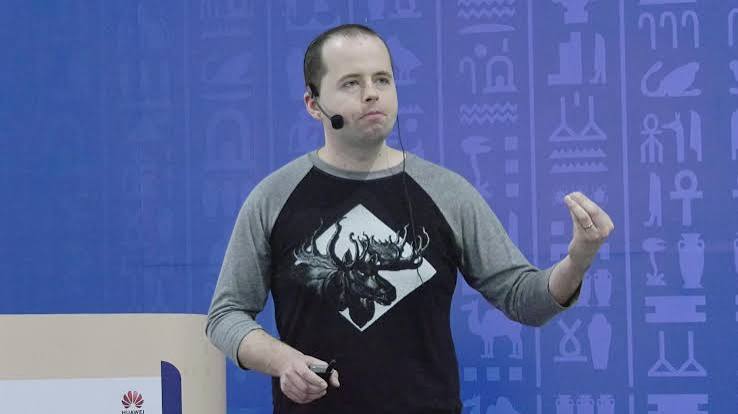
What Pachocki Proposed
In a blog post titled “Perplexity and Intelligence,” published on November 22, 2026, Pachocki makes two linked suggestions.
- A shared metric. Perplexity, measured on data the model was not trained on, should serve as a common yardstick for pretraining progress across the industry.
- Common limits. Developers should commit to not crossing agreed thresholds, based on perplexity and other measurements, until the ability to understand and monitor AI behaviour reaches a concrete milestone.
The logic is simple. If companies want to agree on the pace of AI development, they first need a way to measure it that all of them accept. Perplexity, he argues, could be that measure.
OpenAI Publishes Its Own Numbers
The post also reveals internal figures that OpenAI had not shared before. It reports log-perplexity of about 0.99 for GPT-3.5 and about 0.91 for GPT-4, measured on a dataset OpenAI has tracked over time. According to the post, powerful new capabilities appeared in areas such as cybersecurity and mathematics once the score fell below roughly 0.8.
Because OpenAI has historically been guarded about training details, publishing these scores marks a change in posture.
Why Perplexity Could Work as a Shared Measure
Supporters of the idea point to several advantages.
- It is continuous. Many task-based benchmarks become obsolete as models improve and top scores bunch together. Perplexity keeps giving a usable signal.
- It is general. It reflects how well a model has learned patterns in text, rather than skill at one narrow test.
- It can be compared. If labs measured it the same way, it would give outsiders a clearer picture of who is advancing and how fast.
The Limits of the Idea
The proposal is not a finished standard, and there are real caveats.
- Pachocki’s figures come from OpenAI’s own held-out dataset, so other labs would need a common dataset to make fair comparisons.
- The link between falling perplexity and new capabilities is an observed trend, not proof that a specific number guarantees a specific ability.
- Perplexity alone cannot capture all capability or risk, especially for abilities that come from later training stages and tool use.
- No agreement or threshold has been announced, and the safety milestones that would allow progress past a limit remain undefined.
Why the Timing Matters
Concern about advanced AI has grown as models take on more complex tasks, including in sensitive fields such as cybersecurity. Calls to slow down or pause often stall on a practical question: how would anyone know when a limit has been reached? A measurable, shared indicator turns a vague debate into something that can be negotiated and checked.
What Happens Next
For the proposal to matter, other major AI labs, researchers, and governments would need to engage with it. Key questions include whether competitors will adopt the same metric, who verifies the numbers, which thresholds would trigger limits, and what monitoring progress would be enough to continue. For now, it is an opening position from one of the industry’s most influential labs, not a binding rule.
Frequently Asked Questions
What is perplexity in simple words? It is a score for how well an AI model predicts the next piece of text. Lower scores mean better predictions.
Who proposed using it to track AI progress? OpenAI’s chief scientist, Jakub Pachocki, with the backing of CEO Sam Altman.
What limits does the proposal suggest? Developers would commit not to cross agreed capability thresholds until tools for understanding and monitoring AI behaviour reach a defined milestone.
Is this the same as the Perplexity AI search tool? No. The metric is a technical measure of language models and is unrelated to that company.
Has the industry agreed to the plan? No. No agreement or specific threshold has been announced yet.
© Copyright 2026. All Rights Reserved. Powered by Vygr Media.