 By
By 
India’s sporting community finally has its long-awaited verdict. The Ministry of Youth Affairs and Sports announced the National Sports Awards 2025 on August 18, 2026, recognising athletes, coaches and organisations that have made significant contributions to Indian sport.
The announcement brings an end to months of uncertainty surrounding the awards. The selection process had attracted attention after recommendations were made months earlier, followed by a prolonged review of the proposed Arjuna Award list. The final announcement has now confirmed 17 Arjuna Award recipients, one Arjuna Award (Lifetime) winner, five Dronacharya Award recipients and the Army Paralympic Node, Pune, for the Rashtriya Khel Protsahan Puraskar.
One of the biggest talking points is the absence of a Major Dhyan Chand Khel Ratna Award winner in the 2025 list. The highest sporting honour had earlier been linked to Indian hockey vice-captain Hardik Singh, who was the sole recommendation made by the selection committee in December 2025. However, the final awards announcement contains no Khel Ratna recipient.
The final list also places the spotlight on a new generation of Indian sporting talent, particularly in athletics, chess and badminton.

Tejaswin Shankar, Divya Deshmukh headline Arjuna Award list
The Arjuna Award 2025 list features athletes from a wide range of disciplines, underlining the increasingly diverse nature of Indian sport.
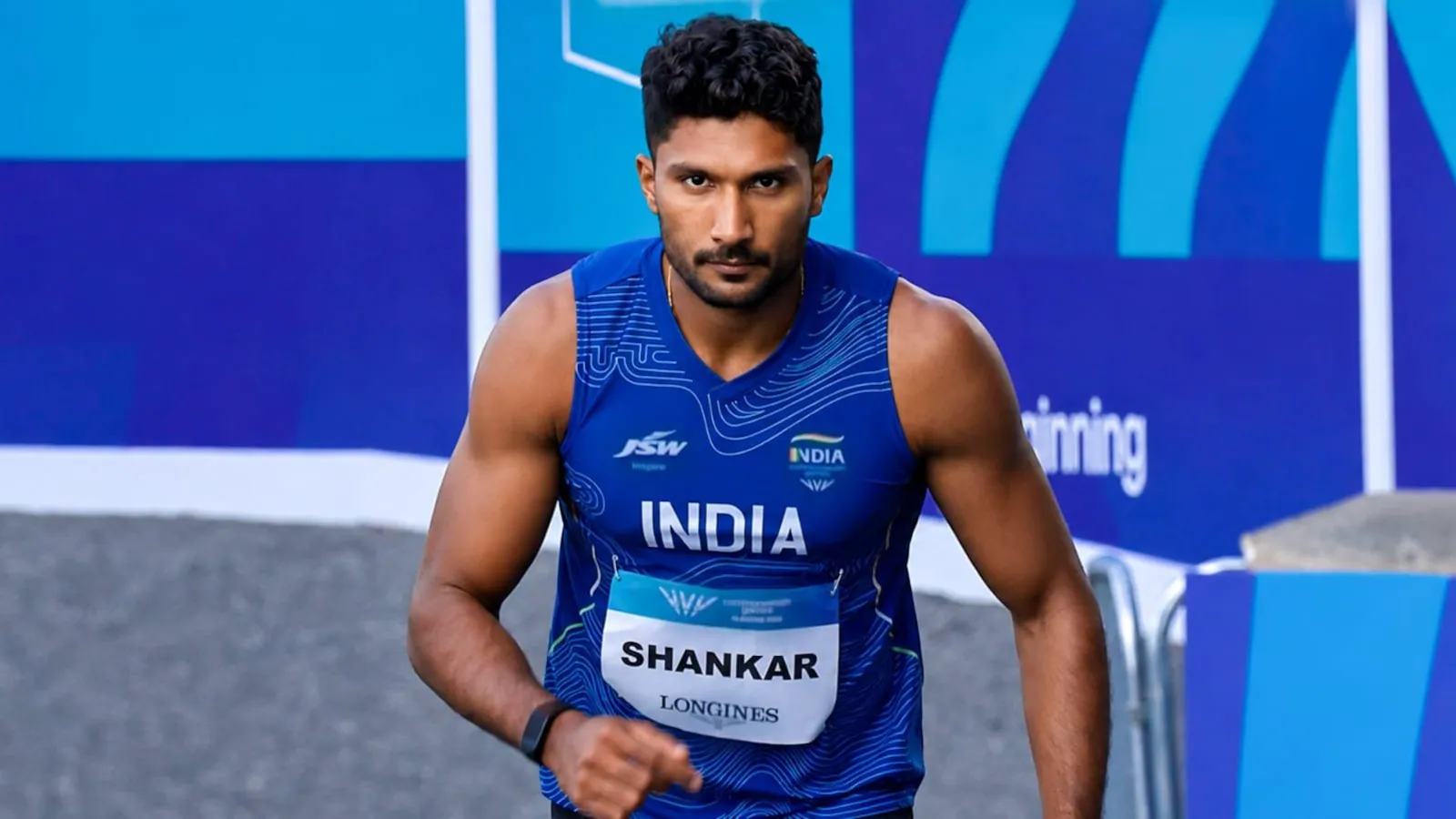
Among the most prominent names is Tejaswin Shankar, whose recognition reflects his sustained performances in athletics. The decathlete has emerged as one of India's leading multi-event athletes and has earned international recognition through his performances at major championships.
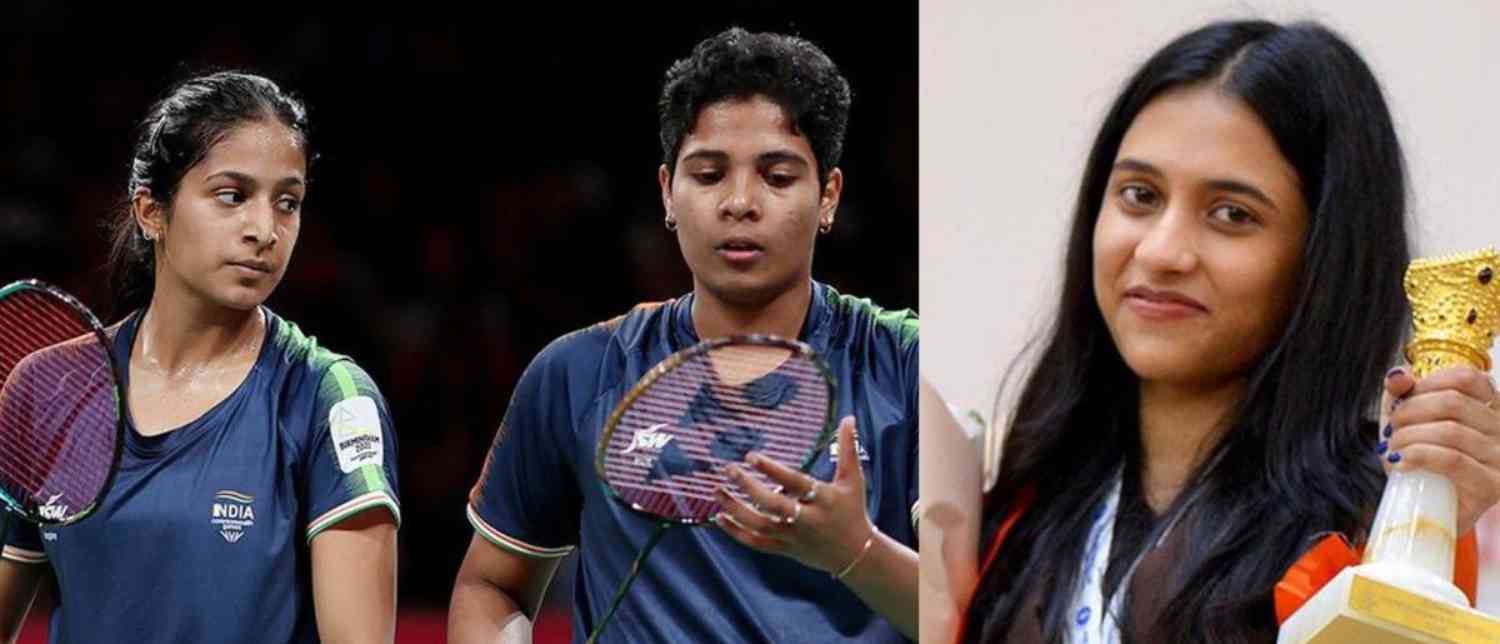
Chess has also received significant representation, with Vidit Gujrathi and Divya Deshmukh both being honoured. Deshmukh's inclusion is particularly noteworthy after her breakthrough on the global stage. Her rise has added another chapter to India's remarkable recent run in international chess, which has already produced a world champion in D. Gukesh.
The badminton contingent features Treesa Jolly and Gayatri Gopichand, India's prominent women's doubles combination. Their inclusion reflects the growing depth of Indian badminton beyond the country's established singles stars.
The complete Arjuna Award list comprises:
-
Tejaswin Shankar — Athletics
-
V. Muhammed Ajmal — Athletics
-
Priyanka Goswami — Athletics
-
Treesa Jolly — Badminton
-
Gayatri Gopichand — Badminton
-
Narender — Boxing
-
Vidit Gujrathi — Chess
-
Divya Deshmukh — Chess
-
Dhanush Srikanth — Deaf Shooting
-
Lalremsiami — Hockey
-
Rajkumar Pal — Hockey
-
Surjeet — Kabaddi
-
Pooja — Kabaddi
-
Rudraksh Khandelwal — Para-Shooting
-
Ekta Bhyan — Para-Athletics
-
Arvind Singh — Rowing
-
Akhil Sheoran — Shooting
The final list is notably different from the 24 names recommended by the selection committee in December 2025. Several names that had initially been proposed, including Pranati Nayak, Nirmala Bhati, Padmanabh Singh, Mehuli Ghosh, Sutirtha Mukherjee, Sonam Malik, Aarti Pal and Mohammed Afsal, do not appear among the final 17 awardees.
That distinction is important. The December list represented recommendations, whereas the August 2026 announcement represents the government's final decision.
No Khel Ratna recipient in National Sports Awards 2025
Perhaps the most striking feature of the announcement is that no athlete has been selected for the Major Dhyan Chand Khel Ratna Award this year.
This comes after hockey star Hardik Singh emerged as the sole Khel Ratna recommendation in December 2025. The midfielder had been a key member of India's Olympic bronze-medal-winning teams at Tokyo 2020 and Paris 2024 and had also contributed to India's success in other major international competitions.
The eventual decision not to confer the Khel Ratna makes the 2025 awards cycle unusual. In the previous cycle, four sportspersons — Manu Bhaker, D. Gukesh, Harmanpreet Singh and para-athlete Praveen Kumar — received India's highest sporting honour.
The absence of a Khel Ratna winner also distinguishes this year's awards from the high-profile 2024 cycle, which followed the Paris Olympics and produced several exceptional performances.
Chess continues its remarkable rise
The inclusion of Vidit Gujrathi and Divya Deshmukh is another indication of India's growing strength in chess.
Indian chess has enjoyed a remarkable period, with D. Gukesh becoming the youngest world champion and a new generation of players making deep runs in major international competitions.
For Deshmukh, the Arjuna Award adds national recognition to a rapidly developing career. Her success has helped place women's chess in India firmly in the spotlight, while Vidit remains one of the country's most established grandmasters.
Their joint recognition also illustrates how India's chess ecosystem is no longer dependent on a single superstar. A wider group of players is now competing successfully at the highest international level.
Treesa Jolly and Gayatri Gopichand earn recognition
Indian badminton's women's doubles pair of Treesa Jolly and Gayatri Gopichand have also earned Arjuna Awards.
Their recognition comes at a time when Indian badminton is attempting to build greater depth in doubles events. While the country has traditionally enjoyed enormous success in men's and women's singles, pairs such as Treesa and Gayatri have increasingly become important representatives of India on the international circuit.
Gayatri's recognition also carries an interesting family connection. She is the daughter of former All England champion and national coach Pullela Gopichand. Her Arjuna Award, however, is recognition of her own performances and achievements as an international badminton player.
For Treesa, the award adds another milestone to a career that has seen her emerge as one of India's most promising doubles players.
Para-sports remain an important part of the awards
The 2025 Arjuna list also gives representation to para-sports through Rudraksh Khandelwal in para-shooting and Ekta Bhyan in para-athletics.
Their inclusion continues the recent expansion of para-sport representation in India's national sporting honours. The country's Paralympic athletes have produced an increasingly strong medal record at international events, and national awards have increasingly reflected that progress.
The recognition of the Army Paralympic Node in Pune through the Rashtriya Khel Protsahan Puraskar further reinforces the importance of institutional support for para-athletes.
The award recognises organisations and institutions that contribute to the promotion and development of sport. The Pune-based Army facility has played an important role in providing training and support to para-athletes.
Lifetime Arjuna Award honours I. Arumainayagam
The Arjuna Award (Lifetime) has been awarded to veteran footballer I. Arumainayagam.
The lifetime category is intended to recognise sporting personalities whose contribution extends beyond a particular period of competitive success. Arumainayagam's selection acknowledges his long association with Indian football and his contribution to the sport over the course of his career.
His recognition also broadens the geographical and sporting footprint of this year's awards, with football receiving representation in the lifetime category even though the regular Arjuna list does not include a footballer.
Coaches receive Dronacharya Awards
The National Sports Awards are not solely about athletes. Coaches occupy an equally important place in India's sporting ecosystem, and the Dronacharya Award 2025 recognises five coaches across the regular and lifetime categories.
The Dronacharya Award is designed to honour coaches whose sustained work helps athletes achieve excellence at the national and international levels. Its inclusion alongside the Arjuna Awards highlights an important reality of elite sport: medals and championships are rarely the product of an athlete's effort alone.
From technical preparation and physical conditioning to strategy, discipline and psychological development, coaches play a critical role in creating high-performing athletes.
A delayed announcement finally brings clarity
The timing of this year's announcement has itself become part of the story.
The National Sports Awards traditionally form part of India's annual sporting calendar around National Sports Day, observed on August 29 to commemorate the birth anniversary of hockey legend Major Dhyan Chand. However, the 2025 awards cycle experienced an unusually long delay after the selection committee submitted its recommendations in December 2025.
The Sports Ministry had indicated that the proposed Arjuna names were being re-evaluated. The delay generated frustration among athletes, particularly because the awards carry considerable symbolic value beyond the medal, certificate and prize money.
The final announcement now resolves much of that uncertainty. It also demonstrates the difference between a selection committee's recommendations and the government's final approval.
A broader picture of Indian sport
The National Sports Awards 2025 are significant not simply because of the names on the list, but because of the range of sports represented.
Athletics, badminton, boxing, chess, deaf shooting, hockey, kabaddi, para-shooting, para-athletics, rowing and shooting all feature among the Arjuna Award recipients. That diversity offers a snapshot of India's sporting ambitions beyond cricket.
There is also a clear generational element to the list. Established international performers such as Tejaswin Shankar and Vidit Gujrathi appear alongside younger stars such as Divya Deshmukh and the rising badminton duo of Treesa Jolly and Gayatri Gopichand.
At the same time, the recognition of veterans through the Arjuna Award (Lifetime) and coaches through the Dronacharya Award underlines that sporting excellence is built over years rather than a single tournament.
The final National Sports Awards 2025 list therefore carries two messages. First, India's sporting success is becoming increasingly broad-based. Second, national recognition is evolving alongside that success, with greater attention being paid to disciplines and athletes outside the traditional spotlight.
For Tejaswin Shankar, Divya Deshmukh, Treesa Jolly, Gayatri Gopichand and the other Arjuna awardees, the honour marks an important milestone. For Indian sport as a whole, the 2025 awards offer a glimpse of a sporting landscape that is becoming deeper, more diverse and increasingly competitive on the global stage.
With input from agencies
Image Source: Multiple agencies
© Copyright 2026. All Rights Reserved. Powered by Vygr Media.