 By
By 
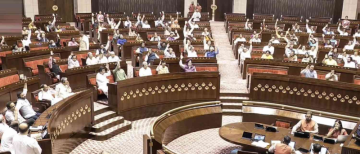
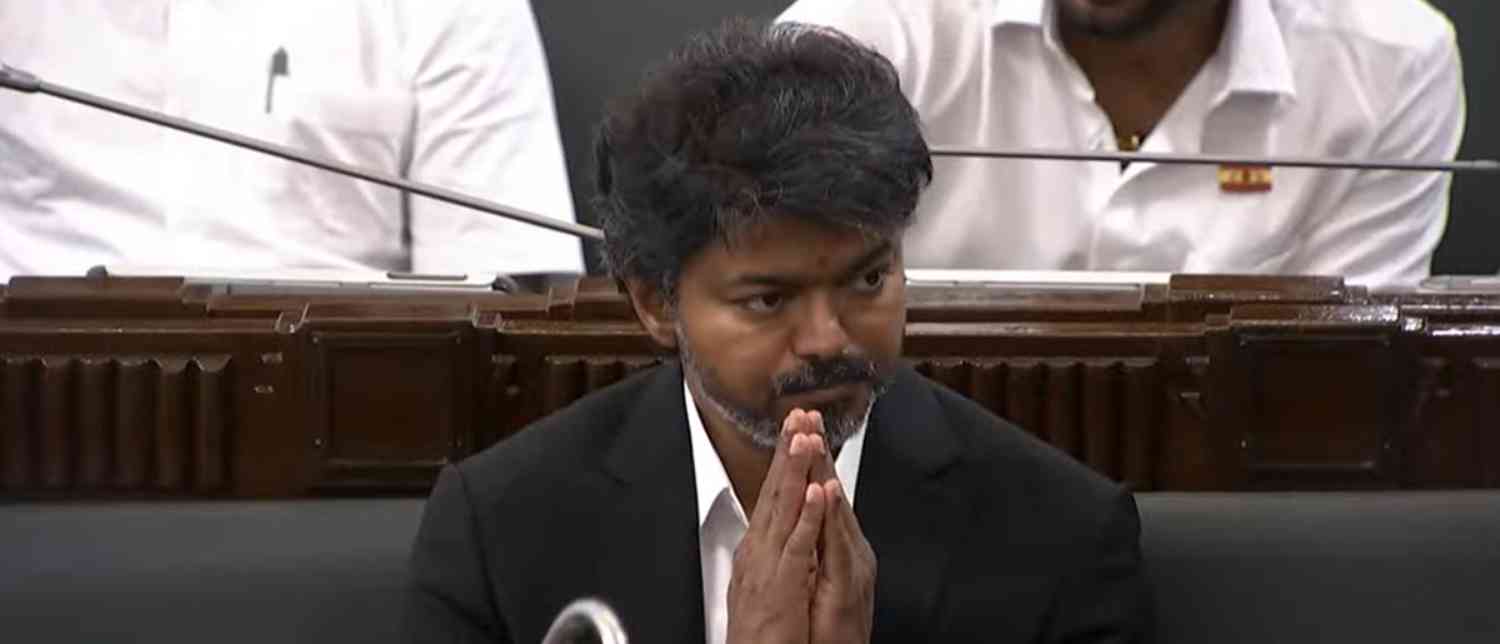
Tamil Nadu Chief Minister C. Joseph Vijay comfortably won the crucial trust vote in the 234-member Assembly on Wednesday, securing the backing of 144 legislators in a politically charged floor test that exposed deep cracks within the opposition Edappadi K. Palaniswami-led AIADMK and triggered dramatic scenes inside the House.
The confidence motion was seen as the first major political challenge for Vijay’s newly formed government after his party, Tamilaga Vettri Kazhagam (TVK), emerged as the single largest party in the 2026 Tamil Nadu Assembly elections but fell short of the majority mark. The majority figure in the Assembly stands at 118. TVK initially had 108 seats, but the effective strength was reduced after Vijay resigned one of the two seats he had contested and won, bringing the party’s tally to 107.
Despite beginning below the halfway mark, Vijay secured overwhelming support during the floor test after receiving backing from multiple parties and rebel legislators from the AIADMK camp. Around 25 to 30 AIADMK rebel MLAs reportedly voted in favour of the TVK government, dramatically altering the political arithmetic in the Assembly.
DMK Walkout Adds Drama To Trust Vote
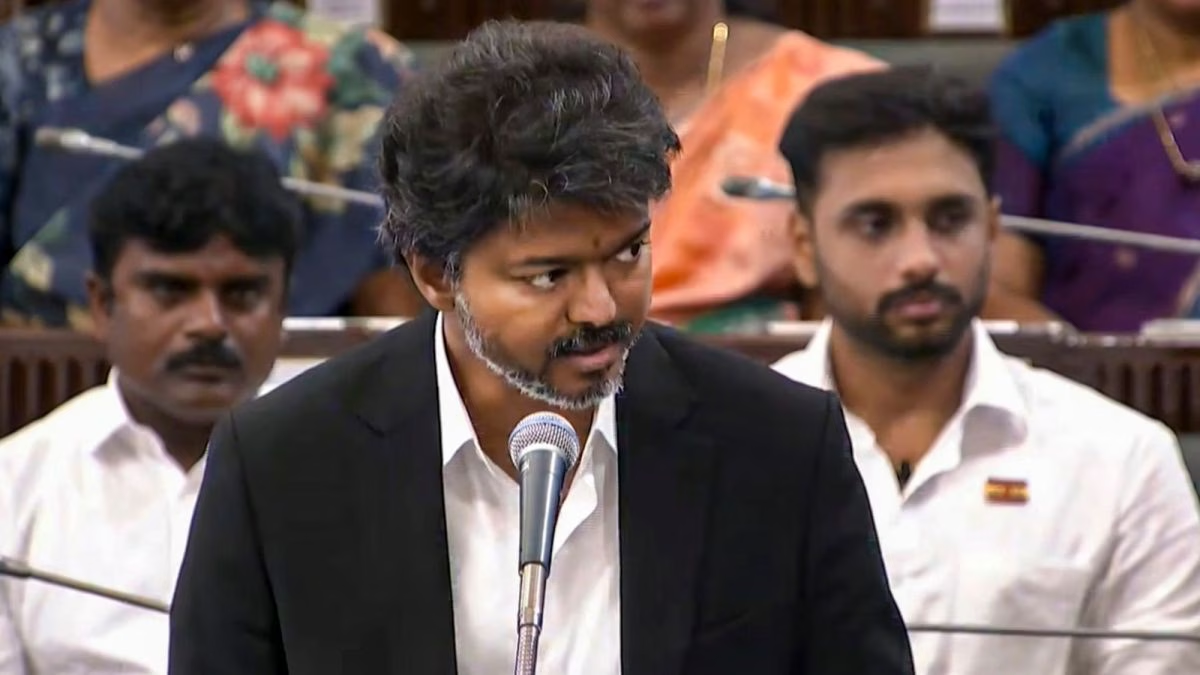
The trust vote proceedings witnessed intense political drama from the outset. The opposition DMK chose to walk out of the Assembly before voting began. The walkout became one of the defining moments of the day, with DMK legislators protesting the developments surrounding the government formation and the support extended to Vijay from sections of the opposition.
Reports also indicated that the DMDK joined the protest action, while the floor test saw divided opposition ranks. The absence of the DMK during the final voting further eased the path for Vijay’s government.
Even before the voting commenced, the atmosphere in Chennai had turned politically tense, with all eyes on whether the AIADMK would remain united behind its official stand or whether rebels would openly cross over to support the TVK government.
AIADMK Split Becomes The Biggest Story
While Vijay winning the trust vote was anticipated by several political observers, the larger political significance of the day lay in the visible internal divisions within the AIADMK. The split between factions loyal to EPS and leaders opposed to him came into sharp focus during the trust vote.
Ahead of the vote, EPS had publicly declared that all AIADMK MLAs would oppose the TVK government. However, that claim quickly unraveled when several legislators defied the party line and voted in Vijay’s favour.
A faction associated with senior AIADMK leader C. Ve. Shanmugam had already signalled support for the TVK government a day earlier. The Shanmugam camp announced readiness to back Vijay, intensifying speculation about a possible realignment within Tamil Nadu politics.
The rebellion effectively turned the floor test into a battle not just for Vijay’s survival, but also for control of the AIADMK itself. Political observers described the vote as a test of EPS’s authority over the party and its legislators.
Several rebel MLAs reportedly met Vijay before the trust vote, further strengthening speculation that sections of the AIADMK could move closer to the TVK government in the coming weeks.
Support From Allies Pushes Vijay Past Majority Mark
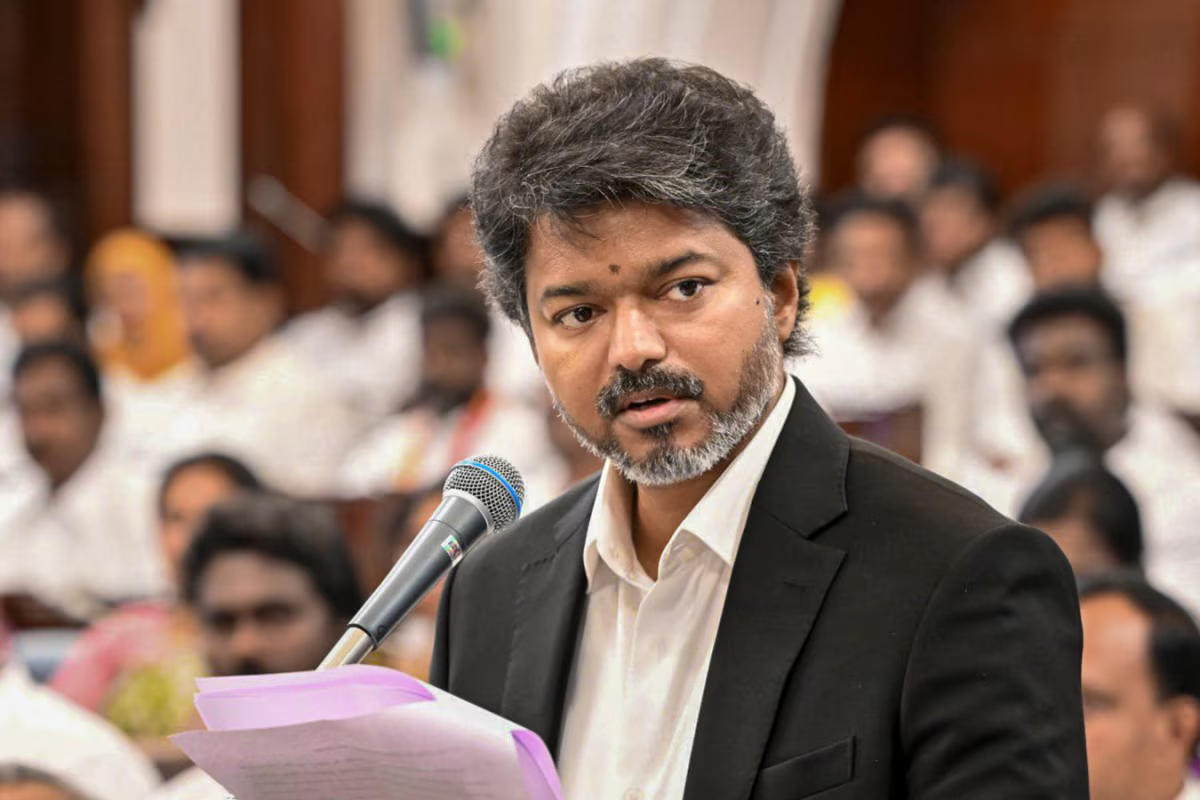
Apart from rebel AIADMK MLAs, Vijay’s government also secured the support of several smaller parties and allies. Reports said that the Congress, VCK, IUML, CPI and CPI(M) extended support to the TVK-led administration during the confidence motion.
The broad coalition of support ensured that Vijay crossed the majority mark comfortably with 144 votes in favour.
Reports also suggested that even some MLAs from PMK and BJP were seen backing the government during the proceedings, underlining the fractured nature of the opposition response.
The final tally reflected not merely numerical support for Vijay, but also the rapidly shifting political equations in Tamil Nadu after the 2026 Assembly elections. What initially appeared to be a hung verdict has now evolved into a fluid political landscape where cross-party support and factional battles are shaping governance.
Vijay’s Rise From Cinema To Secretariat
The floor test also marked another major milestone in Vijay’s transition from cinema superstar to full-fledged political leader. The actor-turned-politician recently took oath as Chief Minister after days of intense negotiations and uncertainty over government formation.
His maiden speech as Chief Minister in the Assembly was closely watched across the state, with supporters projecting the moment as the arrival of a new political force in Tamil Nadu.
Vijay’s TVK had emerged as the surprise performer in the Assembly elections, disrupting the long-standing dominance of the DMK and AIADMK in state politics. Although the party fell short of a majority on its own, it succeeded in attracting support from smaller parties and dissident legislators.
The Chief Minister also appeared keen to project a restrained and governance-focused image ahead of the trust vote. In a message to party cadres earlier, TVK urged supporters not to erect banners and posters, signalling an attempt to distance itself from traditional celebratory political culture.
Governor Standoff And Political Negotiations
The formation of the TVK government had not been straightforward. Following the election results, there was a prolonged phase of uncertainty as Governor R. V. Arlekar reportedly remained unconvinced about whether TVK could prove its majority on the floor of the House.
During this period, Vijay intensified outreach efforts to opposition factions and smaller parties to secure support. The negotiations eventually paid off, culminating in Wednesday’s decisive trust vote victory.
Interestingly, the DMK claimed that some of the supporting parties had originally been persuaded during earlier alliance discussions. A DMK leader argued that Congress and allied parties owed their electoral performance partly to the DMK’s organisational backing.
What The Floor Test Means For Tamil Nadu Politics
The successful floor test has now given Vijay immediate political stability, but the developments inside the Assembly have opened up larger questions about the future of opposition politics in Tamil Nadu.
The AIADMK’s visible internal divide could potentially reshape the state’s political balance in the months ahead. Rebel legislators siding with Vijay may trigger disciplinary action under the anti-defection law, though legal and constitutional questions around such moves are likely to emerge.
For Vijay, the trust vote victory offers both legitimacy and momentum. The result allows his government to move beyond questions of survival and begin focusing on governance and policy implementation. At the same time, maintaining cohesion among a diverse support base will remain a major challenge for the first-time Chief Minister.
The DMK’s decision to walk out instead of directly participating in the vote has also sparked political debate. While the party avoided a direct numerical confrontation, critics argue that the strategy ceded political space to Vijay at a critical moment.
Wednesday’s floor test ultimately became far more than a routine constitutional exercise. It evolved into a defining political moment that showcased Vijay’s growing influence, exposed fractures within established parties, and signalled that Tamil Nadu may be entering a new and unpredictable political era.
With inputs from agencies
Image Source: Multiple agencies
© Copyright 2026. All Rights Reserved. Powered by Vygr Media.