 By
By 
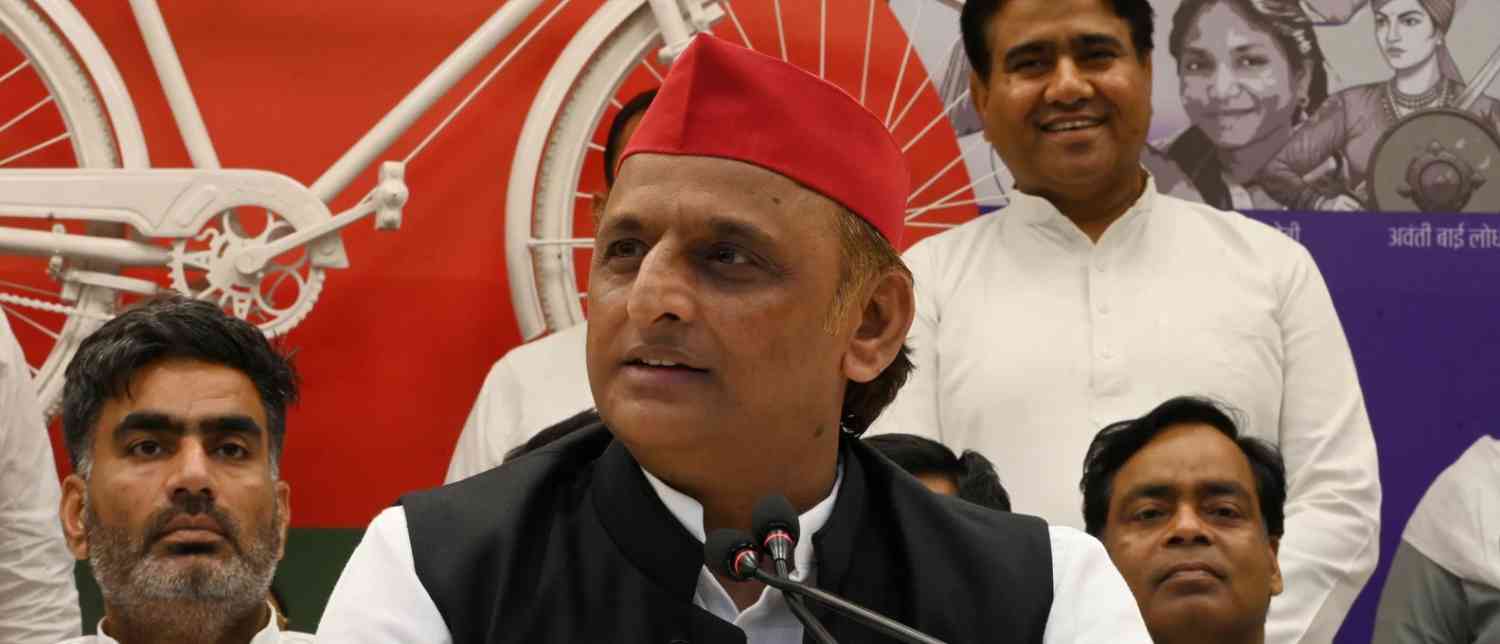
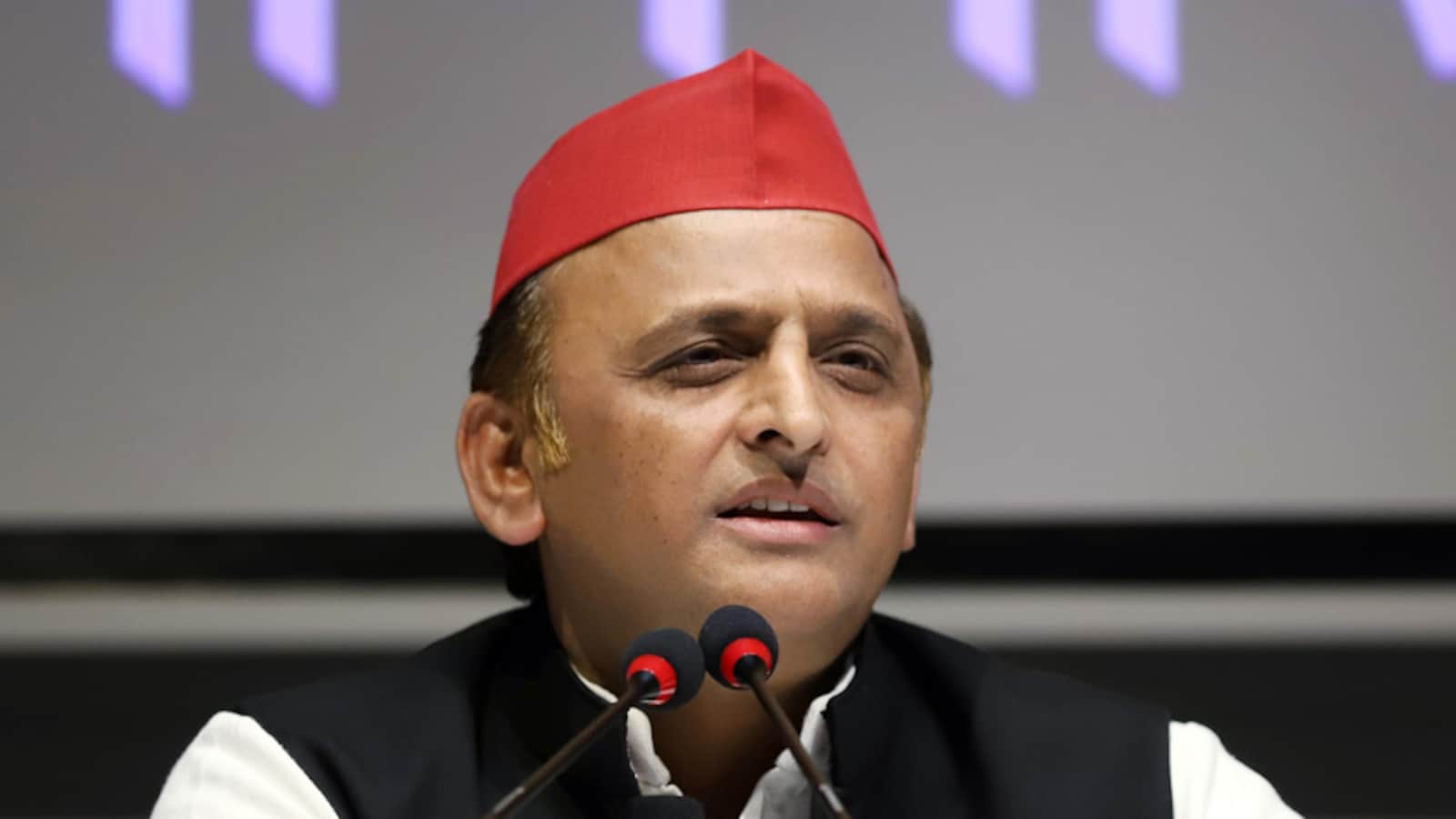
With the 2027 Uttar Pradesh Assembly election drawing closer, Samajwadi Party chief Akhilesh Yadav is attempting a significant recalibration of his political strategy: reaching out to the state’s influential Brahmin community.
The move became particularly visible at a Brahmin Sammelan in Lucknow on August 5, where Yadav declared that “Pandit” could also be represented by the “P” in his party’s familiar PDA formulation. The statement was accompanied by a broader political message: Brahmins, according to Yadav, are also facing difficulties under the BJP government and deserve a place in the Samajwadi Party’s social coalition.
The outreach is significant because the Samajwadi Party’s traditional electoral identity has been closely associated with the Muslim-Yadav, or M-Y, combination. Akhilesh Yadav later attempted to broaden that framework through PDA — Pichhda, Dalit and Alpsankhyak, bringing backward classes, Dalits and minorities into a larger electoral coalition.
Now, with “Pandit” being brought into the conversation, the SP appears to be testing whether its social coalition can be expanded further without alienating its existing support base.
The question, however, is not simply whether Akhilesh Yadav can attract Brahmin voters. It is whether he can persuade enough of them to move away from a BJP that has enjoyed an extraordinary degree of support among the community for nearly a decade.
Why Brahmins Matter in Uttar Pradesh Politics
Numerically, Brahmins are not the largest caste group in Uttar Pradesh. Estimates cited in recent analyses put their share at roughly 9–11% of the state's population, with some estimates placing their share of the electorate closer to 12%. Yet their electoral importance extends well beyond their raw numbers.
The reason is their geographic distribution and ability to influence closely fought constituencies.
An analysis identifies 97 of Uttar Pradesh’s 403 Assembly seats as constituencies where Brahmins account for more than 15% of the population. Seven seats have a Brahmin population share above 30%, although no constituency crosses the 50% mark. The community's influence is particularly concentrated in Central and Eastern Uttar Pradesh. Of those 97 Brahmin-influenced constituencies, 42 are in Central UP and another 41 in Eastern UP.
That puts the political geography of the Brahmin vote through an important belt encompassing areas around Lucknow, Ayodhya, Prayagraj, Varanasi and adjoining districts.
For a party trying to win a state where many constituencies are decided by relatively narrow margins, even a modest change in voting behaviour among a strategically distributed community can have an outsized impact.
This is the arithmetic behind Akhilesh Yadav’s latest outreach.
From SP Stronghold to BJP Fortress
The political history of the Brahmin vote in Uttar Pradesh also explains why the SP is taking another look at the community.
The BJP’s current dominance among Brahmins is not an immutable historical fact. The community has shifted its political preferences significantly over the past three decades.
According to post-poll data, 71% of Brahmin voters backed the BJP in 1996, during the height of the Ram Mandir-era mobilisation. That support declined substantially during the Mandal-era political realignment. It fell to 49% in 2002, 39% in 2007 and 38% in 2012. The BSP's attempt at social engineering under Mayawati played an important role in this period, as the party successfully attracted sections of the upper-caste vote.
The reversal after 2012 was dramatic.
By 2017, BJP support among Brahmins had risen to 83%, and in 2022 it reached 89%, according to the same CSDS-based data.
The Assembly-seat data tells a similar story. In 2012, the SP won 55 of the 97 Brahmin-influenced constituencies. The BJP won just 12. Five years later, the map had almost completely flipped: the BJP captured 87 of those 97 seats, while the SP was reduced to just three.
In 2022, there was some recovery for the SP, which won 21 of these constituencies, but the BJP still dominated with 72.
For Akhilesh Yadav, therefore, the objective is unlikely to be an immediate wholesale transfer of the Brahmin vote. Even shifting a relatively small section of a heavily consolidated electorate could make a meaningful difference.
The BSP Precedent
There is another reason the SP may believe that Brahmin outreach is worth attempting: Mayawati has already demonstrated that Brahmin voters in Uttar Pradesh are not permanently tied to the BJP.
The BSP’s 2007 election strategy remains one of the clearest examples of upper-caste and Dalit social engineering in the state. Mayawati, whose party was traditionally identified with Dalit politics, deliberately expanded her appeal by projecting an inclusive “Sarvajan” message and elevating Satish Chandra Mishra, a prominent Brahmin leader, within the party. The strategy helped the BSP cross the 30% vote-share mark and secure a majority government.
The BSP subsequently declined, and much of its upper-caste support eventually moved towards the BJP. But the lesson for the SP is important: Brahmin voters can be persuaded to cross traditional political boundaries when a party offers them a credible combination of representation, security and political relevance.
Akhilesh Yadav is now trying to find his own version of that formula.
PDA Gets a New “P”
The most striking element of the current strategy is the attempt to redefine the SP's PDA formula.
Originally, PDA stood for Pichhda, Dalit and Alpsankhyak — backward classes, Dalits and minorities. It was designed to move the party beyond its older image as a primarily Muslim-Yadav formation.
At the August 5 gathering, however, Yadav argued that “Pandit” could also be represented within the formulation. He also used the word “peeda”, or pain, to reinforce the idea that communities facing grievances could find common political ground under the PDA umbrella.
This is more than a change in terminology.
The original PDA strategy sought to construct a broad social coalition by bringing historically disadvantaged communities together. Adding Pandits introduces an upper-caste constituency into that framework and suggests that the SP is trying to move from a coalition based primarily on social justice representation towards a wider electoral umbrella.
The move also reflects the political reality created by the SP’s performance in the 2024 Lok Sabha election. The PDA strategy helped the party expand beyond its traditional base, but the 2027 Assembly election will present a different challenge. The BJP remains deeply entrenched in the state, particularly among Hindu voters.
The SP therefore appears to be asking a larger question: can it build an electoral coalition that combines its backward-class, Dalit and minority support with enough upper-caste and Hindu voters to challenge the BJP?
A Broader Hindu Outreach
The Brahmin outreach has not happened in isolation.
Akhilesh Yadav has increasingly incorporated Hindu religious symbolism into his political messaging. His recent activities include meetings with religious figures, references to Sanatana Dharma and criticism of the alleged controversy surrounding donations to the Ram Mandir in Ayodhya. At the Brahmin event, the visual symbolism was equally notable, with Yadav holding a trident while religious chants and performances formed part of the programme.
In July, Yadav also met Swami Avimukteshwarananda and expressed solidarity with the seer following his confrontation with the Uttar Pradesh government during the Prayagraj Magh Mela.
These moves suggest that the SP's objective is broader than simply winning Brahmin votes. It appears to be an attempt to reduce the BJP's monopoly over Hindu political symbolism.
That is an important change for a party whose political history has frequently placed it on the opposite side of the BJP's Hindutva politics.
The Burden of the SP’s Political Legacy
This is also where Akhilesh Yadav's strategy faces its biggest credibility problem.
The Samajwadi Party's history cannot easily be separated from the Ram Janmabhoomi movement. Mulayam Singh Yadav, Akhilesh's father and the party's founder, was Uttar Pradesh Chief Minister when police firing took place on kar sevaks attempting to reach the disputed Ayodhya site in 1990. The episode became a defining part of the political narrative surrounding Mulayam and the SP.
The party's subsequent alliance with the BSP in the 1990s also carried an explicitly anti-BJP political message centred on the Ram Mandir issue.
Akhilesh's current embrace of religious symbolism therefore represents a noticeable departure from the political imagery traditionally associated with the party.
Whether voters interpret that as political maturity or electoral opportunism will be one of the central tests of the strategy.
Akhilesh had already attempted a Brahmin outreach before the 2022 Assembly election, including a series of temple visits in eastern Uttar Pradesh. That effort did not significantly alter the electoral outcome.
The latest attempt therefore has to overcome not only the BJP's organisational strength but also memories of the SP's previous political positioning.
BJP’s Counterattack Is Already Underway
The BJP has little reason to allow the SP's outreach to go unanswered.
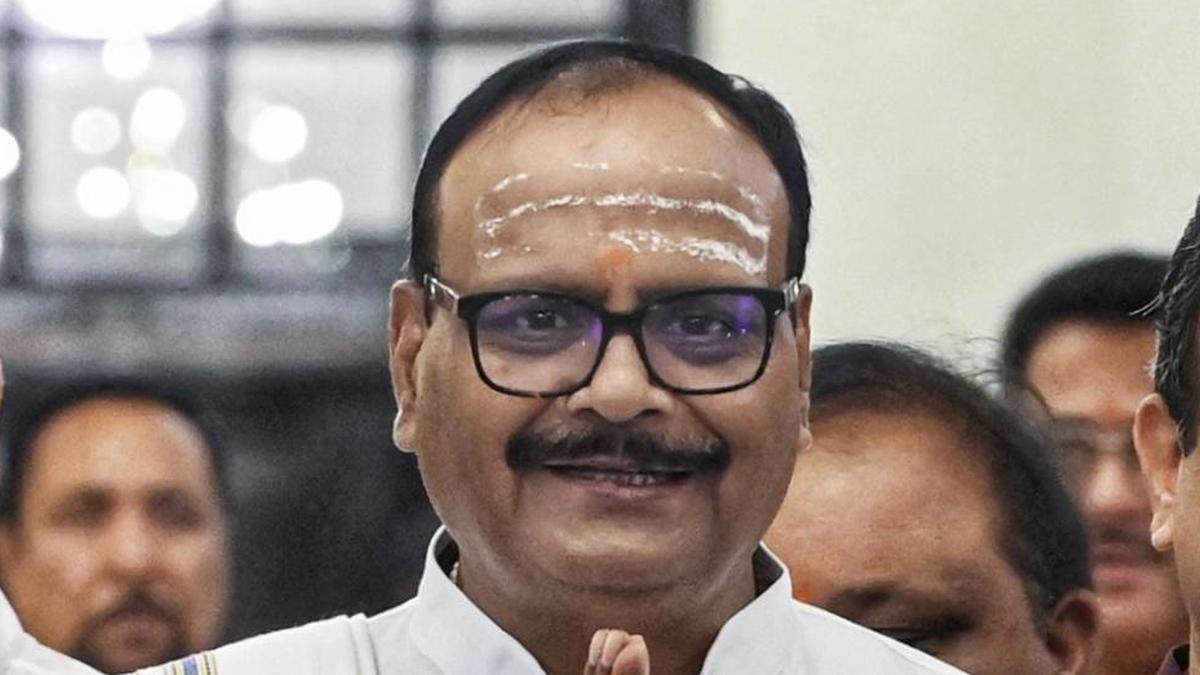
Uttar Pradesh Deputy Chief Minister Brajesh Pathak has attacked Akhilesh Yadav's attempt to position himself as a champion of Brahmins, accusing him of “pretending” to be a well-wisher of the community. Pathak referred to an earlier interaction involving Yadav and a journalist and argued that Yadav's past conduct was inconsistent with his new outreach.
Pathak also attacked the SP over dynastic politics, contrasting it with the BJP's stated emphasis on organisation and Antyodaya.
The BJP's counterargument is straightforward: if the SP is genuinely interested in Brahmin welfare, it must demonstrate consistency rather than simply alter its election rhetoric.
This line of attack could become increasingly prominent as the election campaign develops.
The Reservation Question Adds Another Layer
The timing of the outreach is also important because it comes amid renewed protests and political tensions surrounding caste-based reservation.
Recent protests by sections of upper-caste groups, including demonstrations in Lucknow, have created an opening for opposition parties to speak directly to concerns among sections of the “savarna” electorate. The SP's Brahmin outreach coincides with this renewed agitation.
For the SP, this creates an opportunity — but also a contradiction.
Its political identity has increasingly emphasised representation for backward classes, Dalits and minorities, while the reservation debate can place some upper-caste voters on the other side of that political divide.
The challenge for Akhilesh Yadav is therefore to reassure Brahmins without weakening the social coalition that delivered the SP's recent electoral gains.
That balancing act may prove more difficult than simply changing the meaning of a letter in an acronym.
Can Akhilesh Yadav Actually Win Brahmin Votes?
The immediate answer is: perhaps some, but probably not enough through symbolism alone.
The data indicates how formidable the BJP's position is. Brahmin support for the BJP reached 89% in 2022, while the party continues to dominate the constituencies where Brahmin voters have significant influence.
The SP also lacks one advantage the BJP possesses: a long-established upper-caste leadership structure within the party. An analysis points out that the BJP government provides Brahmin representation through Deputy Chief Minister Brajesh Pathak, while the SP's chief ministerial face remains Akhilesh Yadav. Ticket distribution is another challenge. In 2022, the BJP fielded substantially more Brahmin candidates than the SP.
That does not make an SP breakthrough impossible. But it does mean that outreach will have to extend beyond conferences, temple visits and political messaging.
Candidate selection, local organisation, representation within the party and a sustained engagement with community-specific concerns will matter.
Most importantly, Brahmin voters are unlikely to behave as a monolithic bloc. Economic interests, local candidates, regional issues, governance, religion and perceptions of political representation can all influence voting decisions.
The Real Test Is Consistency
The most important question surrounding Akhilesh Yadav's Brahmin outreach is therefore not whether the latest message is politically clever. It is whether it can survive beyond the election season.
The SP's critics see the “Pandit” addition to PDA as an electoral improvisation — an attempt to broaden the party's Hindu appeal after years of emphasising caste-based and minority politics.
Supporters could make a different argument: political parties evolve, and a party that wants to govern Uttar Pradesh cannot afford to permanently exclude any major social group.
Both interpretations are possible.
What will decide the issue is what happens next.
If the SP continues its engagement with Brahmin leaders, gives the community meaningful representation, fields credible candidates and maintains a broader Hindu outreach even when the immediate electoral incentive fades, the current move could begin to look like a genuine transformation.
If the strategy remains limited to slogans, religious symbolism and election-season conferences, scepticism is likely to prevail.
A High-Stakes Gamble Ahead of 2027
Akhilesh Yadav's Brahmin outreach is ultimately a gamble on political arithmetic.
The Samajwadi Party has learned that its older Muslim-Yadav formula is insufficient for a return to power. Its PDA strategy has helped widen its coalition, particularly among backward classes, Dalits and minorities. But challenging the BJP in Uttar Pradesh requires an even broader social alliance.
Brahmins are attractive to the SP not because they form an overwhelming majority, but because they are geographically dispersed, politically influential and concentrated enough in nearly 100 constituencies to matter in close contests.
Yet the same numbers reveal the scale of the challenge. The BJP's support among Brahmins has been extraordinarily high since 2017. The community's political alignment has been reinforced by the BJP's Hindutva narrative, organisational reach and representation in government.
Akhilesh Yadav is therefore not simply trying to win over a caste group. He is attempting to alter a political relationship that has taken nearly a decade to consolidate.
The 2027 Uttar Pradesh election will show whether that effort represents a genuine expansion of the Samajwadi Party's social coalition — or simply another election-season experiment.
For now, one thing is clear: by adding “Pandit” to PDA, Akhilesh Yadav has signalled that the Samajwadi Party no longer wants to contest Uttar Pradesh while leaving the Brahmin and wider Hindu electorate largely within the BJP's political comfort zone.
Whether Brahmin voters are ready to move with him is the much harder question.
With input from agencies
Image Source: Multiple agencies
© Copyright 2026. All Rights Reserved. Powered by Vygr Media.