 By
By 
India’s Parliament has just concluded another Monsoon Session, but the more uncomfortable question is not what it passed; it is what it failed to do.
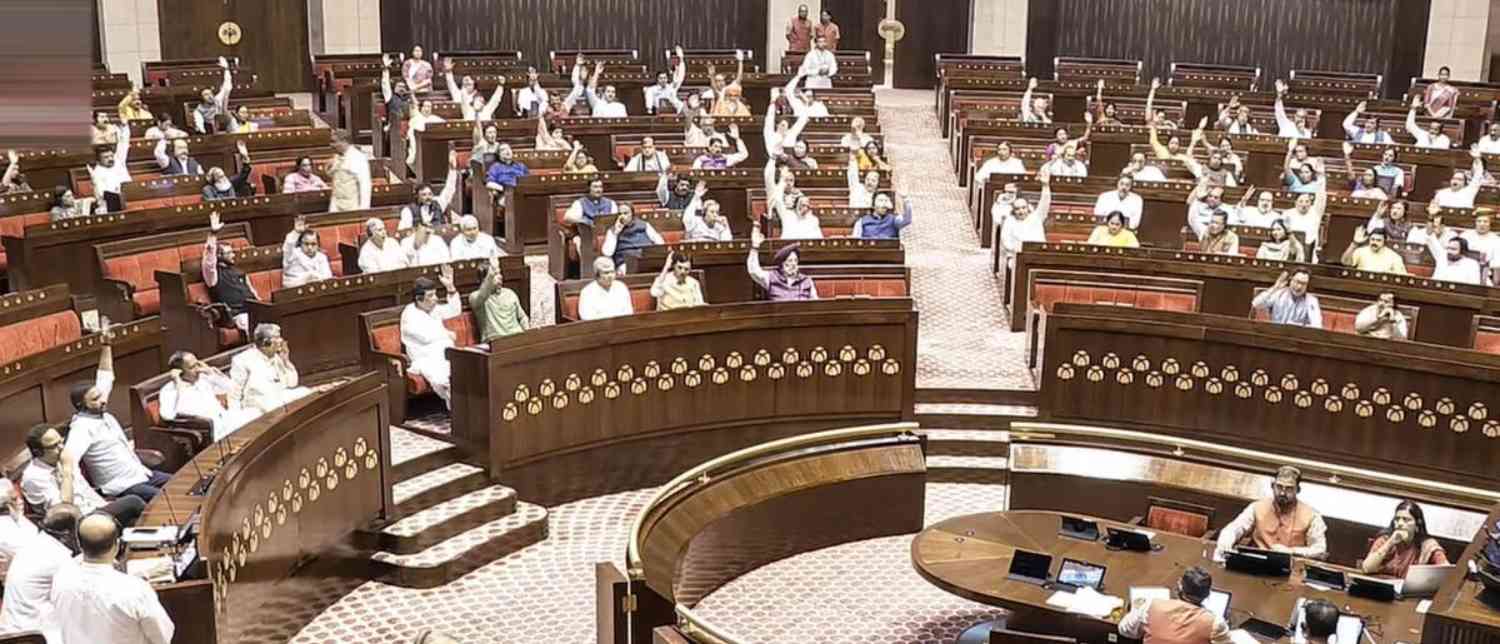
The 19-sitting session, held from July 20 to August 13, ended with both Houses being adjourned sine die amid protests, counter-protests, slogans and an increasingly bitter government-Opposition standoff. The final morning of the Lok Sabha lasted barely three minutes and ten seconds. The national song was played, members stood, and Speaker Om Birla brought the proceedings to an end without delivering his customary valedictory remarks on the House’s performance.
That extraordinary ending was more than an odd parliamentary moment. It was an appropriate metaphor for the entire session. India’s Parliament did not completely stop working: Bills were passed, debates did take place and some legislation received substantial scrutiny. Yet the central functions of Parliament—debate, accountability, deliberation and forcing the executive to answer difficult questions—were badly compromised. And that is why the real loser of the Monsoon Session was neither the government nor the Opposition, but the voter.
A Parliament That Passed Bills Without Really Debating Them
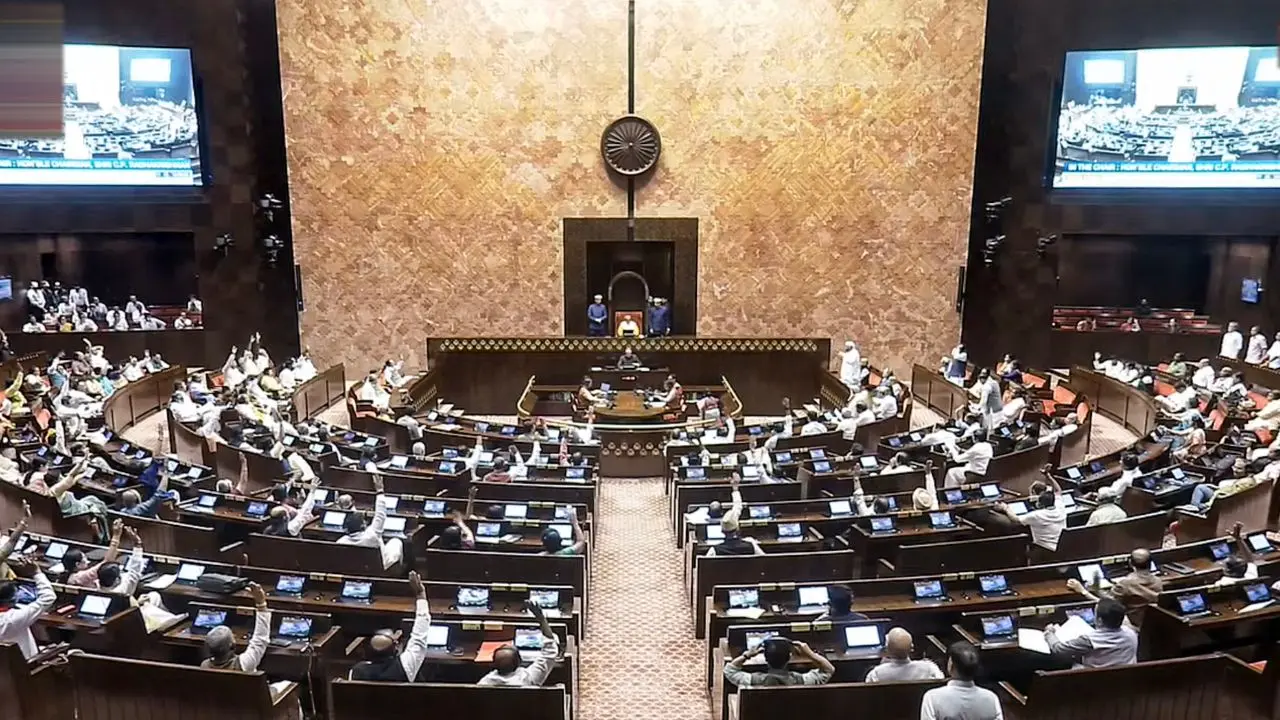
The government can legitimately point to legislative output. The session was not a total washout, and several Bills cleared both Houses, including legislation concerning public examinations, national honour, birth and death registration, the Supreme Court, MSMEs, taxation, tribunals, cooperatives, Kerala’s name and mining.
But counting Bills is an increasingly inadequate way of measuring whether Parliament is functioning. A law is not merely a document that needs a majority vote; Parliament exists precisely because legislation is supposed to be subjected to competing arguments before it becomes binding on 1.4 billion people.
This distinction was painfully visible during the Monsoon Session. The Public Examinations (Prevention of Unfair Means) Amendment Bill received extensive scrutiny, with more than 17 hours of debate across both Houses. That demonstrates what Parliament can still look like when political parties allow legislation to become the subject of genuine deliberation.
Other Bills received dramatically less attention. According to parliamentary session data, the Supreme Court judges legislation took just four minutes in the Lok Sabha, while the MSME amendment and Taxation and Other Laws amendment were also passed in approximately three minutes each. Other measures were cleared in similarly short periods.
That should concern supporters of the government as much as its critics. A government may be entitled to use its majority to pass legislation, but it is not entitled to treat Parliament merely as a voting machine. The Opposition, meanwhile, cannot claim democratic virtue simply because it prevented debate from happening. Disruption may create headlines and political pressure, but it does not automatically constitute accountability.
Both sides have confused political victory with parliamentary success.
The Most Important Casualty: Question Hour
The deepest damage may not be the number of Bills passed or hours lost; it may be the collapse of Question Hour. Question Hour is one of Parliament’s most important accountability mechanisms because it gives MPs an opportunity to ask ministers direct questions about government decisions, implementation failures and problems affecting citizens. It is, in effect, one of democracy’s simplest ideas: the government must answer.
Yet the session saw extraordinarily little use of that mechanism. Parliamentary data showed that only two questions were asked in the Lok Sabha during the session’s early proceedings, while a mere 16 were asked in the Rajya Sabha. The figures indicated that almost the entirety of the scheduled Question Hour in the Lok Sabha had been lost.
This matters far more than a noisy television debate. A slogan disappears after the news cycle, while a parliamentary question can produce a document, a ministerial answer, a commitment or an admission that remains on record. India has historical evidence of why this matters: questions raised in Parliament have previously helped expose major scandals and forced governments to explain themselves publicly. Parliament’s questioning function is therefore not ceremonial; it is one of the institutional checks that separates parliamentary democracy from electoral majoritarianism.
When Question Hour disappears, citizens lose one of their clearest windows into how the government is functioning.
The Government and Opposition Have Different Defences. Neither Is Sufficient.
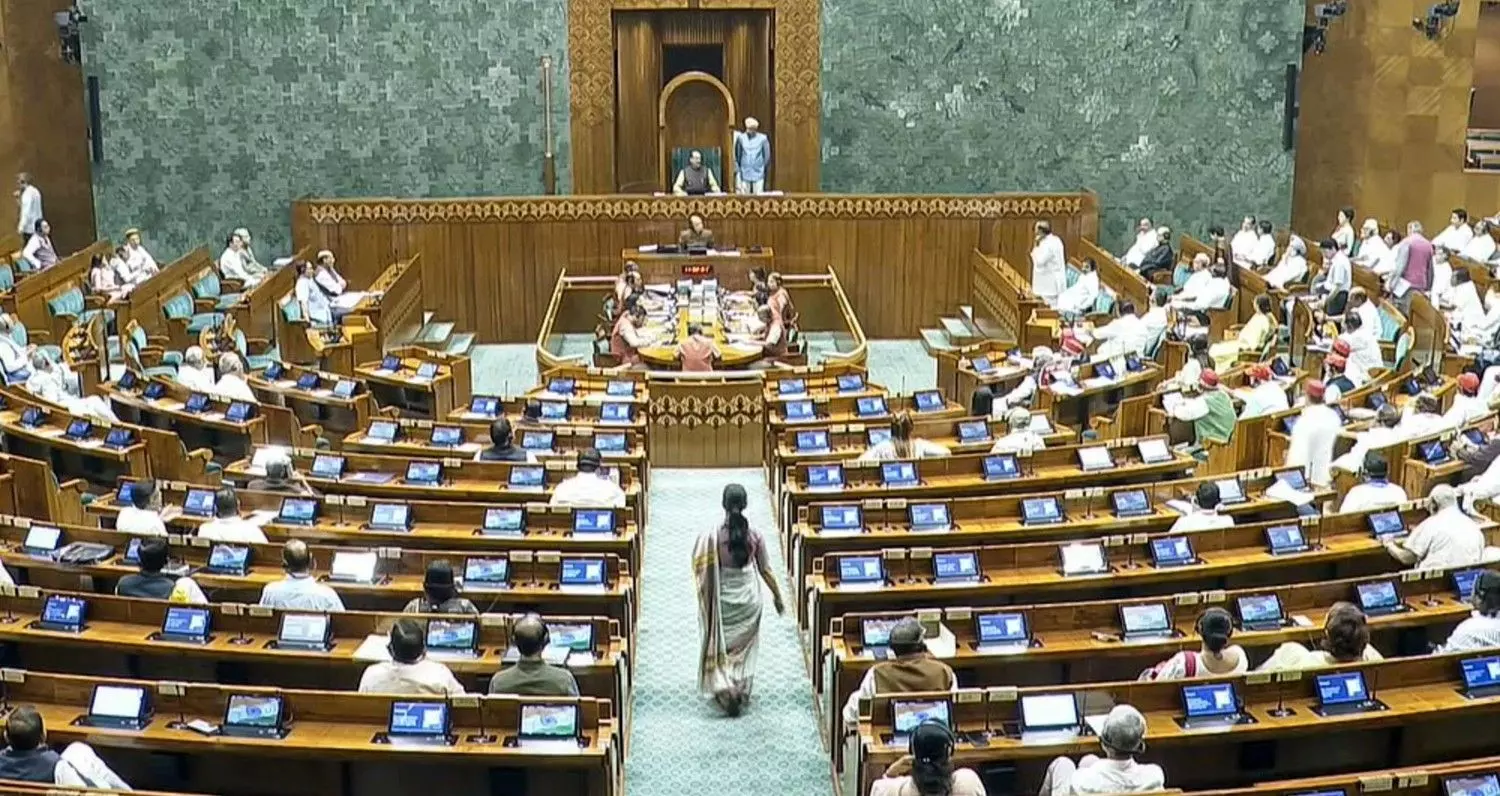
The government’s defence is straightforward: the Opposition disrupted proceedings and then refused opportunities for debate. Parliamentary Affairs Minister Kiren Rijiju argued that the government was willing to discuss issues and accused the Opposition of avoiding debate. Home Minister Amit Shah likewise said he was prepared to answer questions about the student protests and the police action. The Opposition rejected the proposed discussion, arguing that a statement from Shah or a formal debate did not address its demand for accountability.
There is a legitimate point here. An Opposition that deliberately prevents a debate and then complains that Parliament did not debate the issue cannot escape responsibility. But the government cannot escape responsibility either.
The ruling side has the greater institutional obligation to make Parliament work. It controls the legislative agenda, has the numbers to pass Bills and has greater influence over the functioning of the House. If the Opposition disrupts proceedings, the answer cannot simply be to wait for the noise to subside and then push legislation through by voice vote.
That creates a peculiar equilibrium in which both sides benefit politically from dysfunction. The Opposition gets dramatic footage through placards, slogans, walkouts and confrontation, while the government gets legislation passed despite the disruption. Everyone gets a political narrative, but nobody gets a functioning Parliament.
The Politics of Spectacle Has Become the Politics of Parliament
This is perhaps the most disturbing lesson of the Monsoon Session. Parliament increasingly resembles a stage on which political parties perform for audiences outside the House rather than an institution in which they negotiate with one another inside it.
The spectacle is highly efficient. A protest outside Parliament can be clipped into a 30-second video, a confrontation between Rahul Gandhi and the government can dominate social media, and a minister’s accusation can become a television headline within minutes. A three-hour policy discussion on an obscure clause of a Bill cannot compete.
But democracy is not designed to maximise television ratings. It is designed to force disagreement into a structured process.
That process is inherently slower and less dramatic. Members speak, ministers respond, committees examine provisions, amendments are proposed, Opposition arguments are recorded and the government explains its position. The final law emerges after competing claims have been tested. That is precisely why Parliament exists.
When political parties discover that disruption is more rewarding than deliberation, the institution begins to lose its purpose. The sharpest critique from the session’s commentary is therefore not simply that Parliament was “unproductive”; it is that the parties have learned to game the institution.
The Opposition can disrupt and claim it has fought the government, while the government can pass Bills and claim it has defeated the Opposition. Both can declare victory, but the public is left with legislation that may have received insufficient scrutiny and an executive that has faced fewer questions than it should.
The Numbers Tell a Story—But They Also Need Context
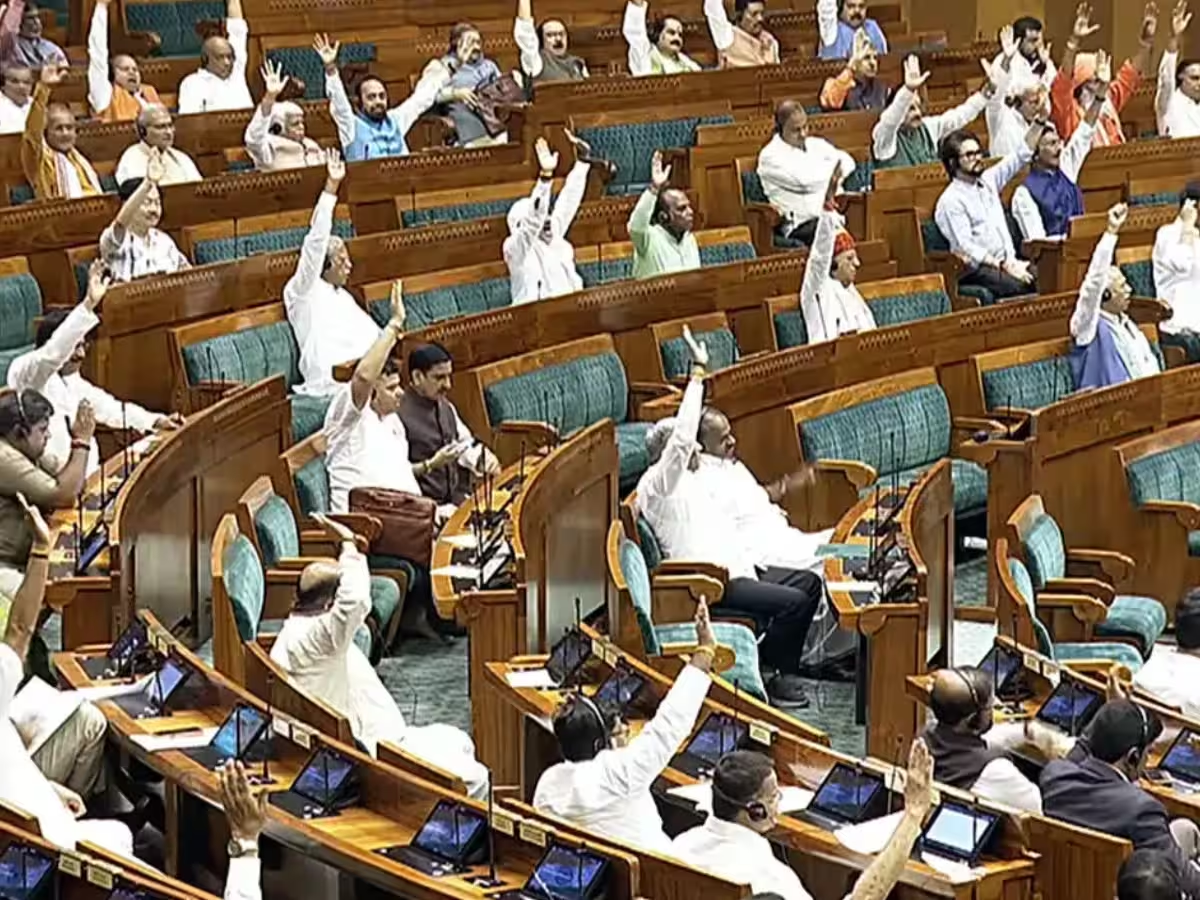
Different reports have cited different productivity figures during and after the session, depending on the point at which the data was measured and the methodology used. Parliamentary analysis placed Lok Sabha productivity at around 15% by the penultimate day, with Rajya Sabha at about 33%. After the session, the government cited figures of 19% for Lok Sabha and 39% for Rajya Sabha.
The precise percentage matters less than the direction of travel: Parliament functioned for only a fraction of its available time.
And this is not an isolated problem. Parliamentary productivity has been under pressure for years, particularly in the post-pandemic period. Average Lok Sabha productivity during Monsoon Sessions between 2015 and 2025 was substantially lower than during Budget Sessions, while post-pandemic Monsoon Sessions have shown a marked deterioration.
That should eliminate the temptation to blame one party, one government or one Opposition strategy. The problem is becoming structural.
The Real Danger Is Not That Parliament Is Noisy. It Is That Parliament Is Becoming Irrelevant.
A noisy Parliament can still be a healthy Parliament. Passionate disagreement is not dysfunction: Opposition parties are supposed to challenge governments, governments are supposed to defend their decisions, and Parliament was never intended to be a polite conversation.
The problem begins when disagreement becomes a substitute for debate. There is a profound difference between saying, “We oppose this Bill,” and preventing the House from discussing why. There is also a difference between saying, “The Opposition is obstructing,” and using the disruption as an excuse to minimise scrutiny.
The Constitution does not require political parties to like one another. It requires institutions through which they can disagree.
If Parliament ceases to provide that space, political conflict does not disappear. It simply moves elsewhere—onto the streets, television studios and social media, where outrage travels faster than evidence and where the incentive is to escalate rather than resolve.
That is bad for democracy.
The Student Protest Standoff Was the Perfect Example
The controversy surrounding student protests and the demand for accountability over police action became the central political confrontation of the session. The Opposition wanted the Home Minister to address the issue and pressed for accountability, while the government said it was ready for discussion and argued that the Opposition was refusing the opportunity. By the end of the session, the dispute remained unresolved.
This was not merely a disagreement over procedure. It was a missed opportunity.
Imagine what a serious parliamentary debate could have produced: a detailed account of what happened, questions about the police chain of command, answers from the government, competing interpretations from MPs and an official record that citizens could examine.
Instead, the political incentive became binary. The Opposition wanted the government to concede ground, while the government wanted the Opposition to concede ground. Neither side was prepared to give the other a political victory in exchange for institutional functioning.
That is precisely how gridlock becomes self-sustaining.
The Final Three Minutes Said More Than Three Weeks of Politics
The final morning of the Lok Sabha was almost surreal. Members assembled, slogans were raised, Vande Mataram was played, MPs stood and the Speaker adjourned the House after just three minutes and ten seconds. The customary valedictory remarks were skipped.
That omission was symbolically powerful. A valedictory address normally gives Parliament an opportunity to assess what it accomplished, how much time it used and what remained unfinished. This time, there was little appetite for such an accounting.
Perhaps that is the most honest ending the session could have had.
Because Parliament should not measure success by whether it can technically pass legislation amid shouting. It should measure success by whether the country’s elected representatives had enough meaningful opportunities to question, debate, scrutinise and improve the laws that govern citizens.
By that standard, the Monsoon Session was a serious warning.
India Cannot Afford a Parliament That Only Performs
The answer is not to silence the Opposition, nor is it to give the Opposition an unlimited veto over government business. India needs something harder: rules and political conventions that make both disruption and legislative bypass less attractive.
Parliamentary committees need stronger scrutiny powers. Bills with significant public consequences should receive meaningful examination rather than being rushed through simply because the government possesses the numbers. Question Hour must be protected as an essential accountability mechanism. And political parties need to accept that disagreement is supposed to culminate in debate, not replace it.
Most importantly, voters need to start judging parliamentary performance differently.
A politician who delivers a spectacular speech is not necessarily doing parliamentary work. An MP who stages a dramatic protest is not necessarily holding the government accountable. And a government that passes a large number of Bills is not necessarily demonstrating legislative excellence.
The real test is much less glamorous: Were questions answered? Were Bills scrutinised? Were opposing arguments heard? Were ministers forced to explain their decisions? Did Parliament improve the legislation before it became law?
Those are the metrics that matter.
The Monsoon Session of 2026 has left India with an uncomfortable paradox: Parliament was neither completely paralysed nor genuinely functional. Bills moved, politics moved and the cameras kept rolling. But the institution itself struggled to perform its central democratic role.
The government got legislation, the Opposition got spectacle, and both sides got talking points. The citizen, meanwhile, got less debate, less accountability and less confidence that the laws being passed had received the scrutiny they deserved.
That is why the biggest lesson from this Parliament session is not that one side won and the other lost. It is that both sides may have discovered a political arrangement in which Parliament can be made to work just enough for everyone to claim victory—and badly enough for everyone to avoid genuine accountability.
That is not a sustainable model of democracy.
India does not need a quieter Parliament; it needs a more serious one. Unless political parties rediscover the difference between performing politics and doing parliamentary work, the institution at the heart of the world’s largest democracy risks becoming less a forum for governing India and more a stage for campaigning at one another.
With input from agencies
Image Source: Multiple agencies
© Copyright 2026. All Rights Reserved. Powered by Vygr Media.