 By
By 
In a landmark judgment that could significantly alter the political landscape of the national capital and beyond, a Delhi court cleared former Chief Minister Arvind Kejriwal and former Deputy Chief Minister Manish Sisodia in the controversial Delhi excise policy case.
What made the ruling particularly striking was not just the legal outcome, but the powerful words invoked by the court. Special Judge (Prevention of Corruption Act) Jitendra Singh cited American civil rights leader Martin Luther King Jr., writing:
“Injustice anywhere is a threat to justice everywhere.”
He also referred to the Latin maxim fiat justitia ruat caelum—“let justice be done though the heavens may fall.”
The message was clear: the judiciary’s role is not to affirm political narratives or secure convenient outcomes, but to uphold the rule of law. According to the court, remaining anchored to such ideals is the only way to preserve public confidence in the justice system.
The Origins of the Liquor Policy Controversy
The case revolved around the excise policy introduced by the Aam Aadmi Party (AAP) government in November 2021. The policy marked a structural shift: the Delhi government withdrew from retail liquor sales and allowed private licensees to operate stores.
In July 2022, then Delhi Chief Secretary Naresh Kumar flagged what he described as “gross violations” and alleged that “undue benefits” were extended to certain licensees. By September 2022, the policy was scrapped.
The Central Bureau of Investigation (CBI) alleged that liquor companies played a role in shaping the excise policy in a way that would yield them 12% profits. It further claimed that a liquor lobby—dubbed the “South Group”—paid kickbacks amounting to Rs 100 crore to the AAP, some of which allegedly reached public servants.
The Enforcement Directorate (ED) pursued parallel money laundering allegations linked to these purported kickbacks.
The Court’s Core Finding: No “Meeting of Minds”
At the heart of the judgment was a crucial legal principle: conspiracy cannot be inferred from policy outcomes alone.
The court emphasized that criminal law cannot be used to retrospectively criminalize policy decisions unless the prosecution can establish a prima facie “meeting of minds” to subvert the framework for unlawful purposes.
Economic gain, uneven commercial benefits, or subsequent profitability, the court said, do not automatically constitute conspiracy. For such a charge to stand, the prosecution must clearly demonstrate:
-
Who agreed with whom
-
What illegal act or means was agreed upon
-
When the agreement took place
-
How subsequent acts advanced that agreement
The court stated that these foundational elements were missing.
In sharp remarks, Judge Jitendra Singh observed that facts appeared to have been “arranged” to support a predetermined conclusion. He described the CBI’s narrative as resting on fragmented circumstances and clarified that courts cannot be expected to “join the dots” where evidence does not do so independently.
“The court can’t be carried away by presentation alone,” he said.
The Legal Turning Point
The prosecution had projected Kejriwal as a “central figure” who allegedly manipulated policy to benefit the so-called South Group and recover upfront payments.
However, the attempt to link him relied heavily on a single statement by prosecution witness Magunta Sreenivasulu Reddy, who claimed that K Kavitha—daughter of former Telangana Chief Minister K. Chandrashekar Rao—would contact him regarding the matter.
The court found no documentary, digital, financial, or electronic evidence to corroborate this claim. There were:
-
No file notings
-
No electronic communications
-
No financial transaction trails
-
No proof of Kejriwal’s presence at alleged conspiratorial meetings
Merely invoking the term “conspiracy,” the judge noted, cannot substitute the legal requirement of demonstrable agreement and participation.
If the foundational allegation—that the policy itself was criminally designed—failed, then all subsequent allegations collapsed, the court reasoned.
Kejriwal’s Emotional Response
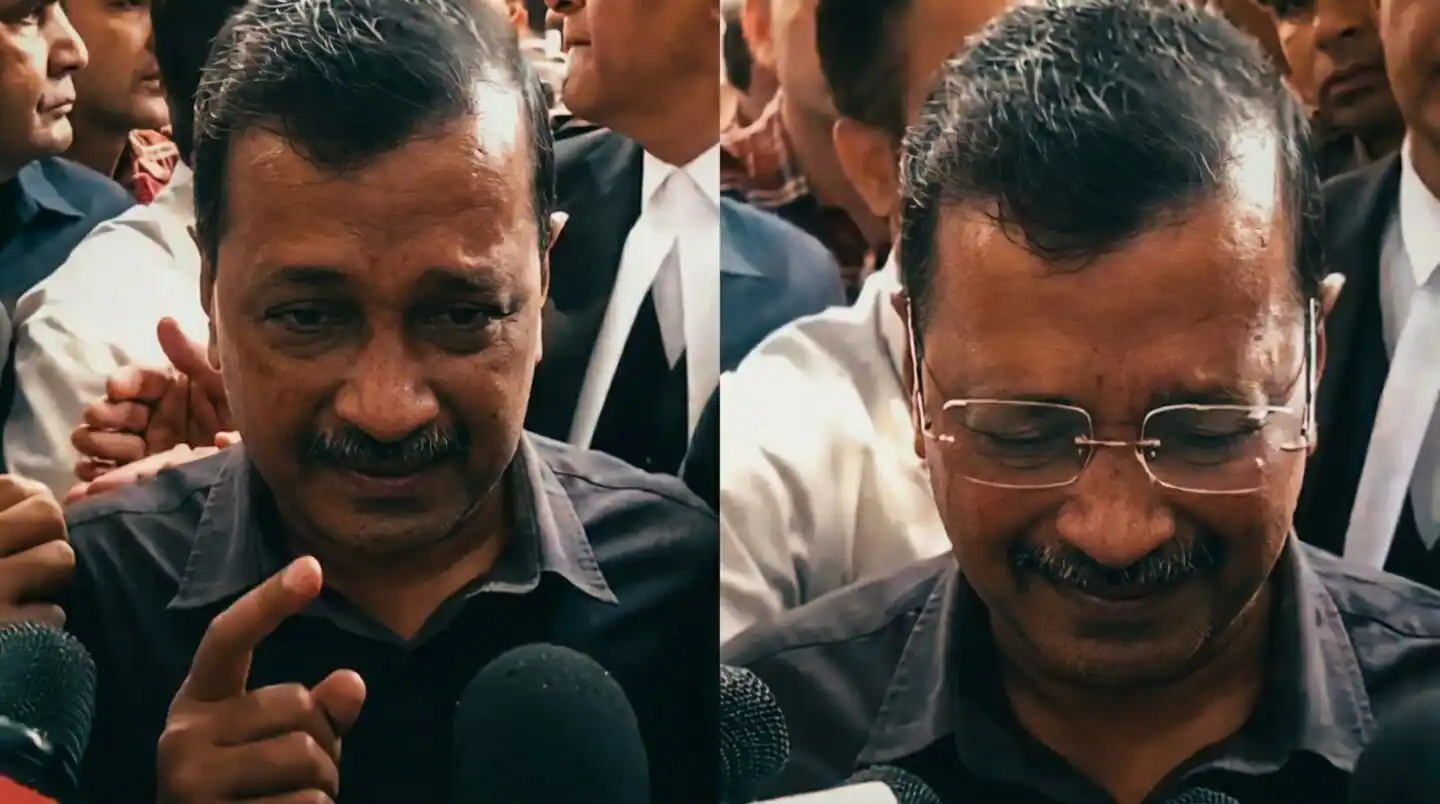
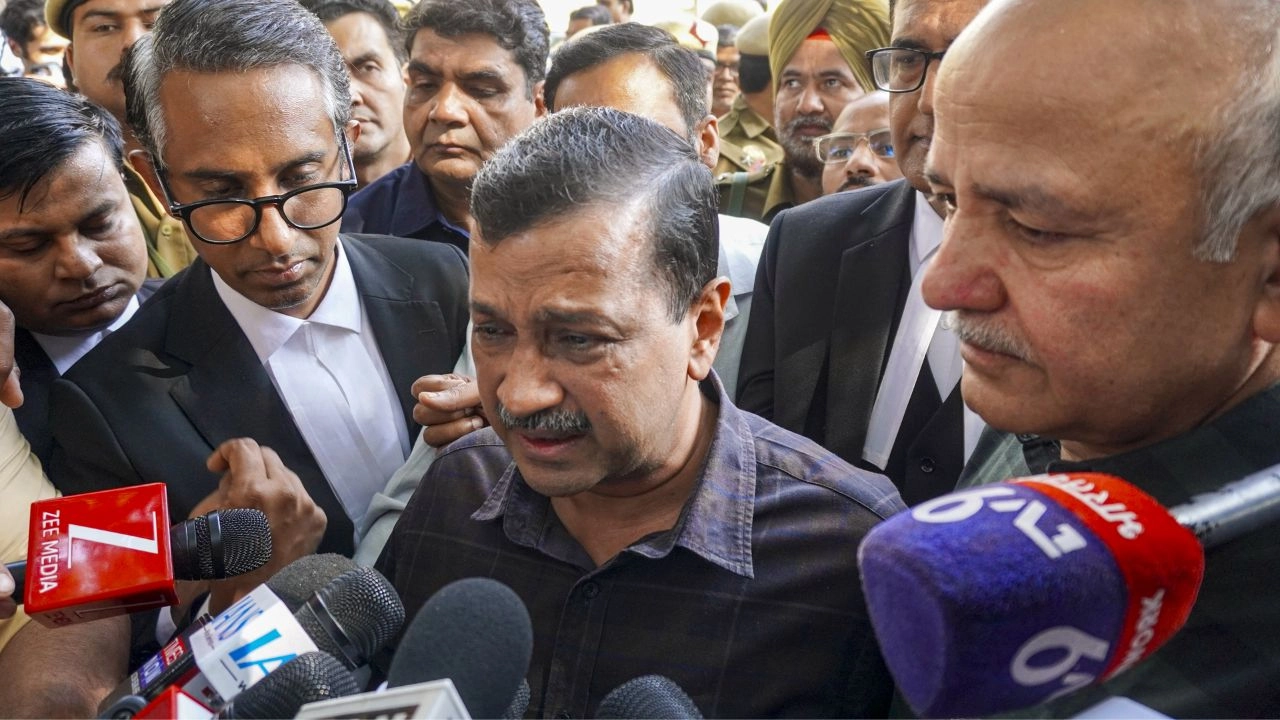
Following the verdict, Kejriwal struggled to contain his emotions. Breaking down at one point, he was embraced by Sisodia.
“We always said that truth ultimately wins,” he declared. “A sitting chief minister was dragged out of his home and thrown into jail. Mud was flung at us.”
Calling himself a “kattar imaandar” (fiercely honest), he extended the claim of integrity to Sisodia and the Aam Aadmi Party.
Kejriwal spent approximately five months in jail in 2024, while Sisodia was incarcerated for nearly a year and a half.
Political Stakes: Can AAP Stage a Comeback?
The legal relief may have come at a pivotal political moment.
In the February 2025 Delhi Assembly elections, AAP’s dominance crumbled. The party won only 22 seats in the 70-member Assembly, down sharply from its commanding 62-seat mandate in 2020. The Bharatiya Janata Party (BJP) surged to power with 48 seats, up from eight.
Political analysts believe that being freed from corruption charges could serve as a political lifeline for Kejriwal. One expert noted that he is likely to frame the verdict as moral vindication, reinforcing his long-standing anti-corruption image.
Journalist Ashutosh, a former AAP associate, called the CBI case “fake” and predicted that AAP would attempt to capitalize on the clean chit, especially ahead of key elections:
-
Punjab in 2027 (where AAP governs)
-
Gujarat (where AAP has rapidly expanded)
-
Goa (another emerging battleground)
Congress’s Strategic Dilemma
For the Indian National Congress, the verdict presents complex political challenges.
Ironically, the controversy originated in mid-2022 when then Delhi Congress president Anil Chaudhary wrote to the Lieutenant Governor alleging corruption in the excise policy and demanding a CBI probe.
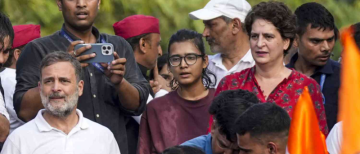
The Congress position evolved over time. When Kejriwal joined the Congress-led INDIA opposition alliance before the Lok Sabha elections and was arrested, party leaders including Rahul Gandhi and Sonia Gandhi stood in solidarity with him at protests, including a major rally at Delhi’s Ramlila Maidan.
However, after the AAP-Congress alliance collapsed ahead of the Delhi Assembly polls, Rahul Gandhi publicly accused Kejriwal of involvement in the liquor scam and criticized expenditures on the Chief Minister’s residence—mockingly dubbed the “Sheesh Mahal.”
Allegations included spending nearly Rs 1 crore on curtains and Rs 6 crore on marble.
The verdict now complicates Congress’s attempts to rebuild in Delhi and other states where AAP is expanding.
Internal Divisions and Leadership Questions
The ruling has also exposed internal differences within Congress. Chandigarh MP Manish Tewari congratulated Kejriwal, describing the case as political vendetta, while former Union minister Margaret Alva termed it false.
Meanwhile, leadership debates persist within the opposition bloc. Senior Congress leader Mani Shankar Aiyar recently questioned Rahul Gandhi’s leadership and suggested that figures such as West Bengal Chief Minister Mamata Banerjee or Tamil Nadu Chief Minister M.K. Stalin could lead the INDIA alliance.
If Kejriwal converts legal vindication into political momentum, some analysts speculate about the emergence of a “third-front” configuration centered around AAP.
Kejriwal’s Counterattack
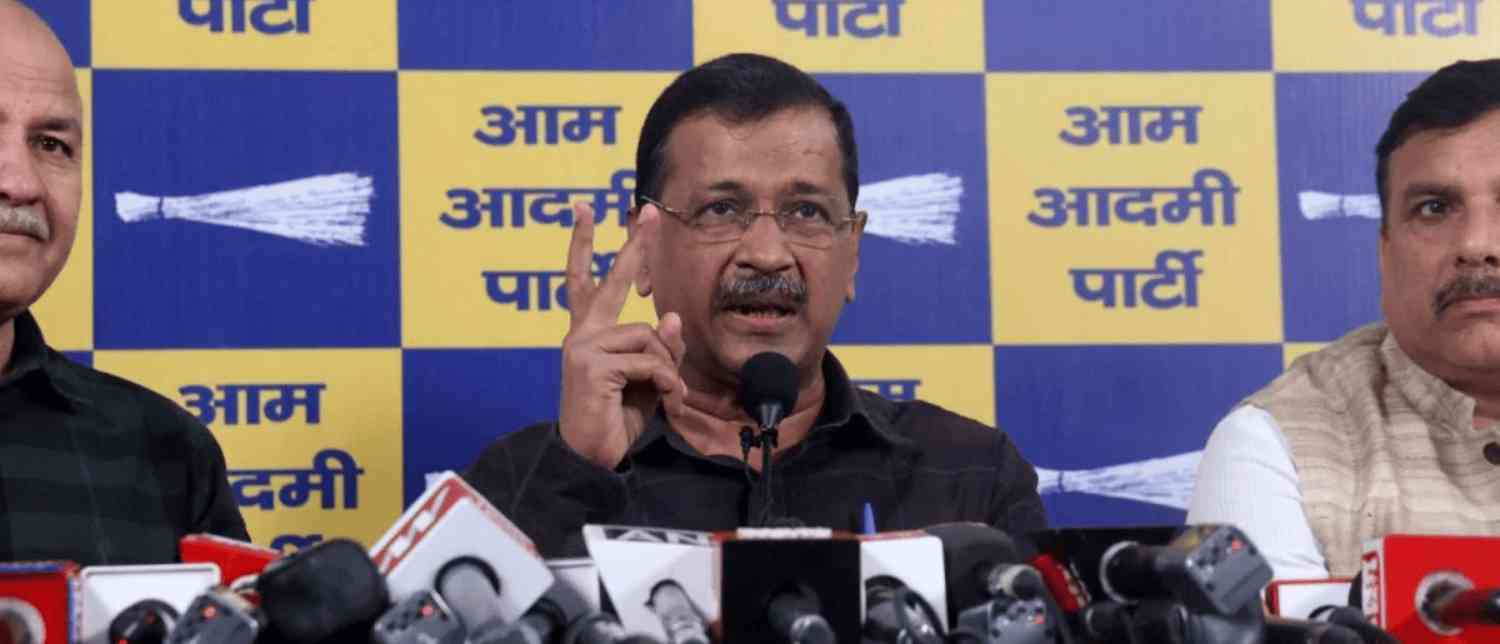
At a press conference after the verdict, Kejriwal directly accused Prime Minister Narendra Modi and Home Minister Amit Shah of conspiring to destroy AAP.
He announced that the party would seek discharge in related ED cases and attacked the BJP government on governance issues including pollution, the Yamuna river’s condition, and infrastructure.
Throwing down a political gauntlet, Kejriwal challenged the BJP to hold fresh elections in Delhi. If the party won more than ten seats, he said, he would quit politics.
A Defining Political Moment
The Delhi court’s judgment represents more than a legal acquittal—it marks a potential inflection point in Indian opposition politics.
By concluding that there was no prima facie evidence of conspiracy or policy manipulation, the court not only cleared Kejriwal and Sisodia but also reasserted core judicial principles: evidence must precede accusation, and narrative cannot substitute proof.
Whether this verdict translates into an AAP resurgence in Delhi, Punjab, Gujarat, or Goa remains to be seen. But one thing is certain: in quoting Martin Luther King Jr., the court framed its decision as part of a larger moral argument about justice, fairness, and institutional integrity.
For Arvind Kejriwal, this ruling may well mark the beginning of what supporters call a political “second innings.” For Congress, it introduces strategic uncertainty. And for India’s opposition politics, it resets the board in ways few anticipated just months ago.
With inputs from agencies
Image Source: Multiple agencies
© Copyright 2025. All Rights Reserved. Powered by Vygr Media.