 By
By 
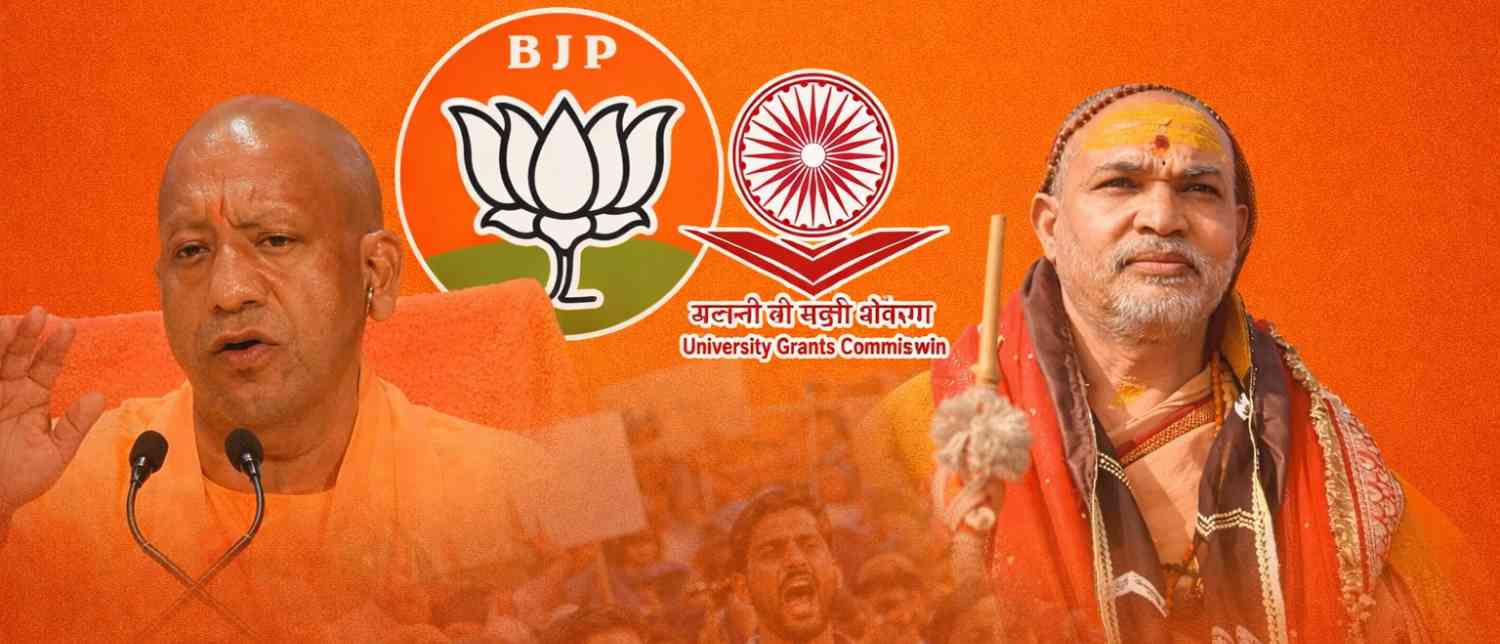
As Uttar Pradesh begins its long political walk toward the 2027 Assembly elections, the Bharatiya Janata Party (BJP) appears to be doing something both risky and revealing: deliberately unsettling its own social coalition to recalibrate caste loyalties in a post-2024 political landscape. Two seemingly unrelated flashpoints—the University Grants Commission’s new equity regulations and the confrontation between the Uttar Pradesh government and the Shankaracharya of Jyotirmath—have converged into a single political storm. Together, they expose the BJP’s strategic anxieties, internal contradictions, and evolving approach to caste politics in India’s most electorally consequential state.
Uttar Pradesh is not just another state election. With 80 Lok Sabha seats and a history of shaping national political narratives, it remains the bellwether of the Hindi heartland. The BJP knows this better than anyone. Its shock performance in the 2024 general elections—where its seat tally in UP collapsed from 66 in 2019 to just 33—has forced a hard rethink. The Opposition, led by the Samajwadi Party (SP) and aided by a revived Congress, made significant gains by mobilising Other Backward Classes (OBCs), Scheduled Castes (SCs), and Scheduled Tribes (STs). The SP alone surged from five seats in 2019 to 37 in 2024.
Against this backdrop, the BJP’s recent moves appear less like missteps and more like controlled experiments—attempts to rebalance caste equations without fully alienating any bloc. Whether the party can manage the fallout remains an open question.
The UGC Equity Regulations: A Legal Mandate, a Political Gamble
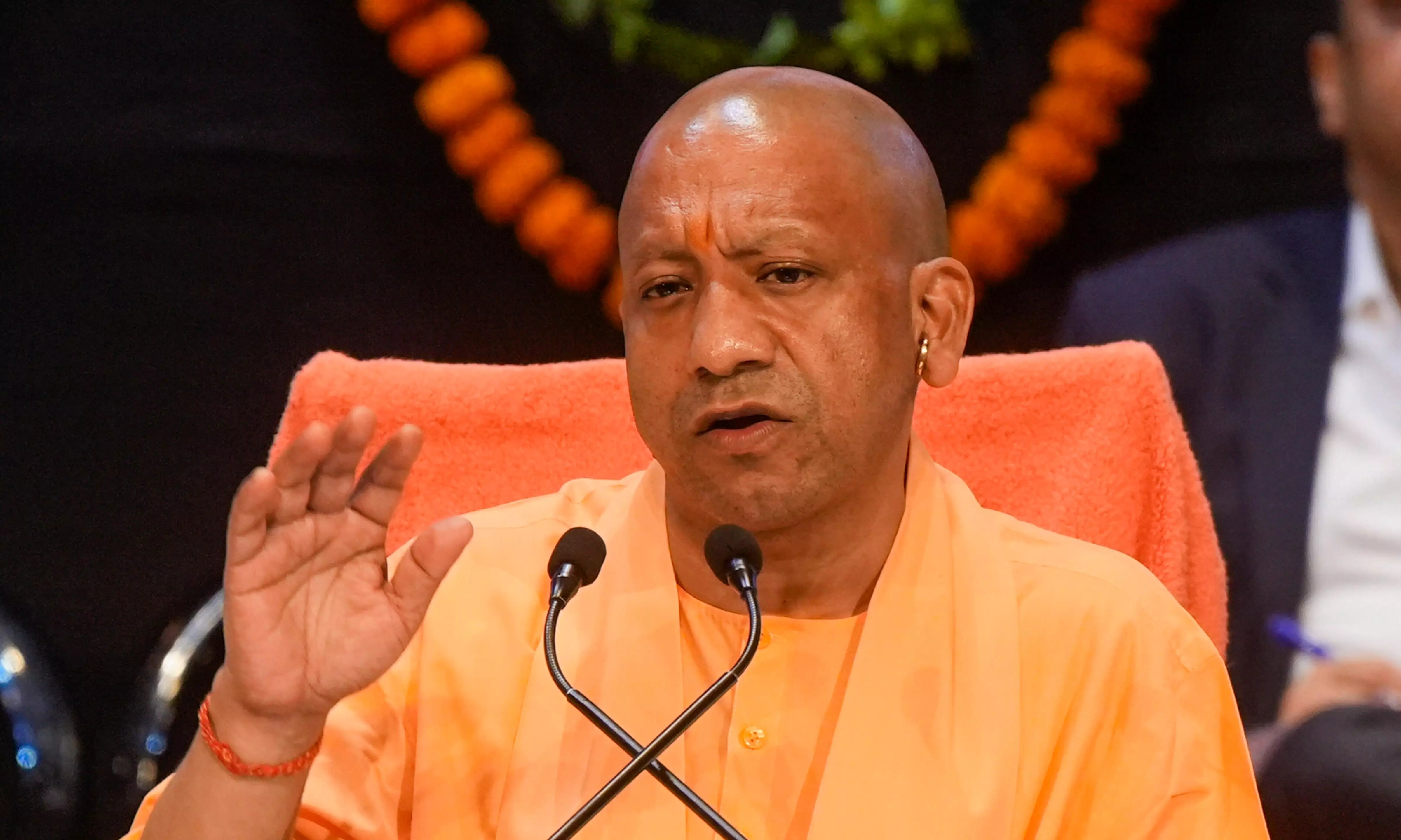
The immediate trigger for widespread protests was the UGC’s notification of the Promotion of Equity in Higher Education Institutions Regulations, 2026. These rules update the 2012 anti-discrimination framework and were issued in compliance with Supreme Court directions following public interest litigations filed by the mothers of Rohith Vemula and Payal Tadvi—both students who died by suicide after facing caste-based harassment in higher education institutions.
The apex court had specifically directed the UGC to strengthen safeguards for SC and ST students. Importantly, neither the court’s directive nor the draft regulations released in February 2025 mandated the inclusion of OBCs. That inclusion came later, in the final notified version—a political decision taken by the Narendra Modi-led government.
On paper, the logic is straightforward. Discrimination against OBC students exists, and excluding them would make the regulations appear incomplete. Politically, however, the implications are far-reaching. OBCs constitute the single largest voting bloc in India, particularly in Uttar Pradesh. By explicitly including them, the BJP signals that it is not—and does not wish to be perceived as—an upper-caste party.
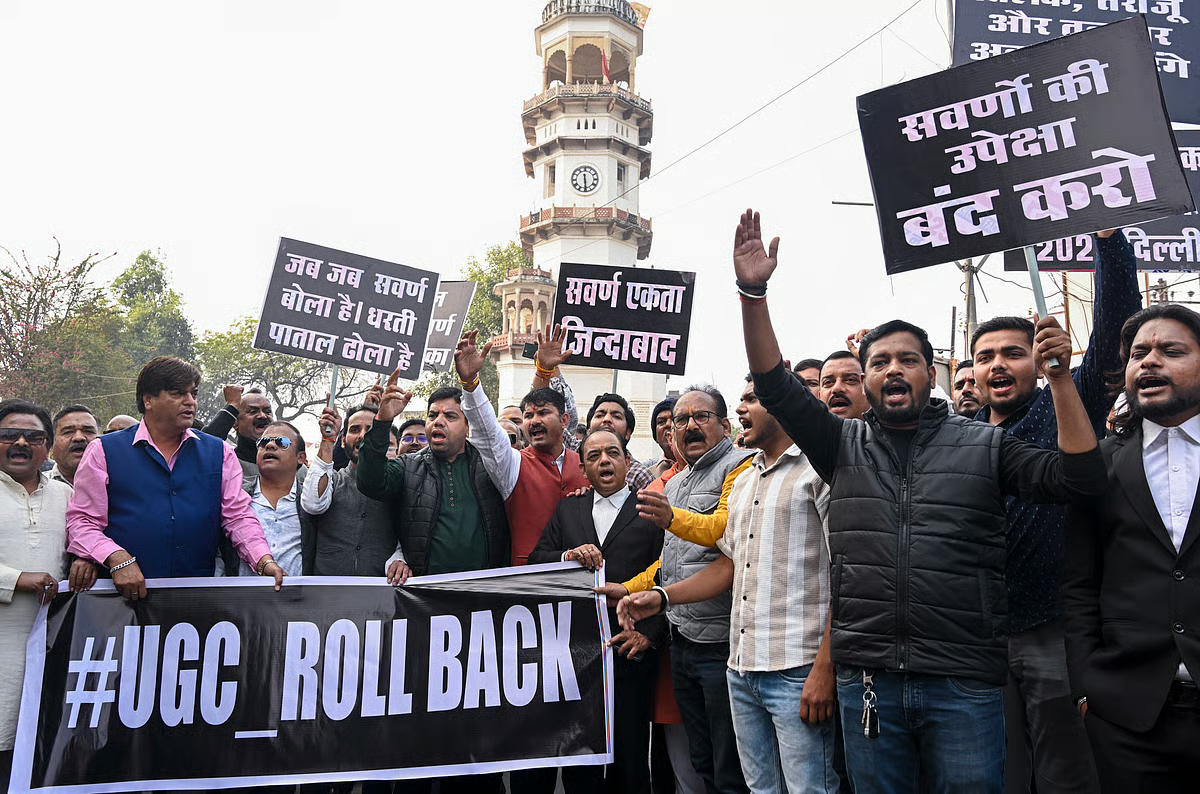
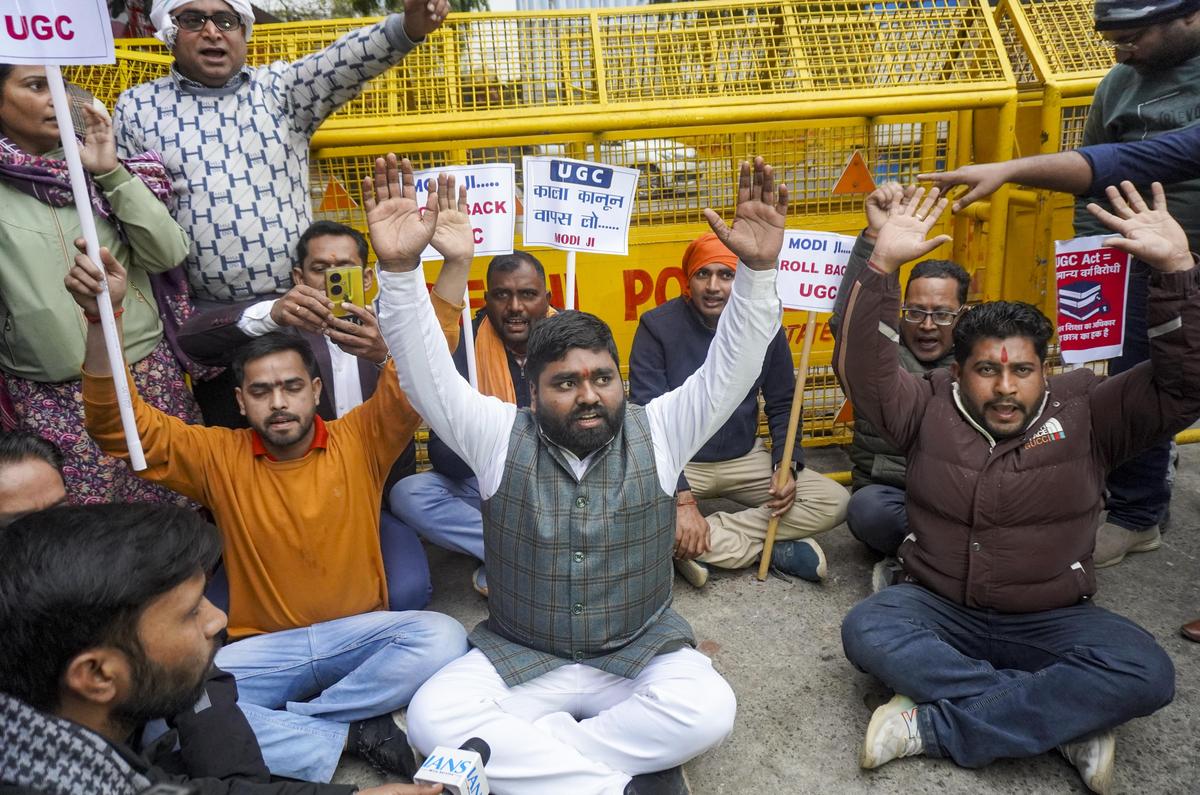
But this inclusion also triggered a fierce backlash from general category students and upper-caste groups, particularly in Uttar Pradesh, Bihar, Delhi, and Madhya Pradesh. The protests were driven by fears that the new rules presume guilt, lack safeguards against false complaints, and could be misused to harass students and faculty from non-reserved categories. These concerns were sharpened by the fact that the final regulations removed a provision present in the 2025 draft that allowed penalties for false complaints.
The Supreme Court’s subsequent decision to hold the regulations in abeyance—describing them as “vague” and “capable of misuse”—has temporarily paused the controversy, but not resolved it. For the BJP, this judicial intervention may offer political cover, allowing it to reassure upper-caste voters while continuing to claim commitment to social justice.
Bureaucratic Revolt and Party Unease
The depth of upper-caste discontent became unmistakable with the resignation of Bareilly city magistrate Alankar Agnihotri, a 2019-batch Provincial Civil Service officer. Agnihotri alleged an “anti-Brahmin campaign” in Uttar Pradesh, criticised the UGC rules as enabling harassment of general category students, and condemned the “mistreatment” of the Shankaracharya of Jyotirmath. Within hours, the Yogi Adityanath government suspended him for indiscipline and violation of service rules.
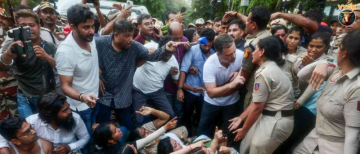
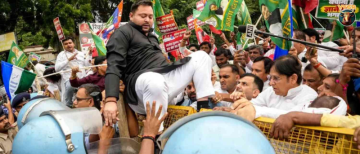
Agnihotri’s resignation did more than embarrass the government; it emboldened dissent within the BJP itself. Several party office-bearers, including mandal-level leaders in Lucknow and Raebareli, tendered resignations, calling the UGC regulations a “black law.” Protests erupted on university campuses, including Lucknow University, while social media campaigns such as #UGC_RollBack and #ShameOnUGC trended widely.
Senior BJP leaders privately acknowledged the undercurrent of anxiety among Brahmin MLAs and MLCs, particularly those representing constituencies with significant upper-caste populations. A December meeting of around 40 Brahmin legislators in Lucknow—informally convened over dinner—further underscored the unease. Though party leadership reprimanded the participants, warning that such gatherings violated organisational discipline, the message was clear: caste disquiet was no longer confined to whispers.
Even veteran leaders stepped in. Former Union minister Kalraj Mishra cautioned that while the intent of the rules was noble, their current framing could deepen divisions. BJP leader Brij Bhushan Sharan Singh openly opposed the regulations, with his son, Kaiserganj MP Karan Bhushan Singh, calling for a rethink. The Rashtriya Swayamsevak Sangh (RSS) and its student wing, the Akhil Bharatiya Vidyarthi Parishad (ABVP), reportedly received a flood of complaints from cadre concerned about growing resentment on campuses.
The Shankaracharya Row: Authority, Identity, and Caste Perception
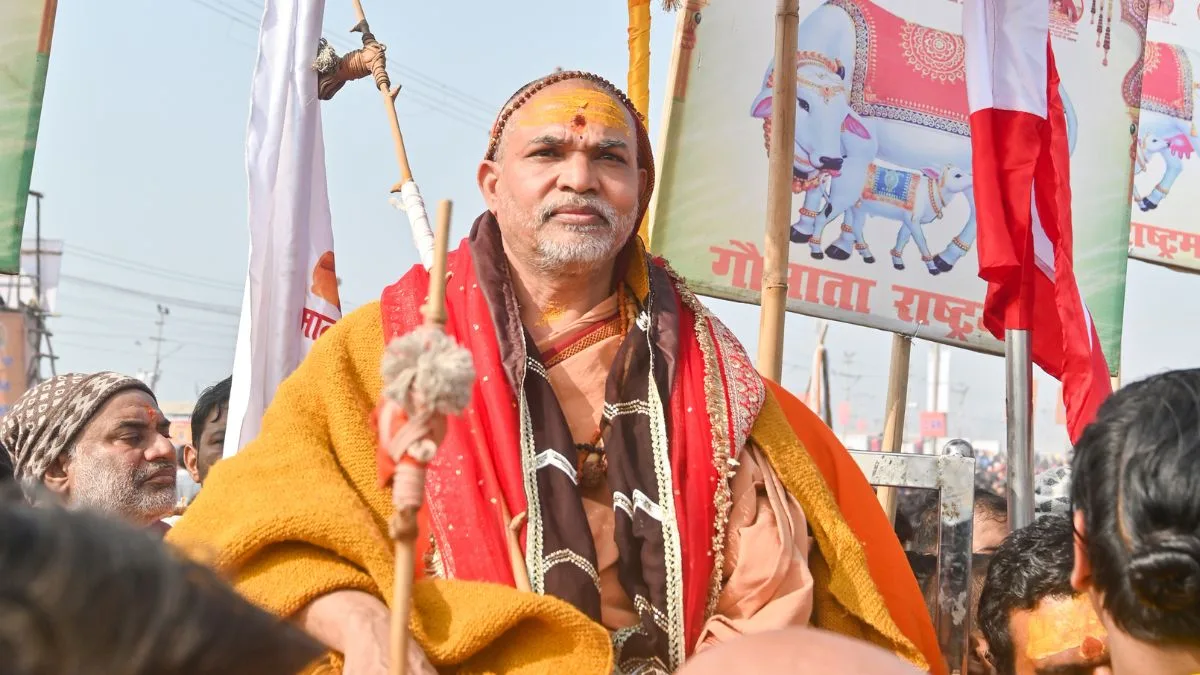
If the UGC issue unsettled the BJP’s urban and educated upper-caste base, the confrontation with Swami Avimukteshwaranand Saraswati struck at the symbolic heart of its Hindu identity politics. The Shankaracharya of Jyotirmath was prevented by Uttar Pradesh Police from taking a ritual dip in the Ganga at Prayagraj during Mauni Amavasya. His followers were allegedly manhandled, and he was served two notices—one questioning his legitimacy as Shankaracharya, and another threatening to withdraw his camping facilities at the Magh Mela, even asking why he should not be permanently banned from the fair.
Avimukteshwaranand is no stranger to controversy. He has openly criticised Chief Minister Yogi Adityanath over the handling of stampede deaths at the Kumbh Mela and has not spared Prime Minister Narendra Modi in the past. Yet the state’s decision to question his religious authority crossed a line for many observers. Traditionally, a Shankaracharya is appointed by a conclave of other Shankaracharyas, not by the state. In this case, the three other Shankaracharyas publicly backed Avimukteshwaranand’s legitimacy.
In Uttar Pradesh’s caste-sensitive political climate, the episode was quickly framed as a Rajput chief minister asserting authority over a Brahmin religious figure. Opposition parties—including the Congress and the Samajwadi Party—along with groups like the Hindu Mahasabha, portrayed the incident as an insult to Sanatan Dharma and an affront to the Brahmin community.
Even within the BJP, voices of concern emerged. Firebrand leader Uma Bharti criticised the administration for overstepping its authority, though she later clarified that her comments should not be interpreted as opposition to Adityanath himself.
Miscalculation or Managed Disruption?
The central question is whether the BJP stumbled into these controversies or engineered them as part of a broader political strategy. The evidence suggests a calculated risk rather than accidental fallout.
The party was aware that including OBCs in the UGC regulations would provoke upper-caste backlash. Yet it proceeded, likely calculating that the Supreme Court’s scrutiny would eventually temper the rules. Simultaneously, the move undercuts the Opposition’s “Jitni abadi, utna haq” slogan by demonstrating that the BJP, too, is willing to engage with the language of equity and representation.
The Shankaracharya episode, meanwhile, sends multiple signals. To non-Brahmin castes, particularly Rajputs, it reinforces Yogi Adityanath’s authority and autonomy. To OBCs and Dalits, it subtly challenges the perception that the BJP is beholden to Brahmin interests. To Brahmins, it presents a hard truth: their political leverage is no longer unconditional.
The BJP appears to believe that Brahmins, despite their discontent, lack viable alternatives. The Congress is seen as too openly aligned with OBC and Dalit politics, while the Samajwadi Party’s leadership remains firmly OBC. In the cow-belt, upper castes deserted the Congress years ago, largely because they no longer see it as electorally competitive.
Opposition Gains and the Road Ahead
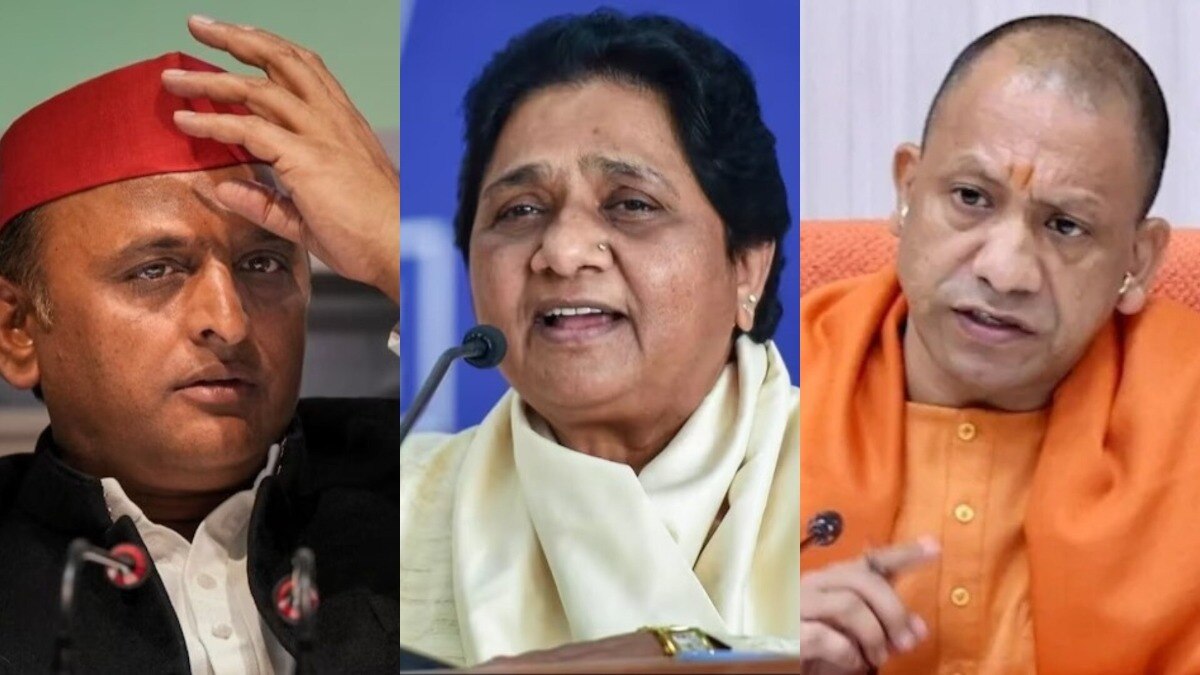
Opposition parties have seized the moment. BSP chief Mayawati defended the UGC rules, calling opposition to them “casteist.” SP leader Ram Gopal Yadav highlighted the near-monopoly of general category candidates in top academic positions, warning of counter-protests if marginalised groups felt ignored.
With panchayat elections looming and the memory of past caste flashpoints—such as the 2018 SC/ST Act controversy—still fresh, the BJP is treading carefully. Union Education Minister Dharmendra Pradhan’s assurances that the rules would not be misused reflect an attempt to calm tempers without retreating from principle.
For now, the party’s experiments are on pause, thanks to judicial intervention and administrative damage control. But the underlying strategy remains intact: test caste sentiments early, absorb the shocks, and recalibrate well before 2027.
Whether this balancing act succeeds will depend on how effectively the BJP can convince upper castes that their interests remain secure while persuading OBCs and Dalits that the party genuinely stands for social justice. In Uttar Pradesh, where caste memory is long and political forgiveness short, that is a gamble with consequences far beyond one election cycle.
*Views expressed in the above piece are personal and solely those of the author. They do not necessarily reflect Vygr’s views.
With inputs from agencies
Image Source: Multiple agencies
© Copyright 2025. All Rights Reserved. Powered by Vygr Media.