 By
By 
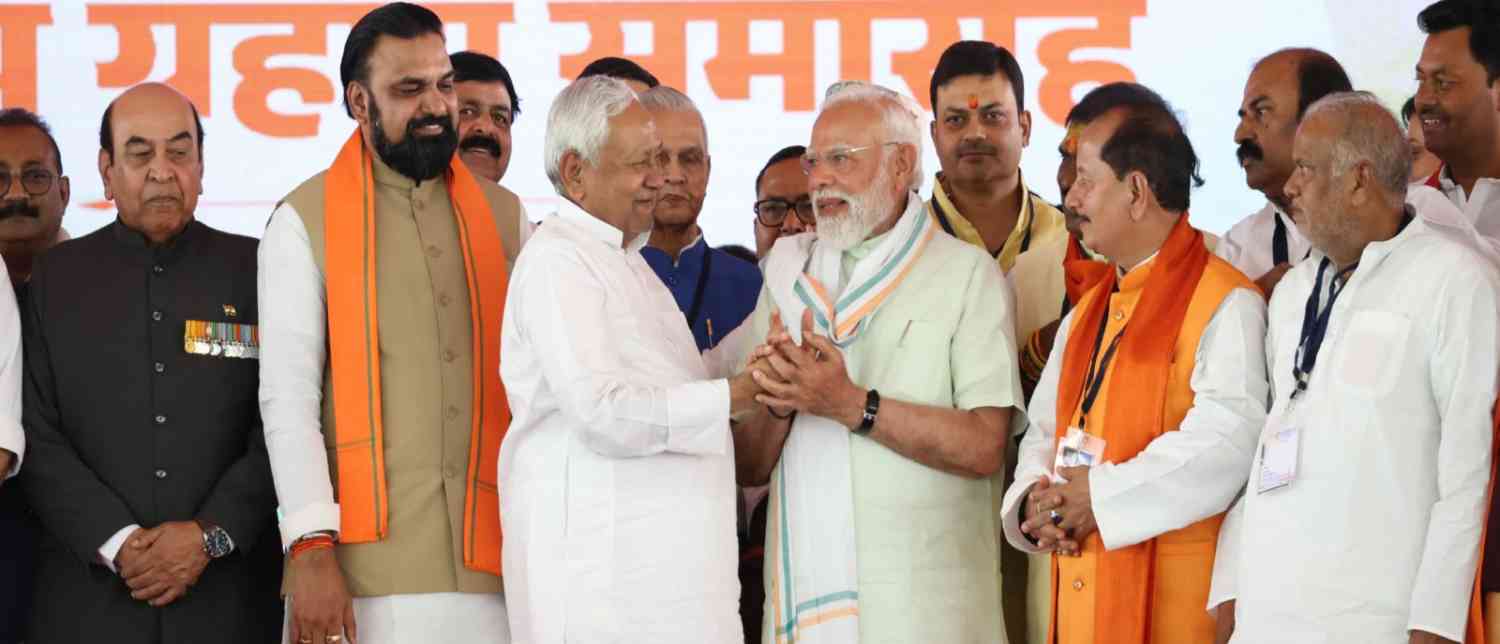
In a major political reshuffle that could redefine Bihar’s power structure ahead of the next electoral battles, Chief Minister Samrat Choudhary on Thursday expanded his cabinet in a grand ceremony at Patna’s historic Gandhi Maidan, inducting 32 ministers into the National Democratic Alliance (NDA) government.
The most talked-about development of the day was the formal political entry of Nishant Kumar, son of former chief minister Nitish Kumar, who took oath as minister for the first time. His induction is being seen as a crucial signal about the future leadership of the Janata Dal (United) or JD(U), especially after Nitish Kumar’s move to the Rajya Sabha earlier this year.
The swearing-in ceremony, attended by Prime Minister Narendra Modi, Union Home Minister Amit Shah, Defence Minister Rajnath Singh and several senior NDA leaders, marked the first major cabinet expansion since the BJP took the chief minister’s post in Bihar under Samrat Choudhary.
The expansion increased the strength of the Bihar cabinet to 35 ministers, including the chief minister. Retired Lieutenant General Syed Ata Hasnain administered the oath of office and secrecy to the new ministers.
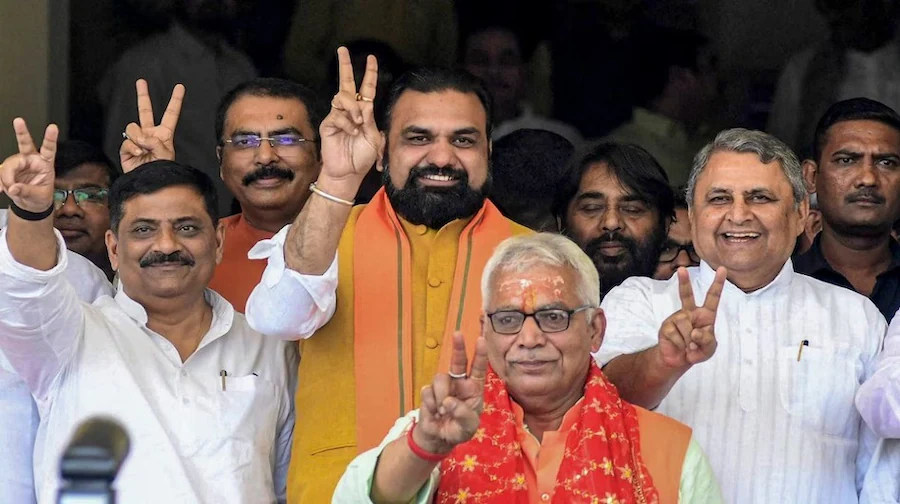
BJP Emerges Dominant Force in New Bihar Power Structure
The cabinet formation reflected the growing dominance of the Bharatiya Janata Party within Bihar’s ruling alliance. Of the 32 ministers inducted, 15 belonged to the BJP, while 13 came from the JD(U). The remaining berths were distributed among NDA allies — two to Lok Janshakti Party (Ram Vilas), and one each to Hindustani Awam Morcha (Secular) and Rashtriya Lok Morcha.
Political observers believe the final distribution was slightly different from the earlier negotiations in which both BJP and JD(U) were expected to get 16 seats each.
The cabinet reshuffle came after Nitish Kumar stepped down from active state leadership and moved to the Rajya Sabha, paving the way for Samrat Choudhary to become Bihar’s first BJP chief minister in recent years.
The BJP’s enhanced numerical strength in the cabinet is widely being interpreted as a reflection of the party’s growing control over governance and electoral strategy in Bihar, while still maintaining the NDA coalition balance.
Nishant Kumar’s Entry Signals JD(U) Succession Plan
The induction of Nishant Kumar became the defining political moment of the ceremony. Until recently, Nitish Kumar’s son had largely stayed away from electoral politics and public office. However, in recent weeks he had intensified political activities, including outreach programmes and participation in JD(U) events.
According to JD(U) insiders, Nishant Kumar had finally made up his mind to enter active politics after initially maintaining distance from government responsibilities.
His inclusion is being seen as an attempt by the JD(U) to ensure continuity in leadership and preserve Nitish Kumar’s political legacy within the party. The development is particularly significant because Bihar politics has long revolved around Nitish Kumar’s personal credibility and governance image.
The move also comes at a time when questions are increasingly being raised about the future leadership structure of JD(U) in a BJP-dominated alliance.
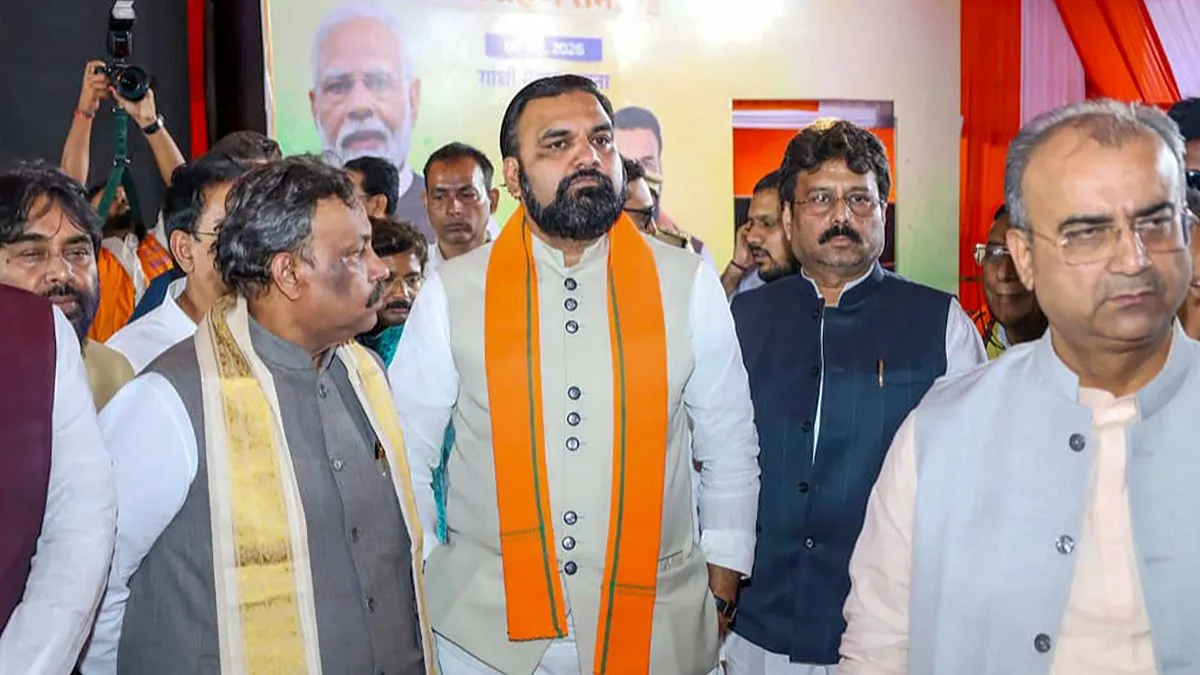
Senior Leaders and Experienced Faces Return to Government
The new cabinet includes several heavyweight leaders from both BJP and JD(U). The first batch of ministers taking oath included Shravan Kumar, Vijay Kumar Sinha, Dilip Jaiswal, Lesi Singh and Nishant Kumar.
Former deputy chief minister Vijay Kumar Sinha’s inclusion was expected, given his strong organisational role within the BJP. Senior JD(U) leaders such as Shravan Kumar were also retained as the party attempted to balance experience with fresh representation.
Reports suggested that the JD(U) particularly focused on including experienced and educated faces in the ministry.
Cabinet Expansion Reworks Bihar’s Caste Arithmetic
One of the biggest political calculations behind the cabinet reshuffle was caste representation — a decisive factor in Bihar politics.
According to analyses emerging after the expansion, the NDA attempted to strike a careful balance among upper castes, Extremely Backward Classes (EBCs), OBCs, Dalits and regional communities. The inclusion of leaders from “Luv-Kush” social blocs — Kurmis and Koeris — was especially significant, as these communities have historically formed the backbone of Nitish Kumar’s political support base.
The cabinet also reportedly gave substantial representation to EBC groups in an effort to consolidate support among communities that have increasingly become crucial in Bihar’s electoral politics. The BJP and JD(U) appear to have jointly designed the cabinet to maintain social balance while also preparing for future assembly contests.
Political observers noted that the caste composition of the cabinet reflects Nitish Kumar’s long-standing social engineering formula, even though the BJP now leads the government.
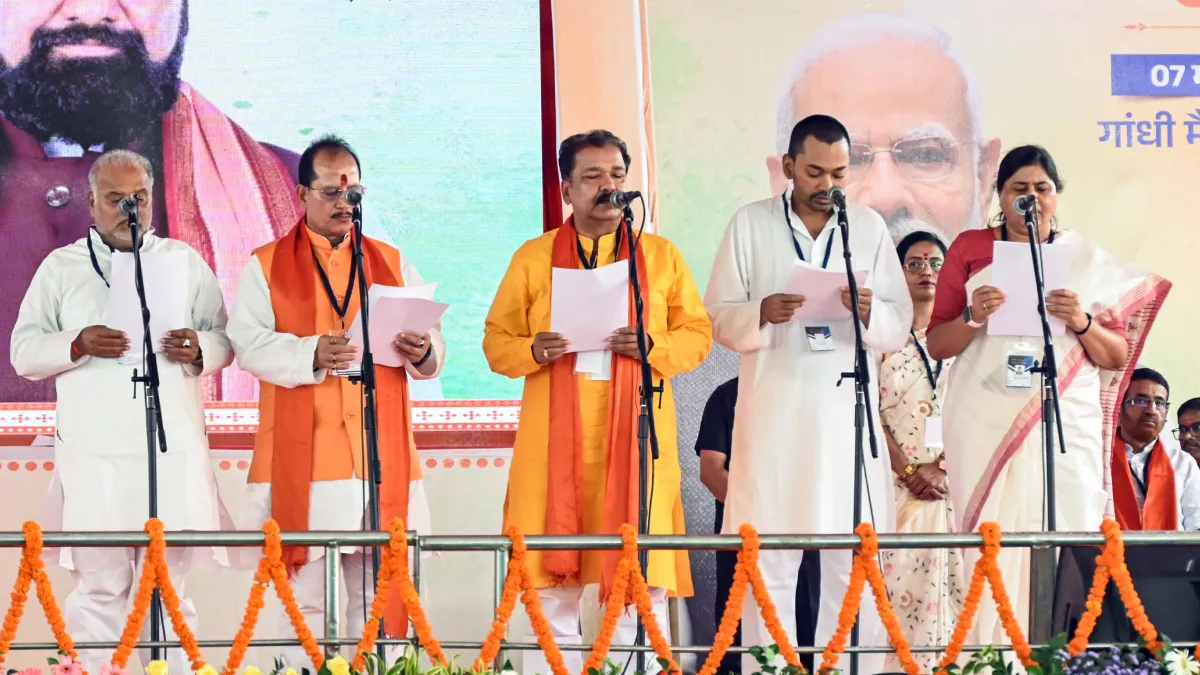
Grand Political Show at Gandhi Maidan
The oath-taking ceremony was organised on a massive scale at Gandhi Maidan in Patna, with elaborate security arrangements and large crowds of party workers and supporters in attendance.
Prime Minister Narendra Modi’s presence elevated the political significance of the event, turning it into a show of strength for the NDA in Bihar. Home Minister Amit Shah had reportedly played a direct role in finalising the list of ministers after a series of consultations with BJP and alliance leaders.
Ahead of the expansion, Samrat Choudhary had held meetings in Delhi with Amit Shah, Rajnath Singh, Nirmala Sitharaman, JP Nadda, Ashwini Vaishnaw and other NDA leaders to finalise the cabinet structure.
The presence of top central leadership underlined the BJP’s intention to closely manage Bihar’s political transition after Nitish Kumar’s exit from the chief minister’s post.
Bihar’s Political Transition Enters New Phase
The cabinet expansion marks a turning point in Bihar politics. For the first time in over a decade, a Bihar government is functioning without Nitish Kumar as chief minister, even though his influence remains deeply embedded within the alliance and JD(U).
Samrat Choudhary’s leadership now faces the challenge of balancing BJP’s growing ambitions with the JD(U)’s organisational sensitivities and Nitish Kumar’s continuing political relevance.
At the same time, Nishant Kumar’s entry into the cabinet has triggered fresh debates about dynastic politics within JD(U), a party that had often criticised family-based political succession in rival camps.
The expanded ministry is also expected to play a major role in shaping Bihar’s governance agenda over the coming months, especially as the NDA government seeks to project administrative stability, caste balance and development-oriented politics.
With BJP firmly in command, JD(U) attempting generational transition, and NDA allies accommodated strategically, Bihar’s new cabinet signals not just an administrative reshuffle but the beginning of a new political era in the state.
With inputs from agencies
Image Source: Multiple agencies
© Copyright 2026. All Rights Reserved. Powered by Vygr Media.