 By
By 
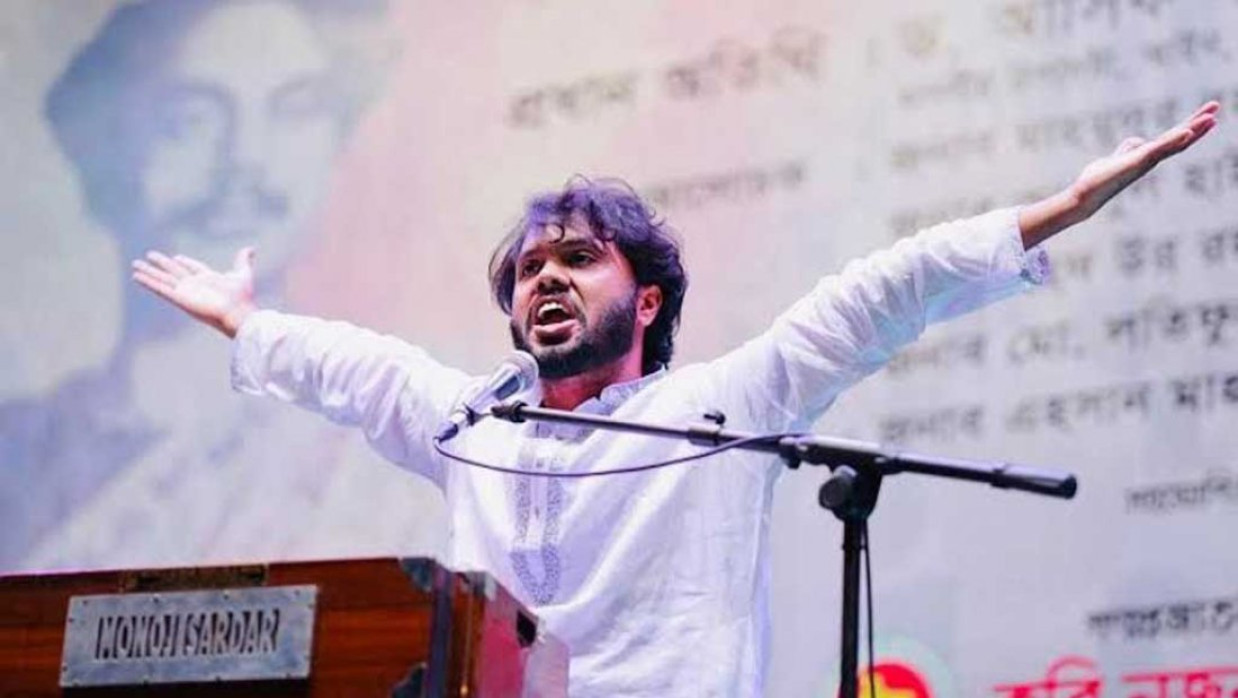
Bangladesh was plunged into renewed political turmoil in mid-December 2025 following the death of Sharif Osman Hadi, a radical youth leader whose influence had surged during the July–August 2024 uprising that ultimately led to the fall of Sheikh Hasina’s Awami League government. Hadi’s killing not only ignited widespread protests across Dhaka but also deepened political tensions ahead of the country’s crucial parliamentary elections scheduled for February 12, 2026.
The assassination of the 32-year-old leader, who headed the radical platform Inquilab Mancha, has since become a flashpoint—triggering diplomatic friction with India, mass street demonstrations, and fears of a broader destabilisation of Bangladesh’s fragile post-uprising political order.
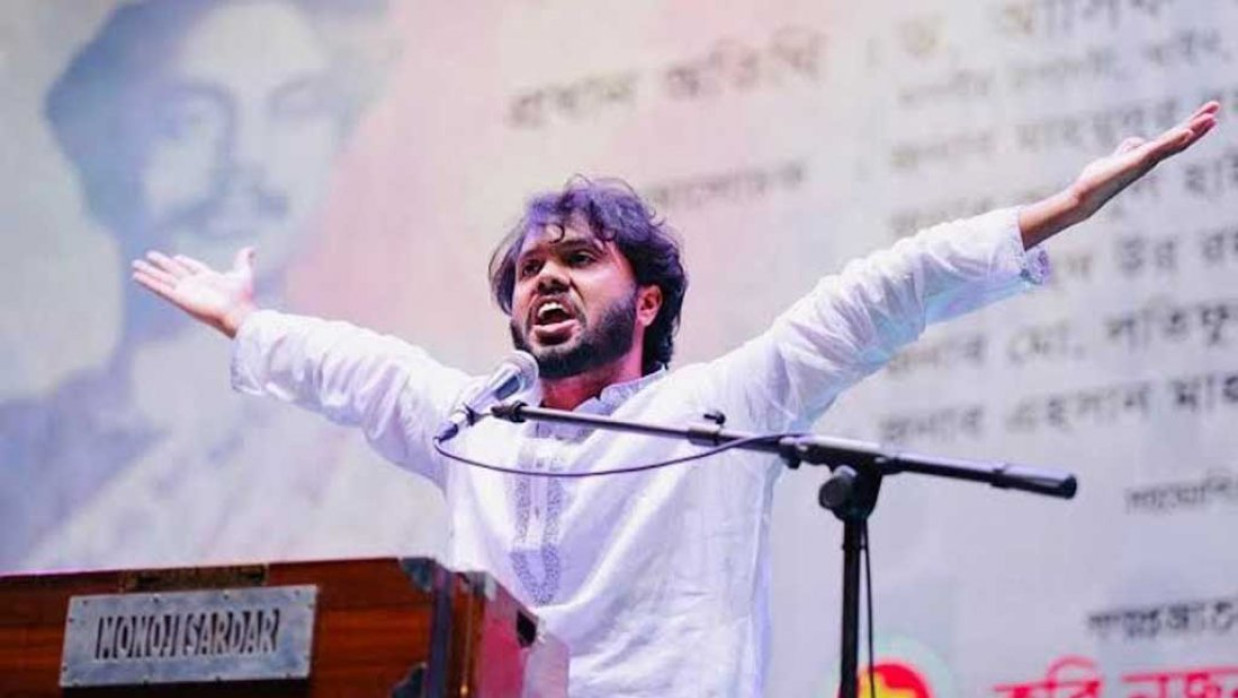
Violence Erupts After Confirmation of Hadi’s Death
On the night of Thursday, December 18, 2025, violence broke out across several parts of Dhaka as news spread that Sharif Osman Hadi had succumbed to his injuries in Singapore. Hadi had been shot six days earlier, on December 12, while launching his election campaign in the capital.
The announcement of his death was made by Bangladesh’s interim government Chief Adviser, Professor Mohammed Yunus, who described the loss as a moment of national grief. Yunus declared that special prayers would be held at all places of worship across the country on December 19, and later announced a nationwide day of mourning on Saturday, December 20. The national flag was ordered to be flown at half-mast at government, semi-government, autonomous offices, educational institutions, public and private buildings, as well as Bangladeshi missions abroad.
Addressing the nation, Yunus vowed that “no leniency will be shown” toward those responsible for the killing, signalling that the interim administration viewed the attack not merely as a criminal act but as a political assault on the state.
The Assassination in Bijoynagar
Sharif Osman Hadi was shot in broad daylight on December 12 at around 2:25 p.m. in Dhaka’s Bijoynagar area, a busy central neighbourhood. According to police, three unidentified assailants riding a motorcycle opened fire on him in front of DR Tower on Box Culvert Road before fleeing the scene.
A spokesperson for Dhaka police confirmed the incident, stating that Hadi had been shot as he initiated his election campaign as an independent candidate from the Bijoynagar constituency. He was immediately rushed to Dhaka Medical College and Hospital (DMCH), where doctors placed him on life support due to the severity of his injuries.
Recognising the critical nature of his condition, the interim government later announced that Hadi would be airlifted to Singapore for advanced medical treatment. He was transported by air ambulance on December 15. Despite intensive care, Hadi passed away three days later, on December 18.
#Bangladesh 🇧🇩
>Motaleb Shikder Sikder ( National Citizen Party ) was shot in the head today in Khulna by unknown men.
>He is a rabid anti India person.
>He has survived.
>This attack comes just days after the assassination of Sharif Osman Hadi. #Dhaka pic.twitter.com/Xk7GSF17cV— S Kumar (@SKumar2047) December 22, 2025
A Leader Forged in the 2024 Uprising
Sharif Osman Hadi rose to national prominence during the July–August 2024 uprising, a turbulent period marked by mass student-led protests, street violence, and the eventual ouster of long-time Prime Minister Sheikh Hasina. Often described in local media as a “frontline fighter” of the movement, Hadi became a symbol of defiance against the former regime.
Born in Nalchiti upazila of Jhalokathi district, Hadi was known for his fiery rhetoric, organisational skills, and uncompromising stance against the Awami League. Over the past year, his political platform, Inquilab Mancha, evolved into a powerful force, particularly among politically mobilised youth and students who had participated in the uprising.
The group positioned itself as a revolutionary vanguard, demanding accountability for alleged crimes committed during Hasina’s rule. After the Yunus-led interim government formally disbanded the Awami League in May 2025 and barred it from contesting elections, Inquilab Mancha intensified its campaigns nationwide.
According to PTI, the platform spearheaded calls for the arrest of what it termed “all terrorists” within the disbanded Awami League—from central leadership to grassroots operatives—while simultaneously demanding protection for the so-called “July warriors” who had led the uprising.
Death Threats and Escalating Tensions
Hadi had repeatedly claimed that his life was under threat. In December 2024, he publicly accused the Awami League of orchestrating covert killings of students involved in the July uprising. Reports in the Dhaka Tribune noted that Hadi spoke openly about receiving death threats from unknown numbers, warning that elements loyal to the former regime were attempting to silence revolutionary voices.
These warnings now appear chillingly prescient. His assassination occurred just one day after Bangladesh’s Election Commission announced the schedule for the 13th parliamentary election, a coincidence that has fueled suspicions of a deliberate attempt to disrupt the electoral process.
Chief Adviser Yunus later described the attack as “symbolic,” arguing that its objective was to derail the election and intimidate revolutionary forces. “This attack is meant to demonstrate their strength and sabotage the entire electoral process,” he said.
In Khulna, Motaleb Shikdar, a leader of the students’ new party National Citizen Party (NCP), has been shot in the head. He sustained a gunshot wound to the left side of his head and is currently receiving treatment at Khulna Medical College Hospital.
Motaleb Shikdar is a… pic.twitter.com/Lc4uJWYhfX— Sahidul Hasan Khokon (@SahidulKhokonbd) December 22, 2025
Protests, Anti-India Slogans, and Diplomatic Fallout
The fallout from Hadi’s killing quickly spilled beyond domestic politics and into Bangladesh’s diplomatic relationship with India. On December 14, Bangladesh’s Ministry of Foreign Affairs summoned Indian High Commissioner Pranay Verma to express “serious concern” over what it described as “incendiary statements” made by deposed Prime Minister Sheikh Hasina, who is currently residing in India.
During the meeting, Bangladeshi officials suggested that the assailants responsible for Hadi’s shooting might attempt to seek refuge across the border. The ministry formally requested India’s cooperation in preventing the suspects’ escape and urged New Delhi to ensure their immediate apprehension and extradition should they enter Indian territory.
In response, India’s Ministry of External Affairs summoned Bangladesh’s High Commissioner to New Delhi, Riaz Hamidullah, on December 17. Indian officials raised concerns over the safety of their diplomatic mission in Dhaka after a large group of protesters marched toward the Indian High Commission.
The demonstrators, chanting anti-India slogans and demanding Sheikh Hasina’s return to Bangladesh, were intercepted by police barricades. According to Dhaka Tribune, the protesters were also raising pro-Hadi slogans, underscoring how his death had become intertwined with broader nationalist and anti-India sentiments.
Calls for Escalation and Yunus’s Warning
Inquilab Mancha had earlier warned that it would stage a sit-in protest at the Shahbagh intersection until Hadi’s attackers were arrested. The group stated that if the killers fled to India, they must be brought back “at any cost” through diplomatic engagement.
The rhetoric escalated further during protests on December 18, when political allies such as the National Citizen Party (NCP) alleged that the assailants had already crossed into India. Some demonstrators demanded the closure of the Indian High Commission until the suspects were returned.
Sarjis Alm, a key NCP leader, issued an incendiary statement, declaring, “The interim government, until India returns assassins of Hadi Bhai, the Indian High Commission to Bangladesh will remain closed. Now or Never. We are in a war!”
While acknowledging public anger, Yunus urged citizens to remain calm and warned against falling prey to propaganda and rumours. At the same time, he framed Hadi as an “enemy of the defeated forces and fascist terrorists,” an apparent reference to remnants of the Awami League.
“Their evil efforts to frighten the revolutionaries will be completely thwarted,” Yunus said, reaffirming the government’s commitment to holding elections as scheduled.
A Second Shooting Deepens the Crisis
Just days after Hadi’s death, Bangladesh was rocked by another shocking act of political violence. On Monday, December 22, Motaleb Sikder—also known as Motaleb Shikdar—a senior leader of the National Citizen Party and head of its Khulna Division, was shot in broad daylight in the southwestern city of Khulna.
According to BD News and The Daily Star, unidentified gunmen opened fire on Sikder around 11:45 a.m. in the Sonadanga area, near Gazi Medical College Hospital. The bullet struck him on the left side of his head, causing profuse bleeding.
Local residents rushed Sikder to Khulna Medical College Hospital, where he was admitted in critical condition. Hospital sources later stated that although the injury was severe, Sikder was out of danger. The bullet reportedly entered through one side of his ear, pierced the skin, and exited through the other side.
Who Is Motaleb Sikder?
Motaleb Sikder, 42, is a prominent NCP leader with deep roots in Bangladesh’s history of student activism. He serves as the Khulna divisional chief of the National Citizen Party and is also the central coordinator of the party’s workers’ wing, NCP Sramik Shakti.
A resident of Sheikhpara Palli in Sonadanga, Sikder was reportedly a key participant in Bangladesh’s violent student-led uprising of 2004, long before the more recent 2024 protests.
The shooting was confirmed by NCP Joint Chief Organiser Mahmudah Mitu, who posted on social media: “The Khulna Division head of NCP and central organiser of the NCP Sramik Shakti, Motaleb Shikdar, was shot a short while ago.”
Police deployed additional forces to both the crime scene and the hospital, stating that investigations were ongoing and more details would be released as they emerged. According to party sources, the attack occurred while Sikder was making preparations for a rally scheduled to begin shortly.
A Nation on Edge
The back-to-back attacks on Sharif Osman Hadi and Motaleb Sikder have heightened fears that Bangladesh is entering a dangerous phase of political violence just weeks before national elections. Both men were closely associated with the movements that dismantled the previous political order, making their targeting especially alarming for supporters of the post-uprising transition.
Hadi’s killing, in particular, has become a symbol of unresolved power struggles in a country still grappling with the aftermath of revolution. For many of his supporters, justice for Hadi is inseparable from the promise of a new political future—one free, they argue, from authoritarianism and foreign interference.
As protests continue, investigations unfold, and diplomatic tensions simmer, Bangladesh now faces a defining test: whether it can safeguard its democratic process while preventing further bloodshed. The coming weeks may determine whether the legacy of Sharif Osman Hadi becomes a rallying point for reform—or a grim reminder of how fragile revolutions can be.
With inputs from agencies
Image Source: Multiple agencies
© Copyright 2025. All Rights Reserved. Powered by Vygr Media.