 By
By 
A devastating suicide bombing ripped through a Shia place of worship in Pakistan’s capital on Friday, killing at least 31 people and leaving more than 169 others injured, many of them critically. The rare but deadly attack occurred during Friday prayers at the Khadijatul Kubra mosque-cum-imambargah in Islamabad’s Tarlai area, triggering nationwide grief, sharp political reactions, and renewed concerns over Pakistan’s worsening security situation.
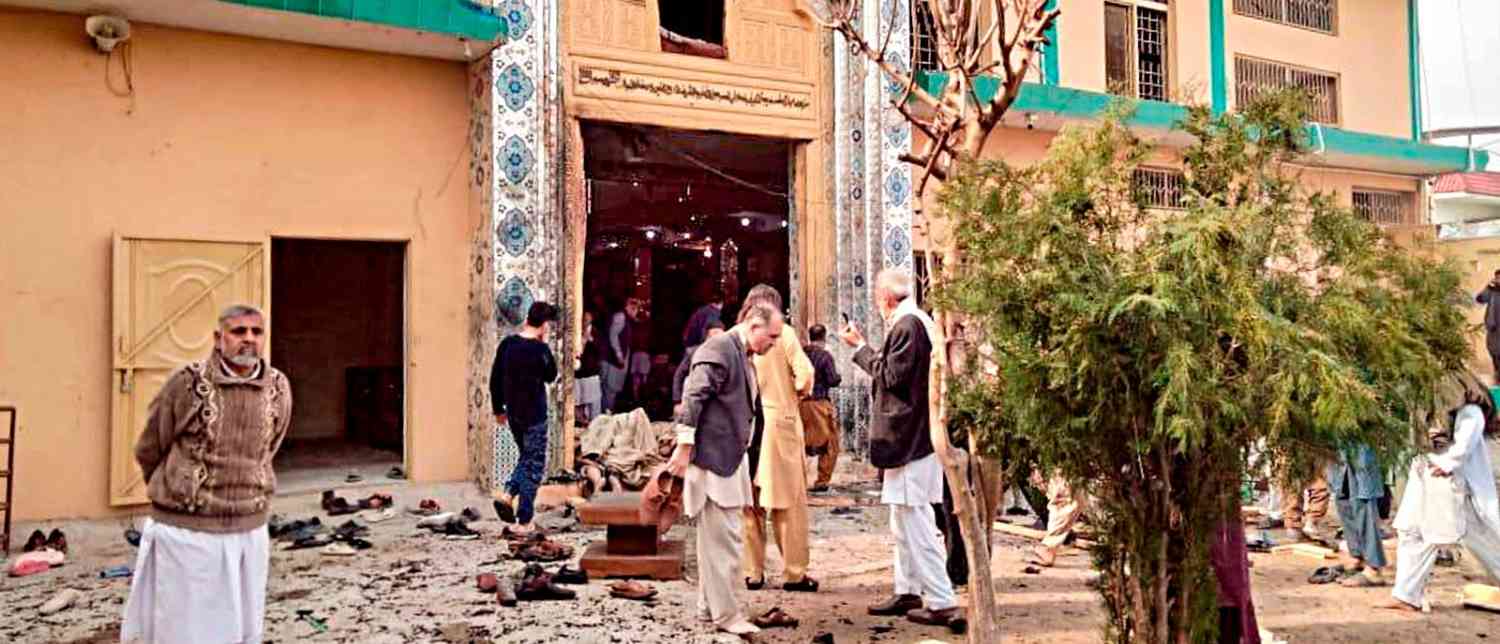
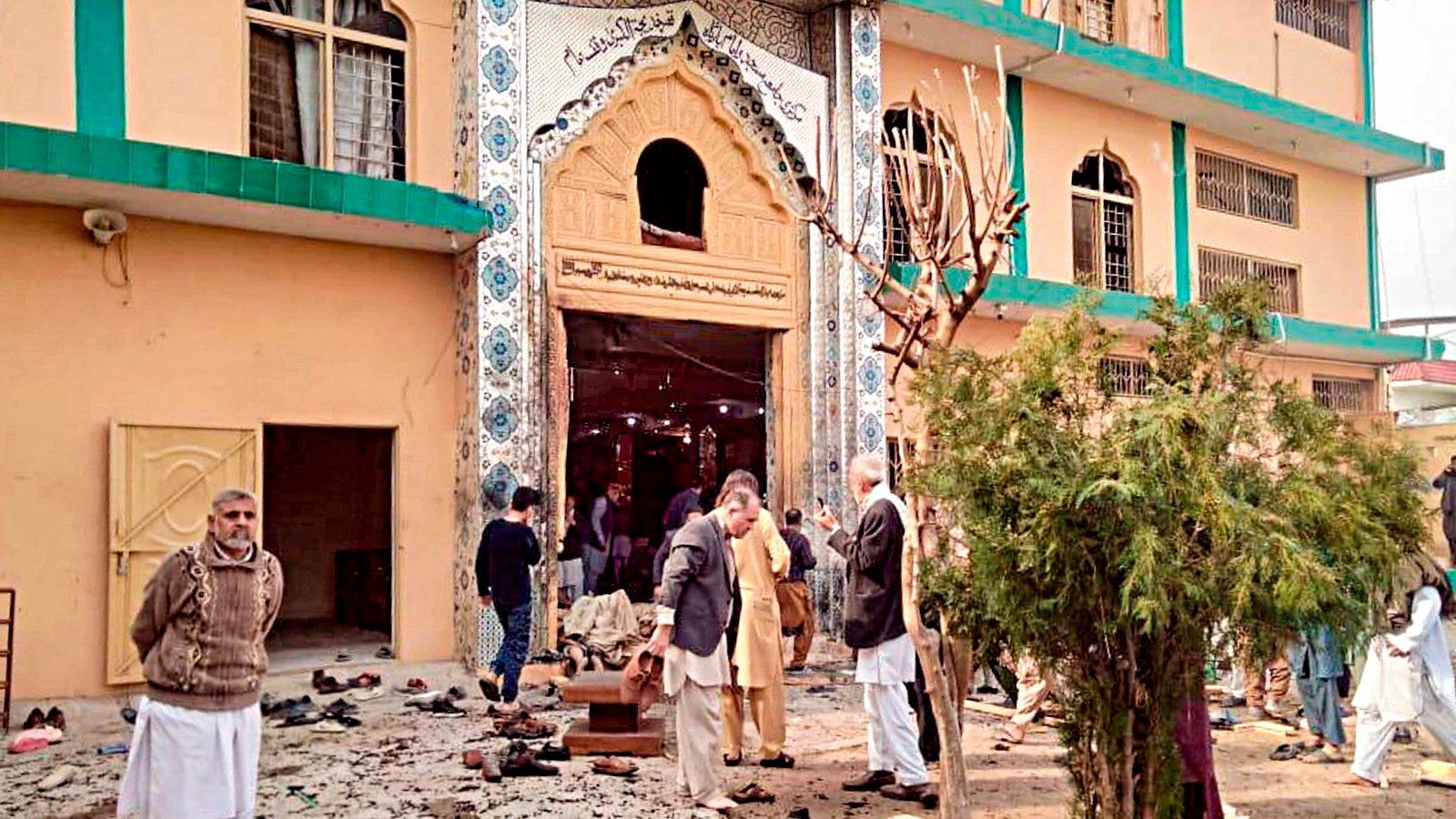
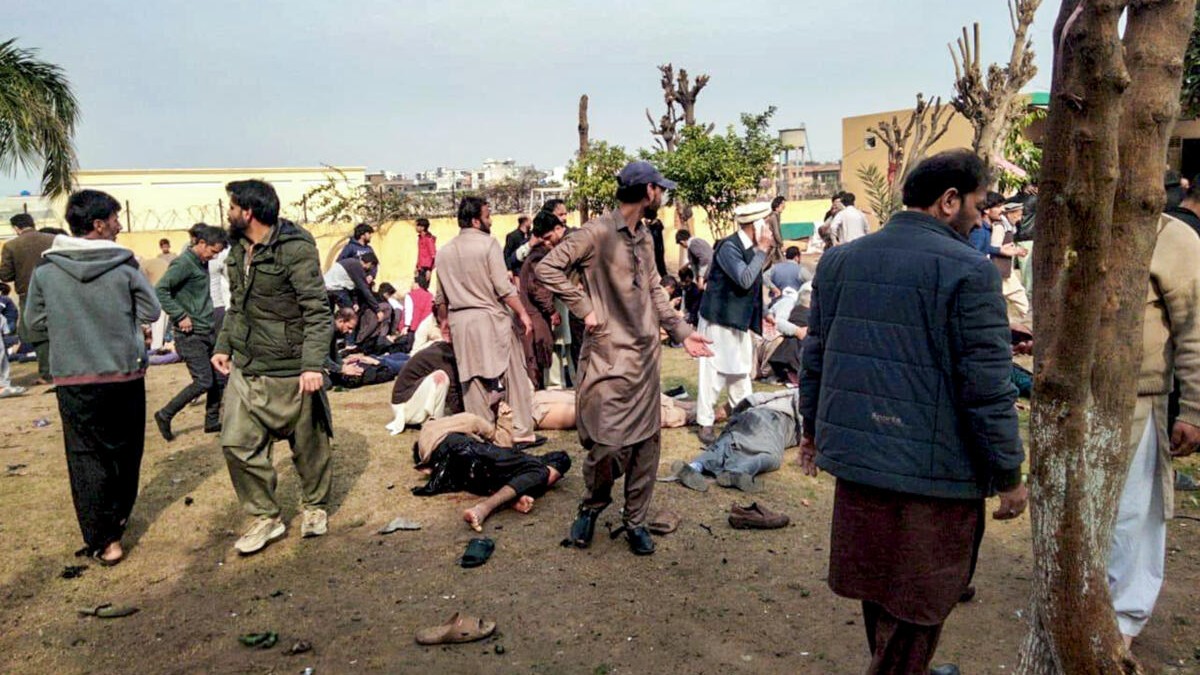
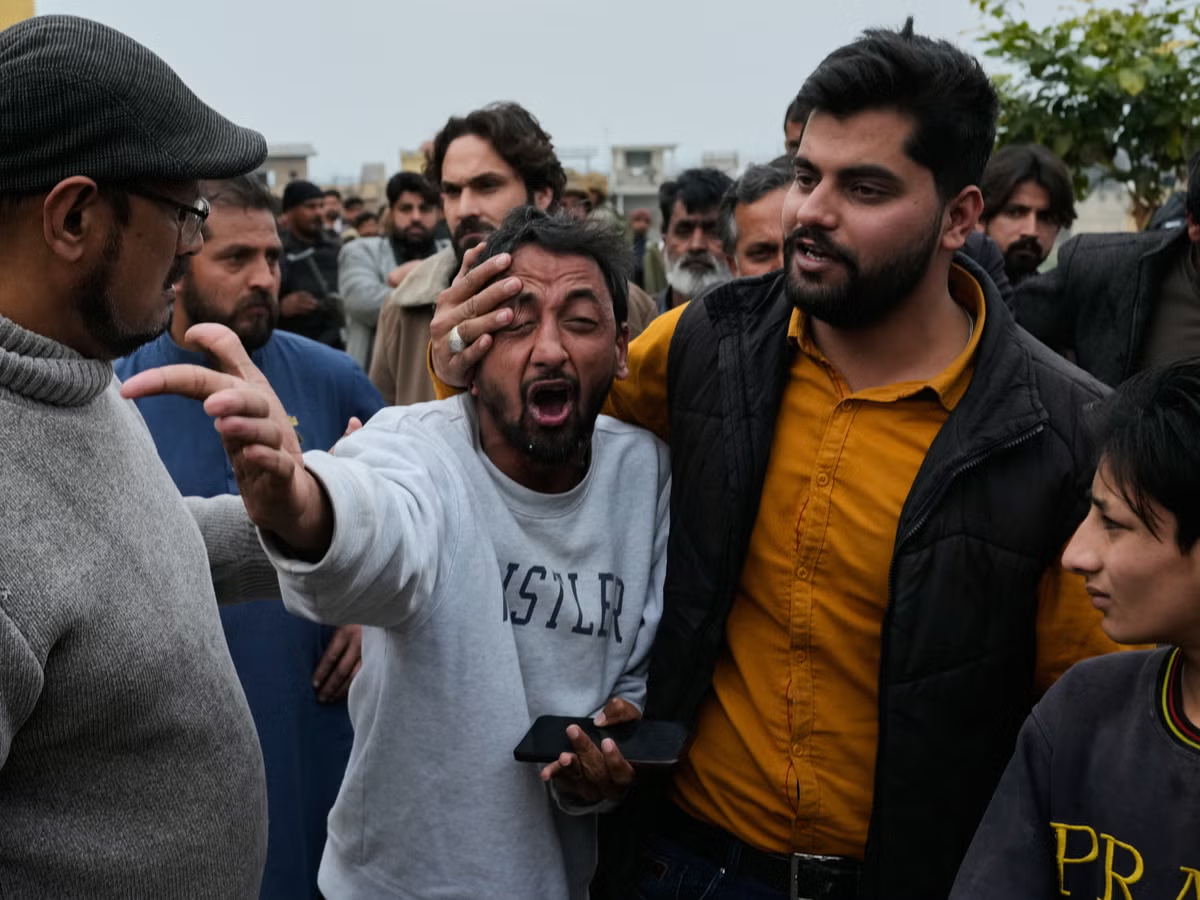
The explosion, described by witnesses as extremely powerful, was heard from a considerable distance and caused extensive damage inside the mosque complex. Television footage and images circulating on social media showed scenes of chaos—bodies strewn across the mosque’s carpeted floors, shattered glass, debris, and bloodstains where worshippers had gathered moments earlier for prayer.
What Happened at the Khadijatul Kubra Mosque
According to police officials, the attacker attempted to enter the mosque complex but was intercepted at the gate by security guards. Rather than retreating, the suspect opened fire, creating panic among worshippers, before detonating an explosive device strapped to his body.
The blast occurred at the height of Friday prayers, when the mosque was filled with worshippers. Rescue workers and eyewitnesses described harrowing scenes inside the mosque, with injured people crying out for help and others lying motionless.
Hussain Shah, who was praying in the mosque’s courtyard at the time, recounted hearing a sudden, thunderous explosion. Realizing immediately that a major attack had taken place, he rushed inside.
“There was chaos everywhere. People were screaming, wounded worshippers were crying for help. I counted around 30 bodies inside the mosque,” Shah said, adding that the number of injured appeared to be far higher.
Casualties and Emergency Response
Initial casualty figures released shortly after the blast were lower, but authorities later revised the numbers upward as rescue operations progressed. Islamabad Deputy Commissioner Irfan Memon confirmed that at least 31 people had been killed, while 169 others were injured, some in critical condition.
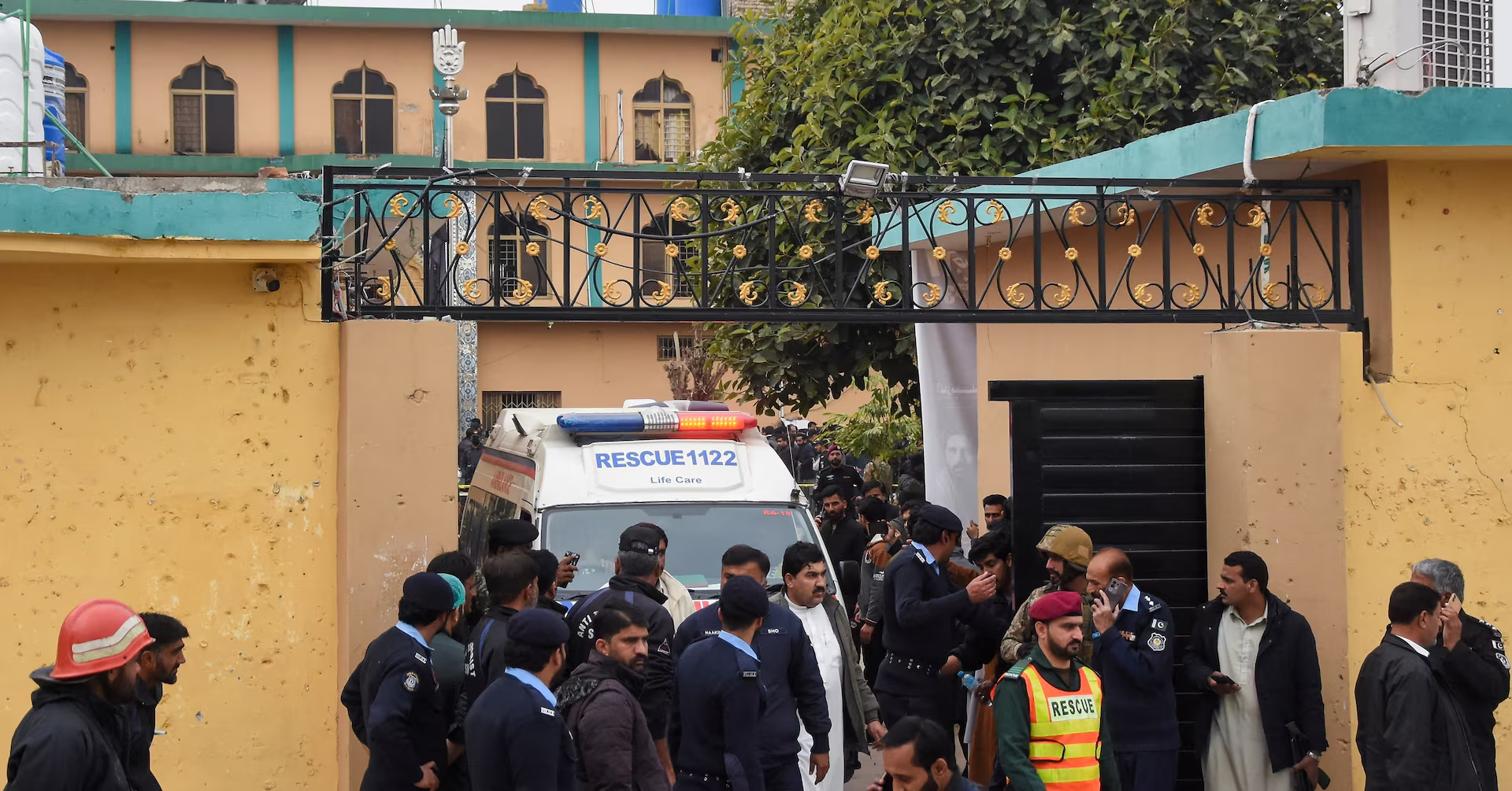
The wounded were rushed to nearby hospitals, primarily the Pakistan Institute of Medical Sciences (PIMS). An emergency was declared at major hospitals across Islamabad to cope with the influx of casualties.
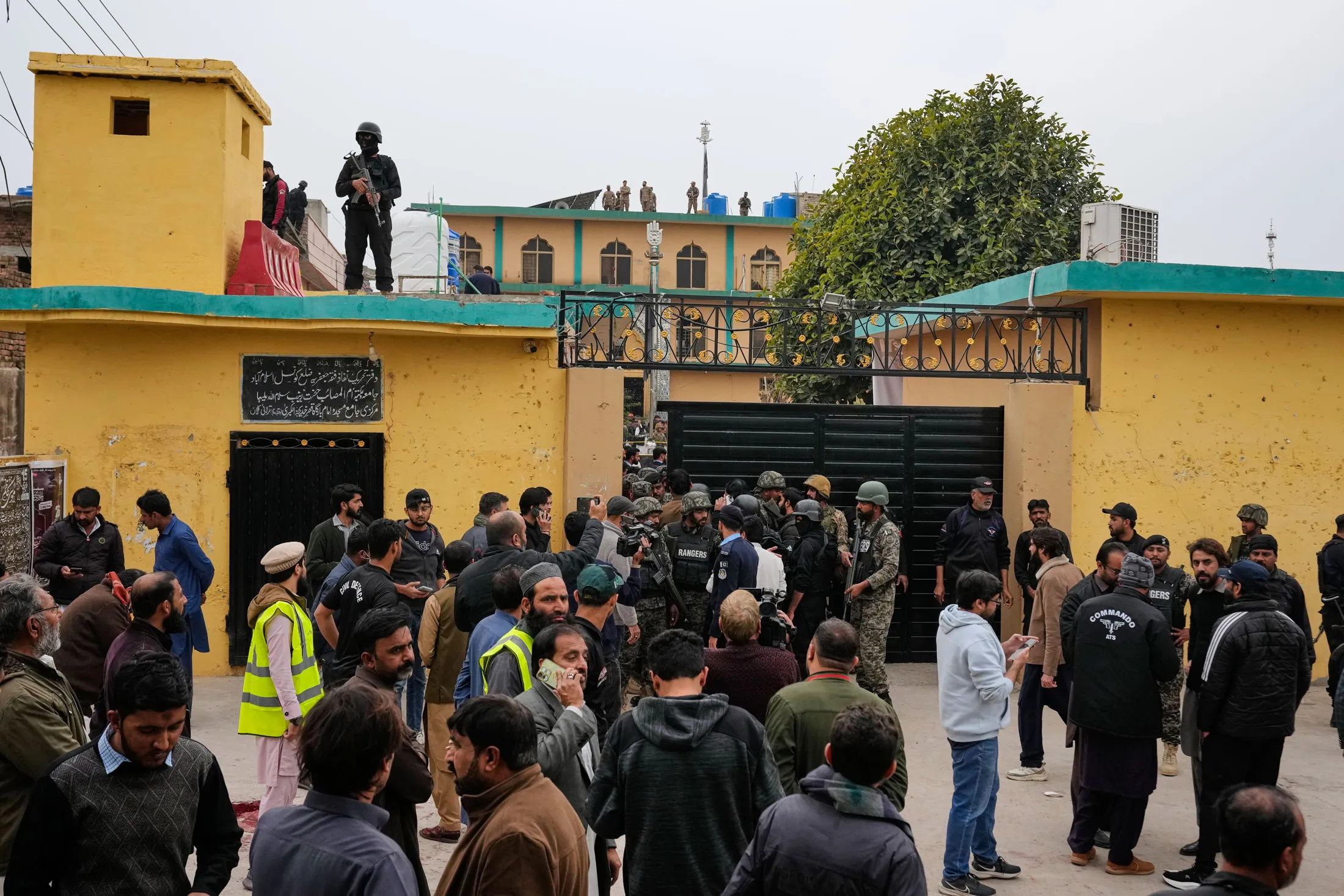
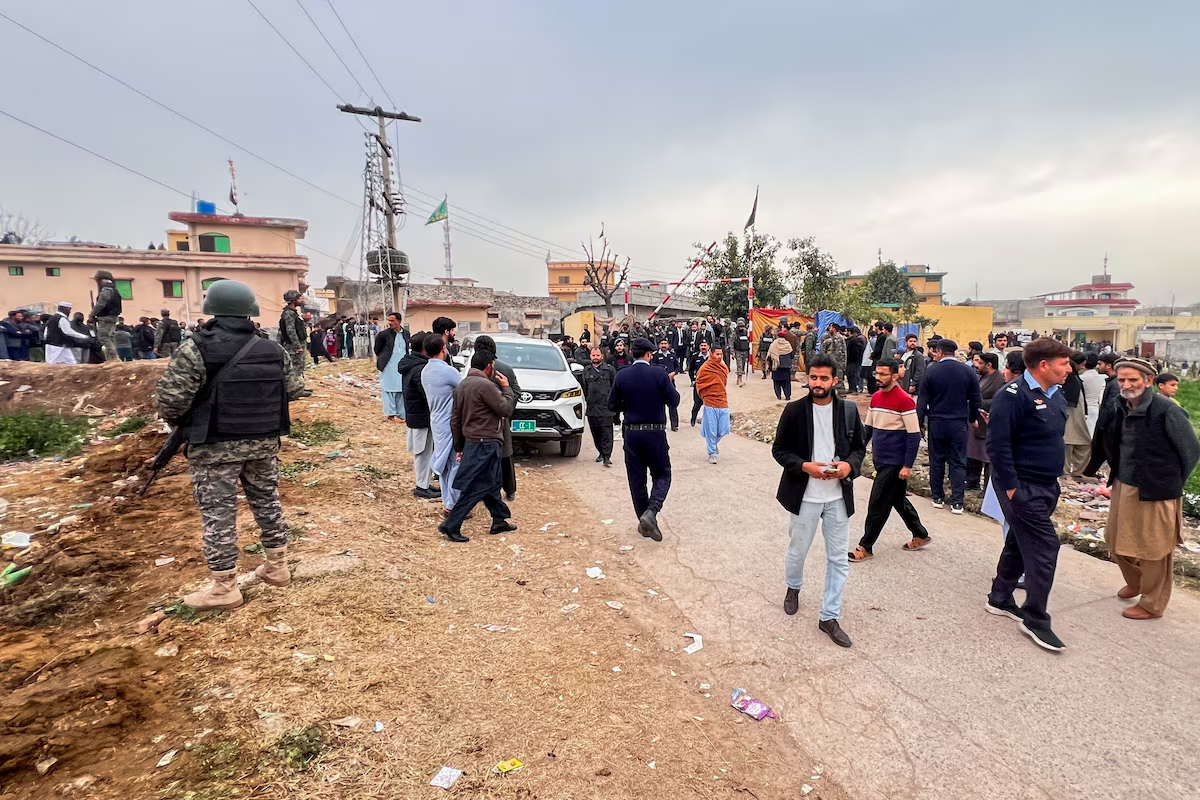
Rescue operations were carried out by police, Rescue 1122 personnel, army troops, and Rangers, who cordoned off the area and launched an extensive security sweep in and around the site. Law enforcement agencies also initiated investigations to determine how the attacker breached security and whether there were any accomplices.
Was It a Suicide Attack?
Police officials confirmed that the explosion appears to be a suicide bombing, though technical and forensic investigations are still ongoing. The method of attack—interception at the gate, opening fire, and self-detonation—strongly supports this assessment.
Authorities have stated that no militant group has officially claimed responsibility for the attack so far.
Who Is Suspected to Be Behind the Bombing?
While responsibility remains unclaimed, police sources told local and international media that the attacker was believed to be a foreign national with alleged links to Fitna al Khwaraji, a term commonly used by Pakistani authorities to refer to the Tehreek-e-Taliban Pakistan (TTP).
Pakistan’s Defence Minister Khawaja Mohammad Asif said in a post on X (formerly Twitter) that preliminary findings suggest the suicide bomber had been moving to and from Afghanistan. He confirmed that mosque security guards attempted to stop the suspect, who then opened fire and detonated explosives among the worshippers. The condition of the guards was not immediately known.
Pakistan has repeatedly accused neighboring Afghanistan, where the Taliban returned to power in August 2021 following the withdrawal of US and NATO forces, of harboring militants belonging to the Pakistani Taliban. Kabul has consistently denied these allegations.
In response to Friday’s bombing, Afghanistan’s Ministry of Foreign Affairs issued a statement condemning the attack, saying it violated the sanctity of mosques and sacred rituals and targeted innocent worshippers.
A Rare but Alarming Attack in the Capital
Militant attacks are relatively rare in Islamabad, making Friday’s bombing particularly shocking. The last deadliest attack in the capital occurred in 2008, when a suicide bomber targeted the Marriott Hotel, killing 63 people and injuring more than 250 others.
More recently, in November, a suicide bombing outside a district and sessions court in Islamabad killed 12 people, underscoring growing security vulnerabilities even in heavily guarded areas.
The latest attack took place less than three months after that court bombing and comes amid a broader surge in militant violence across Pakistan.
Surge in Militant Violence Across Pakistan
Pakistan has witnessed a significant increase in militant attacks in recent months, largely attributed to Baloch separatist groups, the Tehreek-e-Taliban Pakistan (TTP), and a regional affiliate of the Islamic State group, all of which have been active in different parts of the country.
Just days before the Islamabad mosque attack, Balochistan experienced a series of deadly assaults claimed by the Balochistan Liberation Army (BLA). Those attacks killed 36 innocent civilians, including women and children, along with 22 security and law enforcement personnel. According to the military, security forces responding to those incidents killed more than 200 militants.
Earlier in the same month, a suicide bombing reportedly carried out by the TTP injured six people at a cadet college in South Waziristan, in Khyber Pakhtunkhwa province.
Attack Coincided With Uzbek President’s Visit
The timing of the Islamabad bombing added another layer of concern. The attack coincided with the official two-day state visit of Uzbek President Shavkat Mirziyoyev, who had arrived in Pakistan a day earlier.
At the time of the explosion, President Mirziyoyev was attending an official event with Prime Minister Shehbaz Sharif in Islamabad, several miles away from the blast site. While the event itself was unaffected, the coincidence highlighted ongoing security challenges during high-profile diplomatic engagements.
Political and Religious Leaders Condemn the Attack
Pakistan’s top political leadership swiftly condemned the bombing, describing it as an inhumane and cowardly act.
President Asif Ali Zardari expressed deep sorrow over the loss of life and extended condolences to the families of the victims.
“Targeting innocent civilians is a crime against humanity,” Zardari said. “The nation stands with the affected families in this difficult time.”
Prime Minister Shehbaz Sharif also denounced the attack, calling for those responsible to be brought to justice and directing authorities to ensure that all possible medical assistance was provided to the injured.
“Those who are responsible must be identified and punished,” Sharif stated.
Interior Minister Mohsin Naqvi joined other leaders in condemning the bombing, while federal and provincial authorities vowed to tighten security.
Opposition Leader Raja Nasir Abbas: ‘A Grave Failure’
Senate Opposition Leader and prominent Shiite figure Allama Raja Nasir Abbas strongly criticized the attack, calling it a grave failure in protecting human lives and raising serious questions about the performance of the administration and law enforcement agencies.
In a post on X, Abbas said he was deeply grieved by the “martyrdom of innocent worshippers” and described the bombing of a place of worship as a barbaric and cowardly act that constituted an assault on humanity, religion, and societal values.
He extended condolences to the bereaved families and prayed for the speedy recovery of the injured.
Urgent Appeal for Blood Donations
Amid the unfolding tragedy, Allama Raja Nasir Abbas issued an urgent appeal to the youth of Islamabad to donate blood, highlighting the critical shortage faced by hospitals treating the wounded.
“At this time, there is an urgent need for blood for the injured worshippers in various hospitals of Islamabad,” he said. “I urge you all to participate generously in this noble cause and play your role in saving precious lives.”
International Condemnation
The attack drew condemnation from the international community, including statements of sympathy and solidarity from the United States, the European Union, and several foreign embassies based in Islamabad. Diplomatic missions expressed condolences to the victims’ families and denounced the targeting of worshippers.
Investigations Continue
Authorities have confirmed that investigations are ongoing to determine the full scope of the attack, including the bomber’s identity, network, and possible links to militant organizations operating inside or outside Pakistan.
Security forces remain on high alert, with additional checkpoints and patrols deployed across Islamabad and surrounding areas.
A City in Mourning, a Nation on Edge
The suicide bombing at the Khadijatul Kubra mosque has left Islamabad shaken and reignited debates over militant violence, intelligence failures, and the safety of religious minorities. As families mourn their loved ones and hospitals continue to treat the wounded, Pakistan faces renewed pressure to confront the escalating threat posed by militant groups targeting civilians, places of worship, and state institutions alike.
The coming days are likely to test the government’s ability to deliver justice, restore public confidence, and prevent such tragedies from recurring in the heart of the nation’s capital.
With inputs from agencies
Image Source: Multiple agencies
© Copyright 2025. All Rights Reserved. Powered by Vygr Media.