 By
By 
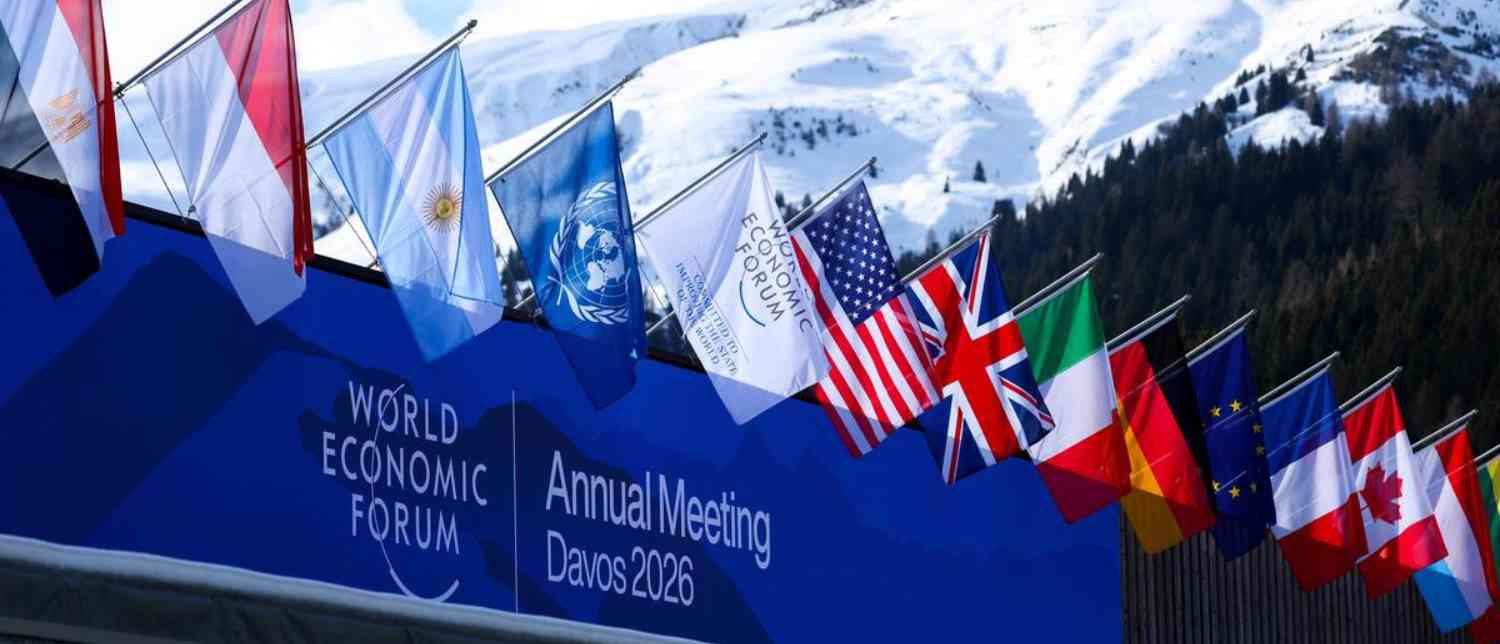
The long-simmering tensions between the United States and its traditional allies erupted into the open at the World Economic Forum (WEF) in Davos, marking what many diplomats now describe as a decisive rupture in the post-war global order. US President Donald Trump’s renewed push to acquire Greenland — an autonomous territory within the Kingdom of Denmark — has become the catalyst for a broader confrontation over power, sovereignty, and the future of the rules-based international system.
What began as a controversial geopolitical ambition has now escalated into a defining moment for America’s alliances. European leaders, joined by Canada, are no longer disguising their discomfort with Washington’s tactics. In Davos, blunt rhetoric replaced diplomatic euphemisms, and the message was unmistakable: the era of appeasing Trump is over.
Davos Becomes the Stage for a Transatlantic Showdown
As Trump prepared to arrive in Switzerland for the annual gathering of global elites, the mood in Davos was already tense. Financial markets were jittery, European industries unsettled, and diplomats bracing for confrontation. The United States’ insistence on asserting sovereignty over Greenland — a move that would directly affect a fellow NATO member — has deeply rattled allies who once relied on Washington as the guarantor of global stability.
European leaders seized the moment to signal unity and resolve. Rather than tiptoeing around Trump’s unpredictability, they openly challenged what they see as coercive tactics undermining international norms.
Macron: “We Prefer Rule of Law to Brutality”
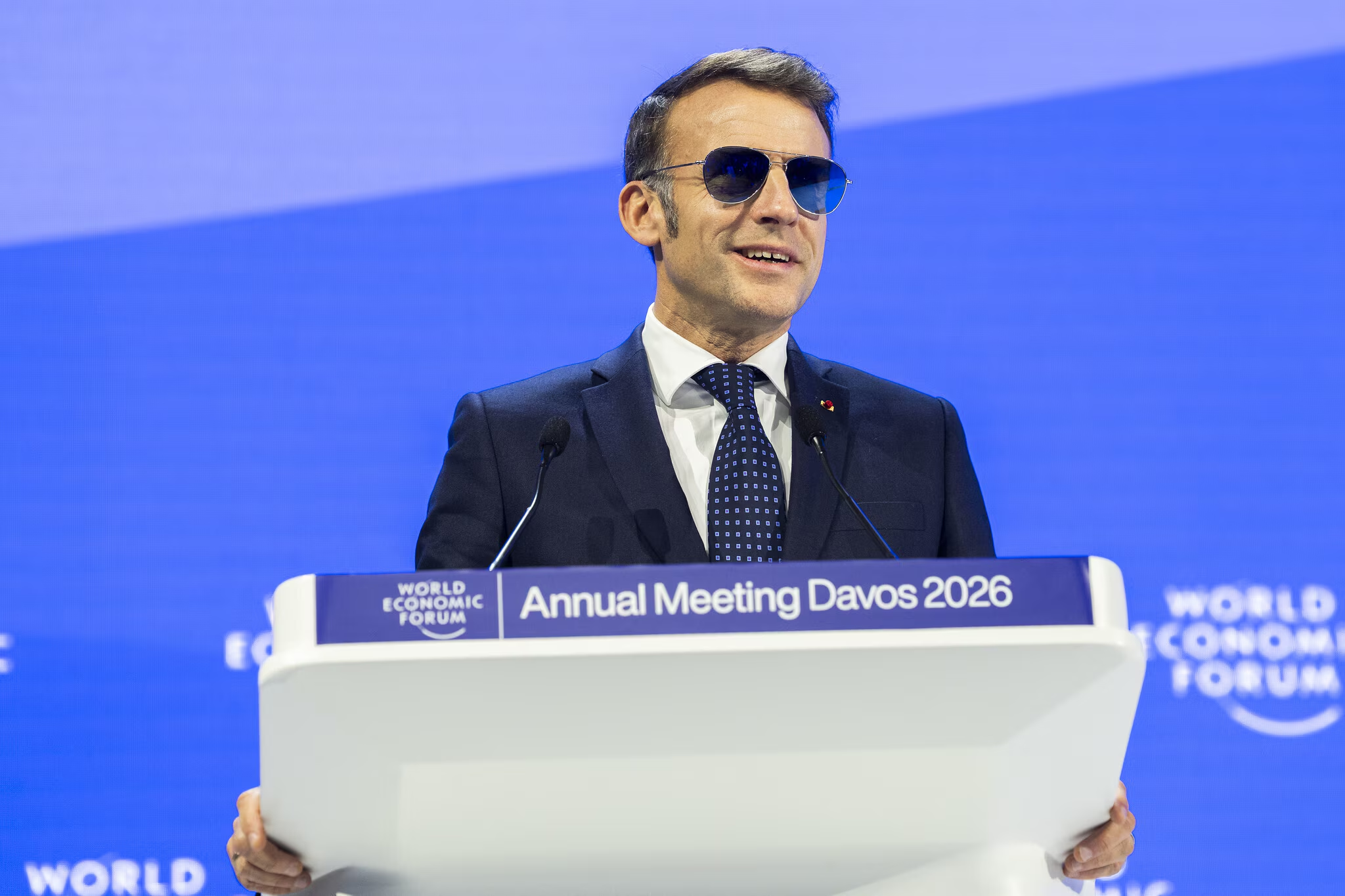
French President Emmanuel Macron delivered one of the sharpest rebukes. Without directly naming Trump, he warned against submission to raw power and rejected what he described as “the law of the strongest.”
“We do believe that we need more growth, we need more stability in this world, but we do prefer respect to bullies. And we do prefer rule of law to brutality,” Macron told delegates at the World Economic Forum, speaking a day before Trump’s arrival.
Macron described it as “crazy” that the European Union was even contemplating using its anti-coercion instrument — a powerful trade mechanism designed to counter economic intimidation — against the United States. His unusually blunt tone resonated across Davos, symbolising Europe’s growing willingness to confront Washington head-on.
In a moment that drew attention beyond politics, Macron delivered his speech wearing aviator sunglasses. The Élysée Palace later clarified that he was protecting his eyes due to a burst blood vessel — a detail that only added to the dramatic symbolism of the moment.
🚨HOLY SMOKES: Danish MEP Anders Vistisen to Trump:
“Let me put this in words you might understand: Mr. President, fuck off.”
Europe is officially done pretending this is normal diplomacy. pic.twitter.com/wtnIhdTJok— Brian Allen (@allenanalysis) January 20, 2026
Europe’s Call for Independence Grows Louder
European Commission President Ursula von der Leyen reinforced Macron’s message, framing the crisis as part of a much larger global transformation. She emphasised that the speed and scale of change had forced Europe to rethink its dependence on traditional power structures.
“It is time to seize this opportunity and build a new independent Europe,” von der Leyen said, highlighting a growing consensus within the bloc that strategic autonomy is no longer optional.
Belgium’s Prime Minister Bart De Wever went even further, describing the European Union as being “at a crossroads.” Reflecting on past efforts to appease Trump — particularly to secure US support for Ukraine — De Wever argued that Europe now faced the consequences of compromise.
“Being a happy vassal is one thing. Being a miserable slave is something else,” he said, referring to Trump’s threats to impose tariffs linked to Greenland.
“If you back down now, you will lose your dignity,” De Wever warned. “So we should unite, and we should say to Donald Trump: ‘You’re crossing red lines here.’ We either stand together or we will stand divided.”
Canada Declares a “Rupture,” Not a Transition
Perhaps the most striking intervention came from Canadian Prime Minister Mark Carney, whose remarks reframed the crisis in historic terms. According to Carney, the world is not witnessing a gradual transition but a fundamental rupture in global governance.
“Let me be clear: We are in the midst of a rupture, not a transition,” he told the Davos audience. He argued that the international rules-based order — long portrayed as universal and impartial — had always been flawed.
“We knew the story of the international rules-based order was partially false,” Carney said. “The strongest would exempt themselves when convenient. That trade rules were enforced asymmetrically. That international law applied with varying rigour depending on the identity of the accused or the victim.”
Carney acknowledged that Canada had benefited from the old system, including from what he called “American hegemony,” which provided global public goods such as open sea lanes, financial stability, collective security, and dispute-resolution frameworks.
However, he warned that the system had evolved into “a system of intensifying great power rivalry where the most powerful pursue their interests using economic integration as coercion.”
For middle powers like Canada, compliance no longer guarantees safety. “It won’t,” Carney said bluntly. “If we’re not at the table, we’re on the menu.”
Europe Prepares Economic Countermeasures
Behind the rhetoric, concrete action is already taking shape. European Union leaders decided over the weekend to convene an emergency summit in Brussels on Thursday evening to address the Greenland crisis.
At stake are tariffs on €93 billion worth of US goods — measures the EU had previously set aside after Trump agreed to a trade deal with the bloc last summer. These tariffs could automatically come into force on February 6 if negotiations collapse.
Macron has also urged the EU to consider activating its Anti-Coercion Instrument, often dubbed the “trade bazooka.” This mechanism would allow the bloc to restrict US access to public procurement markets or limit trade in services, including digital platforms. Macron reiterated that it was “crazy” that relations had deteriorated to this point.
America’s Fractured Relationships with Europe
Trump’s Greenland gambit has exacerbated already strained transatlantic relations. European industries have been rattled, financial markets shaken, and trust eroded across multiple fronts.
Hungary stands out as the sole European nation to join Trump’s newly announced “Board of Peace,” highlighting the depth of division within the continent. The initiative — a new international organisation Trump proposes to lead — has met resistance elsewhere, particularly in France.
Paris has expressed concern that the Board of Peace could undermine the authority of the United Nations. Trump, visibly irritated by France’s reluctance, responded with characteristic bravado.
“I’ll put a 200 per cent tariff on his wines and champagnes, and he’ll join,” Trump said late on Monday, before adding, “but he doesn’t have to join.”
Leaders Avoid Trump at Davos
Trump has said he intends to meet NATO Secretary-General Mark Rutte and other stakeholders during his Davos visit to discuss Greenland. However, many of the most relevant figures are unlikely to attend.
Denmark’s prime minister skipped Davos entirely, reportedly to avoid direct confrontation with Trump. Macron left Switzerland without meeting the US president, and the participation of leaders from Germany and the United Kingdom remains unconfirmed.
The absences themselves underscore how far relations have deteriorated.
Danish Lawmaker’s Viral Rebuke: “Mr President, F*** Off”
The diplomatic crisis spilled into raw political theatre when Danish Member of the European Parliament Anders Vistisen went viral for his extraordinary outburst during a parliamentary debate on Greenland.
Addressing Trump directly, Vistisen made Denmark’s position unmistakably clear. “Greenland has been part of the Danish kingdom for 800 years,” he said. “It is an integrated country. It is not for sale.”
Then came the line heard around the world: “Let me put this in words you might understand: Mr President, f*** off.”
The chamber fell silent before Parliament Vice President Nicolae Stefanuta intervened, warning that such language violated parliamentary rules. Despite the rebuke, the moment captured the depth of frustration simmering across Europe.
Why Trump Wants Greenland
Trump has defended his aggressive pursuit of Greenland by framing it as a national security imperative. He argues that the mineral-rich Arctic territory is vital for US and NATO security as climate change accelerates Arctic ice melt and intensifies competition with Russia and China.
Over the past week, Trump has escalated pressure by threatening tariffs of up to 25 per cent on eight European countries backing Denmark — a move that has prompted Europe to prepare retaliatory measures.
A Defining Moment for the Global Order
What is unfolding over Greenland is no longer just a territorial dispute. It has become a symbol of a collapsing consensus about power, alliances, and global governance.
From Macron’s defiance to Carney’s declaration of rupture, from emergency EU summits to viral parliamentary outrage, the message is clear: America’s allies are drawing red lines.
Whether Trump’s Greenland gambit succeeds or fails, the damage to the old order may already be irreversible. The “Great Davos Divorce” signals a world in which middle powers are no longer willing to submit quietly — and where unity, not deference, is fast becoming their strongest currency
With inputs from agencies
Image Source: Multiple agencies
© Copyright 2025. All Rights Reserved. Powered by Vygr Media.