 By
By 
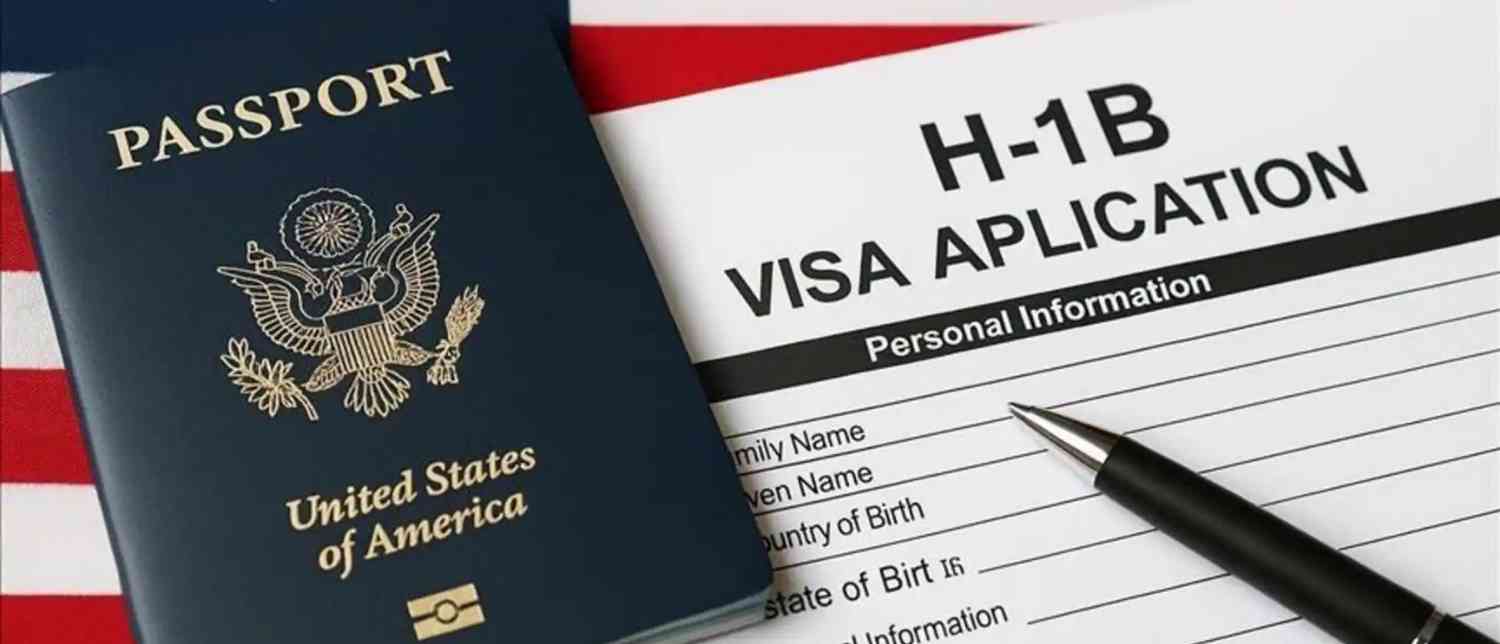
The Trump administration is considering a series of immigration changes that could significantly reshape life for H-1B workers and their families in the United States, with Indian professionals and their spouses likely to bear a disproportionate share of the impact.
Two proposals have emerged as particularly consequential. One could end employment authorisation for eligible H-4 dependent spouses of H-1B visa holders, potentially cutting off a second source of income for thousands of families. Another seeks to eliminate the 60-day grace period currently available to certain nonimmigrant workers after losing their jobs, leaving H-1B professionals with far less time to secure another immigration solution.
Neither proposal has become law yet. Existing H-4 employment authorisation rules and the 60-day grace period remain in effect while the regulatory process moves forward. However, the proposals have raised fresh concerns among Indian families who have spent years building careers, homes and financial lives in the US.
H-4 work permits could be rolled back
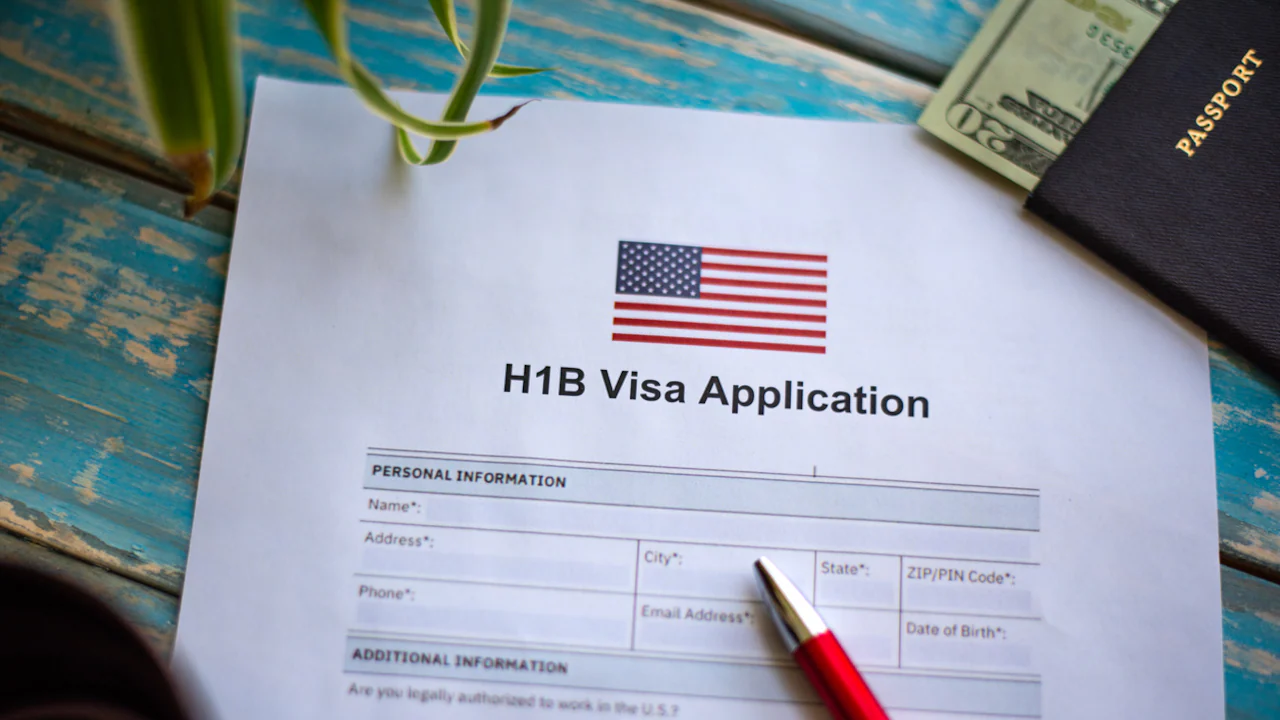
The Department of Homeland Security has placed a proposal on the federal regulatory agenda that would remove certain H-4 dependent spouses of H-1B workers from the categories eligible to seek employment authorisation.
The move would effectively reverse a policy introduced in 2015, when eligible H-4 spouses were allowed to apply for an Employment Authorisation Document, commonly known as an EAD, under specific circumstances.
The H-4 visa itself does not provide a spouse with the right to work. Instead, qualifying spouses must obtain a separate EAD before taking up employment in the US. Eligibility has generally been connected to the H-1B spouse's progress towards permanent residency, including situations involving an approved Form I-140 or certain extensions beyond the standard six-year H-1B limit.
Under the proposed change, that employment pathway could disappear.
Importantly, this does not mean that H-4 spouses are losing their jobs immediately. The proposal is still at the regulatory stage, and current rules continue to apply.
Before a final rule could take effect, DHS would have to publish a formal Notice of Proposed Rulemaking in the Federal Register, open the proposal to public comments and then issue a final regulation. The final rule would also have to specify when any changes would become effective.
Until that happens, H-4 spouses with valid EADs can continue working under existing rules.
Why Indian women could be hit hardest
The potential impact on the Indian community is particularly striking because Indians have historically accounted for the overwhelming majority of H-4 EAD approvals.
Data covering H-4 EAD applications from 2014 to 2017 showed that about 93% of approvals went to Indian nationals. Nearly 94% of those Indian beneficiaries were women.
That means a policy reversal that appears, on paper, to target a specific category of dependent visa holders could have a distinctly large impact on Indian women who have built careers in the US.
For many families, the H-4 EAD transformed the economics of living in America. Instead of relying entirely on the H-1B holder's salary, both spouses could contribute to household finances. Some H-4 EAD holders work in technology and finance, while others have built careers in healthcare, business and other professional fields.
Losing employment authorisation would therefore be more than an immigration-status issue. It could affect household savings, rent or mortgage payments, childcare, education expenses and long-term financial planning.
For families already operating on two incomes, the sudden removal of one salary could require difficult choices.
A second income has become part of the H-1B family equation
The importance of the H-4 EAD is closely tied to the unusual circumstances faced by many H-1B families.
An H-1B worker may spend years, sometimes much longer than expected, waiting for employment-based permanent residency. During that period, the family may establish deep roots in the US, including purchasing a home, enrolling children in schools and building careers.
The H-4 EAD gave eligible spouses a way to remain economically active during that lengthy immigration process.
The original 2015 regulation anticipated substantial demand for the programme. Federal regulatory material had estimated that as many as 55,000 H-4 dependent spouses could become eligible to apply for employment authorisation annually after the programme's first year, although that figure represented a maximum estimate rather than the number who actually received permits.
A rollback could therefore affect an established workforce rather than simply prevent new applicants from entering the US job market.
The 60-day H-1B grace period could also disappear
The proposed H-4 change is not the only development creating anxiety among Indian H-1B workers.
The administration is also moving toward eliminating the discretionary 60-day grace period available to eligible nonimmigrant workers after their employment ends.
The grace period was introduced in 2017 and can generally provide eligible workers with up to 60 consecutive days following the end of employment, or until their authorised stay expires, whichever comes first.
The provision covers several nonimmigrant categories, including H-1B, H-1B1, L-1, O-1, TN, E-1, E-2 and E-3 workers.
For an H-1B worker who suddenly loses a job, those 60 days can be crucial.
They can provide time to search for another employer willing to file the required immigration paperwork, explore a change of status or prepare to leave the country. The window can also give families time to deal with housing, schools, finances, relocation and other practical matters.
Removing that cushion could make a layoff dramatically more disruptive.
What happens if an H-1B worker is laid off?
Under the proposed system, an affected worker could potentially lose lawful status when employment ends unless another qualifying petition or status-related action has already been filed, or discretionary relief is available.
That would create a much tighter timeline for workers who suddenly find themselves unemployed.
Finding a new job is only part of the challenge. The prospective employer may also need to complete the necessary immigration filing, adding another layer of urgency to an already stressful situation.
For an H-1B professional who has lived in the US for years, a layoff is rarely just an employment problem. It can immediately become an immigration, financial and family problem as well.
A worker could be dealing with a mortgage, lease, children's education, healthcare arrangements and other long-term commitments while simultaneously trying to preserve legal status.
The current 60-day period provides at least some breathing room. Removing it could make the consequences of a sudden job loss much more severe.
Why Indian H-1B workers are especially vulnerable
Indian nationals are expected to be among the groups most exposed to the proposed changes because of their dominant presence in the H-1B programme and the exceptionally long employment-based green card backlog faced by many Indian applicants.
Indian nationals accounted for roughly 71% of approved H-1B petitions in fiscal year 2024, according to USCIS data cited in the reports.
At the same time, many Indian professionals remain in the US on successive H-1B extensions while waiting for their employment-based immigrant visa priority dates to become current.
The problem is particularly acute in the EB-2 and EB-3 categories, where per-country limits can result in extraordinarily long waits for Indian applicants.
This creates a peculiar vulnerability: a worker may have spent years contributing to the US economy and building a permanent life in the country, while still depending on an employment-linked nonimmigrant status.
The longer the green card wait, the more significant the ability to maintain H-1B status becomes.
Two proposed changes could affect the same family
The H-4 EAD proposal and the proposed elimination of the H-1B grace period are separate policy changes, but their combined effect could be especially significant for families.
Consider an H-1B household where one spouse is the primary visa holder and the other works using an H-4 EAD.
If the H-1B worker loses their job, the family could potentially face two pressures at once: the primary income becomes uncertain while the dependent spouse's employment rights are also under threat from the proposed H-4 rollback.
Even without a simultaneous job loss, removing the H-4 EAD could reduce a household's financial resilience.
For families who have planned their budgets around two incomes, the loss of one salary could affect everything from retirement savings to children's education.
This is why immigration lawyers and affected families are likely to watch the regulatory process closely rather than treating the proposals as abstract policy changes.
H-1B costs could also rise sharply
The developments come against the backdrop of a broader effort to tighten and restructure the H-1B system.
The administration has also proposed a fee of $103,265 for certain new H-1B hires, a major potential increase that could make employing foreign professionals considerably more expensive for US companies.
For employers, higher costs could influence hiring decisions, particularly for technology and engineering positions.
Companies facing significantly higher expenses for new H-1B workers could reconsider whether to hire in the US or locate certain roles elsewhere. That could potentially benefit technology and engineering hubs outside America, including India's growing Global Capability Centre ecosystem.
For Indian professionals, however, the immediate concern remains the stability of existing careers and immigration status.
This is not the first attempt to end H-4 EADs
The proposed rollback also has a history.
During Trump's first term, the administration considered removing employment authorisation for certain H-4 spouses. A proposal was issued in 2017, but it was never finalised and was ultimately withdrawn in 2021.
That history is important because the current proposal should not be interpreted as an immediate termination of H-4 work rights.
The same distinction applies to the proposed 60-day grace-period change.
For now, neither policy has completed the full rulemaking process.
What H-1B and H-4 families should know now
The most important fact for affected families is that the rules have not changed yet.
H-4 spouses who currently hold valid EADs are not being stripped of their work permits simply because the proposal has appeared on the regulatory agenda. Likewise, the existing 60-day grace period for eligible H-1B workers remains available while the proposed change goes through the regulatory process.
The next steps will matter.
For the H-4 proposal, DHS must issue a formal proposed rule, invite public comments and consider those comments before deciding whether to publish a final regulation.
For the grace-period proposal, the measure was submitted for review on August 6, 2026, and cleared review by the White House Office of Information and Regulatory Affairs on August 28. Publication of a Notice of Proposed Rulemaking in the Federal Register would be a major next step, followed by a public-comment period and further review.
Legal challenges could also emerge if either proposal ultimately becomes a final rule.
A potentially major shift for Indian families in America
Taken together, the proposed changes signal a potentially tougher period for H-1B professionals and their families.
The H-4 EAD has allowed thousands of spouses—particularly Indian women—to participate in the US workforce, build independent careers and contribute directly to household incomes. Meanwhile, the 60-day grace period has provided H-1B workers with a limited but valuable buffer when employment suddenly ends.
Removing either protection would increase uncertainty. Removing both would make the immigration system considerably less forgiving for families whose lives are tied to H-1B employment.
For now, however, affected families are not facing an immediate cancellation of work permits or an instant end to the grace period. Both proposals still have to navigate the federal rulemaking process.
But for the large Indian H-1B community, the message is already clear: immigration policy in the US is becoming more consequential not only for the worker holding the visa, but for the entire family whose career, income and future may depend on it.
With input from agencies
Image Source: Multiple agencies
© Copyright 2026. All Rights Reserved. Powered by Vygr Media.