 By
By 
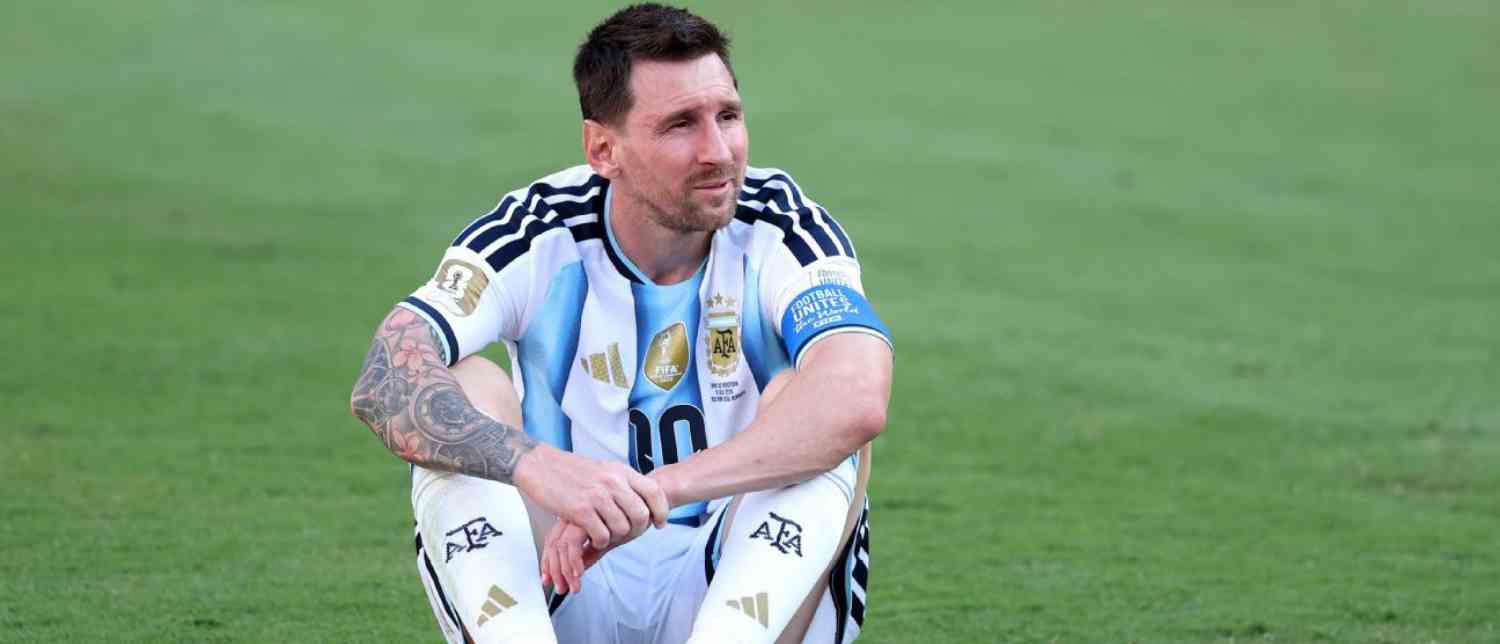
Lionel Messi has retired from international football at the age of 39, bringing an extraordinary 21-year chapter with Argentina to an emotional close.
The Argentine great announced his decision on Monday, August 31, saying he had spent considerable time reflecting on his future after Argentina’s defeat to Spain in the 2026 FIFA World Cup final. What initially began as a decision he had made shortly after the final was strengthened by the death of his father, Jorge Messi, earlier in August.
Messi’s retirement marks the end of one of the most remarkable international careers football has ever witnessed. With 207 appearances and 125 goals for Argentina, he leaves as the country’s most-capped player and its leading goalscorer.
Yet the numbers only tell part of the story.
For more than two decades, Messi was at the centre of Argentina’s hopes, disappointments, celebrations and debates. His relationship with the national team was complicated in its early years, marked by painful defeats and questions over whether the greatest player of his generation could deliver the trophies his country craved.
Eventually, he did.
And when Messi finally walked away, he did so as a world champion, a Copa America winner and the undisputed leader of a golden generation of Argentine football.
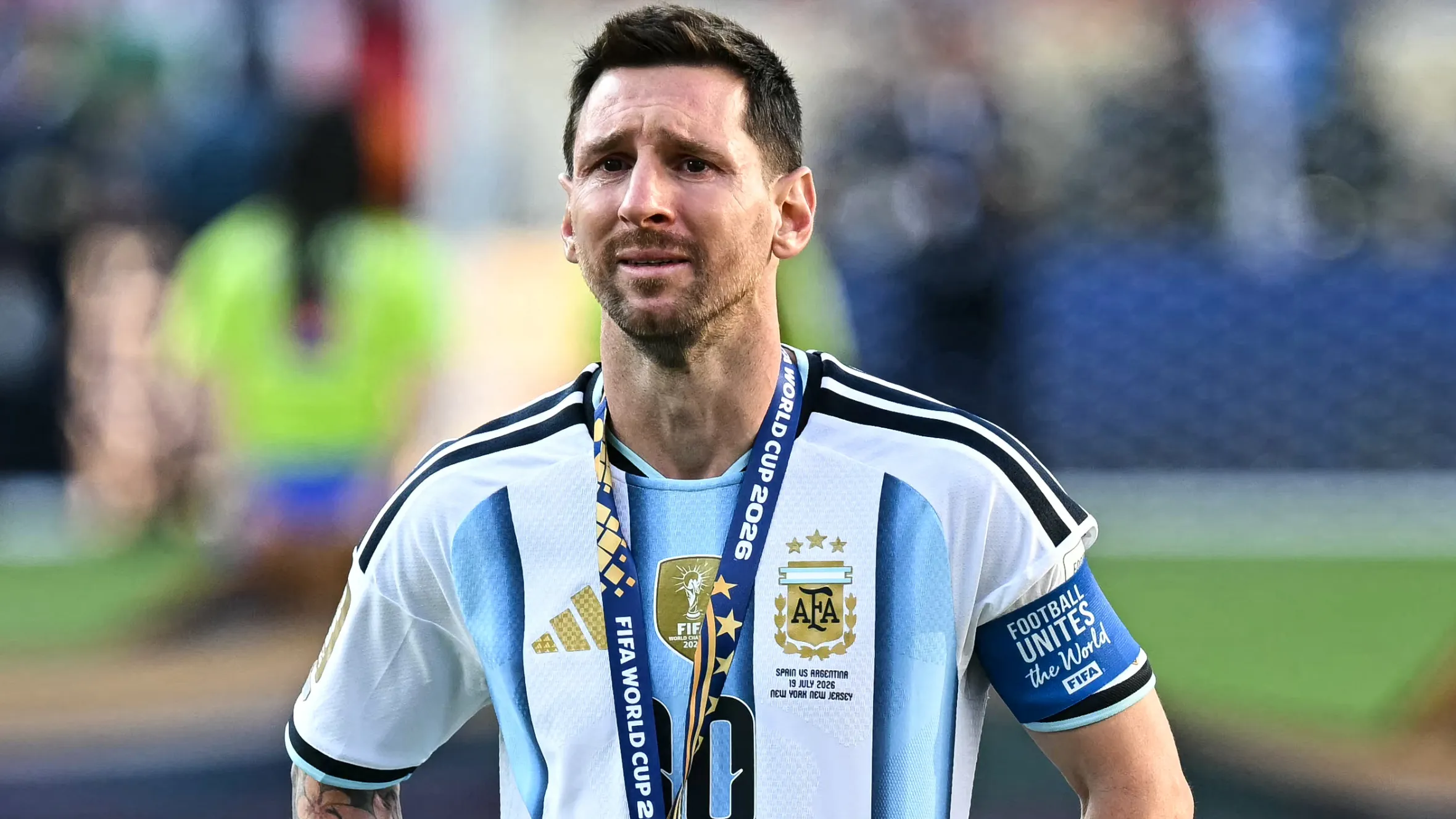
Messi announces his international retirement
Messi confirmed his retirement through an emotional social media statement, explaining that the decision was painful but that he believed the time had come to step aside.
The 39-year-old revealed that he had actually written his retirement message on July 21, two days after Argentina’s 1-0 defeat to Spain in the 2026 World Cup final. His father’s death on August 8 subsequently reinforced his decision.
Messi had already entered the 2026 tournament with questions surrounding his international future. At 39, another World Cup in 2030 would have required him to play at 43, making the 2026 tournament a natural point at which to consider the end of his international career.
Argentina ultimately reached the final but lost to Spain after extra time. The defeat ended the country’s hopes of defending the World Cup title Messi had helped them win four years earlier.
In his farewell message, Messi made clear that his decision was not about a lack of affection for Argentina. Quite the opposite. He described representing the national team as something he had always loved and said he had given everything he could to the shirt.
He also pointed towards Argentina’s emerging generation, acknowledging that younger players now deserve the opportunity to establish themselves.
That sentiment may prove important to Argentina’s next chapter.
From teenage prodigy to Argentina's greatest goalscorer
Messi made his senior debut for Argentina in 2005 at just 18 years old. Within a year, he was part of the country's squad at the 2006 World Cup in Germany.
His arrival on the international stage was immediate. Messi scored against Serbia and Montenegro at the 2006 tournament, becoming Argentina’s youngest World Cup player and, at the time, its youngest World Cup goalscorer.
But his early international career was anything but straightforward.
At the 2010 World Cup, Argentina were eliminated in the quarter-finals. Four years later, Messi came agonisingly close to the biggest prize in international football when Argentina reached the 2014 World Cup final in Brazil.
Germany eventually won that match 1-0 after extra time.
The disappointment continued at the 2015 Copa America, where Argentina lost to Chile on penalties. A year later, the same opponent defeated Argentina again in the Copa America Centenario final, also through a penalty shootout.
Those defeats took a heavy toll on Messi.
After the 2016 final, he announced his retirement from international football, having suffered three consecutive final defeats with Argentina. But the retirement lasted only briefly. He returned to the national team and began another chapter of his international career.
That comeback would ultimately change the story of Messi and Argentina forever.
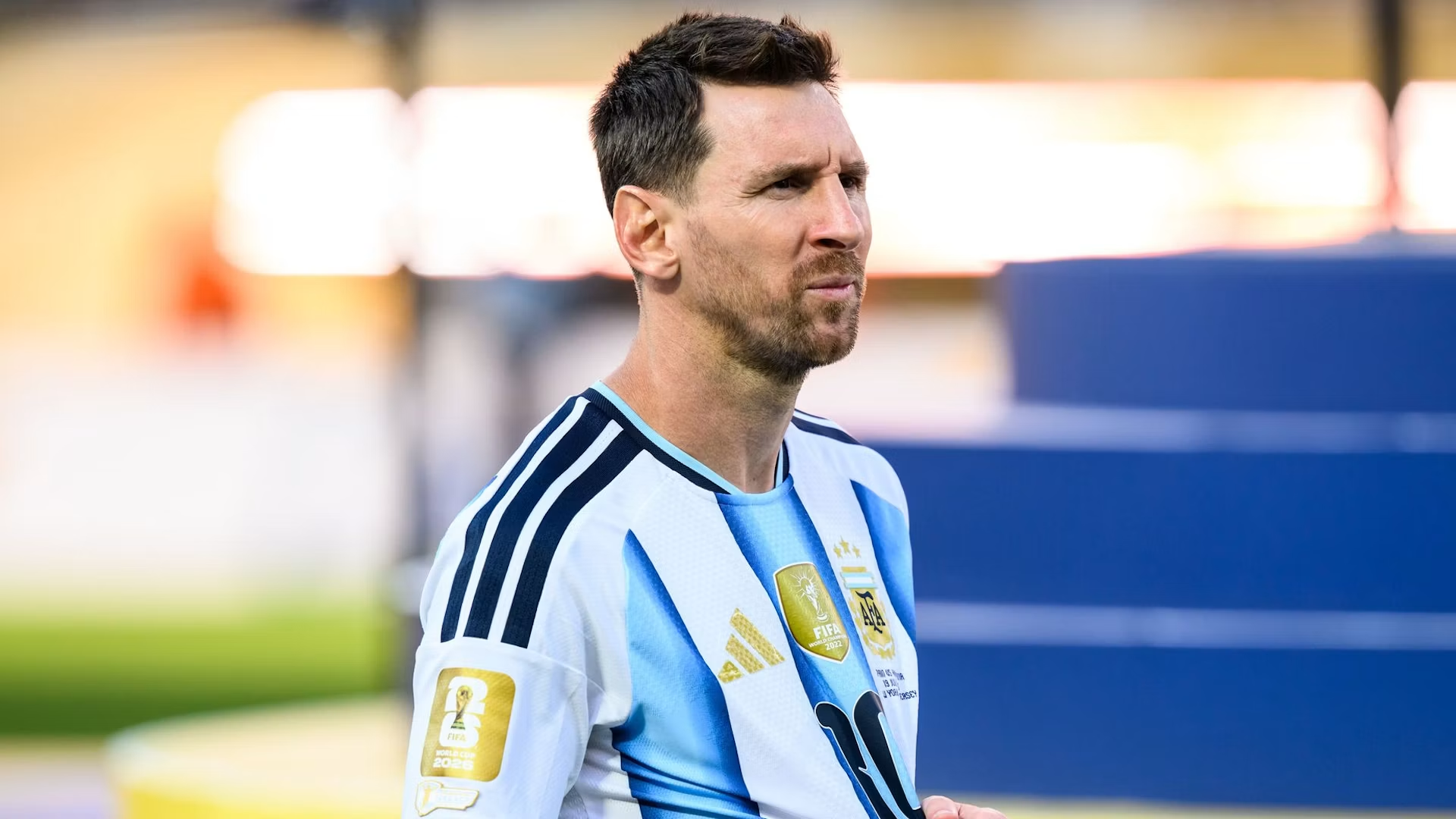
The trophy drought finally ends
For years, Messi’s critics pointed to one major omission from his otherwise extraordinary résumé: success with Argentina.
He had already won virtually everything possible at club level, but international football continued to elude him.
That changed at the 2021 Copa America.
Argentina defeated Brazil 1-0 at the Maracana to win the tournament, giving Messi his first major senior international trophy. He played a central role throughout the competition, contributing directly to nine of Argentina’s 12 goals and being named the tournament’s best player.
The victory was more than another trophy.
It changed the emotional relationship between Messi and Argentine supporters.
The player who had once been criticised for failing to reproduce his club success with the national team had finally delivered silverware. And the best was still to come.
Qatar 2022: Messi completes the missing chapter
If the 2021 Copa America removed one major burden, the 2022 World Cup removed the last one.
At the FIFA World Cup in Qatar, Messi led Argentina through a dramatic campaign that culminated in one of the most memorable finals in tournament history.
Argentina faced France in the final, with the match ending 3-3 after extra time. Messi scored twice, while Argentina ultimately prevailed in the penalty shootout.
The victory gave Argentina its first World Cup title since 1986 and Messi the trophy that had been missing from his career.
Messi finished the tournament with seven goals and three assists and won the Golden Ball as the World Cup’s best player.
More importantly, he had finally achieved what many believed he needed to do to complete his international legacy.
The debate over whether Messi could be considered the greatest footballer of all time became even louder.
The final World Cup chapter
Messi nevertheless returned for the 2026 World Cup, making history by appearing at his sixth edition of the tournament.
Argentina again reached the final, giving Messi an opportunity to add another World Cup triumph to his remarkable international résumé.
Instead, Spain won 1-0 after extra time, with Ferran Torres scoring the decisive goal. The result gave Spain its second World Cup title and ended Argentina’s campaign just short of another trophy.
For Messi, the defeat carried an additional emotional weight.
His father, Jorge Messi, who had played a central role in his son’s career and had previously worked as his agent, was unable to attend the final. He died weeks after the tournament, on August 8, at the age of 68.
Messi later reflected on wanting to win the trophy for his father. The physical and emotional demands of the tournament also reinforced the sense that his international journey was reaching its conclusion.
A record-breaking international career
Messi leaves Argentina with statistics that underline the scale of his contribution.
He made 207 appearances for the national team and scored 125 goals, making him both Argentina’s most-capped player and its all-time leading scorer.
His World Cup record is equally extraordinary.
Across six World Cups — 2006, 2010, 2014, 2018, 2022 and 2026 — Messi made 34 appearances, played 3,054 minutes, scored 21 goals and registered 12 assists.
Those six tournaments also illustrate the evolution of his career.
The teenager who arrived at the 2006 World Cup as an exciting prospect eventually became Argentina’s captain, attacking leader and most important player.
His international career stretched from the generation of Gabriel Batistuta and Juan Román Riquelme to a younger Argentine group now preparing to carry the team forward without him.
Few footballers have remained relevant at the highest international level for such an extended period.
Why Messi's retirement feels different this time
Messi has retired from international football before.
That is why his latest announcement inevitably raises the question of whether he could change his mind again.
But circumstances are different now.
He is 39. He has completed six World Cups. He has won the Copa America and World Cup. He is Argentina’s record appearance-holder and leading scorer. And, perhaps most significantly, Messi himself says he has reached the point where he has nothing more to give.
The timing also reflects his desire to allow younger players to take responsibility.
Argentina’s success over the past decade was built around Messi, but the national team now faces the task of developing an identity beyond its iconic captain.
His departure will leave an enormous void, but it also creates an opportunity.
The next generation will no longer be competing for space alongside Messi. They will have to create their own era.
What comes next for Lionel Messi?
Retirement from international football does not mean Messi is walking away from professional football altogether.
He continues to play club football with Inter Miami in Major League Soccer, meaning fans will still have opportunities to watch one of the sport’s most recognisable figures on the pitch.
His future at club level will inevitably be watched closely, particularly as he enters the latter stages of his playing career.
But the Argentina chapter is now closed.
And unlike his retirement announcement in 2016, this time Messi walks away without an unresolved question hanging over him.
He has won the trophies Argentina supporters wanted. He has broken the country’s scoring and appearance records. He has played in six World Cups and captained Argentina to the biggest prize in international football.
He leaves behind more than statistics.
He leaves memories of the teenager who announced himself in Germany, the frustrated captain who suffered repeated final defeats, the player who briefly walked away from international football, the leader who returned, the champion who finally lifted the Copa America and the World Cup, and the veteran who led Argentina to another World Cup final at 39.
A goodbye to Argentina, not to football
Messi’s final message to Argentina was not bitter or resentful. It was reflective.
He thanked his supporters, family, coaches, teammates and officials who accompanied him throughout his career. He acknowledged the difficult moments alongside the unforgettable ones and said he would now support Argentina from outside the pitch.
That may ultimately be the most fitting ending.
Messi spent more than 20 years trying to make Argentines proud through football. For a long time, the journey was defined as much by disappointment as by brilliance.
But the ending belongs to the achievements.
The Copa America. The World Cup. The records. The goals. The six World Cups. The captaincy. The countless nights when an entire country waited to see what its number 10 could produce.
Now, at 39, Lionel Messi has decided that his Argentina story has reached its final page.
He leaves international football not because there is nothing left for him to accomplish, but because he believes he has already given Argentina everything he had.
And perhaps, after two decades, that is the most fitting way for one of football’s greatest international careers to end.
With input from agencies
Image Source: Multiple agencies
© Copyright 2026. All Rights Reserved. Powered by Vygr Media.