 By
By 
For much of modern history, great-power competition was measured in familiar terms: military strength, territorial expansion, strategic alliances and control over vital geographic positions. China is increasingly adding another dimension to that equation — the ability to build and control networks that connect economies, markets, technologies and institutions across borders.
This is the less visible side of China's rise.
Ports, railways, highways, logistics hubs, energy pipelines, telecommunications systems, digital platforms, trade corridors and financial arrangements may appear to be separate economic initiatives. But when they are developed across multiple countries and connected to one another, they create something much more consequential: an ecosystem in which China occupies an increasingly important position.
Beijing does not need to acquire another country's territory to expand its influence. If Chinese companies help finance and construct a railway, develop a port, supply telecommunications infrastructure, establish industrial parks, provide technology and connect those facilities to Chinese supply chains, the resulting relationship can give Beijing considerable economic and strategic leverage without a single border being redrawn.
That is what makes China's global strategy so difficult to assess through traditional geopolitical thinking. Its power is increasingly being built not simply through physical possession, but through connectivity.
From Infrastructure to Influence
The most important thing to understand about China's Belt and Road Initiative is that it cannot be viewed merely as a collection of roads, bridges, ports and railways.
Infrastructure matters because it determines how economies interact.
A railway connecting Central Asia to China becomes considerably more important when it is linked to highways, customs facilities, logistics centres, industrial zones and access to Chinese markets. A port becomes strategically significant not merely because ships can dock there, but because it can be connected to shipping companies, warehouses, manufacturing clusters and inland transport networks.
The same principle applies to digital infrastructure. Telecommunications networks, cloud computing systems, data centres and smart-city technologies may initially look like commercial investments. But once governments, businesses and consumers build their operations around a particular technological ecosystem, replacing it can become expensive and complicated.
This is where China's network-based approach acquires a deeper geopolitical significance.
The country's 2026 economic planning documents explicitly emphasise expanding the BRI's "hard" and "soft" connectivity, improving freight rail services, expanding port capacity, strengthening international logistics hubs and developing integrated networks spanning maritime, air, rail and road transport. They also identify digital economy, artificial intelligence and cross-border financial cooperation as areas for further expansion.
China itself says the objective is greater connectivity and mutually beneficial development. There is undoubtedly a commercial dimension to that strategy. Developing countries need infrastructure, access to markets and investment, and Chinese financing and companies can help provide them.
The strategic question begins when those individual relationships become interconnected.
A country that depends on the same external partner for infrastructure, technology, financing, trade and logistics may gradually find that the economic relationship has acquired a political dimension as well.
That influence does not necessarily have to be imposed. It can emerge from dependence.
Why Ports Matter So Much
Ports provide one of the clearest examples of how economic infrastructure can become geopolitical infrastructure.
Global trade depends on a relatively small number of major maritime routes and logistical hubs. Whoever becomes deeply embedded in those systems gains an important position in the movement of goods between countries.
China's role in global shipping and port infrastructure has therefore attracted considerable attention.
This does not mean every Chinese-linked port is secretly a military facility, nor does commercial involvement automatically translate into political control. Such assumptions oversimplify a much more complicated reality.
The more important issue is the cumulative effect of China's presence across the logistics chain.
Chinese companies can be involved in financing infrastructure, constructing terminals, operating facilities, providing shipping services and developing industrial zones around ports. Each investment may have a straightforward commercial justification. Collectively, however, these relationships can place Chinese companies at multiple points in the movement of goods.
That creates resilience for China and, potentially, dependence for its partners.
Recent allegations in the United States concerning China's state-owned shipping giant COSCO have added another dimension to the debate. US officials have accused the company of using concealed equipment on vessels to collect intelligence about military communications and shipping routes. China has rejected those allegations. Regardless of how those claims are ultimately assessed, the controversy illustrates why the growing overlap between China's commercial networks and national-security interests is receiving increasing scrutiny.
The broader point is not that commercial infrastructure should automatically be viewed as a security threat. It is that the distinction between commerce and strategy is becoming less clear in an era when economic networks themselves can generate geopolitical leverage.
Central Asia Is Becoming a Contest of Networks
Central Asia perhaps provides the clearest illustration of this changing geography of power.
Kazakhstan, Uzbekistan, Kyrgyzstan, Tajikistan and Turkmenistan occupy a strategically important position between China, Russia, South Asia, the Middle East and Europe. Their geography has historically been both an advantage and a constraint: they sit along potentially valuable trade routes but lack direct access to the sea.
China has increasingly attempted to turn that geography into an advantage by expanding road, rail, energy and trade connections across the region.
For Beijing, Central Asia offers more than a route for transporting goods. It provides access to resources, new markets and alternative trade corridors while strengthening China's economic relationship with countries that sit on its western periphery.
The result is a growing competition over connectivity.
Russia retains historical and security ties across the region. Europe is looking for alternative routes into Central Asia and beyond. Turkey is expanding its influence through its relationships with Turkic-speaking states. India, meanwhile, is attempting to strengthen its engagement through alternative routes involving Iran and the wider Eurasian region.
The question is therefore no longer simply who has influence over Central Asia. It is increasingly about who builds the networks through which Central Asia trades with the rest of the world.
Who finances the railway? Which port does it eventually reach? Which logistics companies handle the cargo? Which technology manages customs and payments? Which markets absorb the goods? Which energy infrastructure supplies the region?
The answers to those questions will determine where influence accumulates.
The SCO Gives Connectivity a Political Platform
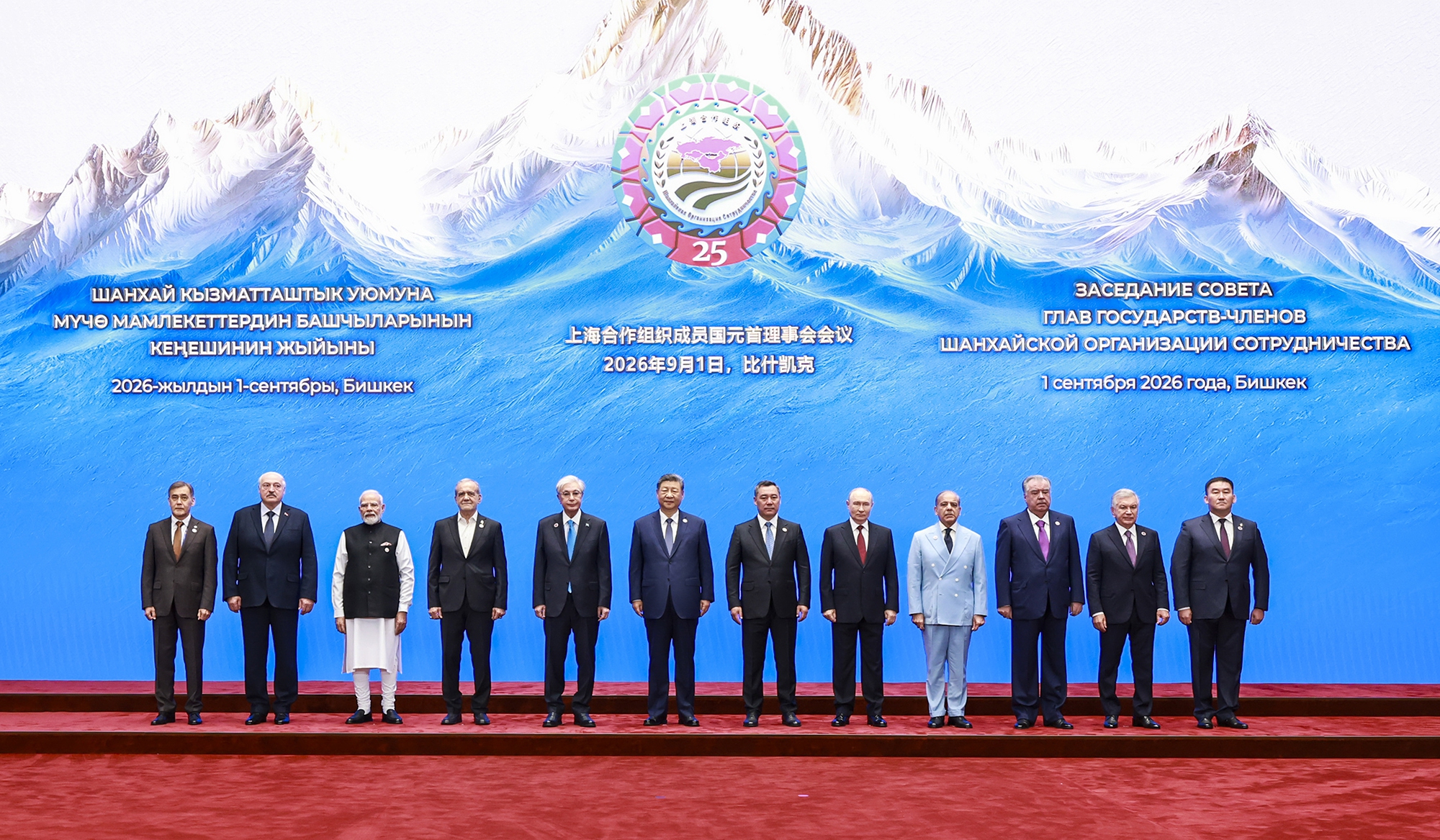
The Shanghai Cooperation Organisation is another important component of this emerging network.
The SCO began primarily as a regional security organisation, but its relevance has expanded alongside its membership and agenda. Today, it brings together China, Russia, India, Iran and Central Asian states in a forum that increasingly discusses not only security, but also trade, transport, energy, technology and regional connectivity.
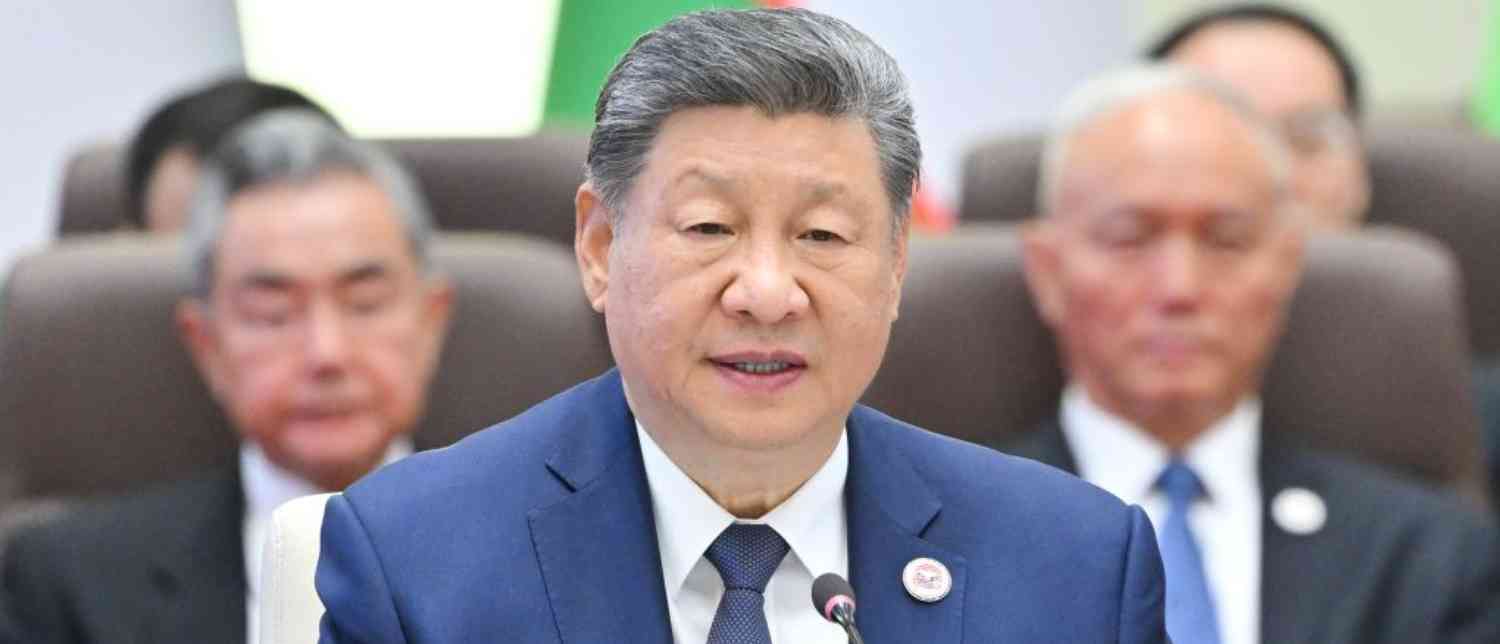
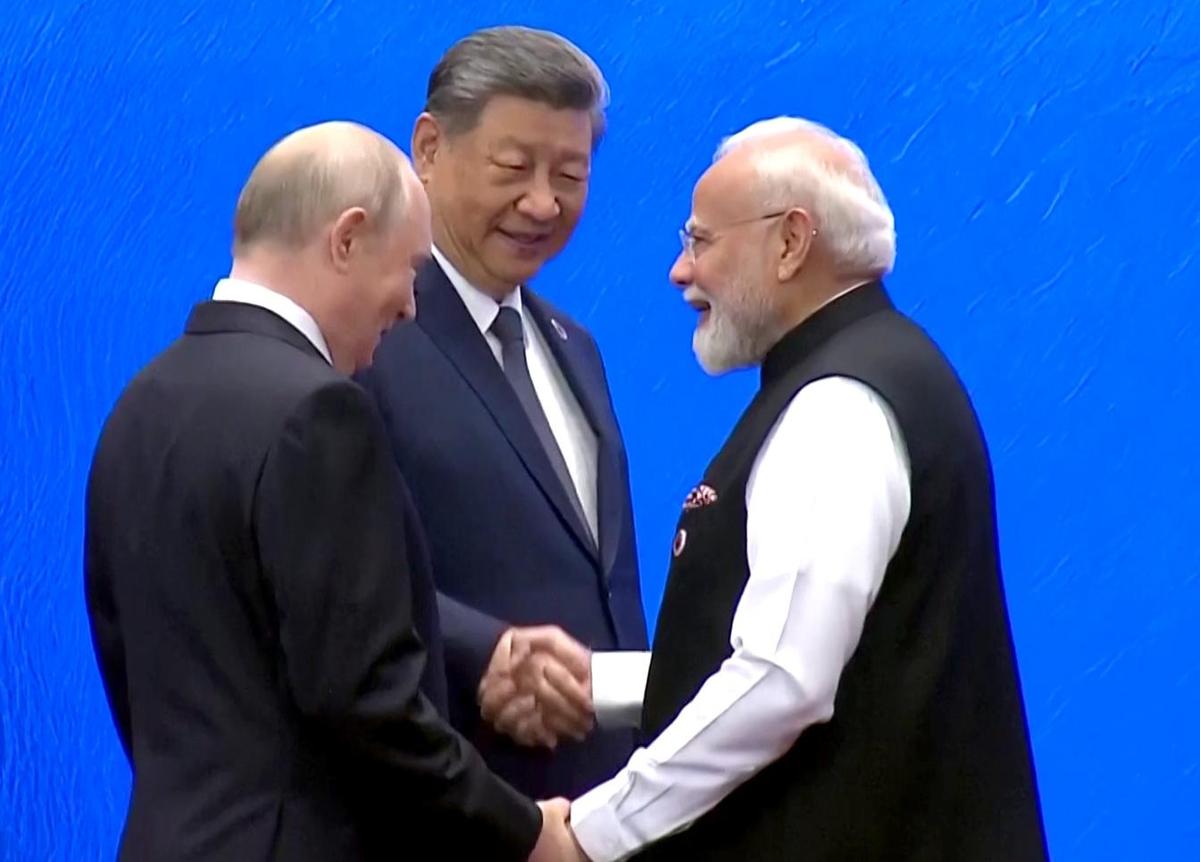
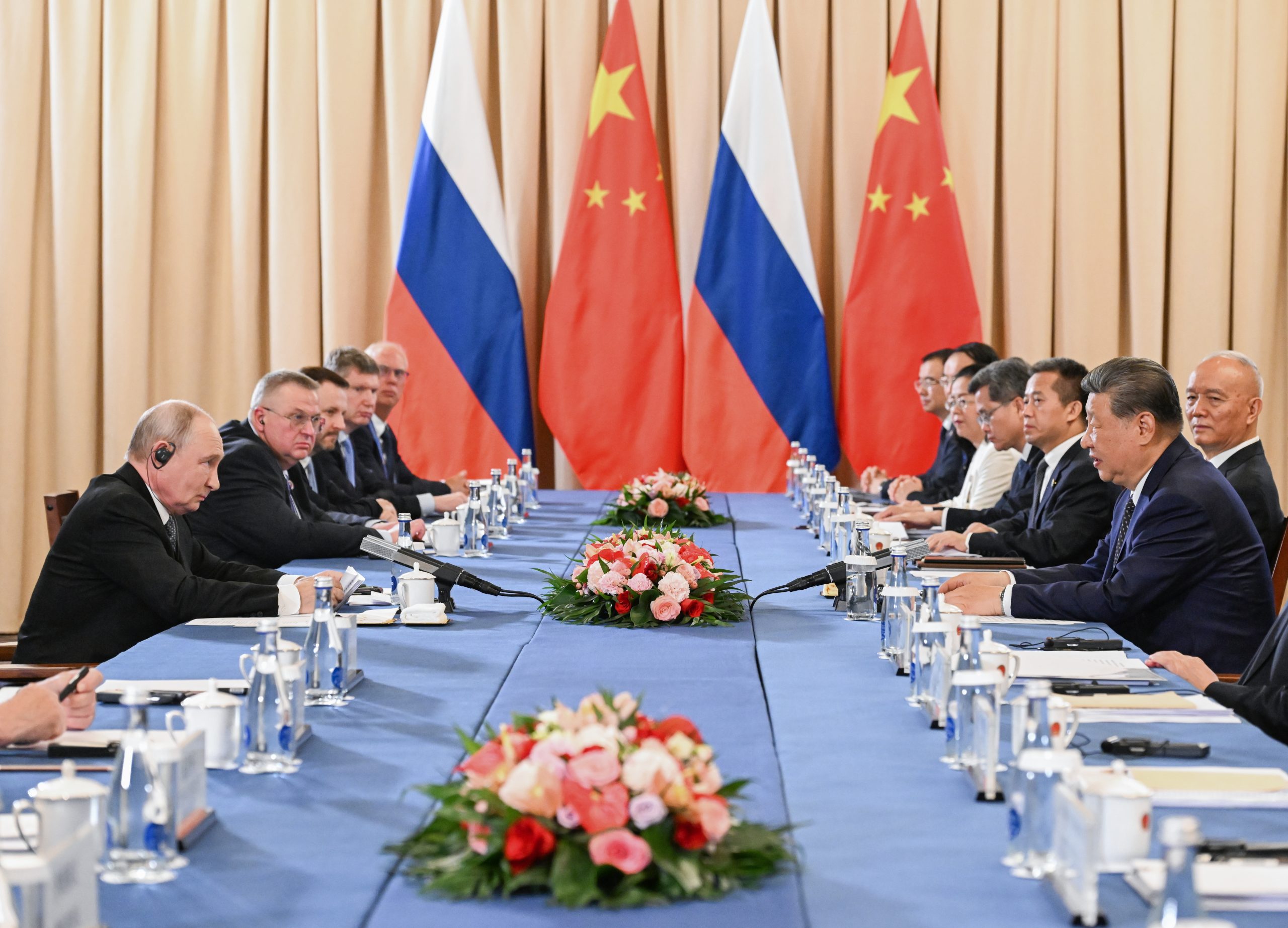
The recent SCO summit in Bishkek demonstrated both the organisation's growing geopolitical relevance and its internal contradictions. Leaders including Xi Jinping, Vladimir Putin and Narendra Modi participated in discussions shaped by security concerns, economic cooperation and the changing international order. At the same time, tensions between member states — including India-China and India-Pakistan differences — prevent the SCO from functioning as a conventional political or military bloc.
That distinction matters.
China does not necessarily need the SCO to become a Chinese-controlled organisation. It benefits from something subtler: having China's economic weight, diplomatic priorities and connectivity agenda embedded within a major Eurasian institution.
The SCO therefore becomes another layer in China's network of influence.
India understands the opportunity as well as the risk. At the latest summit, New Delhi pushed its own emphasis on security, connectivity and opportunity while insisting that connectivity initiatives should respect sovereignty and territorial integrity. India also sought greater customs and logistics cooperation, demonstrating that it does not intend to leave the Eurasian connectivity conversation entirely to China.
This is an important distinction. India does not have to withdraw from institutions where China is influential. It needs to ensure that its own interests remain represented within them.
BRICS Adds the Economic Dimension
A similar dynamic is unfolding within BRICS.
The grouping has increasingly become a platform for discussions about trade, finance, supply chains, development and the structure of global governance. Its expansion has also strengthened its significance across the Global South.
China's economic size gives it substantial weight within such a framework. It is one of the world's largest trading powers, a manufacturing centre and a critical participant in global supply chains.
That does not mean BRICS is simply an instrument of Chinese policy. Its members have different interests, and India in particular has its own vision of a more representative and multipolar international order.
Yet the expansion of alternative economic platforms can simultaneously create more space for China's influence.
This is one of the central paradoxes of the emerging multipolar system. Countries seeking to reduce excessive dependence on Western institutions may find themselves becoming more connected to China because Beijing already possesses the infrastructure, markets, manufacturing capacity and financial relationships necessary to support alternative networks.
The competition, therefore, is not necessarily between one bloc and another. It is increasingly about who provides the networks through which countries can diversify.
The Digital Silk Road May Prove Even More Important
Physical infrastructure is visible. Digital infrastructure is not, and that could make it even more consequential.
China's technology companies have expanded their presence across telecommunications, cloud computing, artificial intelligence, digital payments and smart-city systems. The Digital Silk Road adds a technological layer to the broader BRI framework.
This creates a different kind of dependency.
A railway can theoretically be replaced by another route. Replacing an entire digital ecosystem is much harder. Governments and businesses integrate their systems with particular technologies, workers are trained to operate them, data is organised around them and new services are developed on top of them.
Once that process has taken place, changing suppliers can involve considerable financial and technical costs.
The significance of China's digital expansion therefore goes beyond selling technology. It is also about shaping the standards, systems and technological relationships through which other countries operate.
In a future where artificial intelligence, data and digital infrastructure are as important to economic competitiveness as roads and ports, this could become one of the most consequential elements of China's global strategy.
Energy Creates Long-Term Relationships
Energy provides another example of how networks can translate into strategic influence.
China's enormous demand for oil, gas and other resources has encouraged long-term relationships with Russia, Central Asia, the Middle East and other resource-rich regions. Pipelines, electricity grids, processing facilities and long-term supply agreements are expensive to build and difficult to replace.
That gives energy relationships an unusual degree of durability.
A pipeline is not simply a piece of infrastructure. It creates a relationship between producer and consumer that can last for decades. The same is true of power grids and large-scale industrial projects.
China's energy partnerships therefore have an obvious economic rationale, but they also deepen its long-term relationships across Eurasia and beyond.
Iran is a particularly interesting example because of its geographic position between Central Asia, South Asia and the Middle East. Its infrastructure and location give it potential importance within China's broader vision of transcontinental connectivity.
This demonstrates another feature of China's approach: Beijing's network strategy does not depend on a single corridor. It can involve multiple routes, partners and geographic nodes that reinforce one another.
China's Advantage Is Scale
The greatest challenge for competitors is perhaps not any individual Chinese project. It is the cumulative effect of China's scale.
Beijing does not need to dominate every port, finance every railway or supply every telecommunications network. It only needs to become sufficiently important across enough networks that bypassing China becomes increasingly difficult.
This is what makes the network model different from conventional territorial expansion.
Territorial power is visible. Network power is distributed.
A Chinese company can participate in a port in one country, a railway in another, an industrial park somewhere else and a telecommunications network in a fourth. Each relationship can be justified on economic grounds. Yet together they create a web of commercial connections that increases China's overall presence.
China's own 2026 figures illustrate the scale Beijing is pursuing. According to Chinese government data, trade with BRI partner countries reached 23.6 trillion yuan in 2025, while two-way investment between China and BRI partners exceeded $240 billion between 2021 and the first half of 2025. China also says the China-Europe Railway Express has operated more than 130,000 trips.
These figures are Chinese government figures and should therefore be understood in that context, but they nevertheless demonstrate the scale of the network Beijing is attempting to construct.
India cannot realistically reproduce that model simply by matching China's spending project for project.
It does not need to.
India's Answer Should Be Alternatives, Not Imitation
India's challenge is not to stop China's connectivity ambitions. It is to ensure that China's networks do not become the only viable networks available to India's neighbours and partners.
That requires a different strategy.
India needs faster project implementation, stronger infrastructure financing, deeper economic engagement with Central Asia, more reliable logistics, stronger maritime partnerships and greater investment in digital technology.
Connectivity projects such as the India-Middle East-Europe Economic Corridor are important in this context because their significance goes beyond transportation. They represent an attempt to create alternative routes through which trade, investment and supply chains can move. India's engagement with Chabahar and Central Asia serves a similar purpose.
The objective should not be to force countries to choose between India and China.
Most countries will resist such choices.
Central Asian states, Middle Eastern countries, African economies and Southeast Asian nations increasingly want multiple partners because diversification gives them greater bargaining power.
India can benefit from that preference if it offers something credible: access to a large market, reliable infrastructure, technology, investment, education, healthcare, defence cooperation and political partnerships without creating unsustainable dependence.
In other words, India's most effective response to China's network power is to build networks of its own.
The Real Power May Lie in Being Difficult to Bypass
China's growing global influence should neither be exaggerated into a theory of inevitable Chinese domination nor dismissed as ordinary commercial expansion.
The reality lies somewhere in between.
Chinese infrastructure can provide genuine economic benefits to countries that need roads, ports, railways, power plants and digital systems. Many governments actively seek Chinese investment because they see it as an opportunity for growth. The modern BRI itself has evolved from a focus on large physical projects toward a broader combination of infrastructure, trade, digital connectivity, finance and economic cooperation.
The strategic concern arises when these relationships reinforce one another.
A port connected to a railway becomes more valuable. The railway becomes more useful when linked to Chinese markets. Trade becomes easier when customs systems and digital platforms are compatible. Investment becomes more durable when supported by financial relationships. Energy infrastructure strengthens the economic relationship further, while organisations such as the SCO and BRICS provide diplomatic platforms in which those countries interact.
Over time, connectivity can become dependency, and dependency can create influence.
That process does not require coercion or territorial expansion. It can happen through ordinary economic decisions made over many years.
This is why the most important question about China's rise may no longer be where Beijing wants to expand its territory.
It is where Beijing is building connections.
The global contest for power is gradually moving from the map to the network. The countries that build the ports, finance the railways, connect the digital systems, secure the energy routes, facilitate the trade and shape the institutions surrounding them will have an enormous influence over how the global economy functions.
China has recognised this transformation earlier than many of its competitors.
Its ambition is not necessarily to control every road, port or market. It is to become important enough to the system that bypassing it becomes increasingly difficult.
That is the quiet power of networks — and it may prove to be one of the defining geopolitical forces of the 21st century.
With input from agencies
Image Source: Multiple agencies
© Copyright 2026. All Rights Reserved. Powered by Vygr Media.