

 By
By 
In a deeply distressing incident that has sent shockwaves across the country, three minor sisters died by suicide after jumping from the ninth floor of their residential apartment in Ghaziabad, Uttar Pradesh. The tragedy unfolded in the early hours of Wednesday, around 2:15 am, at Bharat City Society, leaving behind grieving parents, stunned neighbours, and a trail of unanswered questions about online gaming addiction, cultural obsession, and adolescent vulnerability.
The sisters—Pakhi (12), Prachi (14), and Vishika or Nishika (16)—were found to have been intensely obsessed with an online Korean task-based gaming app, reportedly referred to as a “Korean Love Game.” Investigators believe this obsession played a central role in pushing the girls toward the irreversible decision to end their lives together.
The Night of the Incident
According to police officials, the three sisters went to the balcony of their ninth-floor apartment in the dead of night, bolted the door from inside, and jumped out of a window one after the other. Investigators later revealed that the girls had climbed onto a chair before jumping, and a ladder found at the spot is believed to be connected to one of the game’s tasks.
Their screams and the loud thud of their bodies hitting the ground jolted the apartment complex awake. Parents, neighbours, and security guards rushed toward the sound, only to discover the horrifying aftermath. By the time the girls’ parents managed to break open the locked balcony door, it was already too late.
“When we reached the scene, we confirmed that three girls, daughters of Chetan Kumar, had died after jumping from the building,” said Assistant Commissioner of Police Atul Kumar Singh.
Morning visuals from the society showed the three bodies lying on the ground, their mother inconsolably wailing, and residents standing in stunned silence, struggling to process the scale of the tragedy.
A Handwritten Apology and an Eight-Page Diary
At the centre of the investigation is a handwritten suicide note and an eight-page diary recovered from the apartment. The note, written on the pages of a pocket diary, carried a heartbreaking apology addressed to their father.
“Is diary me jo kuch bhi likha hai woh sab padh lo kyuki ye sab sach hai. Read now. I’m really sorry. Sorry, Papa,” the note read.
The message was accompanied by a hand-drawn crying emoji—an unsettling detail that police say reflects the emotional state of the girls in their final moments. The diary meticulously documented their daily gaming routines, mobile phone usage, and their emotional attachment to Korean culture.
Police officials confirmed that the girls repeatedly expressed in their writings that they felt unable to live without the Korean game and the world it had created for them.

“Korea Is Our Life”: A Father’s Grief
Chetan Kumar, the girls’ father, has described what he believes was an extreme and all-consuming addiction—not only to the game, but to Korean culture as a whole. According to him, the sisters had even adopted Korean names and identities. They reportedly believed they were Korean rather than Indian and imagined themselves as Korean princesses under the influence of the game.
“They said, ‘Papa sorry, Korea is our life. Korea is our biggest love. Whatever you say, we cannot give it up,’” Kumar said through tears.
The middle sister, Prachi, was described as the leader among the three. She reportedly took the lead in gaming activities and was believed by the family to be guiding the others through the tasks associated with the game.
In recent days, the parents had restricted the girls’ access to mobile phones—a decision that investigators believe may have triggered emotional distress.
“This should not happen to any parent or child. Parents should not let their children play games,” the devastated father said. “I was not aware of the game, or I would have never let them play it.”
Clues From the Bedroom Walls
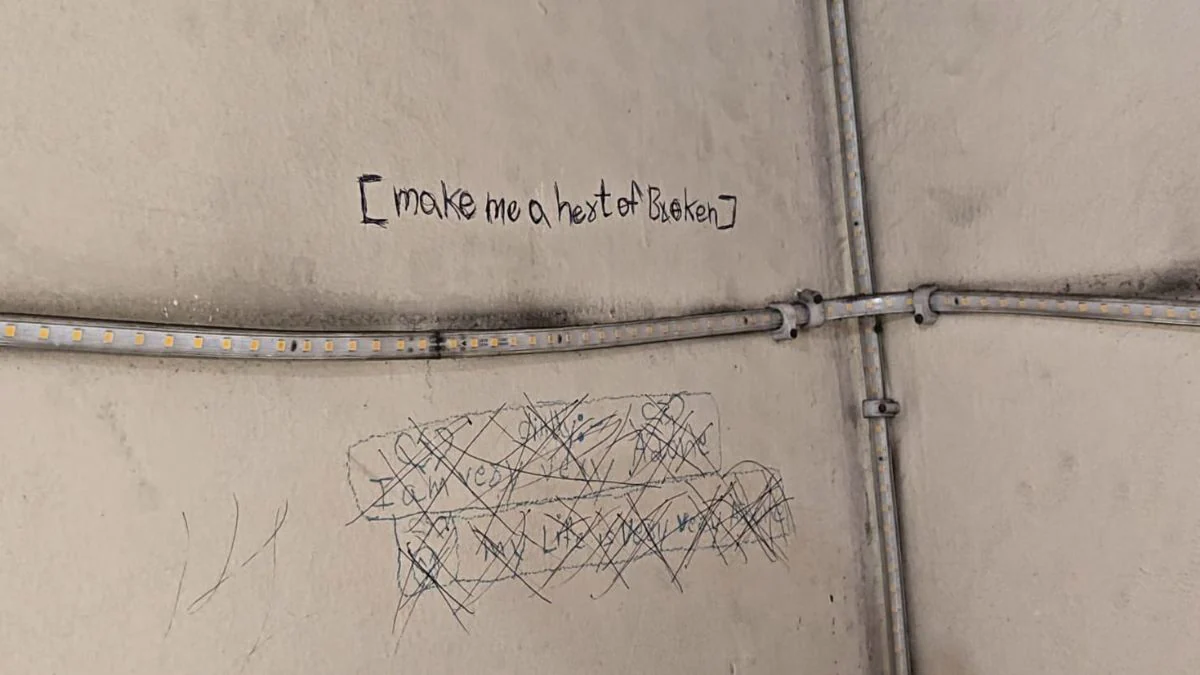
Investigators also discovered disturbing messages scribbled on the walls of the girls’ bedroom. Among the phrases written were lines such as “I am very very alone” and “make me a hert of broken (sic).” These writings, police say, point to deep emotional isolation and distress that may have gone unnoticed.
The sisters reportedly did everything together—bathing, eating, and spending most of their time isolated from others. Over time, their real-world interactions diminished as their online world grew more dominant.

A Life Disrupted After the Pandemic
According to police and family members, the girls’ gaming addiction began during the COVID-19 pandemic, when prolonged lockdowns and online exposure became part of daily life for many children. What started as casual gaming gradually escalated into a fixation.
The sisters became irregular in attending school and eventually stopped going altogether. Despite their ages—12, 14, and 16—the eldest sister was reportedly still studying at a Class 4 level, highlighting the extent to which their education had been disrupted.
Authorities confirmed that none of the three girls had attended school since the pandemic.
What Is Known About the Korean Task-Based Game
While police have not officially confirmed the exact name of the game, multiple reports suggest that the girls were addicted to an app referred to as “Korean Love Game.” According to an India Today report, the game reportedly contains around 50 tasks, some of which may involve real-world actions.
Investigators are examining whether these tasks encouraged risky behaviour. The ladder and chair used by the girls are believed to be linked to one such task, though officials have cautioned that this aspect is still under investigation.
“The investigation so far has not revealed any specific game name,” said senior police officer Nimish Patel. “But it is clear that the girls were influenced by Korean culture and have mentioned it in the suicide note.”
Police have seized the girls’ mobile phones and are conducting a forensic analysis to understand the nature of the content they were consuming and the instructions they may have been following.
Family Structure and Background
Police also confirmed details about the family structure. Chetan Kumar had married two sisters and lived with both wives and their children, all of whom were daughters. Two of the deceased girls were born to one wife, while the third was their half-sister.
Authorities have clarified that there is no evidence, at this stage, to suggest family conflict as a contributing factor. Instead, the focus remains firmly on digital addiction, emotional dependence on virtual identities, and the psychological impact of sudden restrictions.
Police Investigation Continues
Deputy Commissioner of Police Nimish Patil told IANS that the family had restricted the girls’ phone usage in the days leading up to the incident.
“As we spoke to the family, they had somewhat restricted the girls from using the phone for the past few days. The girls were troubled by this, and because of that, they took this decision,” he said.
Assistant Commissioner Atul Kumar Singh added that the girls’ writings suggest they felt trapped between their real lives and the digital identities they had created.
“They were highly obsessed with the game and thought that they were not Indians, but Koreans. They portrayed themselves as Korean princesses under the influence of the game,” he said.
A Wake-Up Call for Parents and Society
The deaths of Pakhi, Prachi, and Vishika have reignited urgent conversations about online gaming addiction, unsupervised digital access, and the mental health of children in a hyper-connected world. Experts warn that immersive task-based games, when combined with emotional vulnerability and isolation, can have devastating consequences if left unchecked.
As the investigation continues, the tragedy stands as a grim reminder that behind screens, avatars, and virtual rewards are real children—grappling with real emotions—who need guidance, connection, and support long before warning signs turn fatal.
With inputs from agencies
Image Source: Multiple agencies
© Copyright 2025. All Rights Reserved. Powered by Vygr Media.