
 By
By 
For years, food security was largely understood in simple terms: Does a country have enough grain to feed its people?
That definition is no longer sufficient.
In 2026, a country can have overflowing grain warehouses and still find itself vulnerable to a food crisis. A disruption thousands of kilometres away can push up fertiliser costs, while a conflict can threaten shipping routes. Higher fuel prices can make farm inputs and transportation more expensive, while a weaker currency can make imports costlier. A bad monsoon can then turn an external shock into a domestic problem.
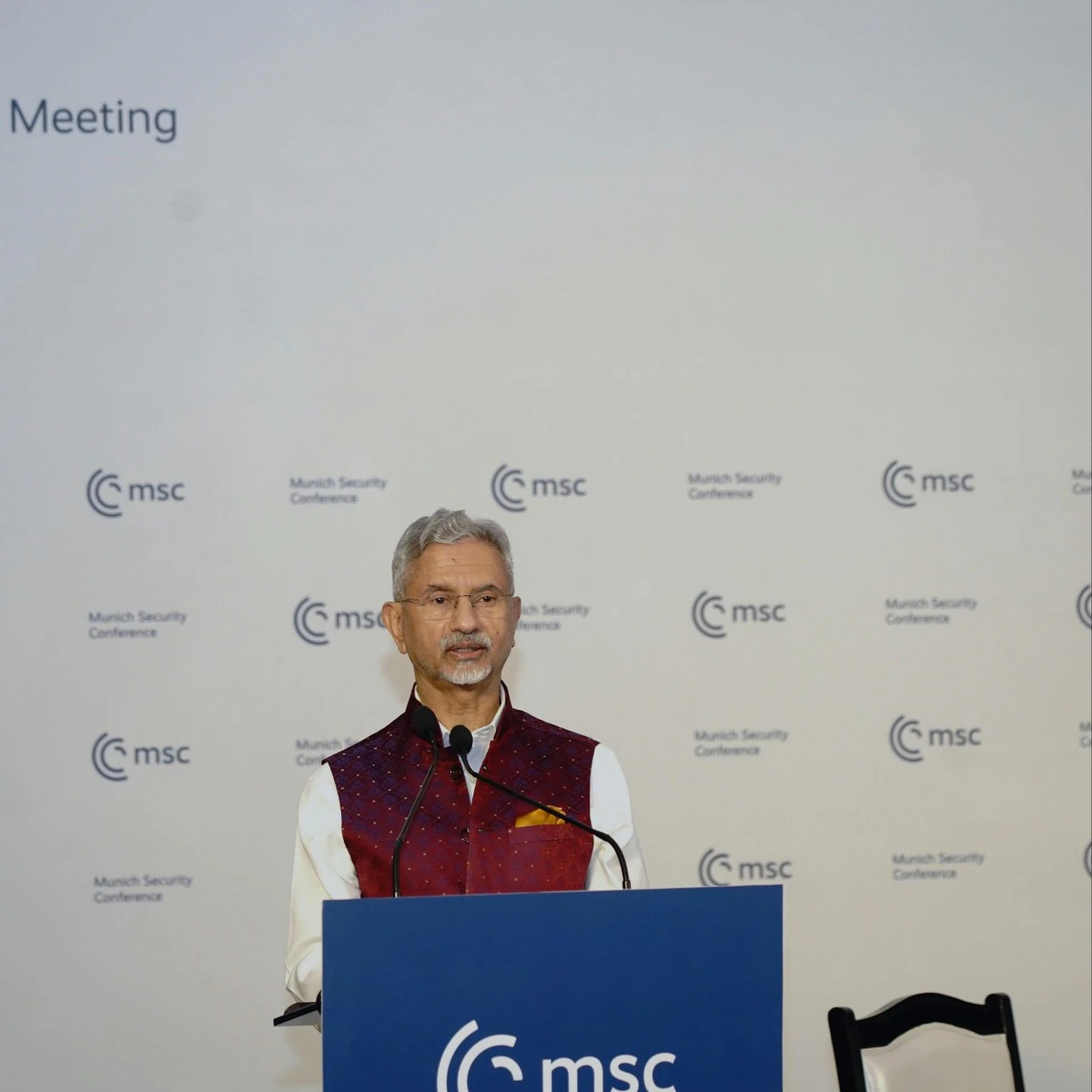
This is the uncomfortable reality behind the growing concern over a global food crisis and External Affairs Minister S. Jaishankar’s warning about a “4F crisis” involving food, fuel, fertiliser and finance.
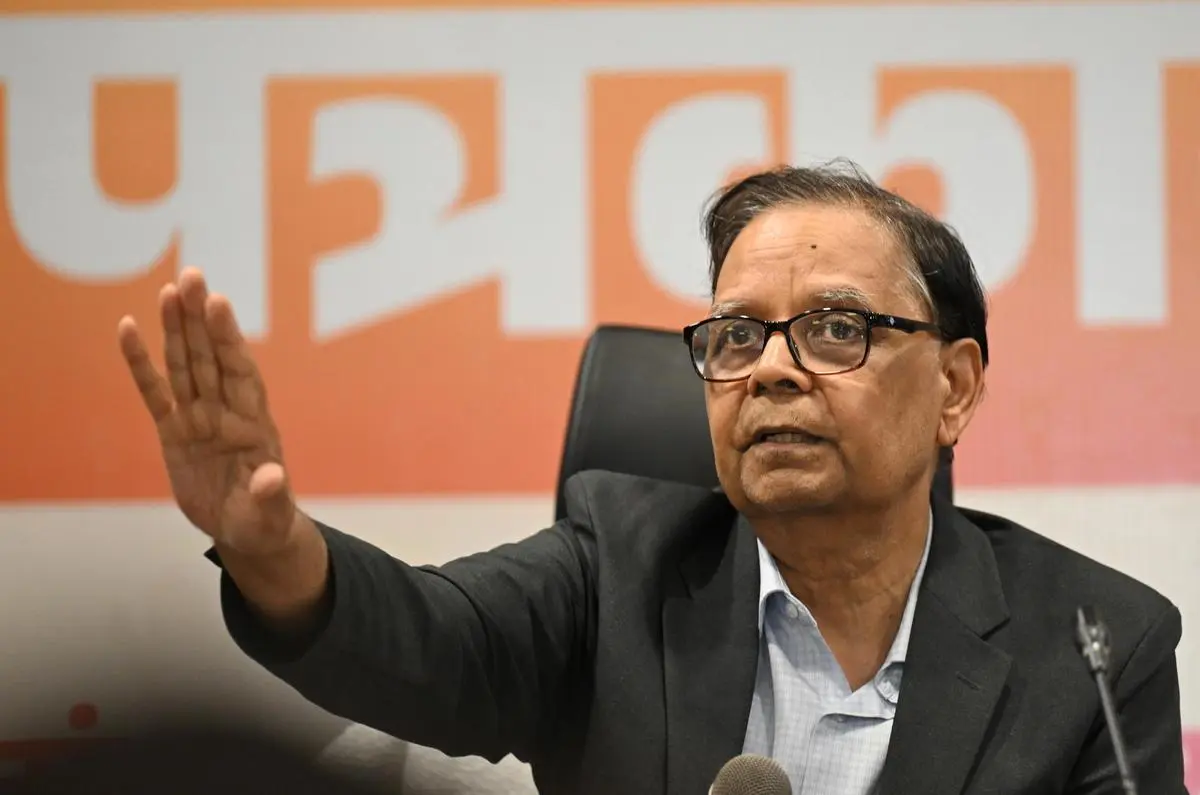
India, importantly, is not currently staring at empty ration shops or an imminent nationwide grain shortage. Its foodgrain reserves are substantial, domestic production remains strong and the government has significant policy tools to cushion vulnerable households. The Finance Commission chairman has also argued that India is unlikely to face a major food or fertiliser crisis because the country has strengthened supplies, restarted domestic fertiliser capacity and diversified imports.
But that should not become an excuse for complacency.
The real question is not whether India has enough rice and wheat today. The real question is whether India can keep producing affordable food if geopolitical conflicts, fertiliser disruptions, extreme weather, expensive energy and global financial pressures continue simultaneously.
That is where the warning deserves to be taken seriously.
This is not a traditional food shortage
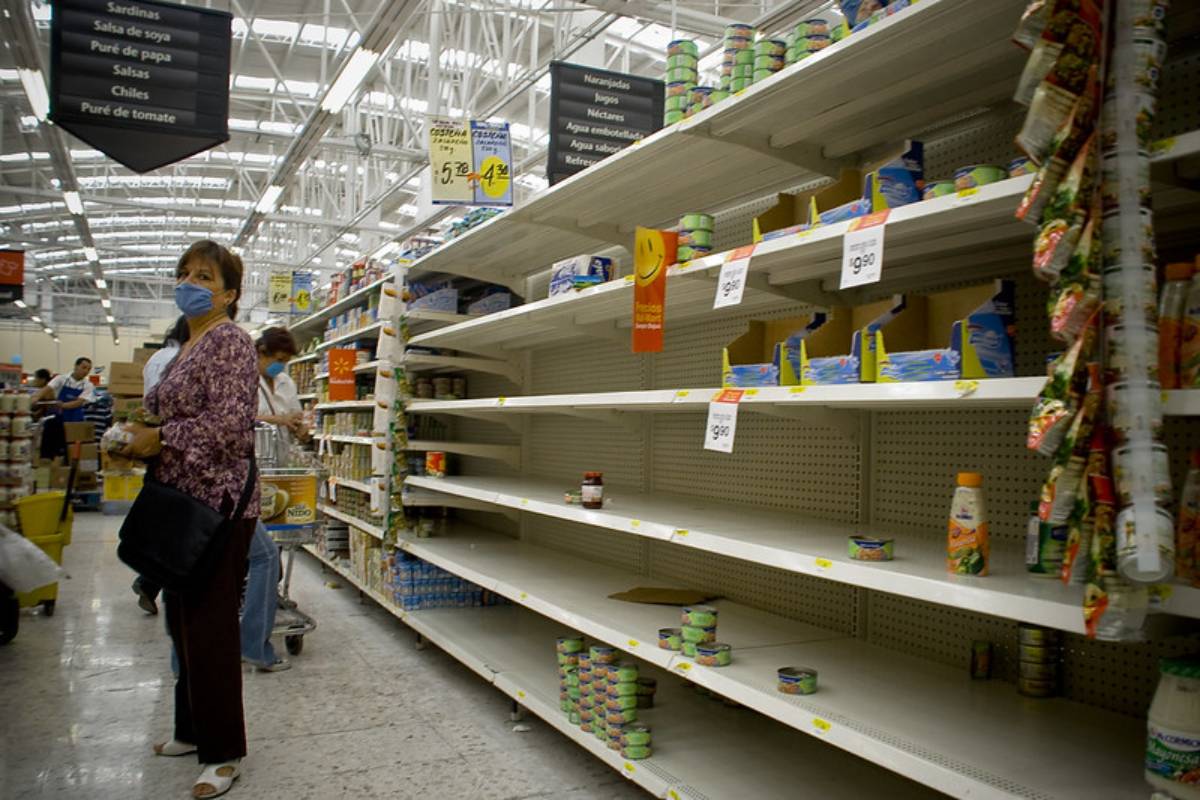
The most important point about the emerging global food supply crisis is that it may not initially look like one.
There can be enough grain somewhere in the world and yet food prices can rise sharply elsewhere. Why? Because food has to be grown, fertilised, harvested, transported, financed, stored and distributed. A failure at any point can make food more expensive even when total global production remains relatively high.
Recent international food-price movements illustrate this contradiction. Global cereal production for 2026 is still expected to remain close to record levels, yet international food prices have been rising. Cereal prices, particularly wheat, have faced renewed pressure amid disruptions affecting major trade routes.
That changes the nature of the problem.
The next food crisis may be less about “there is no food” and more about “food is available, but can people afford it and can countries obtain it reliably?” For developing economies, that distinction is enormous.
The 4F crisis is really one interconnected crisis
The phrase 4F crisis - food, fuel, fertiliser and finance, is useful because it exposes how interconnected today's vulnerabilities have become.
Consider the chain. A geopolitical conflict disrupts energy supplies or a major shipping route, causing fuel prices to rise. Higher energy costs increase the cost of producing and transporting fertiliser, while farmers facing expensive or uncertain fertiliser supplies may reduce application. Lower fertiliser use can eventually reduce crop yields, putting pressure on food supplies and pushing prices higher.
Meanwhile, geopolitical uncertainty can push global capital towards safer assets, weakening emerging-market currencies and making dollar-denominated imports more expensive. One crisis therefore feeds another.
This is why treating food security as merely an agricultural issue would be a serious policy mistake.
Food security is now also an energy-security issue, trade issue, financial issue, climate issue and national-security issue.
The fertiliser problem demonstrates this particularly well. Fertiliser production is concentrated among a relatively small number of major suppliers, while nitrogen fertilisers depend heavily on natural gas. When energy supplies become unstable or shipping corridors are disrupted, the consequences can eventually reach farms months later.
That time lag makes the problem particularly dangerous. A fertiliser shortage today may not create a food shortage today, but it can create one next season.
India has something many countries do not: a substantial buffer
This is where India is in a comparatively strong position.
The country has spent decades building mechanisms designed precisely to prevent external shocks from immediately becoming domestic hunger. Government grain stocks are substantial, rice and wheat inventories remain well above official buffer requirements, and the public food distribution system provides subsidised or free foodgrains to hundreds of millions of people. India's foodgrain production has also reached historically high levels.
That matters enormously because a country without strategic reserves can be forced into the international market precisely when everyone else is trying to buy. India has more breathing room.
This is one reason it would be wrong to describe the current situation as an imminent food crisis in India. There is no evidence that India is about to run out of rice or wheat.
There is, however, a danger in allowing the existence of those reserves to create a false sense of complete security. A warehouse full of grain cannot manufacture urea, create rainfall, lower international crude prices or guarantee affordable edible oil. Nor can it indefinitely prevent food inflation if production costs keep rising.
India’s real vulnerabilities lie beyond rice and wheat
India's food-security story becomes more complicated when we move beyond staple cereals.
Take edible oils. India imports roughly two-thirds of its edible oil requirements, which means international prices, shipping costs, geopolitical disruptions and currency movements can quickly influence domestic household budgets. Pulses present another vulnerability, with imports accounting for a meaningful share of domestic consumption.
These are precisely the kinds of products that can produce a different form of food insecurity.
A family may still have access to subsidised rice and wheat while simultaneously paying much more for cooking oil, pulses, vegetables and other essentials. Food security is therefore not simply about calories; it is about affordability, nutrition and dietary diversity.
A country cannot declare victory over food insecurity merely because cereal stocks are comfortable.
This is where India's policy focus needs to evolve. Pulses, oilseeds, millets and bio-fortified crops need greater importance in procurement, agricultural planning and nutrition programmes. A cereal-heavy food-security system may protect against hunger but remain vulnerable to nutritional insecurity and import shocks.
The biggest threat may be water, not wheat
There is another issue that deserves far more attention: water.
India's agricultural model has historically depended heavily on irrigation and groundwater, with several regions cultivating water-intensive crops even as groundwater extraction exceeds natural replenishment. That model becomes increasingly difficult to defend in an era of climate volatility.
The current agricultural warning signs are already visible. Irregular rainfall has damaged crops in parts of the country, while excessive rainfall and flooding have affected millions of hectares. At the same time, drought has been declared in several states. The kharif paddy area has also declined, while the government's foodgrain production target for 2026-27 has been lowered.
And then comes El Niño.
Climate patterns do not automatically translate into disaster, but stronger El Niño conditions can increase agricultural risks across vulnerable regions, including parts of South and Southeast Asia.
That should force India to reconsider an uncomfortable question: Can the country continue growing crops in exactly the same places, using exactly the same amounts of water, simply because that is how agriculture has traditionally been organised?
The answer increasingly appears to be no.
The Rabi season could be the real test
The coming Rabi season is particularly important because it will reveal whether India's current buffers are enough to withstand a combination of water stress, fertiliser uncertainty and weather volatility.
Wheat production is expected to remain strong, with projections pointing towards another large harvest. But production estimates on paper are not the same thing as guaranteed output in the field.
Farmers need timely access to fertiliser, adequate irrigation, sufficient soil moisture and reasonable input costs. They also need confidence that whatever they produce can be sold at viable prices.
Government assurances about fertiliser availability are useful, but the ultimate test is logistical: Is the fertiliser available to the farmer at the right place, at the right time and at a manageable price?
Agriculture does not wait for bureaucratic delays to disappear. Miss the sowing window and the opportunity is gone.
That is why fertiliser supply disruptions are so dangerous. Their consequences may remain invisible until months after the original disruption.
India has already shown that it can absorb external shocks
There is also a more optimistic side to this story.
India has demonstrated considerable resilience in recent years. During periods of global energy disruption, the country managed to limit the immediate impact on households. Domestic fertiliser production has increased, imports have been diversified and advance stocking has helped reduce the risk of sudden shortages. The country's ability to source fertiliser from multiple suppliers provides another layer of protection.
This matters because resilience does not mean eliminating dependence. No major economy can completely isolate itself from the global market.
India imports crude oil, fertiliser and fertiliser inputs, as well as edible oils. It participates deeply in global trade and financial markets. The goal, therefore, should not be autarky but strategic diversification.
If one supplier fails, another should be available. If one shipping route is disrupted, alternatives should exist. If one crop fails, another should provide some cushion. If international prices rise, domestic reserves and targeted policy support should soften the blow.
That is what genuine food-security preparedness looks like.
But India must also avoid becoming part of the problem
There is a difficult balancing act ahead.
India is one of the world's biggest rice exporters. When domestic food prices rise, restricting exports can protect Indian consumers. But export restrictions can also tighten global supplies and raise prices for countries that depend on imports.
The dilemma is real. Should India prioritise domestic affordability, or should it maintain exports to support global food security?
There is no simple answer, but it reinforces an important reality: India's food policy now has consequences far beyond India's borders.
The country needs a calibrated approach rather than sudden policy swings. Export decisions, procurement, buffer stocks, subsidies and the allocation of surplus grain all need to be considered as part of one larger food-security strategy.
Centre-state cooperation cannot remain a slogan
Perhaps the most practical lesson from the current situation is that food security in India cannot be managed entirely from New Delhi.
Agriculture is deeply dependent on state-level realities. Water availability, crop patterns, rainfall, groundwater stress, storage infrastructure and procurement systems vary significantly from one region to another.
A national policy may establish the broad framework, but implementation has to happen much closer to the farm.
That makes Centre-state cooperation essential. States need access to funding, technology, seeds, irrigation solutions and procurement mechanisms if they are expected to change crop patterns or encourage farmers towards less water-intensive agriculture. Greater coordination can also help India respond faster to regional shortages before they become national problems.
This is not the moment for political point-scoring. A food crisis does not care which party runs a state. A failed monsoon does not care about federal boundaries. Neither does a fertiliser shortage.
The biggest mistake would be either panic or complacency
There are two equally dangerous reactions to the current warnings.
The first is panic. Declaring that India is heading towards a devastating food shortage would be premature. The country has significant grain stocks, strong production capacity, extensive welfare infrastructure and multiple policy buffers.
The second mistake is complacency. Saying “India has enough rice and wheat, so there is nothing to worry about” would be equally misleading.
The real vulnerability lies in the links between the systems. A poor harvest combined with expensive fertiliser is more dangerous than either problem alone. Expensive fertiliser combined with weak rainfall is more dangerous than either individually. Higher fuel prices combined with a weaker rupee can amplify food inflation.
Global supply disruptions combined with protectionist export policies can make the international food market even tighter.
That is precisely why the 4F crisis deserves attention. It is not necessarily a prediction of catastrophe; it is a warning about interconnected vulnerabilities.
India should prepare for a food-security shock before it becomes a food crisis
The smartest response to the current warnings is neither alarmism nor denial. It is preparation.
India should strengthen strategic fertiliser reserves, diversify import sources, improve domestic production capacity and develop contingency plans for major shipping disruptions.
Agriculture policy should become far more climate-aware. Water-intensive crops should gradually give way to crops better suited to local water availability wherever economically feasible. Pulses and oilseeds deserve greater attention, while micro-irrigation and efficient water management need to move from policy documents into widespread farm-level practice.
The public distribution system should also evolve beyond a narrow cereal focus and incorporate nutritional security more meaningfully.
Most importantly, India needs to think beyond the next harvest.
The real test is not whether the country can survive one bad agricultural season. It is whether it can withstand two or three consecutive years of global volatility.
That is a completely different challenge.
The food crisis India should fear is the one that arrives quietly
The most dangerous food crisis may not begin with empty warehouses. It may begin with a fertiliser shipment that arrives late, forcing a farmer to apply less fertiliser. Yields then fall, wholesale prices rise, cooking oil becomes more expensive, transport costs increase and household budgets tighten. The government spends more to protect consumers, fiscal pressures increase, and the original causes may eventually become difficult to trace.
By the time the average household feels the crisis, its origins may be buried in a conflict, a shipping bottleneck, a fertiliser factory, a currency movement or a failed monsoon months earlier.
That is why the current debate matters.
India does not need to be frightened by the prospect of a global food crisis. It needs to be smarter about preparing for one.
The country has substantial strengths: grain reserves, a large agricultural base, public food distribution, growing domestic fertiliser capacity and the ability to diversify imports. But resilience is not something a country achieves once and then keeps forever. It has to be maintained.
The immediate question is not, “Will India run out of food?”
The more important question is, “Can India keep food available, affordable and nutritious when the world around it becomes more unpredictable?”
For now, the answer is reasonably reassuring. But the margin for complacency is shrinking.
The next food crisis may not arrive as a dramatic shortage. It may arrive as a slow squeeze — through fuel, fertiliser, finance, water and prices — until the global crisis finally reaches the Indian kitchen.
And by then, preparation will be far more expensive than it is today.
© Copyright 2026. All Rights Reserved. Powered by Vygr Media.