 By
By 
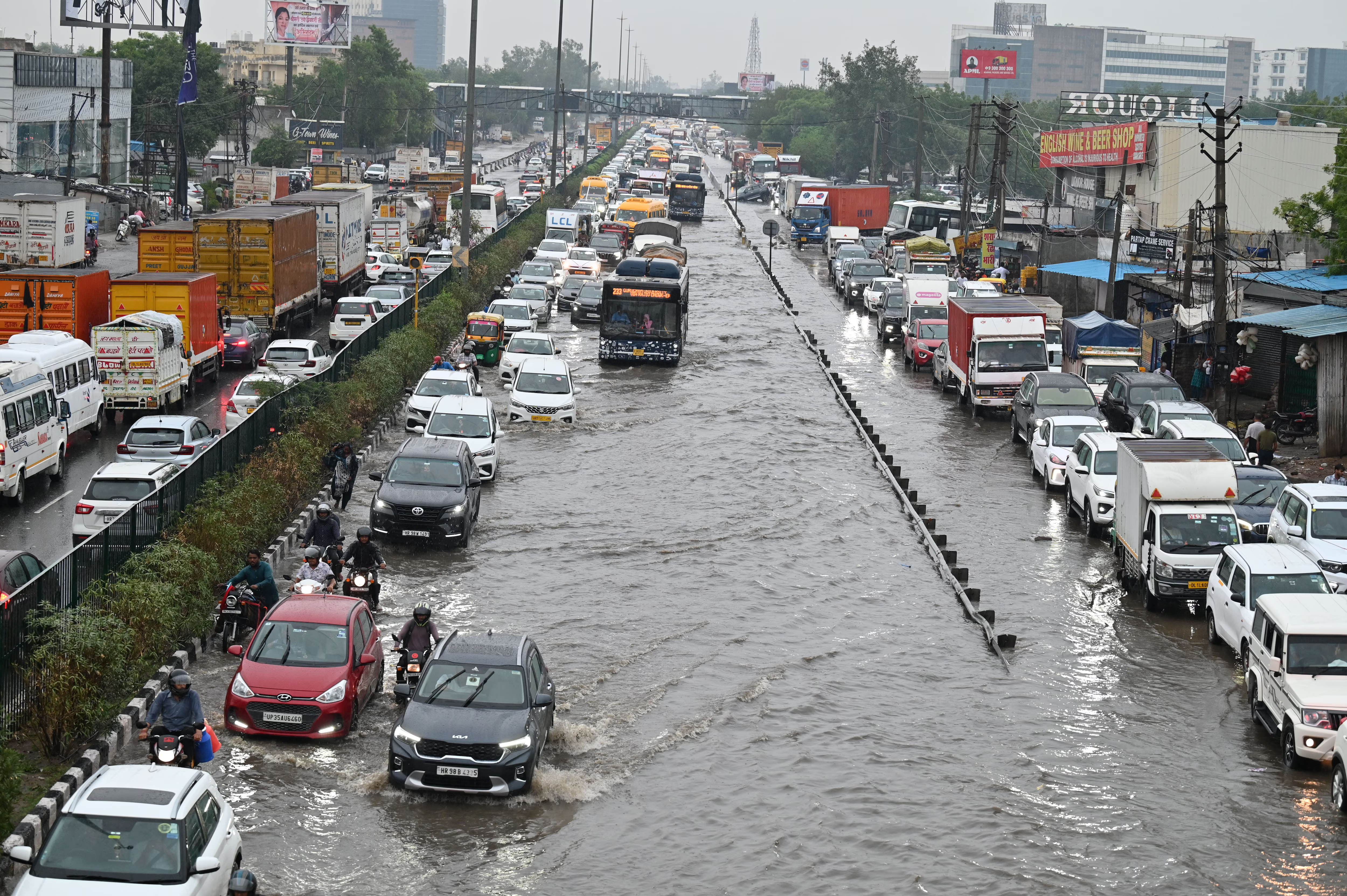
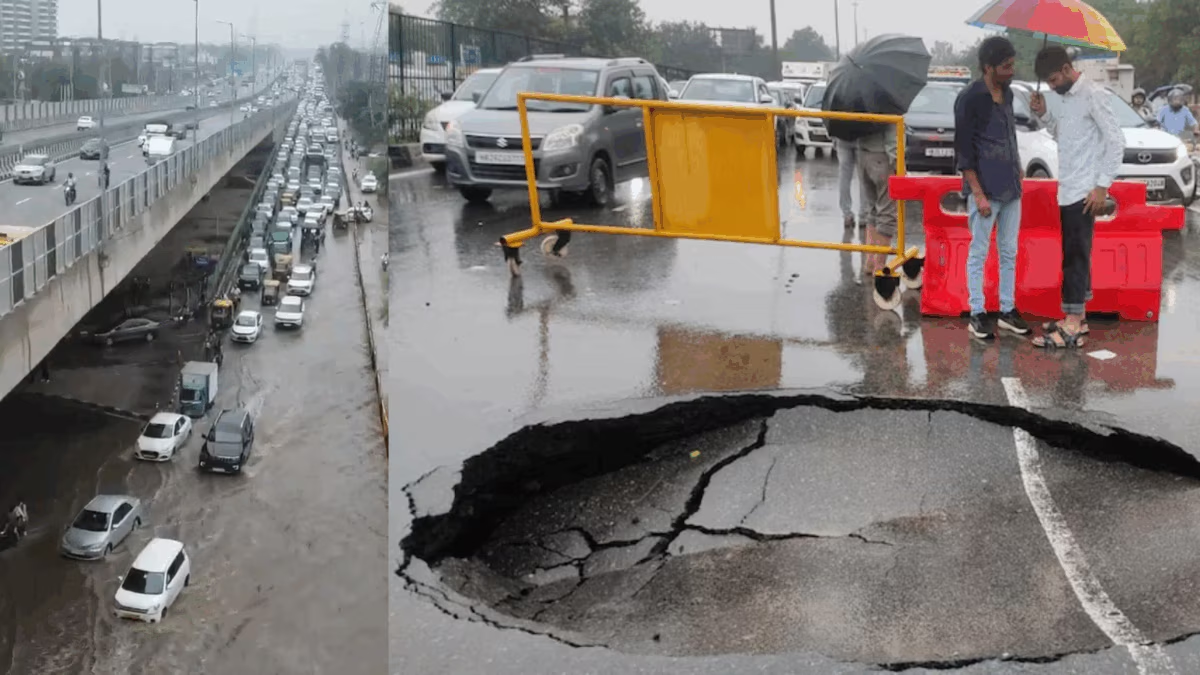
Every monsoon, Gurugram finds itself grappling with a crisis that has become all too familiar. Just a few hours of heavy rainfall are enough to bring the city to a standstill, flooding roads, stranding commuters and triggering massive traffic jams. The latest spell of rain once again exposed the city's chronic drainage problems, with waterlogging reported across key intersections, highways, underpasses and residential neighbourhoods, leaving thousands of office-goers stuck for hours.
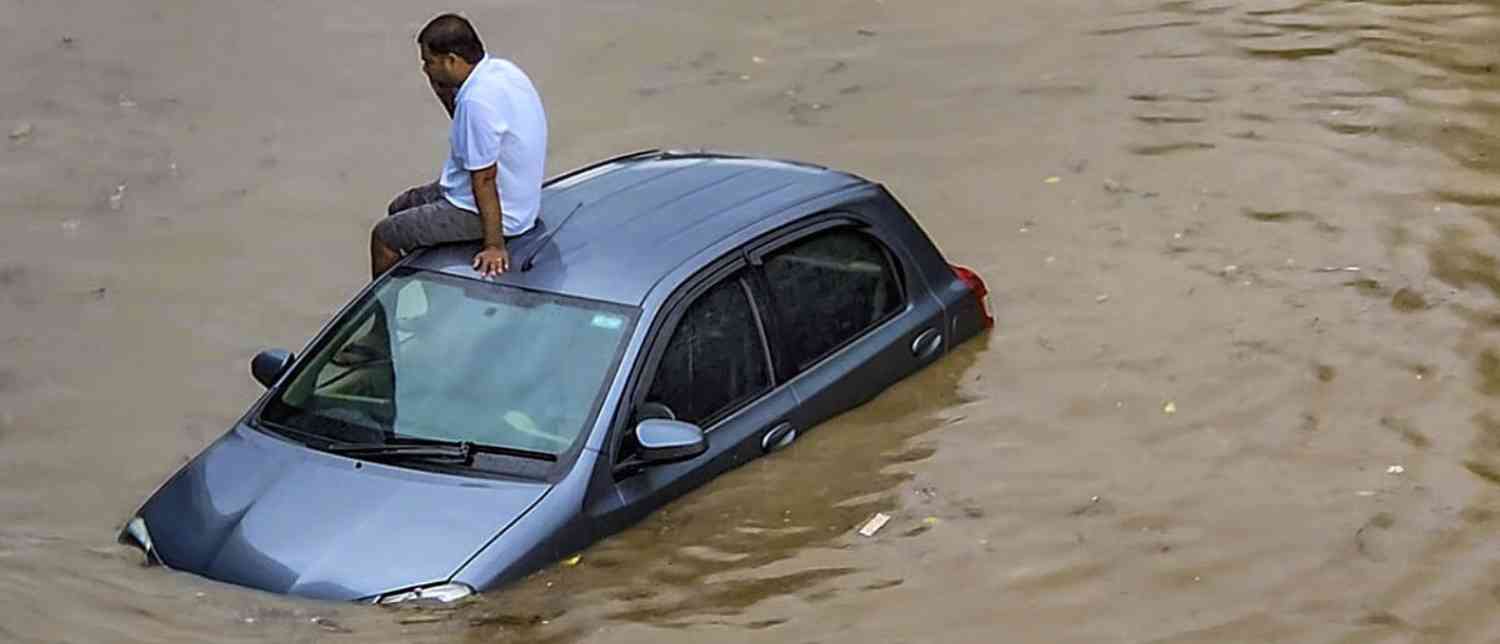
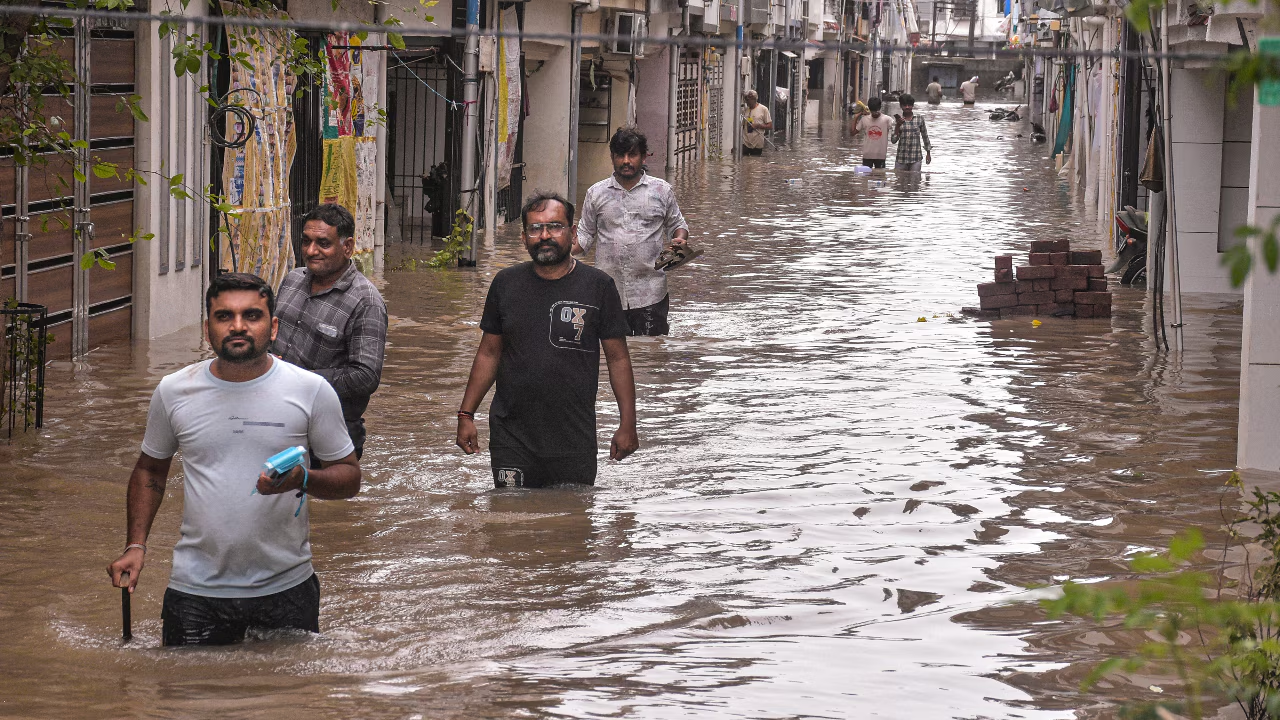
For residents, the scenes have become an annual ritual. Images of submerged cars, flooded corporate hubs and people wading through knee-deep water quickly flooded social media, reviving the now-common nickname "Jalgram" to describe the city during the monsoon.
More Than Just Heavy Rainfall
Experts have long argued that the problem goes far beyond heavy rainfall. The recurring floods are largely the result of decades of rapid urbanisation that overlooked Gurugram's natural landscape.
Before transforming into one of India's largest corporate centres, the region was dotted with ponds, wetlands and seasonal streams connected to the Aravalli hills. These natural water bodies acted as storage systems during the monsoon, allowing excess rainwater to spread out and gradually drain away.
As urban development accelerated, many of these lakes, ponds and drainage channels disappeared beneath commercial complexes, roads and residential townships. Their disappearance significantly reduced the city's natural ability to manage heavy rainfall.
Adding to the problem is the extensive concretisation of the city. Large stretches of asphalt roads, parking lots and buildings leave very little open ground for rainwater to seep into the soil. Instead, water rapidly flows across hard surfaces and accumulates on roads, overwhelming the drainage network within a short span of time.
Natural Drainage Has Been Disrupted
Urban planners also point to the disruption of traditional drainage channels as a major reason behind the city's flooding.
Several roads and developments have either blocked or narrowed the natural paths through which rainwater once flowed. As these channels disappeared, rainwater lost its natural route to larger drains, causing it to collect in low-lying areas across the city.
The Badshahpur drain, Gurugram's primary stormwater outlet, has also struggled for years with encroachments, inadequate capacity and maintenance challenges. Although improvement projects have been undertaken periodically, bottlenecks continue to restrict the drain's ability to carry away large volumes of water during intense rainfall.
An Overburdened Drainage Network
Despite being one of India's fastest-growing urban centres, Gurugram's drainage infrastructure has failed to keep pace with its rapid expansion.
The city's stormwater drains were designed for a much smaller urban population and are now expected to handle runoff from sprawling residential sectors, commercial districts and highways. During heavy rain, these drains often become overwhelmed, especially when clogged by silt or solid waste.
As water accumulates faster than it can be drained away, major roads, intersections and underpasses are quickly submerged, severely disrupting movement across the city.
A Corporate Hub That Comes to a Halt
The impact of waterlogging extends far beyond inconvenience.
Gurugram is home to hundreds of multinational companies, technology firms and major corporate offices, making it one of India's most important business destinations. Whenever flooding disrupts transport, the effects are felt across businesses, employees and supply chains.
Recent rainfall brought traffic to a crawl on several major routes, including stretches of NH-48, Sohna Road and other key corridors connecting Gurugram with Delhi and neighbouring cities. Vehicles broke down after getting trapped in waterlogged stretches, worsening congestion that extended for several kilometres.
Thousands of commuters spent hours trying to reach their homes, while office attendance, deliveries and emergency services were all affected. For businesses operating in the city, repeated monsoon disruptions translate into significant productivity losses and increased operational costs.
Climate Change Is Intensifying the Challenge
While poor urban planning remains the primary reason behind Gurugram's flooding, changing weather patterns are making the situation even more difficult.
Meteorologists have observed that cities are increasingly experiencing short-duration but extremely intense rainfall events. Instead of receiving moderate rain over an entire day, urban areas often witness a large volume of rainfall within just a few hours.
Such high-intensity downpours generate enormous runoff almost instantly, placing enormous pressure on drainage systems that are already operating beyond their intended capacity.
Why the Crisis Continues
The city's recurring flooding reflects years of infrastructure planning that failed to keep pace with explosive urban growth.
As Gurugram expanded rapidly, investments in stormwater infrastructure did not match the scale of development. At the same time, responsibilities for drainage management remain divided among multiple civic agencies, making long-term planning and coordinated execution more difficult.
Experts believe that annual pre-monsoon desilting drives and emergency pumping operations provide only temporary relief. Unless the underlying structural problems are addressed, similar flooding is likely to occur every monsoon.
What Needs to Change
Urban planning experts say Gurugram's flooding can be reduced through sustained, long-term measures rather than seasonal emergency responses.
Among the key recommendations are restoring ponds and wetlands wherever possible, protecting the remaining natural drainage channels from encroachment, expanding and modernising the stormwater drainage network, and increasing the use of permeable surfaces in future developments to improve groundwater recharge.
Experts have also stressed the importance of stronger coordination among planning authorities, municipal bodies and environmental agencies to ensure that drainage projects are implemented effectively.
Additionally, expanding rainwater harvesting infrastructure and constructing check dams in the Aravalli region could help slow the flow of runoff before it reaches densely populated urban areas.
A Wake-Up Call for Urban Planning
Every monsoon serves as another reminder that Gurugram's flooding is not merely the result of heavy rainfall but a consequence of long-standing planning failures.
As climate change brings more frequent extreme weather events and the city's population continues to grow, the risks associated with inadequate drainage infrastructure will only increase.
The annual transformation of India's Millennium City into "Jalgram" is no longer just an inconvenience—it is a warning that sustainable urban planning, environmental conservation and modern infrastructure must go hand in hand if the city is to overcome its recurring monsoon crisis.
With inputs from agencies
Image Source: Multiple agencies
© Copyright 2026. All Rights Reserved. Powered by Vygr Media.