 By
By 
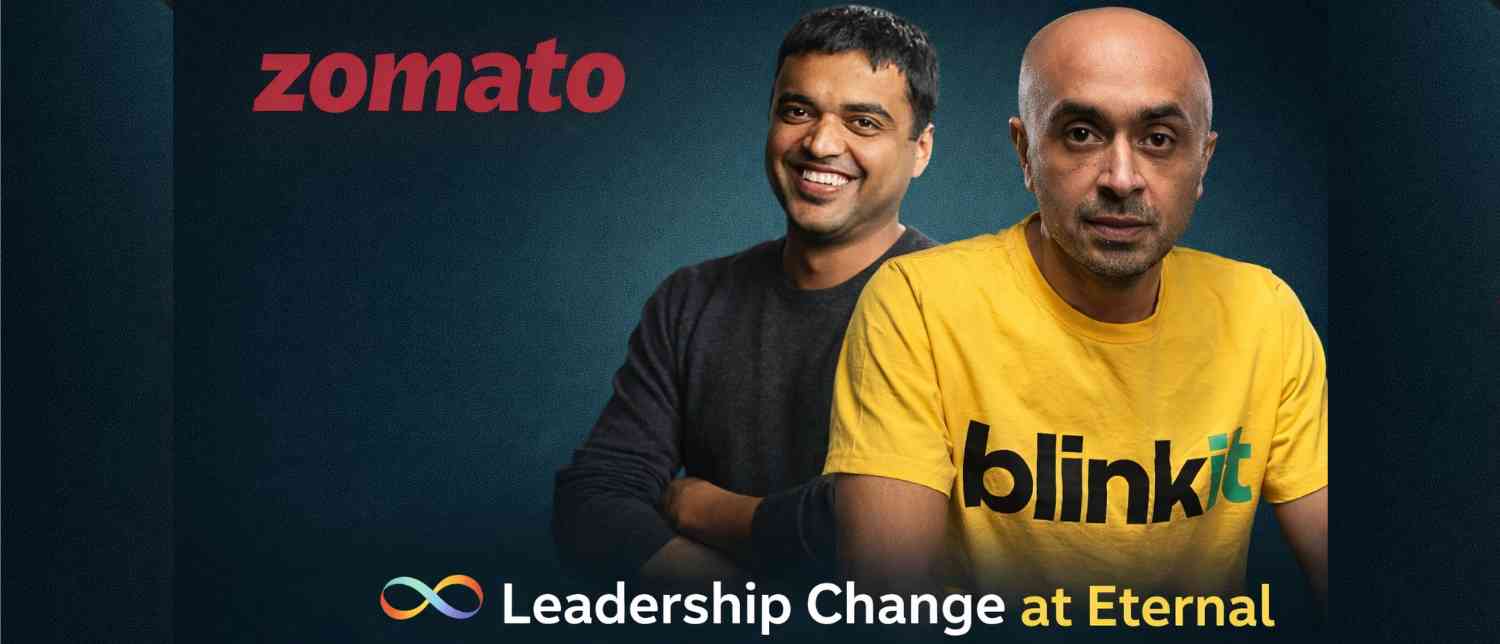
When Deepinder Goyal announced on January 21, 2026, that he would step down as Group Chief Executive Officer and Managing Director of Eternal Ltd., the decision immediately sent ripples across India’s startup, technology, and investor communities. Eternal, the parent company of Zomato and Blinkit, is one of India’s most closely watched consumer internet firms. For nearly two decades, Goyal had been its defining force—first as a scrappy startup founder and later as the face of a publicly listed internet giant.
Effective February 1, 2026, Goyal will hand over executive leadership to Albinder Singh Dhindsa, founder and CEO of Blinkit. The move marks one of the most significant leadership transitions in India’s startup ecosystem in recent years. Yet, unlike many high-profile founder exits, this one is not rooted in crisis, boardroom conflict, or declining performance. Instead, it reflects a deliberate and carefully planned shift—one that Goyal himself describes as a choice driven by curiosity, experimentation, and the constraints of running a public company.
Rather than leaving Eternal altogether, Goyal will transition into the role of Vice Chairman of the board, subject to shareholder approval, maintaining strategic continuity while stepping away from day-to-day execution.
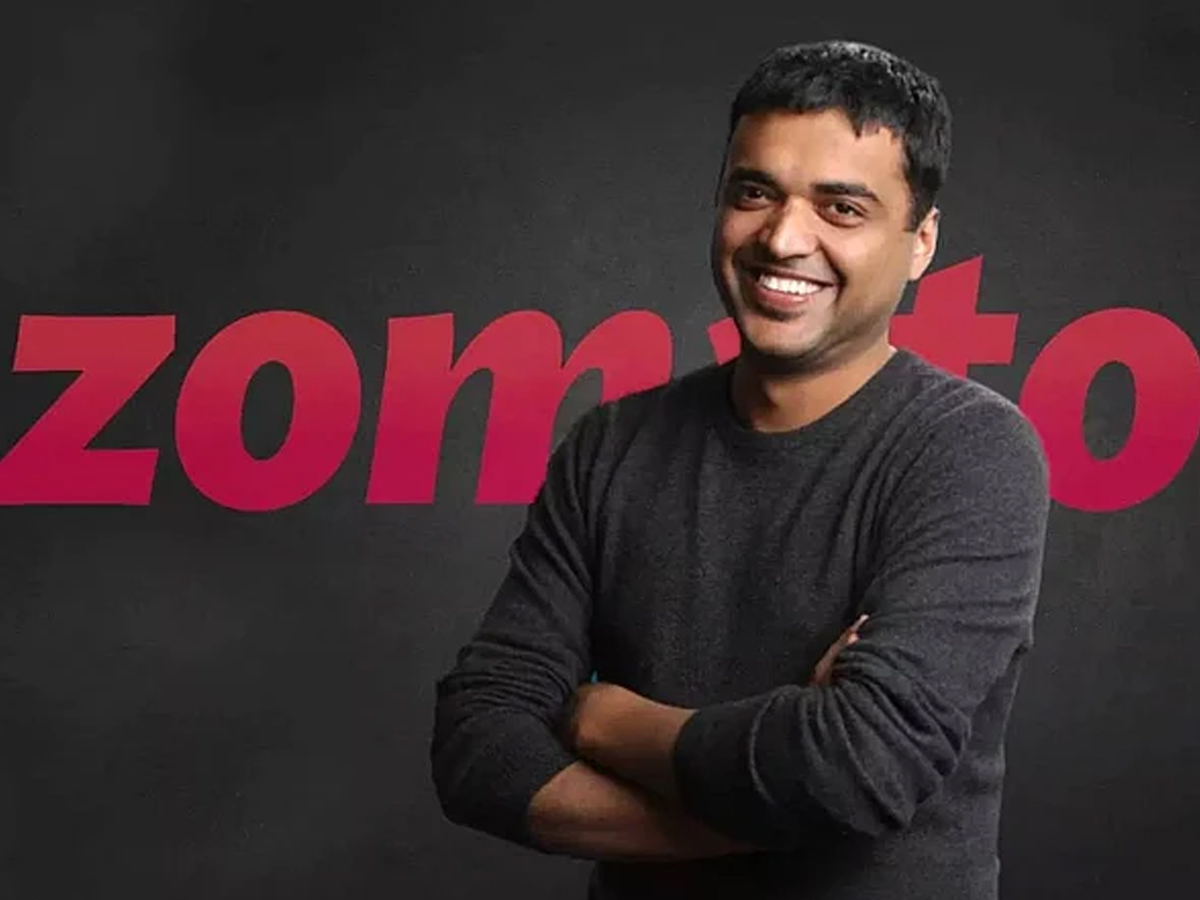
A Founder Steps Aside at a Moment of Strength
The timing of Goyal’s decision is particularly striking. Eternal has just reported one of its strongest quarters yet, buoyed by a surge in quick-commerce demand and improved margins across its food delivery business. In the third quarter of FY26, the company posted a consolidated net profit of ₹102 crore, a 73% year-on-year increase from ₹59 crore in the same period last year.
Consolidated Adjusted Revenue for the quarter jumped to ₹16,692 crore, marking a 190% year-on-year rise and a 19% sequential increase. Consolidated Adjusted EBITDA stood at ₹364 crore, up 28% year on year and 63% quarter on quarter—clear indicators of sustained profitability momentum.
Management noted that the headline revenue growth was amplified by an accounting change following Eternal’s shift to an owned-inventory model in quick commerce. On a like-for-like basis, revenue growth was estimated at approximately 64% year on year, underscoring strong underlying demand and operational improvements even after adjusting for the accounting impact.
In short, this was not a founder walking away under pressure. It was a founder choosing to step back when the company was performing well.
An important update on leadership changes at Eternal. pic.twitter.com/CALn2QQFWE— Deepinder Goyal (@deepigoyal) January 21, 2026
What Deepinder Goyal Said—and Why It Matters
In a candid letter to shareholders, Goyal addressed the reasons behind his decision directly, making it clear that fatigue or dissatisfaction were not the drivers.
“Of late, I have found myself drawn to a set of new ideas that involve significantly higher-risk exploration and experimentation,” he wrote. “These are the kinds of ideas that are better pursued outside a public company like Eternal.”
Goyal explained that leading a large, publicly listed company demands intense operational discipline, predictability, and constant focus on execution and quarterly performance. While Eternal continues to perform strongly, the expectations—legal, regulatory, and otherwise—placed on a public company CEO in India require near-total attention.
“While I believe I personally have the bandwidth to continue what I am doing at Eternal and also explore new ideas outside of it,” he added, “the expectations, legal and otherwise, of a public company CEO in India demand singular focus.”
In other words, it was not about an inability to continue, but about the trade-offs involved. The kind of unconventional, uncertain, and high-risk exploration that once defined Goyal’s entrepreneurial journey has become increasingly difficult to pursue from within the constraints of a listed entity.
Those ambitions, he believes, are better chased from outside the CEO’s chair.
From Foodiebay to Eternal: A Nearly Two-Decade Journey
Goyal’s story is inseparable from the evolution of India’s food-tech and quick-commerce sectors. In 2008, he co-founded Foodiebay with Pankaj Chaddah as a simple platform that listed restaurant menus and reviews. What began as a modest idea grew steadily into Zomato, one of India’s largest food delivery platforms and a globally recognised consumer internet brand.
Over time, Zomato expanded beyond food discovery and delivery, eventually entering the fast-growing quick-commerce space through the acquisition of Blinkit (then Grofers). To house its growing portfolio of businesses, Eternal Ltd. was later formed as a parent holding company overseeing Zomato, Blinkit, and other verticals.
For Goyal, Eternal represents a life’s work. In his letter, he stressed that stepping down from the CEO role does not mean distancing himself from the company he built. Having spent nearly half his life building the organisation, he intends to continue contributing meaningfully—just from a different vantage point.
As Vice Chairman, Goyal will remain closely involved in shaping Eternal’s long-term strategy while stepping away from daily operations, execution, and business decisions. He also clarified that there will be no change in the autonomy currently enjoyed by individual business CEOs within the group.
A Clean and Structured Transition
As part of the leadership handover, all of Goyal’s unvested stock options will return to Eternal’s employee stock option pool. The move signals a clean, transparent, and well-structured transition—one designed to reinforce confidence among employees, investors, and stakeholders.
The board of Eternal has approved Albinder Singh Dhindsa’s appointment as Group CEO with effect from February 1, 2026. It has also recommended Goyal’s appointment as Director and Vice Chairman, subject to shareholder approval, ensuring continuity in strategic oversight even as executive leadership changes.
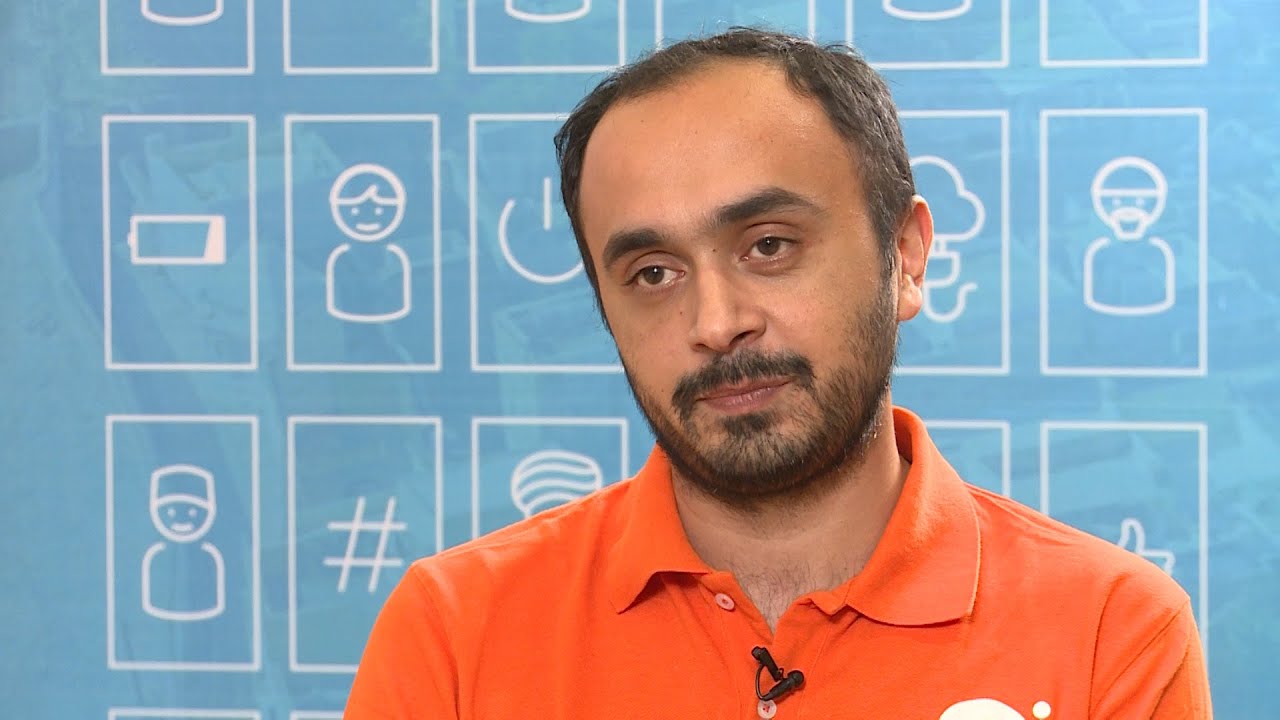
Meet the New CEO: Albinder Singh Dhindsa
Taking over the reins of Eternal is Albinder Singh Dhindsa—often referred to as “Albi” within the organisation—the founder and CEO of Blinkit. His elevation reflects not just succession planning, but the growing importance of quick commerce within Eternal’s overall strategy.
Dhindsa joined the group following Zomato’s acquisition of Blinkit in 2022 for $568 million. At the time, the deal raised questions about integration challenges and leadership alignment. In fact, it later emerged that Goyal had asked Dhindsa to step down twice in the weeks following the acquisition, citing post-merger difficulties.
Dhindsa stayed on—and proved his case through execution.
Under his leadership, Blinkit transitioned from being seen as a risky acquisition to one of Eternal’s strongest growth engines. The company achieved breakeven and delivered consistently improving unit economics, reinforcing confidence in Dhindsa’s operational capabilities.
Blinkit’s Breakout Quarter
In the third quarter, Blinkit posted 121% year-on-year growth in net order value (NOV) and 14% sequential growth. More importantly, the business turned Adjusted EBITDA positive at ₹4 crore—an important milestone as scale and efficiency gains began to flow through the profit and loss statement.
Management attributed the performance to tighter supply-chain execution, a more favourable category mix, and rising operating leverage as order density increased.
A key driver of this turnaround has been Blinkit’s shift to an owned-inventory model, which now accounts for around 90% of net order value. This change has materially altered revenue recognition and is expected to add approximately 100 basis points to group-level margins over time, with about half of that benefit already reflected in the current quarter’s numbers.
It was this journey—from integration challenges to profitability—that convinced Goyal that Dhindsa was ready to lead the group.
Who Is Albinder Dhindsa?
Dhindsa is a familiar name in India’s startup ecosystem. He co-founded Blinkit, originally known as Grofers, in 2013. In 2021, he spearheaded the company’s strategic pivot toward 10-minute grocery delivery, helping establish it as a leader in the quick-commerce segment.
Before founding Blinkit, Dhindsa worked at Zomato, where he served as Head of International Expansion, playing a key role in the company’s global growth initiatives.
Academically, he holds a Bachelor of Technology in Civil Engineering from IIT Delhi and an MBA from Columbia University in New York. During his time at Columbia Business School, he gained exposure to global business perspectives, entrepreneurship, and leadership thinking. He also worked briefly as an associate at UBS Investment Bank, gaining experience in financial markets and corporate strategy.
Outside work, according to Blinkit’s website, Dhindsa enjoys basketball and listening to French music.
Now, as Group CEO of Eternal, he will oversee both Zomato’s core food delivery business and Blinkit’s fast-growing quick-commerce operations, while continuing to focus closely on Blinkit, which remains the group’s primary growth engine.
Goyal’s Life Beyond Eternal: High-Risk Ideas and New Ventures
While stepping away from the CEO role, Goyal is far from slowing down. Over the past few years, he has quietly built a portfolio of ambitious ventures that reflect his growing interest in science, health, and infrastructure.
One of the most significant is Continue Research, a philanthropic research platform and seed fund launched in 2024 to explore human longevity and biological health. Goyal has committed $25 million of his personal capital to the initiative, which operates independently of Eternal.
Continue is built around the “Gravity Ageing Hypothesis,” which suggests that gravity-induced reductions in cerebral blood flow are a primary driver of ageing. A defining feature of the platform is its open-science philosophy: all research outputs are intended to be published as open-source and made freely accessible.
Under Continue, Goyal has also incubated Temple, a health-tech startup focused on deep diagnostics. Temple’s core product is an experimental, non-invasive wearable sensor placed on the temple to monitor cerebral blood flow in real time. The device is designed to test the hypothesis that maintaining optimal brain blood flow can help preserve cognitive and physical function over longer periods. As of early 2026, Temple remains in the experimental and research phase and is not yet commercially available.
Goyal has also ventured into aviation through LAT Aerospace, founded in January 2025 and co-founded with former Zomato executive Surobhi Das. The startup aims to reimagine regional air connectivity in India by developing 24-seater Short Take-Off and Landing (STOL) aircraft capable of operating from compact “air-stops” no larger than parking lots. The idea is to bypass conventional airport infrastructure and connect underserved Tier-2 and Tier-3 cities—what the company describes as “buses in the sky.”
A Resignation—or a Reinvention?
In the end, Deepinder Goyal’s exit as Eternal’s CEO is less a resignation and more a reinvention. It reflects a founder recognising the changing demands of leadership at scale—and choosing to trust a successor with execution while freeing himself to pursue bold, uncertain ideas once again.
For Eternal, the transition brings continuity paired with operational focus, as Albinder Dhindsa takes charge at a time of strong financial momentum. For Goyal, it marks the beginning of a new chapter—one driven not by quarterly earnings calls, but by curiosity, experimentation, and long-term ambition.
As India’s startup ecosystem matures, such founder transitions may become more common. But few will be as closely watched—or as thoughtfully executed—as this one.
With inputs from agencies
Image Source: Multiple agencies
© Copyright 2025. All Rights Reserved. Powered by Vygr Media.