 By
By 
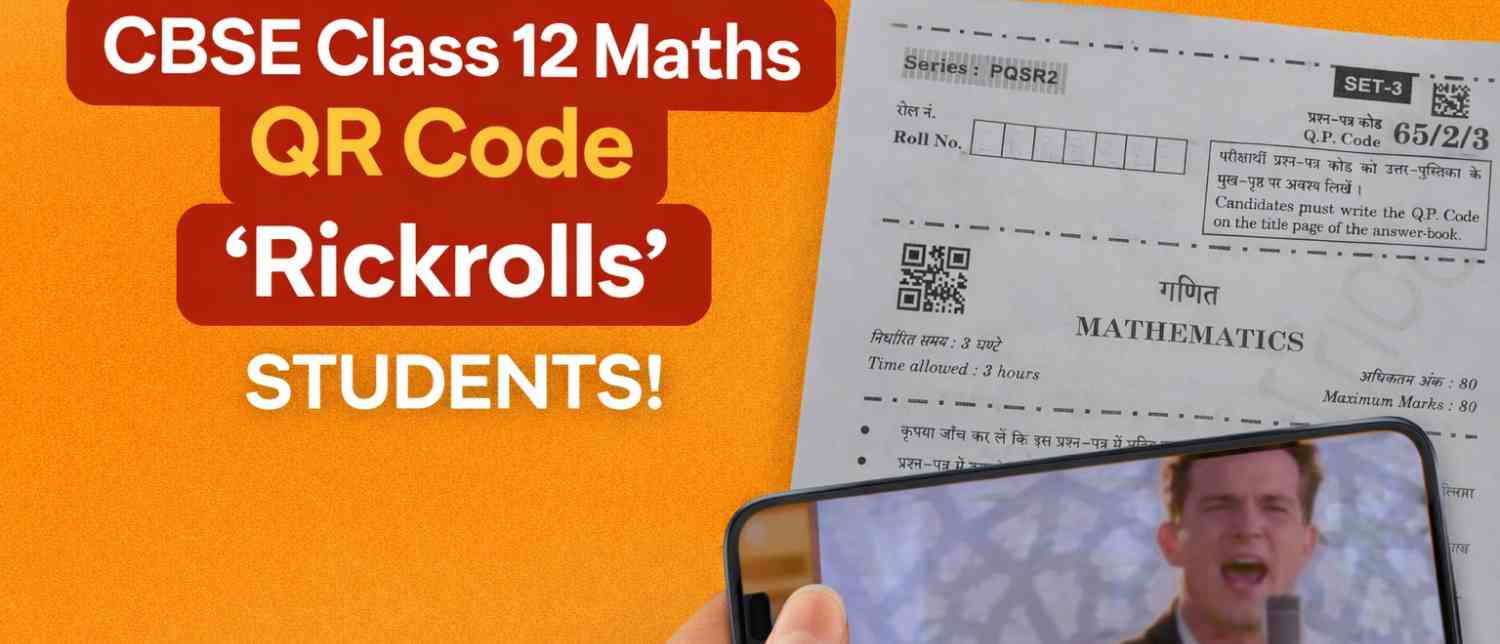
The CBSE Class 12 Mathematics board exam became the centre of an unexpected internet buzz after students claimed that a QR code printed on the question paper redirected users to the music video of “Never Gonna Give You Up” by Rick Astley. The incident quickly spread across social media platforms, sparking curiosity, amusement, and debate about how a security feature on an official exam paper could lead to a classic internet prank known as “rickrolling.”
While the Central Board of Secondary Education (CBSE) later clarified that the question papers were genuine and their security had not been compromised, the unusual episode captured widespread attention online.

CBSE Class 12 Maths Exam and the QR Code Controversy
The CBSE Class 12 Mathematics and Applied Mathematics exam was conducted on March 9, 2026, from 10:30 am to 1:30 pm. Soon after the exam concluded, images of the question paper began circulating widely on social media platforms.
Students and internet users noticed a QR code printed on the top-left corner of the question paper. Curious users began scanning it, as QR codes on CBSE exam papers are generally meant for authentication and verification purposes.
However, according to multiple posts online, scanning the code did not display verification information. Instead, it allegedly redirected users to the music video of “Never Gonna Give You Up”, the 1987 hit song by British singer Rick Astley.
The video is widely associated with the internet prank called Rickrolling, where users are tricked into opening a link that unexpectedly plays the iconic song.
Social Media Reacts to the Unexpected “Rickroll”
As screenshots and videos surfaced online, the claim quickly went viral. Several users on social media platforms posted the QR code image and encouraged others to scan it.
One widely shared video showed a student demonstrating the process. In the clip, she scans the QR code from her mathematics question paper and says:
“I want to show you guys something… This is my maths question paper. I am scanning it now. And see what it led to.”
Moments later, the song appears on her device.
As more students reported similar results when scanning QR codes from different question paper sets, the story gained traction online.
Netizens responded with a mix of amusement and disbelief. Some humorous reactions included:
-
“When the paper setter is a part-time admin of a meme page.”
-
“I don’t see a problem with it, kinda funny ngl.”
-
“This was not on my 2026 list, CBSE.”
However, not everyone found the incident amusing. Some users questioned how a QR code meant for official exam verification could lead to unrelated online content, raising concerns about exam paper security.
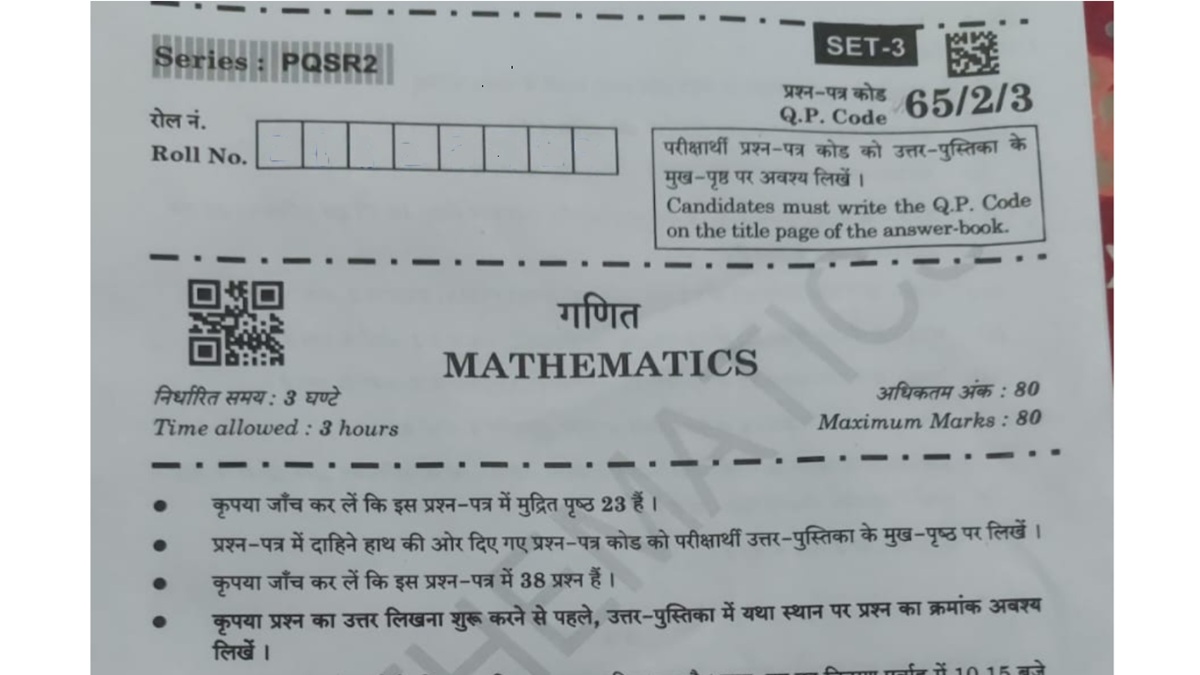
Why QR Codes Are Printed on CBSE Question Papers
QR codes have been included on CBSE examination papers since 2018 as part of the board’s security measures to prevent paper leaks and verify authenticity.
These codes typically allow authorities to:
-
Verify the genuineness of the question paper
-
Identify the specific set of the paper
-
Confirm authenticity in case of a suspected security breach
Because of this purpose, the reports that a QR code redirected to a YouTube music video raised questions among students and parents about the reliability of the system.
CBSE Responds to the Viral Claims
Following the viral posts, CBSE issued a clarification addressing the controversy.
The board confirmed that the question papers were genuine and their security had not been compromised.
According to the statement, in a few question paper sets, scanning one of the QR codes appeared to link to a YouTube video, which led to confusion and speculation about the paper’s authenticity.
CBSE emphasised that the issue did not indicate any paper leak or security breach.
The board stated:
“The question papers are genuine. The security of the question papers remains uncompromised.”
It also added that while the concerns raised by students and parents were understandable, necessary steps are being taken to ensure such incidents do not occur again in the future.
The Central Board of Secondary Education, India Rickrolled 2.5 million students by printing a Youtube QR code on the Maths question paper pic.twitter.com/jSl3TlkjjV— Mogambo (@Netajinonsense1) March 9, 2026
Statement from CBSE Examination Controller
CBSE Examination Controller Sanyam Bhardwaj also addressed the issue in a statement to PTI.
He explained that multiple security features are incorporated into question papers, including QR codes designed to confirm the authenticity of the document if any breach is suspected.
Referring to the incident, Bhardwaj said:
“On March 9, an examination in Mathematics was conducted for class 12. In a few question paper sets, it appears that when one of the given QR codes is scanned, it links to a YouTube video.”
He further clarified that while the situation raised concerns among students and parents, the board had verified that the question papers were authentic and their security remained intact.
CBSE Board Exams 2026 Schedule
The CBSE Class 10 and Class 12 board examinations for 2026 began on February 17.
The exam cycle is scheduled to conclude on April 10, with the Legal Studies paper marking the final exam for Class 12 students.
The mathematics exam held on March 9 was one of the major papers during this period, which partly explains why the QR code controversy quickly gained national attention online.
Important Update:
Press Release issued by CBSE pic.twitter.com/HqhdjYo23q— CBSE HQ (@cbseindia29) March 10, 2026
What Exactly Is “Rickrolling”?
To understand why the incident amused many internet users—especially millennials—it is important to know what Rickrolling actually is.
Rickrolling is a popular internet meme from the mid-2000s. It is based on a “bait-and-switch” prank, where someone shares a link claiming it leads to useful or interesting content.
Instead, when the unsuspecting user clicks the link, it redirects them to the music video of “Never Gonna Give You Up” by Rick Astley.
The music video features Astley singing the famous lines:
“Never gonna give you up, never gonna let you down, never gonna run around and desert you.”
The prank became extremely popular online and is still occasionally used today.
Origins of the Rickrolling Meme
Although similar pranks existed earlier, Rickrolling became widely popular due to Shawn Cotter, a 19-year-old United States Air Force airman stationed in South Korea.
In March 2007, video game company Rockstar Games released the first trailer for Grand Theft Auto IV (GTA IV). The hype surrounding the game was so intense that the company’s website crashed because of heavy traffic.
During this time, Cotter posted a link on the anonymous imageboard 4chan, claiming it led to the GTA IV trailer.
Instead, the link redirected users to the YouTube video of “Never Gonna Give You Up.”
The video was titled “Rickroll’d”, and the prank quickly spread across the internet, giving birth to one of the most famous memes in online culture.
Cotter’s original upload has since accumulated over 96 million views on YouTube, while the 4K remastered version of the song uploaded in 2009 has crossed 1.7 billion views.
Why “Never Gonna Give You Up”?
The choice of the song may seem random, but there is a simple explanation.
Rick Astley released “Never Gonna Give You Up” in 1987, and it became a massive hit, topping charts worldwide, including the Billboard Hot 100 in the United States.
By 2007, however, the song had largely faded from mainstream popularity.
Shawn Cotter later told Vice Media in 2022 that he picked the track simply because he found it on a list of popular songs from 1987, the year he was born. He also said he found the music video amusing.
The song had occasionally appeared in pop culture earlier as well. For example, in the sitcom “It’s Always Sunny in Philadelphia,” the character Dennis sings along to it in the episode “Charlie Has Cancer,” aired in August 2005.
When Rickrolling Took Over the Internet
Rickrolling reached its peak popularity around 2008, when the meme spread across websites and social media platforms.
Even YouTube joined the trend. On April 1, 2008, the platform redirected all videos on its homepage to the Rick Astley music video as an April Fools’ Day prank.
On that single day, the video received 6.6 million views and over 43,000 comments.
Other major websites such as Sports Illustrated and LiveJournal also performed their own Rickroll pranks.
The meme even moved offline, with flash mobs performing Rickroll dances in cities like London and Baltimore.
At the height of the trend, Rick Astley himself unexpectedly benefited from the phenomenon. In 2008, he was named Best Act Ever at the MTV Europe Music Awards, receiving over 100 million votes—more than all other nominees combined.
Astley later joked that MTV itself had been thoroughly Rickrolled.
The Meme’s Revival in the 2020s
Although Rickrolling began fading in the 2010s, the meme experienced a revival in December 2020.
Rick Astley posted on Reddit, where a user claimed they had met him backstage at the age of 12 and shared a hyperlink. When Astley clicked the link, he discovered that he had been Rickrolled himself.
The singer responded with a clapping emoji, sparking renewed discussions about the meme online.
Since then, the prank has continued to appear occasionally across social media and YouTube.
Did Someone Rickroll CBSE Students?
The sudden appearance of the Rick Astley video after scanning a CBSE exam paper QR code led many to speculate that someone had executed a large-scale Rickroll within the Indian education system.
However, the identity of the person responsible remains unclear, and CBSE has not confirmed how the link appeared in some question paper sets.
What the board has confirmed, though, is that the exam papers were authentic and secure.
The Unexpected Intersection of Exams and Internet Culture
For many students—especially those from Gen Alpha, who may be less familiar with older internet memes—the incident may have been confusing.
For millennials, however, the idea of being Rickrolled by a mathematics exam paper felt like a nostalgic callback to early internet culture.
While the QR code incident raised some questions about exam document systems, it also highlighted how internet culture can unexpectedly intersect with real-world events—even something as serious as board examinations.
For now, CBSE has assured students and parents that exam security remains intact, and that measures will be implemented to prevent similar issues in the future.
With inputs from agencies
Image Source: Multiple agencies
© Copyright 2025. All Rights Reserved. Powered by Vygr Media.