 By
By 
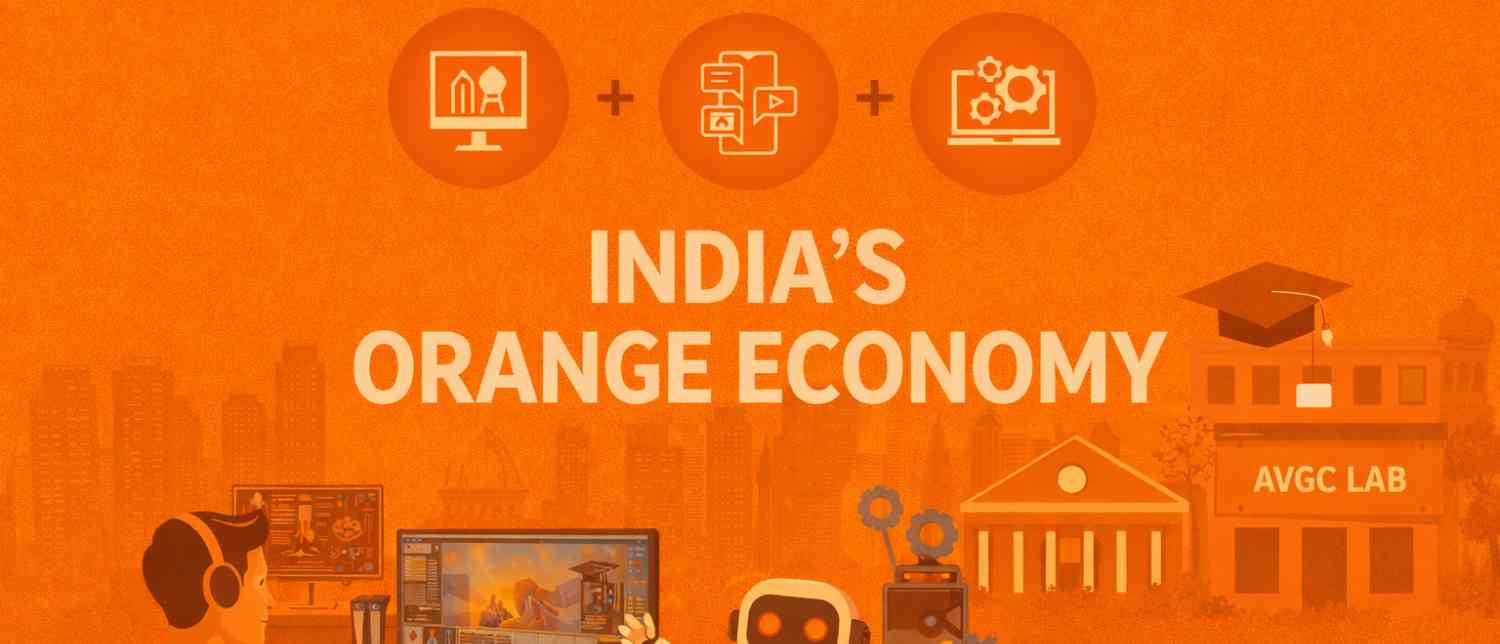
When Finance Minister Nirmala Sitharaman presented the Union Budget 2026–27, one term stood out and quickly began trending across digital platforms: the “Orange Economy.”
At first glance, it may sound like a catchy phrase. But its inclusion in the Budget speech marks a significant shift in how India views creativity, digital culture, and content-driven industries. For a country with over 100 million digital content creators and nearly 65% of its population under the age of 35, the recognition of the Orange Economy signals that creativity is no longer seen as a side pursuit — it is now positioned as a pillar of economic growth.
So what exactly is the Orange Economy? Why did it find mention in the Economic Survey 2025–26? What has Budget 2026 promised? And how does this affect content creators, gamers, designers, and India’s rapidly expanding AVGC (Animation, Visual Effects, Gaming, and Comics) sector?
What Is the Orange Economy?
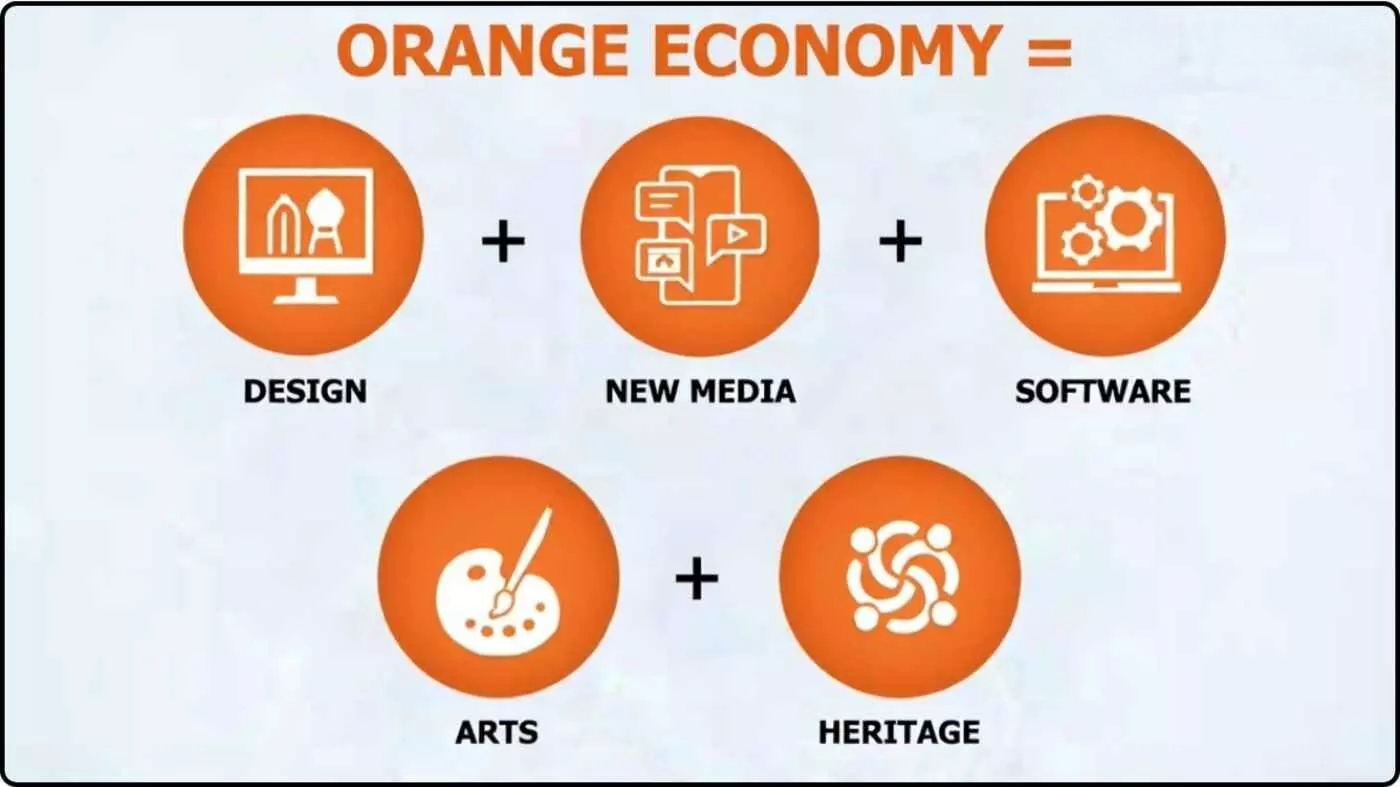
The Orange Economy, also known as the Creative Economy, refers to industries that derive their value primarily from ideas, creativity, cultural expression, technology, and intellectual property, rather than from physical goods or traditional manufacturing.
In simple terms, it includes sectors where imagination and innovation generate economic value.
Industries under the Orange Economy umbrella include:
-
Animation, Visual Effects, Gaming & Comics (AVGC)
-
Film, music, and digital storytelling
-
Advertising and design
-
Fashion
-
Publishing
-
Software tools that enable content creation
-
Video games
-
Cultural tourism and live entertainment
Unlike traditional industries that rely on natural resources or large-scale manufacturing, the Orange Economy thrives on intellectual capital, artistic expression, and digital content.
The concept was popularised globally to demonstrate how cultural heritage and creativity can drive sustainable economic development. In India’s context, it uniquely blends storytelling traditions, technological advancement, and demographic advantage into a forward-looking economic strategy.
Why the Orange Economy Matters in India
India today hosts one of the largest creator ecosystems in the world. With more than 100 million digital content creators, the country has witnessed an explosion of vloggers, influencers, animators, gaming designers, musicians, digital artists, and niche storytellers.
But this growth is not accidental.
Two structural factors are driving this momentum:
1. A Young Demographic Advantage
Approximately 65% of India’s population is under 35 years old. This makes India one of the youngest major economies globally. Millions enter the job market each year — a scale that traditional industries alone cannot absorb.
Creative and digital industries offer a scalable employment avenue that aligns with youth interests and digital habits.
2. Digital Infrastructure and Affordable Internet
The rapid expansion of affordable internet and smartphone access has turned content creation into a mainstream career path. Today, monetisation happens across multiple platforms, and creators are building full-time careers around digital storytelling, gaming, design, and animation.
Importantly, this shift is not limited to social media influence. It extends to formal sectors such as:
-
Gaming art and development
-
Film VFX and post-production
-
Immersive media
-
Digital advertising
-
Creative software production
India already plays a global role as a creative talent hub in many of these segments.
_1770797984.png)
What Budget 2026 Has Promised for the Orange Economy
In her ninth consecutive Budget presentation, Finance Minister Nirmala Sitharaman made a direct policy commitment to strengthen India’s creative industries.
1. AVGC Content Creator Labs in Schools and Colleges
The most significant announcement was the proposal to support the Indian Institute of Creative Technologies (IICT), Mumbai, in establishing:
-
AVGC Content Creator Labs in 15,000 secondary schools
-
AVGC labs in 500 colleges nationwide
In her Budget speech, Sitharaman stated:
“India's animation, visual effects, gaming and comics sector is a growing industry, projected to require 2 million professionals by 2030. I propose to support the Indian Institute of Creative Technologies, Mumbai, in setting up AVGC content creator labs in 15,000 secondary schools all over the country and 500 colleges.”
This is a direct attempt to build skills early and align education with future industry demand.
2. Preparing for 2 Million Future Jobs
The AVGC sector is projected to require 2 million skilled professionals by 2030. By integrating creative training into school and college curricula, the government aims to close this upcoming talent gap.
The initiative is expected to strengthen:
-
Employment generation
-
Startups in the creative economy
-
Innovation in animation, gaming, and digital storytelling
3. Strengthening Design Education Infrastructure
The Budget also proposes the creation of a new National Institute of Design (NID) in eastern India, recognising the rapid growth of the design sector and the shortage of trained professionals.
This move signals that creative education is no longer peripheral — it is becoming institutionalised and regionally distributed.
What the Economic Survey 2025–26 Says About the Orange Economy
The mention of the Orange Economy in the Budget was not isolated. It draws heavily from insights in the Economic Survey 2025–26, which identified the creative economy as a major emerging driver of:
-
Employment
-
Urban services
-
Tourism growth
The Survey positioned the Orange Economy as a critical component of India’s services-led growth model, especially capable of absorbing a large workforce that traditional manufacturing may struggle to accommodate.
Live Entertainment as a High-Multiplier Sector
A major highlight was the live entertainment or concert economy, described as a high-multiplier activity.
Key data points include:
-
India’s live entertainment industry crossed ₹10,000 crore in 2024.
-
Beyond ticket sales, it stimulates demand for:
-
Hospitality
-
Transport
-
Logistics
-
Local services
-
Globally, creative industries contribute between 0.5% and 7% of GDP.
In the United States alone, live music supported more than 900,000 jobs and generated over $130 billion in 2019.
The Survey suggests that India could unlock similar multiplier effects if regulatory and infrastructure bottlenecks are addressed.
Structural Challenges Identified
While the Orange Economy is expanding, the Economic Survey highlights several structural hurdles:
-
Regulatory complexity
-
Infrastructure shortages
-
Venue shortages for live entertainment
-
Operational constraints
-
Shortage of trained designers and creative professionals
These constraints currently limit the sector’s full potential.
What Can Be Done to Boost the Orange Economy?
The Economic Survey recommends shifting the perception of creative industries from “niche entertainment” to a core urban growth and tourism strategy.
Key proposals include:
1. Single-Window Permission Mechanism
Simplifying approval processes for live entertainment events through a single-window clearance system could reduce delays and compliance burdens.
2. Infrastructure Access
Opening heritage monuments and culturally significant spaces for select events can enhance India’s appeal as a global cultural destination.
3. Skill Development
Addressing shortages in trained designers, animators, and creative professionals is essential to support rapid expansion.
Budget 2026’s AVGC labs directly align with this recommendation.
Technology and Emerging Sectors: Expanding the Orange Economy
The Budget emphasised that AI and emerging technologies are central to building citizen capacity and enabling inclusive growth.
Key initiatives supporting this technology push include:
-
AI Mission
-
National Quantum Mission
-
Anusandhan National Research Fund
-
Research, Development and Innovation Fund
Emerging technologies were positioned as crucial in expanding the Orange Economy’s potential.
Technology’s role was highlighted in:
-
Benefiting farmers
-
Supporting women in STEM
-
Helping youth upskill
-
Empowering persons with disabilities
One notable announcement was ‘Bharat-VISTAAR’, a multilingual AI-based platform integrating AgriStack portals with ICAR practices to improve farm productivity and decision-making.
Additionally, the government proposed establishing a high-powered “Education to Employment and Enterprise” Standing Committee to assess how AI and emerging technologies will impact jobs and skills.
This signals that creativity and technology are being treated as interconnected growth drivers.
PM Modi’s Vision: Orange Economy at WAVES 2025
The idea of the Orange Economy has also been endorsed at the highest political level.
During his inaugural address at the WAVES 2025 (World Audio Visual and Entertainment Summit), Prime Minister Narendra Modi highlighted India’s rising role in the global creative economy.
He emphasised the importance of creativity, culture, and intellectual property in shaping India’s economic future — reinforcing the concept that storytelling and innovation are national assets.
Why Budget 2026 Is a Turning Point for Creators
The recognition of the Orange Economy in Budget 2026 marks a deeper philosophical shift.
For decades, creative careers were often seen as informal, uncertain, or secondary. Now, they are being positioned as:
-
Formal employment pathways
-
Export-oriented growth sectors
-
Institutional priorities
-
Drivers of urban development and tourism
1. New Career Pathways
Students across 15,000 schools and 500 colleges will gain exposure to animation, gaming, VFX, and digital content creation — opening doors beyond conventional professions.
2. Entrepreneurship and Startups
Creative skills in digital storytelling and design can fuel startups and IP-based businesses.
3. Global Competitiveness
India’s creators and studios are well-positioned to serve global markets, attract international investment, and build world-class intellectual property.
4. Inclusive Growth
By integrating creative labs nationwide, opportunities expand beyond metropolitan centres, enabling talent from smaller towns to participate in high-growth industries.
The Bigger Picture: From Hobby to Economic Infrastructure
Budget 2026 makes one message clear: creativity is economic infrastructure.
The Orange Economy is no longer a buzzword. It represents:
-
Youth potential
-
Cultural strength
-
Technology-driven innovation
-
Services-led economic expansion
With projections of 2 million AVGC jobs by 2030, a ₹10,000 crore live entertainment industry, and a massive creator base exceeding 100 million individuals, India’s creative economy is not emerging — it is accelerating.
The challenge now lies in execution: building skills, easing regulations, expanding infrastructure, and ensuring inclusive access.
If successfully implemented, the Orange Economy could become one of the defining engines of India’s next growth chapter — transforming cultural expression into sustainable economic power.
For millions of creators, designers, gamers, animators, and storytellers across India, Budget 2026 is more than a policy document. It is recognition.
And perhaps, the beginning of a creative revolution rooted in both heritage and innovation.
With inputs from agencies
Image Source: Multiple agencies
© Copyright 2025. All Rights Reserved. Powered by Vygr Media.