
 By
By 
The American dream has long been a powerful motivator for Indian technology professionals. For generations of engineers, software developers and IT specialists, an opportunity to work in the United States has represented more than a better salary. It has promised career advancement, international exposure, financial security and the possibility of building a permanent life in one of the world's most influential economies.
But that dream has become increasingly uncertain.
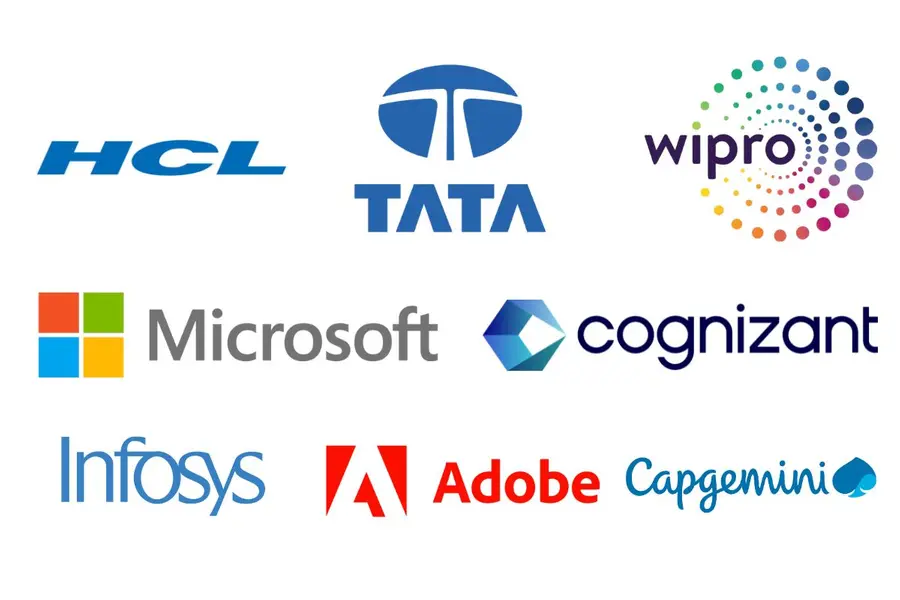
The US administration's decision to suspend employment-based green card processing through the Permanent Labour Certification programme, commonly known as PERM, for eight major technology companies has sent shockwaves through the global technology industry. Microsoft, Adobe, Cognizant, Infosys, Tata Consultancy Services (TCS), Wipro, HCL Technologies and Capgemini are among the companies affected. The suspension covers new applications as well as pending cases, creating uncertainty for foreign professionals who have spent years working in the United States and waiting for permanent residency.
For thousands of Indian IT workers, this is not simply another immigration policy announcement. It is a disruption to carefully planned careers, family decisions and long-term financial commitments.
Yet the bigger question goes beyond individual hardship: what happens when a country's technology industry becomes too dependent on immigration policies controlled by another government?
The PERM suspension should prompt India to reconsider its dependence on the American technology market, strengthen its domestic innovation ecosystem and rethink the assumption that professional success must involve moving abroad. It should also encourage Washington to recognise that restricting access to international talent can carry economic costs of its own.
What the US PERM Suspension Means for Indian IT Professionals
The PERM programme is a crucial step in the employment-based green card process. It generally requires an employer to demonstrate that there are insufficient qualified, willing and available American workers for a particular position and that employing a foreign worker will not adversely affect the wages and working conditions of similarly employed US workers.
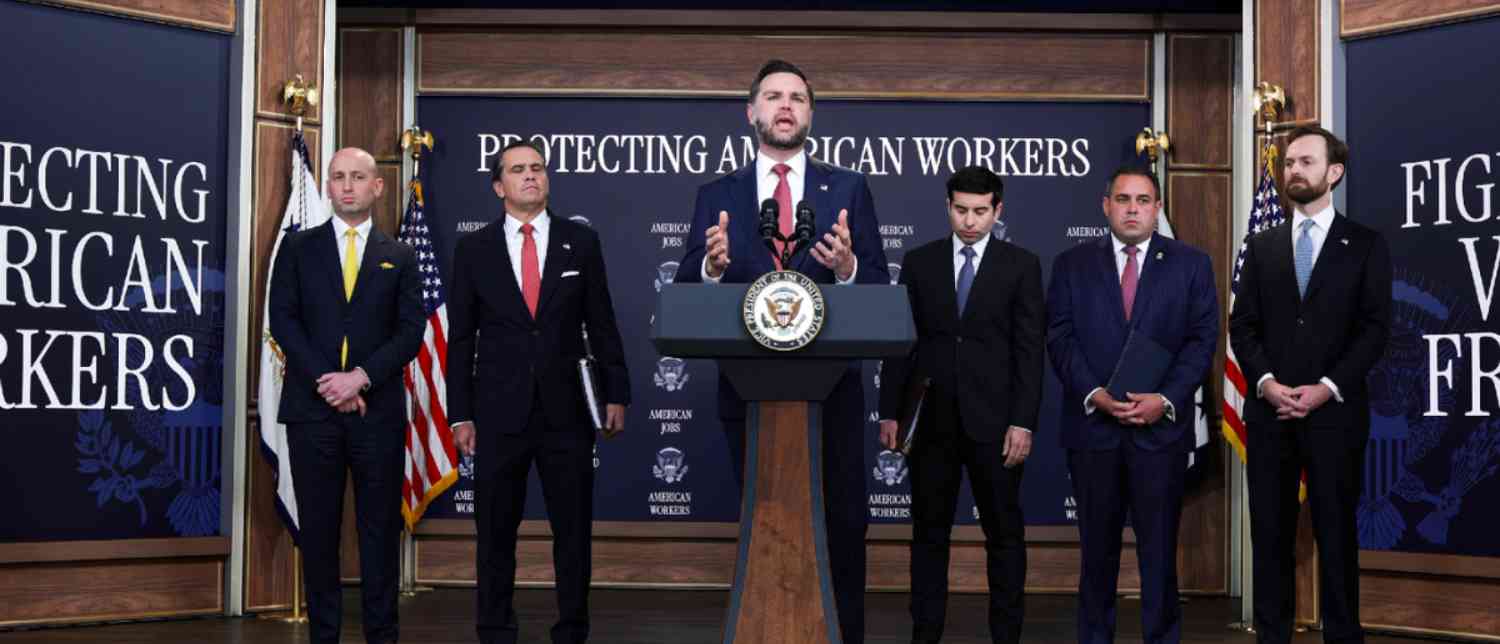
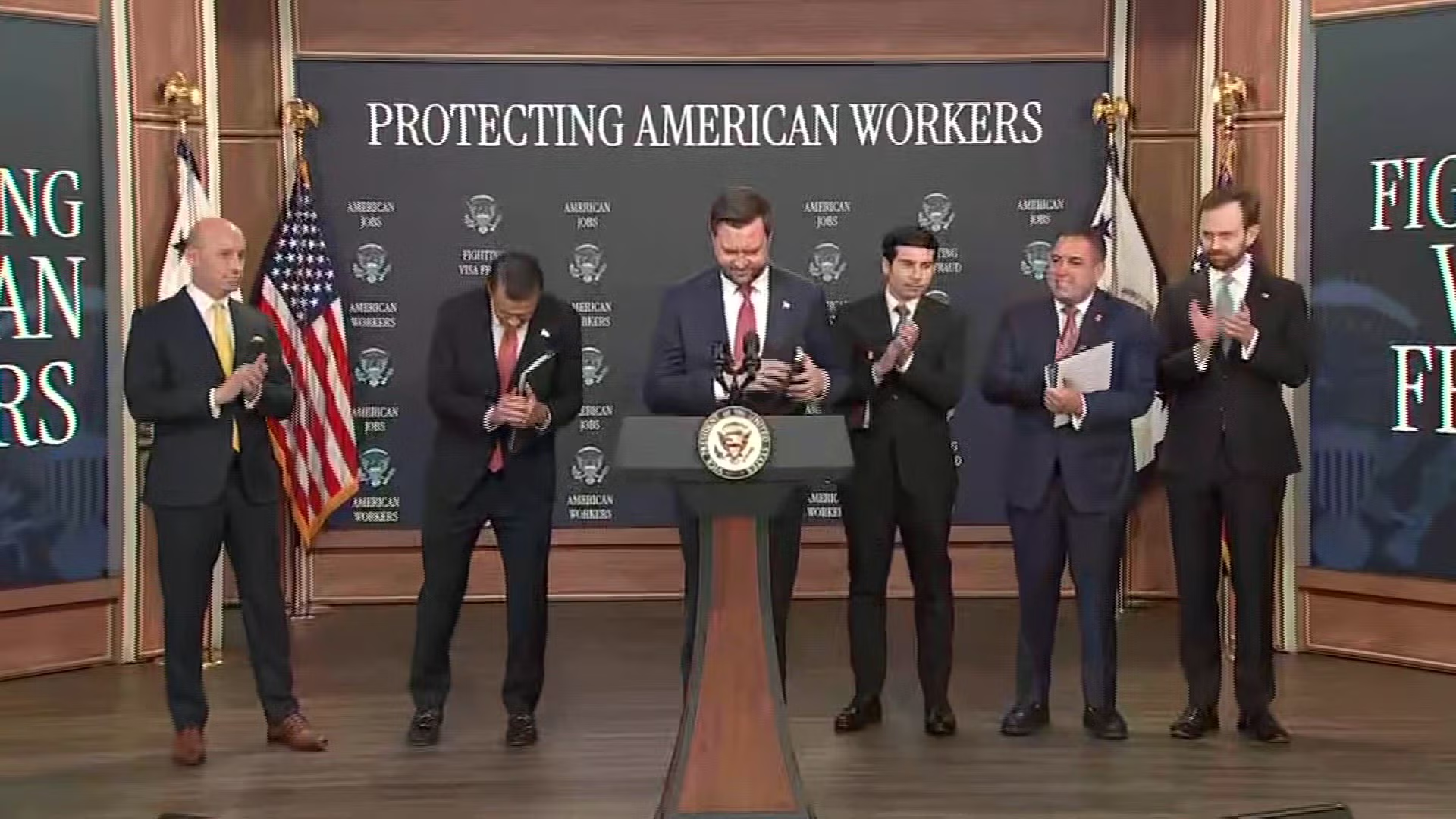
The suspension means the affected companies cannot proceed with new PERM applications or have their pending applications processed while the restrictions remain in force. The administration has justified its action by pointing to alleged abuses of employment-based immigration programmes and concerns about protecting American workers. US officials have also raised questions about foreign hiring practices at a time when American employees are facing layoffs.
These concerns deserve scrutiny. If an employer lays off American workers while seeking permission to recruit foreign employees for comparable positions, regulators have legitimate reasons to investigate. Immigration programmes should not be used to undermine wage protections or circumvent employment rules.
However, allegations must be examined through transparent procedures, and accountability should be based on evidence rather than broad assumptions about foreign workers.
The immediate distinction is equally important: the suspension does not automatically cancel existing H-1B visas or previously approved green cards. Nevertheless, professionals with pending PERM applications face delays, while those who have yet to begin the process may find their route to permanent residency blocked through their current employers.
For Indian employees, the consequences can be particularly serious because employment-based green card backlogs have already made the journey to permanent residency exceptionally long.
An employee may spend years working for a company, paying taxes, raising a family and building professional relationships in the United States, only to discover that a policy change has made the next stage of the immigration process uncertain.
The result is a troubling imbalance: professionals are expected to make long-term commitments, while the policy environment governing their futures can change abruptly.
Why This Is Bigger Than an Immigration Dispute
It would be easy to treat the suspension as a narrow disagreement between the US government and a group of technology companies. That would miss the broader implications.
Indian IT services firms have built substantial businesses around a combination of offshore delivery, international client relationships and the deployment of specialised personnel to overseas markets. For decades, this model has enabled Indian companies to provide technology services at competitive costs while giving employees access to international assignments.
The United States has been central to that growth. American companies have benefited from Indian engineering talent, while Indian technology firms have secured revenue, expanded their global operations and helped establish India as a major technology services destination.
This relationship has never been entirely one-sided. American businesses have gained access to specialised skills, operational flexibility and global delivery networks. Indian professionals have gained employment opportunities, expertise and international experience.
The current restrictions expose the vulnerability within this arrangement.
When immigration becomes less predictable, companies must reconsider how they staff projects, retain experienced employees and fulfil client commitments. Workers may become more inclined to change employers, seek opportunities in other countries or return to India. Businesses may respond by increasing offshore delivery, expanding local US hiring or accelerating automation.
In other words, an immigration restriction can gradually become a business-model problem.
The inclusion of Microsoft and Adobe alongside Indian IT services companies also suggests that the issue cannot be understood solely as a dispute with outsourcing firms. It reflects a wider political sensitivity surrounding foreign recruitment, domestic layoffs and the employment of international professionals.
For India, the lesson is clear: a successful global industry cannot afford to leave a critical part of its workforce strategy dependent on a single country's changing political priorities.
India Must Defend Its Workers Without Defending Corporate Misconduct
The Indian government faces a delicate diplomatic challenge.
Indian professionals form a significant part of the US technology workforce, and restrictions affecting employment-based immigration can have consequences for families, businesses and bilateral relations. New Delhi therefore has a legitimate reason to raise concerns about the fairness, transparency and proportionality of the suspension.
However, a strong response must avoid turning the issue into an unconditional defence of every company involved.
If investigations uncover genuine violations, the companies responsible should be held accountable. Protecting Indian workers does not require dismissing legitimate concerns about wage practices, recruitment procedures or the displacement of domestic employees.
India should instead insist on due process, clear explanations, access to legal remedies and a time-bound review of the restrictions.
The government should also press for practical safeguards for workers whose applications have been frozen through no fault of their own. These could include clearer guidance on pending cases, appropriate protection of immigration priority dates where legally possible and transparent procedures for employees seeking alternative sponsorship.
Diplomacy must be firm, but it must also be strategic.
A policy that affects Indian professionals should not be treated as an isolated administrative matter when it has implications for trade, technology cooperation and the wider bilateral relationship. At the same time, retaliatory measures that damage India's own businesses or unnecessarily escalate tensions could prove counterproductive.
The objective should be to protect Indian interests, not merely to deliver a dramatic political response.
India must recognise that its leverage will come not only from diplomatic protests but also from the value it brings to the global economy, the strength of its domestic technology ecosystem and its ability to offer international businesses credible alternatives.
The Risks to India's Traditional IT Services Model
For Indian IT companies, the PERM freeze raises uncomfortable questions about a model that has delivered decades of growth.
Traditionally, many firms have recruited extensively in India, deployed some employees to client locations in the United States and used international assignments to support complex projects and maintain close relationships with customers.
This arrangement has helped companies combine large offshore teams with smaller onsite groups responsible for coordination, implementation and client engagement.
But when visa and green card pathways become less predictable, the economics of that model change.
Companies may face higher staffing costs, greater employee turnover and difficulties retaining professionals with specialised knowledge of clients and projects. Employees who believe their long-term residency prospects have weakened may seek opportunities elsewhere, potentially taking valuable experience with them.
There is also a reputational risk. If clients perceive a vendor's workforce strategy as vulnerable to sudden policy changes, they may reconsider how much work should depend on personnel who must travel internationally.
The answer, however, is not to abandon the US market. It is to reduce the extent to which business continuity depends on the physical movement of employees across borders.
Indian IT firms should expand local hiring in the United States where commercially justified, strengthen delivery centres closer to clients and develop more sophisticated offshore capabilities. They should also invest in compliance systems that can demonstrate adherence to immigration and wage rules.
Independent audits, transparent reporting and clear communication with employees would help companies establish credibility at a time when foreign hiring is under political scrutiny.
Above all, firms must stop treating immigration sponsorship as a reliable long-term employee-retention mechanism. Workers should stay because their employers offer compelling careers, meaningful responsibilities, competitive compensation and opportunities to develop—not because changing jobs might jeopardise a long-awaited green card.
AI and India's Global Capability Centres Offer a New Path
The disruption also arrives at a time when artificial intelligence is reshaping the technology industry.
Basic coding and repetitive technical tasks are increasingly being automated, while demand is growing for professionals who can work with AI systems, evaluate their outputs, solve complex problems and understand the industries in which technology is deployed.
This transformation presents both a threat and an opportunity.
Indian IT companies that continue to rely heavily on labour-intensive service delivery may face pressure from automation, tighter margins and changing client expectations. At the same time, India has an opportunity to move up the technology value chain by developing stronger capabilities in AI engineering, cybersecurity, cloud infrastructure, data governance, product development and advanced research.
Global Capability Centres (GCCs) are especially important to this transition.
These centres, established by multinational companies to manage technology, research, analytics and other strategic operations, are increasingly becoming more than back-office facilities. Many now undertake product engineering, innovation, enterprise technology development and specialised AI work.
India's expanding GCC ecosystem demonstrates that high-value technology careers do not necessarily require employees to relocate permanently to the United States.
Domestic startups provide another avenue. A stronger startup ecosystem can create opportunities in software products, fintech, enterprise AI, digital infrastructure and other emerging fields. These businesses can also help Indian professionals move from executing technology projects designed elsewhere to building products and intellectual property of their own.
But this shift will not happen automatically.
India needs sustained investment in research, high-quality education, advanced computing infrastructure and industry-academia partnerships. Universities must move beyond narrow coding instruction and equip students with engineering fundamentals, critical thinking, domain expertise and the ability to use AI responsibly.
Employers, meanwhile, must invest in reskilling existing workers and creating meaningful opportunities for early-career professionals.
The ambition should be to make India a destination where world-class technology is designed, developed and commercialised—not merely a place from which skilled workers are recruited for overseas assignments.
The American Dream Is Changing, Not Disappearing
It would be a mistake to suggest that Indian professionals should abandon the United States altogether.
America remains a major centre for research, entrepreneurship, investment and technological innovation. International experience can be valuable, and skilled migration can benefit both the destination country and the professional moving there.
The problem is not the desire to work abroad. It is the assumption that a successful technology career must depend on one destination, one employer-sponsored immigration route or one country's political climate.
The PERM suspension reinforces the importance of career flexibility.
Professionals affected by the restrictions should assess their individual immigration status with qualified legal advisers rather than making decisions based on speculation. Depending on their circumstances, they may need to explore alternative employers, different destinations or opportunities in India. A change of employer does not automatically transfer an existing green card application, and the available options vary according to the stage of the process.
For professionals who return to India, the transition should not be framed as failure.
International experience can be valuable in India's expanding technology sector, particularly in leadership, product development, research and AI-driven business transformation. Companies and policymakers should work to ensure that returning professionals can apply their skills in roles that offer genuine responsibility and long-term growth.
At the same time, not everyone will find the transition easy. Family commitments, financial obligations, differences in compensation and the disruption of established lives are real concerns. It would be unfair to dismiss these difficulties by suggesting that India's growth automatically compensates for every lost opportunity.
The right response is to expand choices so that workers can make decisions based on their aspirations rather than immigration pressure.

Washington Could Win a Political Battle but Lose Global Talent
The US administration's emphasis on protecting American workers addresses a politically powerful concern. Governments have a responsibility to enforce labour laws and ensure that recruitment programmes serve their intended purposes.
Yet restrictions also carry trade-offs.
When experienced professionals face prolonged uncertainty, they may choose to build their careers elsewhere. Canada, Europe, the Gulf and India could benefit if skilled workers redirect their ambitions towards more predictable opportunities.
American employers may also face difficulties retaining people with specialised knowledge, particularly in areas where qualified talent is scarce. Research, engineering and advanced technology development often require years of experience, institutional knowledge and collaboration.
Replacing experienced employees is not always simple, and restricting the movement of talent does not automatically create the skills that businesses need.
There is a further contradiction in demanding stronger domestic technology capabilities while making it harder for companies to recruit and retain specialised international workers. The two objectives are not necessarily incompatible, but they require careful policy design rather than sweeping assumptions.
A transparent immigration system should protect domestic workers while recognising legitimate skill shortages, encouraging investment and providing predictable procedures for employers and employees.
If the United States wants to remain an attractive destination for global talent, the credibility of its rules matters. A policy environment perceived as arbitrary may encourage businesses and professionals to diversify their plans.
Ultimately, talent is mobile. Countries that create attractive conditions for innovation and professional growth are better positioned to benefit from that mobility.
India's Opportunity Is to Build Strength at Home
The most important lesson from the US green card suspension is not that India should retaliate or that the American technology market has become irrelevant. It is that India must reduce the vulnerabilities created by excessive dependence.
That requires action on several fronts.
First, the government should make skilled immigration and worker protection a consistent part of bilateral engagement with the United States. It should seek transparency, legal clarity and fair treatment for affected professionals while supporting legitimate enforcement against proven violations.
Second, Indian technology companies must diversify their delivery models, improve compliance and reduce their dependence on immigration-linked employee retention.
Third, policymakers and businesses should accelerate the development of domestic technology capabilities, particularly in AI, advanced engineering, product innovation and research.
Finally, India's education and employment systems must become better at preparing professionals for a technology economy in which both international mobility and traditional software jobs may be less predictable.
The goal should not be to discourage Indians from pursuing opportunities overseas. It should be to ensure that those who want to build their futures in India can find equally meaningful opportunities to contribute, innovate and advance.
A Moment to Rethink, Not Retreat
The US PERM suspension is a warning about the risks of building careers and business strategies around immigration policies that can change with political priorities. It exposes the uncertainty facing Indian IT professionals, the vulnerabilities of India's traditional IT services model and the need for a more resilient approach to global talent mobility.
But it also creates an opportunity to accelerate a transition that India should have been pursuing more aggressively: from being a major supplier of technology labour to becoming an even stronger centre of technological innovation.
India must defend its workers, demand fair treatment and engage Washington with strategic resolve. Its technology companies must modernise their workforce strategies, and its policymakers must invest in the skills, institutions and infrastructure needed to support high-value technology jobs.
The American dream may remain meaningful for millions of Indians. But it should be one option among many, not the foundation on which an entire professional future depends.
A country's technological strength is ultimately measured not only by how many of its engineers work abroad, but by how many opportunities it can create for them at home.
For India, the challenge is no longer simply to help its brightest professionals reach America. It is to build an economy in which they have compelling reasons to stay, return, invest and create.
That is how a moment of immigration uncertainty can become a turning point for India's technology future.
© Copyright 2026. All Rights Reserved. Powered by Vygr Media.