 By
By 
A basketball court is meant to nurture dreams, discipline, and determination. For countless young athletes and children, it is a place where careers begin, and confidence grows. But over the past nine months, that space has repeatedly turned into a site of horror.
Four separate basketball pole collapse incidents, two claiming lives, two leaving victims with devastating spinal injuries, have exposed a disturbing pattern of negligence. These are not freak accidents. They are preventable infrastructure failures that have occurred despite repeated warnings, public outrage, and promises of action.
What makes these tragedies even more unsettling is that each incident should have served as a wake-up call. Instead, authorities have largely responded with temporary inquiries, suspensions, and assurances, while another child or athlete has gone on to become the next victim.
The bigger story is no longer about collapsing basketball poles. It is about a system where maintenance is ignored until tragedy strikes, accountability disappears after headlines fade, and young lives continue to pay the price.
Incident One: A Teenager's Death in Bahadurgarh
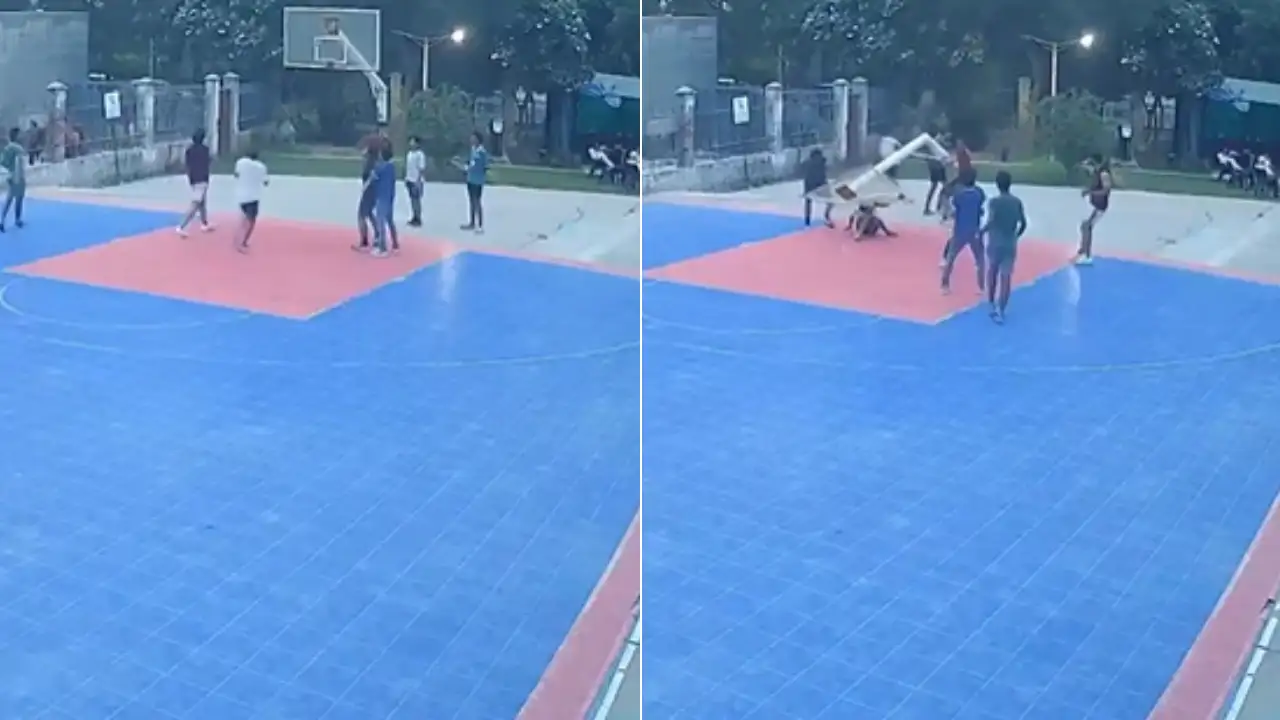
The first major warning came in Bahadurgarh, Haryana, where a 15-year-old basketball player, Aman, suffered catastrophic injuries after a basketball pole collapsed during practice. Despite being rushed for medical treatment, he later succumbed to his injuries. The incident shocked the sporting community and immediately raised uncomfortable questions about the condition of sports infrastructure being used by children every day.
Reports suggested that the pole's condition had become a matter of concern only after it had already taken a life. Families questioned whether routine inspections had ever been conducted and whether anyone had certified the equipment as safe before allowing children to practice beneath it.
Instead of being treated as an isolated tragedy, this should have triggered a nationwide audit of sports facilities. It did not.
Incident Two: National-Level Player Hardik Rathi Dies in Rohtak
Barely days later came an even more horrifying incident.
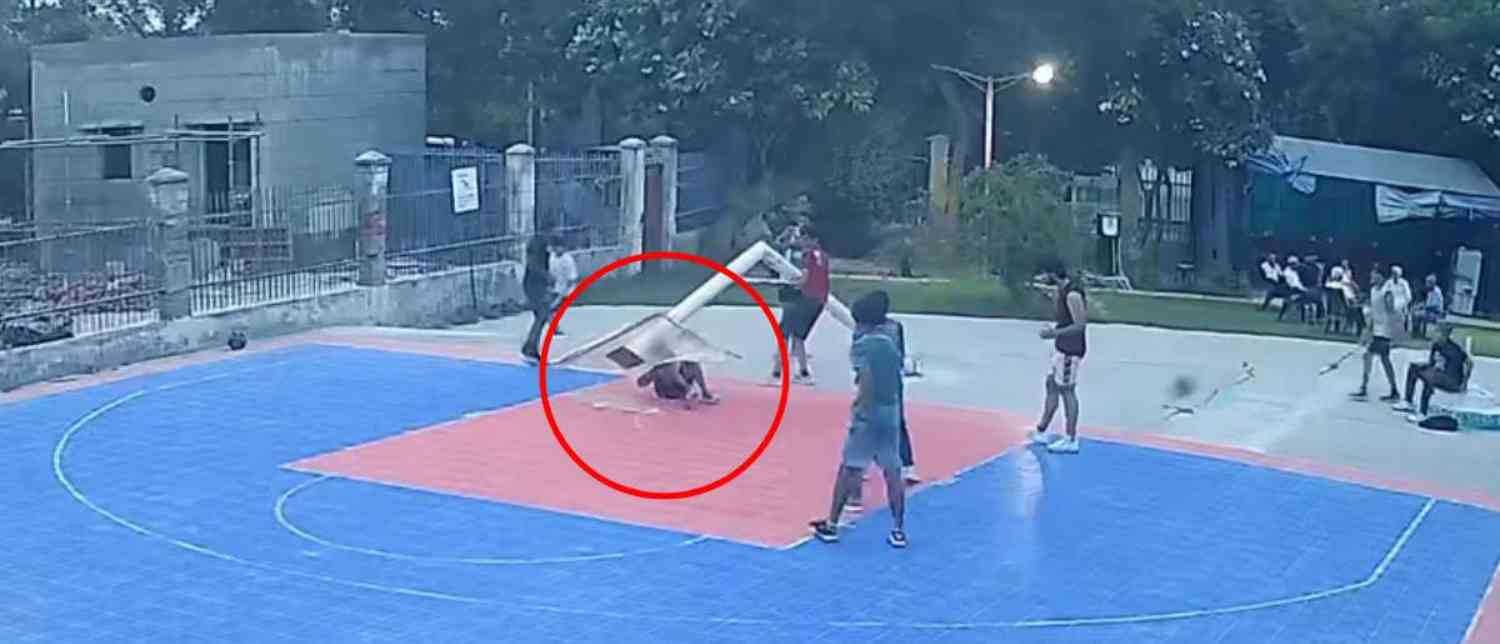
Sixteen-year-old national-level basketball player Hardik Rathi was practising at Lakhan Majra village in Rohtak when he attempted a routine move involving the basketball hoop. CCTV footage captured the terrifying moment an iron basketball pole suddenly gave way and crashed onto him. Despite immediate medical attention, Hardik could not be saved.
His death shattered not only his family but also India's sporting fraternity.
Even more disturbing were allegations from those familiar with the court. Family members and local players claimed the pole had been rusted for a long time and that concerns regarding its condition had allegedly been raised earlier. If those warnings were indeed ignored, then this was not merely equipment failure—it was administrative failure.
Following widespread outrage, authorities suspended a district sports officer, ordered investigations, and announced the removal of unsafe sports equipment across the state.
But announcements alone do not prevent future accidents. Maintenance does.
Incident Three: Gurugram Resident Suffers Severe Spinal Injuries
Months after the Haryana tragedies, another basketball pole collapsed—this time inside a residential society in Gurugram.
A 24-year-old man sustained multiple spinal fractures after the basketball structure reportedly collapsed while he was using the court. Residents alleged negligence in maintaining sports facilities and questioned whether proper inspections had ever been carried out before allowing residents to access the court.
Unlike the earlier cases involving young athletes, this incident occurred inside a private residential complex, highlighting a wider problem.
Unsafe basketball equipment is not confined to government stadiums.
Housing societies, schools, colleges, and local playgrounds often install heavy sports structures that receive little or no structural inspection for years. Rust, loose foundations, weak welding, and poor maintenance remain largely invisible until disaster strikes.
When a basketball pole weighing several hundred kilograms collapses, there is little chance for the person beneath it to escape.
Incident Four: Another Young Boy Suffers Spinal Fractures
The latest incident has once again brought the same questions back into public discussion.
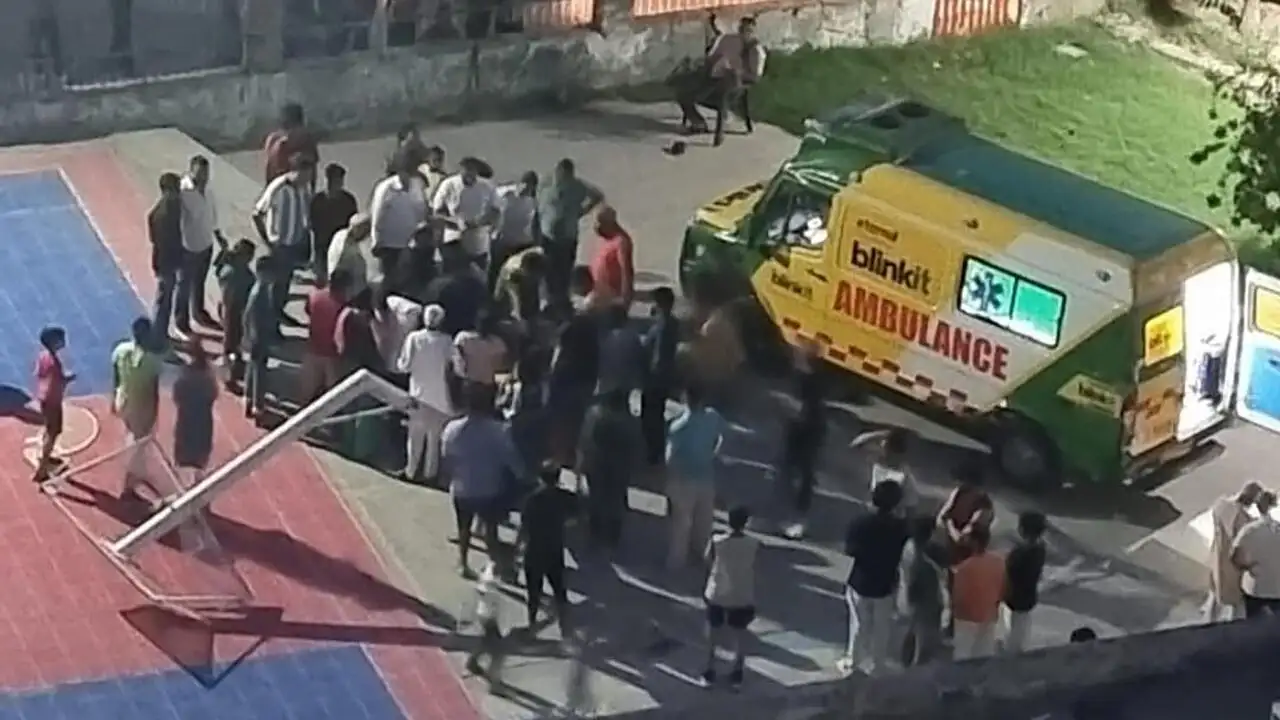
A young boy suffered multiple spinal fractures after a basketball pole allegedly collapsed during practice at a Gurugram housing society. Residents have once again alleged negligence on the part of those responsible for maintaining the sports infrastructure.
By now, the pattern is impossible to ignore.
Four serious basketball pole collapse incidents within just nine months have left behind a devastating trail, two young lives lost and two others suffering life-altering spinal injuries. These incidents occurred at different locations and under different authorities, yet they all point to the same underlying problem: neglected sports infrastructure and poor maintenance. When the same type of accident keeps recurring despite earlier tragedies, it can no longer be dismissed as an unfortunate coincidence. It becomes a glaring example of institutional negligence and systemic failure.
A Pattern That Cannot Be Dismissed
Authorities often describe such incidents as unfortunate accidents, but the pattern tells a different story. A true accident is unexpected and difficult to foresee. In these cases, however, the repeated collapse of heavy basketball poles across multiple locations suggests recurring failures in inspection, maintenance, and safety oversight rather than isolated bad luck.
Each case involves heavy sports infrastructure.
Each case raises questions about maintenance.
Each case has prompted allegations of ignored warnings or poor upkeep.
Each case resulted in either death or severe injury.
Most importantly, every new tragedy occurred after the previous one had already exposed the risks. That is what makes these incidents deeply troubling. Every collapse represents a missed opportunity to prevent the next.
Maintenance Is Not Optional
Basketball poles are engineered structures carrying enormous weight. Exposure to rain, humidity, corrosion, repeated stress, and poor installation can gradually weaken them.
Regular structural inspections are therefore not recommendations. They are basic safety requirements.
Schools routinely inspect buses to ensure student safety. Buildings undergo structural audits, and elevators require periodic safety certifications before they can continue operating. Heavy sports equipment should be held to the same standard because the risks are just as serious. A basketball pole weighing hundreds of kilograms can be just as dangerous as any other poorly maintained public structure if regular inspections are ignored.
Children and athletes trust that the facilities provided to them are safe. They should never have to inspect rusted joints or question whether the equipment above their heads has been maintained properly.
That responsibility belongs entirely to the authorities managing those facilities.
Temporary Suspensions Are Not Accountability
Following public outrage after the Haryana deaths, officials announced inquiries, suspended certain personnel, and ordered inspections of sports equipment.
Such actions may demonstrate immediate administrative response. But they do not necessarily establish accountability. Real accountability requires answers.
Who last certified these basketball poles?
Were maintenance records maintained?
Were complaints documented?
If complaints existed, why were they ignored?
Has anyone been held legally responsible after investigations concluded?
These questions rarely receive public answers. Instead, news cycles move on while families continue living with irreversible loss.
The Cost of Negligence Is Measured in Lives
Infrastructure failures rarely dominate headlines until someone dies. Yet every collapsed basketball pole reflects years of neglect rather than a single day's failure.
Budgets may be allocated. Projects may be inaugurated. Facilities may appear impressive from the outside.
But safety lies in routine inspections, preventive maintenance, engineering audits, and timely repairs, not ceremonial inaugurations or public announcements.
The saddest reality is that the victims in these four cases were doing exactly what society encourages young people to do.
They were playing sports. Training. Improving themselves and representing their schools, communities, and even the country.
Instead of medals, some returned home in ambulances. Others never returned at all.
India Needs a National Sports Infrastructure Safety Audit
The repeated basketball pole collapses should trigger reforms extending far beyond Haryana or Gurugram.
Every school, college, academy, public stadium, municipal playground, and residential sports facility should undergo mandatory structural inspections of basketball poles, football goalposts, volleyball systems, gym equipment, and other heavy sporting installations.
Inspection reports should be publicly available.
Maintenance schedules should be mandatory.
Unsafe equipment should be immediately sealed until repaired or replaced.
Most importantly, failure to maintain sports infrastructure should carry real administrative and legal consequences. Without enforceable accountability, safety advisories remain paperwork.
No Child Should Fear the Court
The true tragedy is not simply that four basketball poles collapsed within nine months. The greater tragedy is that each collapse followed another without producing meaningful systemic change.
Every incident exposed the same weaknesses. Every family demanded answers. Every investigation promised lessons.
Yet another pole still fell. Young athletes deserve facilities that reward talent—not punish it.
Parents should worry about their children's performance on the court, not whether the equipment above them will collapse.
Until routine safety becomes non-negotiable and accountability extends beyond temporary suspensions, these incidents will continue to be described as isolated tragedies when they are, in reality, symptoms of the same enduring failure.
The question is no longer whether authorities know there is a problem. After four devastating incidents in nine months, they do.
The only remaining question is how many more lives must be lost before action becomes permanent rather than reactive.
With input from agencies
Image Source: Multiple agencies
© Copyright 2026. All Rights Reserved. Powered by Vygr Media.