 By
By 
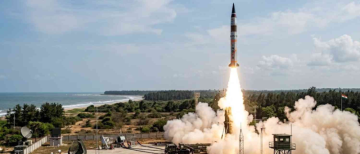
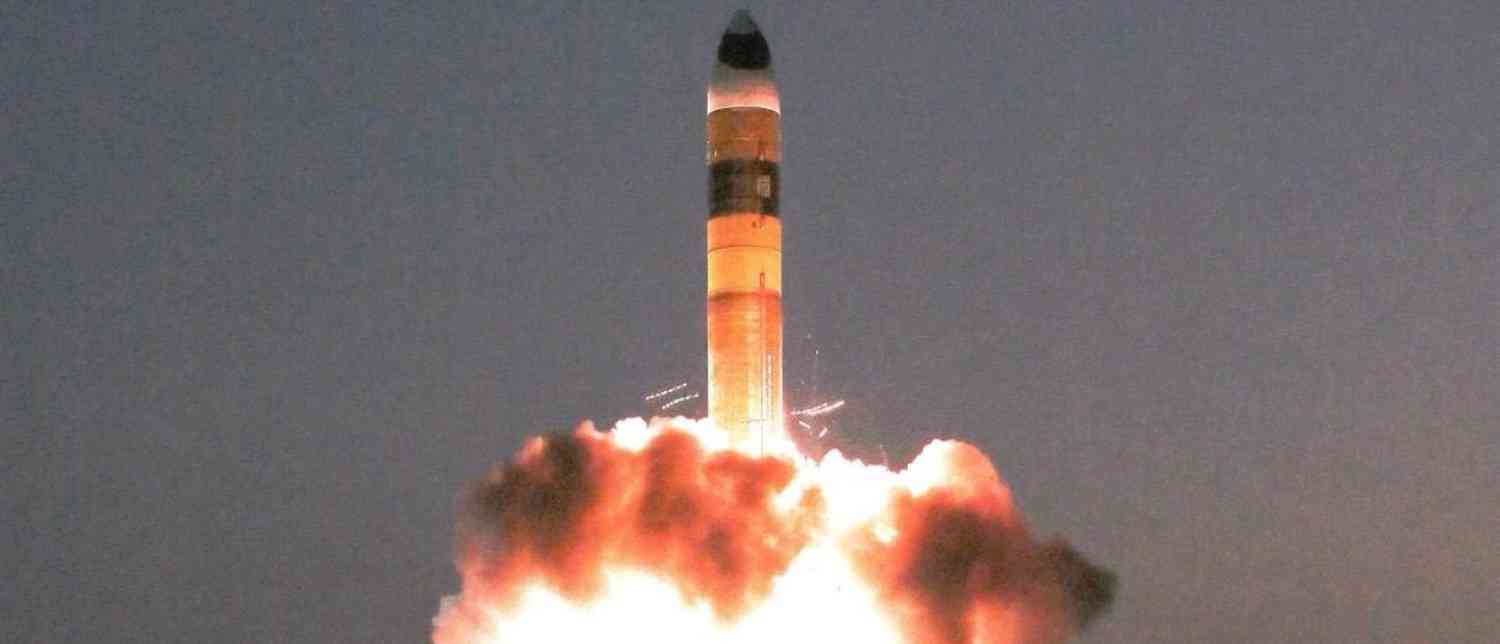
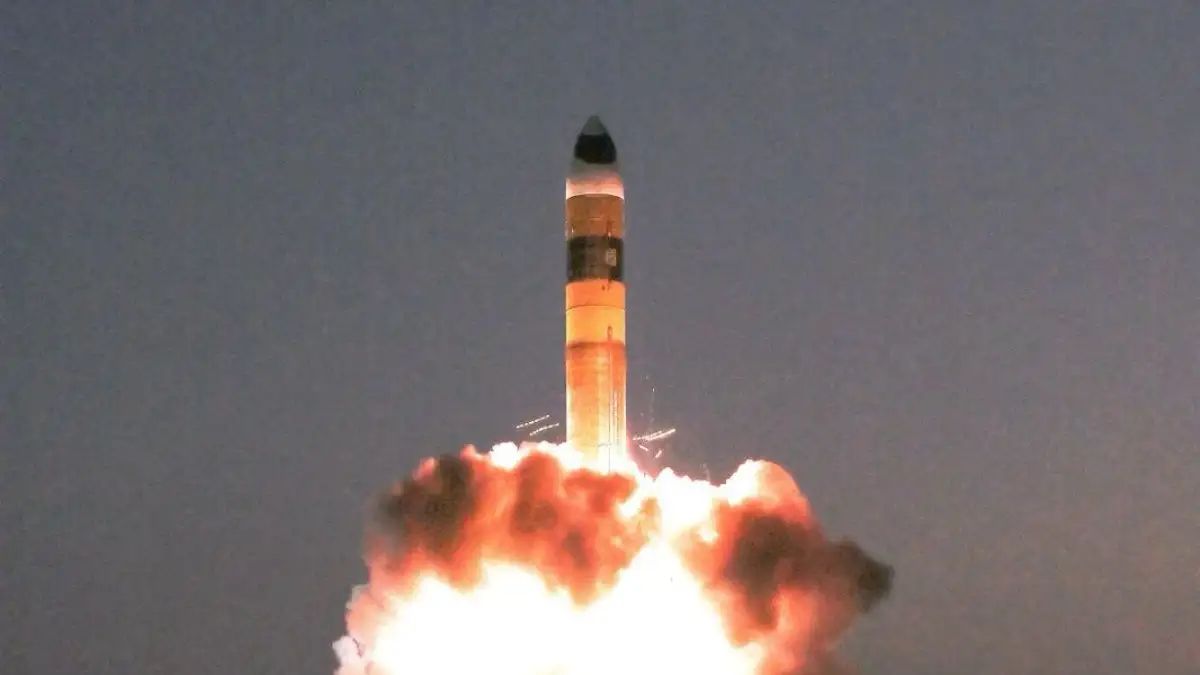
India has successfully conducted the flight trial of an advanced Agni ballistic missile equipped with Multiple Independently Targetable Re-entry Vehicle (MIRV) technology, marking a significant milestone in the country’s strategic defence and nuclear deterrence capabilities. The test was carried out from the Dr APJ Abdul Kalam Island off the Odisha coast on May 8 under the supervision of the Defence Research and Development Organisation (DRDO) and the Strategic Forces Command (SFC).
According to the Ministry of Defence, the advanced Agni missile was tested with multiple payloads aimed at different targets that were spatially distributed over a large geographical area in the Indian Ocean Region. The successful demonstration validated India’s ability to deploy MIRV technology — a capability possessed by only a handful of nations globally.
The test represents a major technological breakthrough for India’s indigenous missile programme and significantly strengthens the country’s strategic deterrence posture amid evolving regional security dynamics.
What Is MIRV Technology And Why It Matters
MIRV, or Multiple Independently Targetable Re-entry Vehicle technology, enables a single ballistic missile to carry several nuclear warheads that can strike different targets independently. Unlike traditional ballistic missiles that carry a single payload, a MIRV-equipped missile can release multiple warheads during flight, each programmed for separate destinations.
Defence experts consider MIRV capability a game-changing advancement because it dramatically increases the offensive and deterrence potential of strategic missile systems. A single missile launch can overwhelm enemy missile defence systems by attacking multiple targets simultaneously or by deploying decoys and manoeuvrable warheads.
With this successful test, India joins a select group of countries possessing operational or demonstrated MIRV capabilities, including the United States, Russia, China and France.
Advanced Agni Missile: India’s Most Sophisticated Strategic Weapon Yet
While officials referred to the system as an “Advanced Agni missile,” multiple reports and defence observers believe the test involved an upgraded variant of the Agni-5 missile platform integrated with MIRV technology.
The Agni-5 is India’s most advanced long-range ballistic missile currently known publicly. It is a three-stage, solid-fuel, nuclear-capable missile with a strike range of around 5,000 kilometres, capable of reaching targets deep inside Asia and beyond.
The missile has been developed indigenously by DRDO as part of India’s Agni missile programme. Previous Agni-5 tests validated improvements in navigation systems, guidance technology, warhead integration and propulsion systems.
The latest test adds another layer of sophistication by integrating MIRV capability with multiple payload deployment and precision targeting. According to reports, the missile was able to engage multiple targets spread over a vast geographical area, highlighting advancements in post-separation guidance and re-entry technologies.
Successful Trial Conducted From Odisha Coast
The missile was launched from the Integrated Test Range at Dr APJ Abdul Kalam Island in Odisha, one of India’s primary strategic missile testing facilities. The region has hosted numerous Agni missile trials over the years, including tests of Agni-1, Agni-4, Agni-5 and Agni-Prime systems.
The Ministry of Defence confirmed that the mission objectives were achieved successfully. Tracking systems, radars and monitoring infrastructure followed the missile trajectory throughout the mission, validating the performance of multiple payload deployment systems and guidance mechanisms.
Defence Minister Rajnath Singh congratulated DRDO scientists, the Strategic Forces Command and the broader defence ecosystem for the successful test. He described the achievement as a major boost to India’s strategic capabilities and indigenous defence technologies.
Strategic Implications For India
The successful MIRV test significantly enhances India’s nuclear deterrence architecture, especially in the context of regional strategic competition involving China and Pakistan. Defence analysts note that MIRV-equipped missiles improve second-strike capability and strengthen deterrence by ensuring survivability against missile defence systems.
China already possesses MIRV-capable intercontinental ballistic missiles, while Pakistan continues to modernise its tactical and strategic missile inventory. India’s successful demonstration narrows a critical technological gap and enhances the credibility of its nuclear triad.
The development also reflects India’s growing focus on indigenous strategic technologies under the broader push for defence self-reliance. Over the past decade, DRDO has accelerated the development of advanced missile systems, hypersonic technologies, next-generation delivery platforms and precision-guided weapons.
Evolution Of India’s Agni Missile Programme
India’s Agni missile programme has evolved substantially since the first Agni test in the late 1980s. The Agni family now includes several variants designed for different operational ranges and strategic roles.
The Agni-1 is a short-range ballistic missile with a strike range of over 700 kilometres and the ability to carry nuclear payloads.
The Agni-4 serves as an intermediate-range ballistic missile with advanced avionics and guidance systems.
Agni-Prime, one of the newest additions to the series, is a next-generation missile featuring lighter composite materials, canisterised launch capability and improved manoeuvrability. It has a strike range of around 2,000 kilometres.
However, Agni-5 remains the flagship of India’s strategic missile inventory because of its long range and advanced technological architecture. The addition of MIRV technology now pushes the platform into a much more sophisticated category of strategic weapon systems.
Global Context And Strategic Significance
Only a limited number of countries possess credible MIRV-equipped ballistic missile systems because of the technological complexity involved. MIRV technology requires mastery over miniaturised warheads, precise guidance systems, re-entry vehicle design, trajectory computation and advanced propulsion systems.
India’s successful test signals the maturity of its strategic missile ecosystem and its growing technological sophistication in the defence sector. Analysts say the achievement could have implications for regional deterrence calculations and long-term strategic stability in Asia.
The successful trial also comes at a time when countries worldwide are investing heavily in missile defence, hypersonic systems and next-generation strategic weapons. By demonstrating MIRV capability, India has showcased its ability to maintain credible deterrence despite advancements in anti-missile shield technologies.
Social Media Buzz And Defence Community Reactions
The successful test generated significant discussion across defence communities and social media platforms. Several defence enthusiasts and analysts described the development as a defining moment for India’s strategic programme.
Some observers speculated whether the tested missile could be a precursor to a future Agni-6 system or involve additional advanced technologies such as hypersonic glide vehicles. However, no official confirmation has been issued regarding those claims.
Defence watchers also noted that the government’s reference to the weapon simply as an “Advanced Agni missile” rather than specifically Agni-5 has fuelled speculation about the possibility of a new or upgraded strategic platform under development.
A Major Milestone For India’s Strategic Programme
The successful test of the advanced Agni missile with MIRV capability marks one of the most important milestones in India’s missile development journey in recent years. The achievement demonstrates not only technological progress but also the growing maturity of India’s indigenous defence research and strategic deterrence infrastructure.
With the ability to deploy multiple warheads from a single missile and strike geographically separated targets, India has strengthened its position among technologically advanced military powers possessing sophisticated strategic delivery systems.
With inputs from agencies
Image Source: Multiple agencies
© Copyright 2026. All Rights Reserved. Powered by Vygr Media.