 By
By 
In West Bengal’s turbulent political theatre, victory at the ballot box is only the beginning of a far more complicated story. As recent commentary across platforms suggests, the real test lies not in winning Bengal—but in transforming it. Two sharply argued opinion pieces converge on this central truth: Bengal is a state weighed down by its past, politically complex in its present, and deeply uncertain about its future.
At the heart of this dilemma is Kolkata itself—a city that once led India intellectually, culturally, and industrially, but now finds itself caught between memory and modernity. The political implications of that tension are profound.
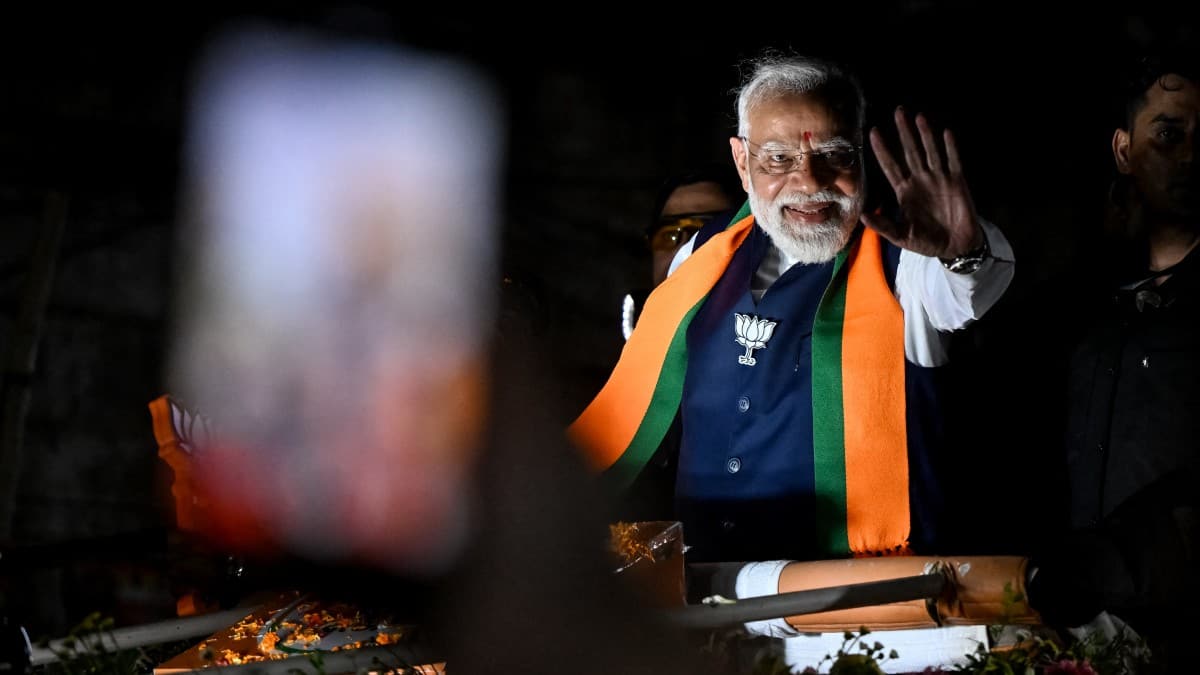
A state trapped between memory and momentum
Kolkata is not just a city; it is an idea. Historically, it was the capital of British India until 1911 and a hub of commerce, culture, and political thought. Over time, however, decades of political instability, labour unrest, and industrial decline eroded that dominance. Factories shut down, businesses migrated, and the city—once a powerhouse—began to stagnate.
Yet what replaced that industrial dynamism was not a new economic model, but a powerful cultural identity rooted in nostalgia. As one of the articles argues, Kolkata may live in the present, but it thrives on the past—drawing endlessly from icons like Rabindranath Tagore, Satyajit Ray, and a romanticised intellectual tradition.
This “nostalgia trap” is not merely cultural; it has political consequences. It shapes how voters think, how parties campaign, and how governance is judged. The state’s self-image—as a cultural and intellectual vanguard—often clashes with its economic reality.
The long shadow of history on governance
To understand why governing Bengal is harder than winning it, one must trace the roots of its structural challenges. The state’s decline did not happen overnight.
The Partition of 1947 disrupted Bengal’s integrated economic system, severing supply chains and triggering massive refugee inflows into Kolkata. This was followed by decades of political upheaval, including the rise of militant movements and prolonged communist rule from 1977 to 2011—the longest-serving democratically elected communist government in the world.
While the Left Front implemented significant land reforms and built a durable political base, critics argue it also fostered an environment hostile to private enterprise, contributing to industrial decline. Combined with frequent strikes and labour militancy, this pushed capital out of the state and entrenched economic stagnation.
Even after economic liberalisation in the 1990s, when cities like Hyderabad, Pune, and Gurgaon surged ahead, Kolkata struggled to keep pace. The result: a state that still carries the weight of past policy choices, even as it attempts to reimagine itself.
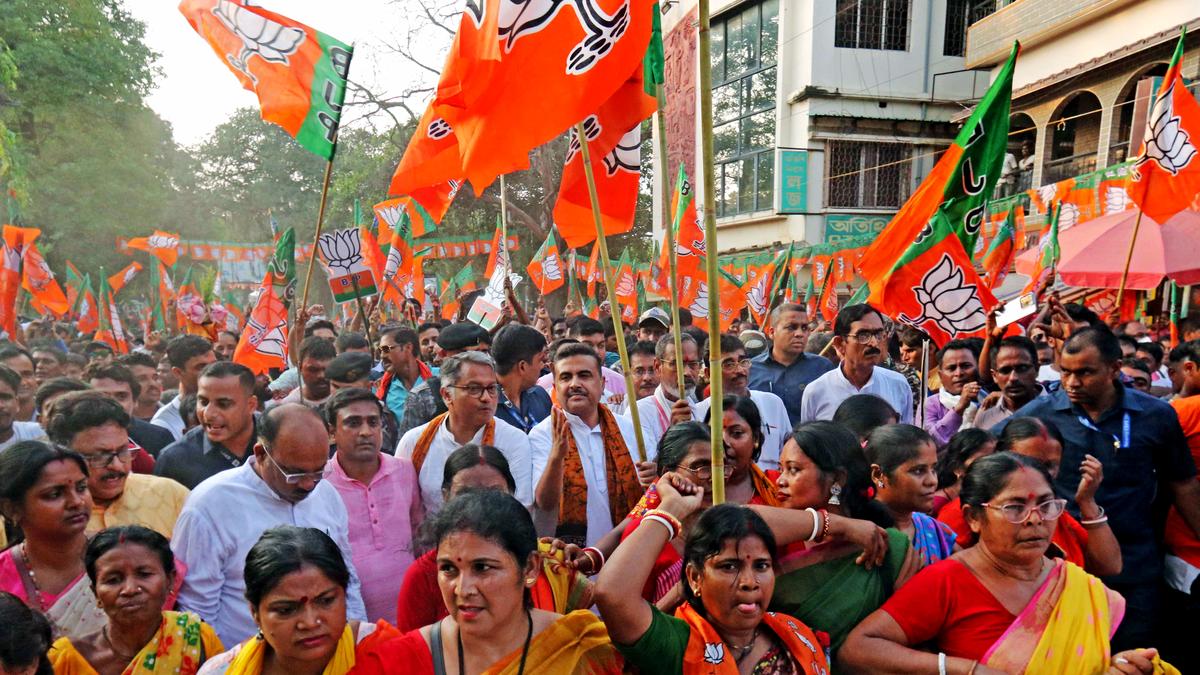
Electoral victory vs. structural transformation
Against this backdrop, the recent political narrative—highlighted in both articles—becomes clearer. Winning Bengal is an electoral challenge; transforming it is a structural one.
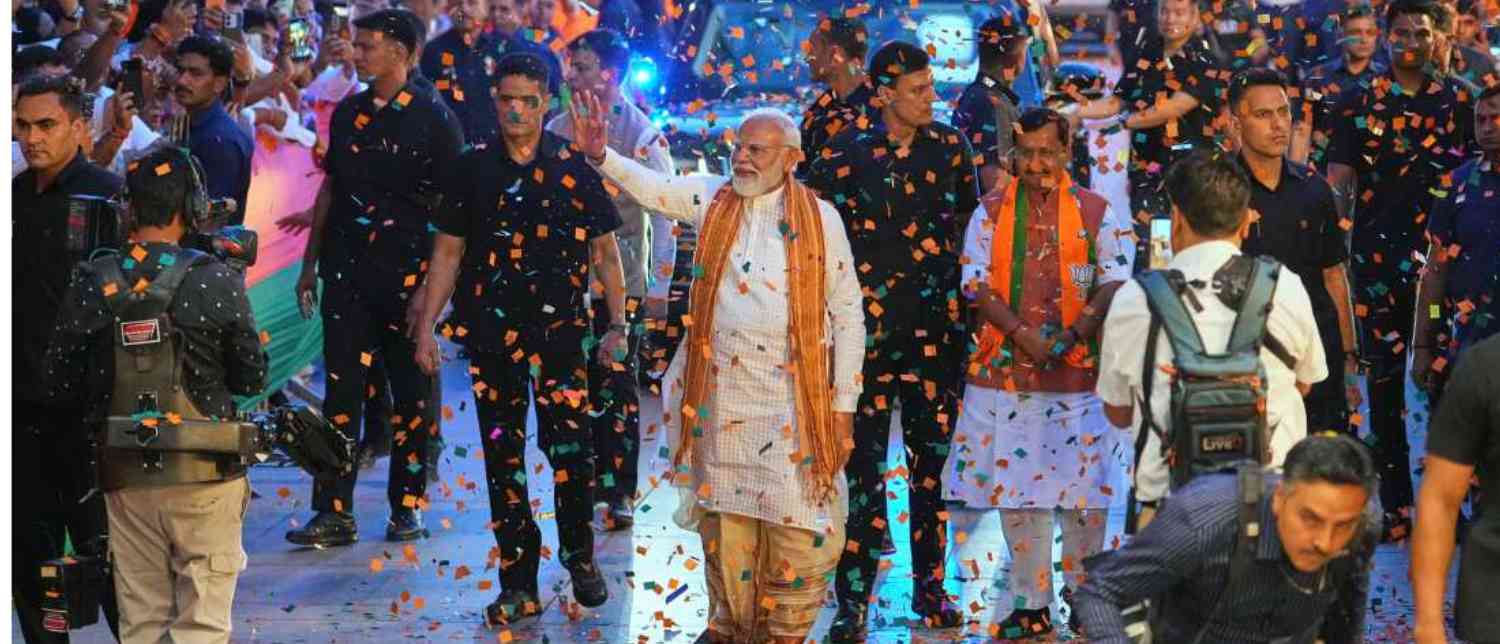
The Bharatiya Janata Party (BJP), for instance, has made significant inroads into a state long dominated by regional and Left forces. Campaign strategies have evolved—from being perceived as an “outsider” party to embedding itself in local culture, adopting Bengali symbols, and promising leadership rooted in the state.
But even if electoral gains continue, governance presents a far tougher task. Bengal’s economy is marked by structural unemployment, a large informal sector, and limited industrial growth. Nearly 40% of Kolkata’s labour force operates in the informal economy, underscoring the fragility of its employment landscape.
The political challenge, therefore, is not just about winning votes—it is about rewiring an entire socio-economic ecosystem shaped by decades of policy, ideology, and cultural self-perception.
When identity politics meets economic reality
Recent election trends reveal a crucial shift in voter priorities. While identity politics—particularly around Bengali culture—has long dominated the discourse, economic concerns are beginning to take precedence.
Campaigns by the Trinamool Congress (TMC) have framed elections as a battle to protect Bengali identity, highlighting issues such as migrant discrimination and cultural imposition. But this narrative has increasingly been challenged by ground realities: unemployment, corruption, deteriorating infrastructure, and unresolved governance crises.
In fact, four key grievances have emerged as decisive factors in voter sentiment:
-
The fallout from the RG Kar hospital tragedy
-
Persistent joblessness
-
Crumbling infrastructure
-
The unresolved teachers’ recruitment dispute
These issues have cut across ideological lines, reshaping the political landscape. As one observer noted, the Bengali middle class—once driven by cultural pride—is now motivated more by economic survival.
This shift signals a deeper transformation: the decline of identity-driven politics in favour of performance-based governance. But it also raises a critical question—can any political formation deliver the structural reforms needed to meet these expectations?
_1778091468.avif)
The middle class dilemma
The Bengali middle class plays a pivotal role in this evolving political narrative. Historically, it has been the custodian of the state’s intellectual and cultural identity. Today, however, it finds itself caught between nostalgia and necessity.
On one hand, there is a deep attachment to Bengal’s cultural legacy. On the other, there is growing frustration over limited economic opportunities. Many young professionals are forced to migrate to other states in search of jobs—a trend that reflects both aspiration and disillusionment.
This duality creates a paradox: a society that celebrates its past achievements but struggles to build a future that matches them. It is this contradiction that makes governance in Bengal uniquely challenging.
The myth and reality of Kolkata’s revival
There are signs of change. Kolkata has seen growth in sectors like information technology, real estate, and tourism. In fact, the city’s “crumbling nostalgia” has itself become an economic asset, driving a quiet tourism boom through heritage walks, restored colonial architecture, and cultural experiences.
But these developments, while promising, do not fully address the state’s deeper economic challenges. Tourism cannot replace large-scale industrialisation. Cultural capital, however rich, cannot substitute for job creation at scale.
The gap between perception and reality remains wide—and bridging it requires more than incremental change.
Why transformation will be harder
Both articles converge on a stark conclusion: Bengal’s biggest obstacle is not political opposition, but structural inertia.
Transforming the state would require:
-
Rebuilding industrial confidence after decades of decline
-
Reforming labour practices and regulatory frameworks
-
Addressing governance deficits and corruption
-
Creating sustainable employment opportunities
-
Reconciling cultural identity with economic modernisation
Each of these challenges is deeply embedded in the state’s political economy. None can be resolved through electoral victories alone.
Moreover, any attempt at reform must navigate a complex social fabric where cultural pride, political ideology, and economic necessity intersect in unpredictable ways.
The road ahead
West Bengal stands at a crossroads. The political churn of recent years has opened the door to change—but whether that change translates into transformation remains uncertain.
The lesson from both analyses is clear: winning Bengal is a milestone, not a destination. The harder journey lies ahead—one that requires not just political will, but a fundamental reimagining of the state’s economic and social trajectory.
Kolkata, with all its history and contradictions, embodies this challenge. It is a city that remembers everything—but must now learn how to move forward.
In the end, the real contest in Bengal is not between political parties. It is between the past and the future. And for whoever governs next, the question will not be how to win—but how to transform.
With inputs from agencies
Image Source: Multiple agencies
© Copyright 2026. All Rights Reserved. Powered by Vygr Media.