
 By
By 
Punjab woke up to a fresh wave of anxiety on Wednesday after two near-simultaneous explosions—one in Jalandhar and another in Amritsar—sent shockwaves through the border state, triggering a sweeping security alert, political sparring, and a multi-agency investigation into what authorities increasingly suspect could be a coordinated attack involving improvised explosive devices (IEDs).
Twin blasts
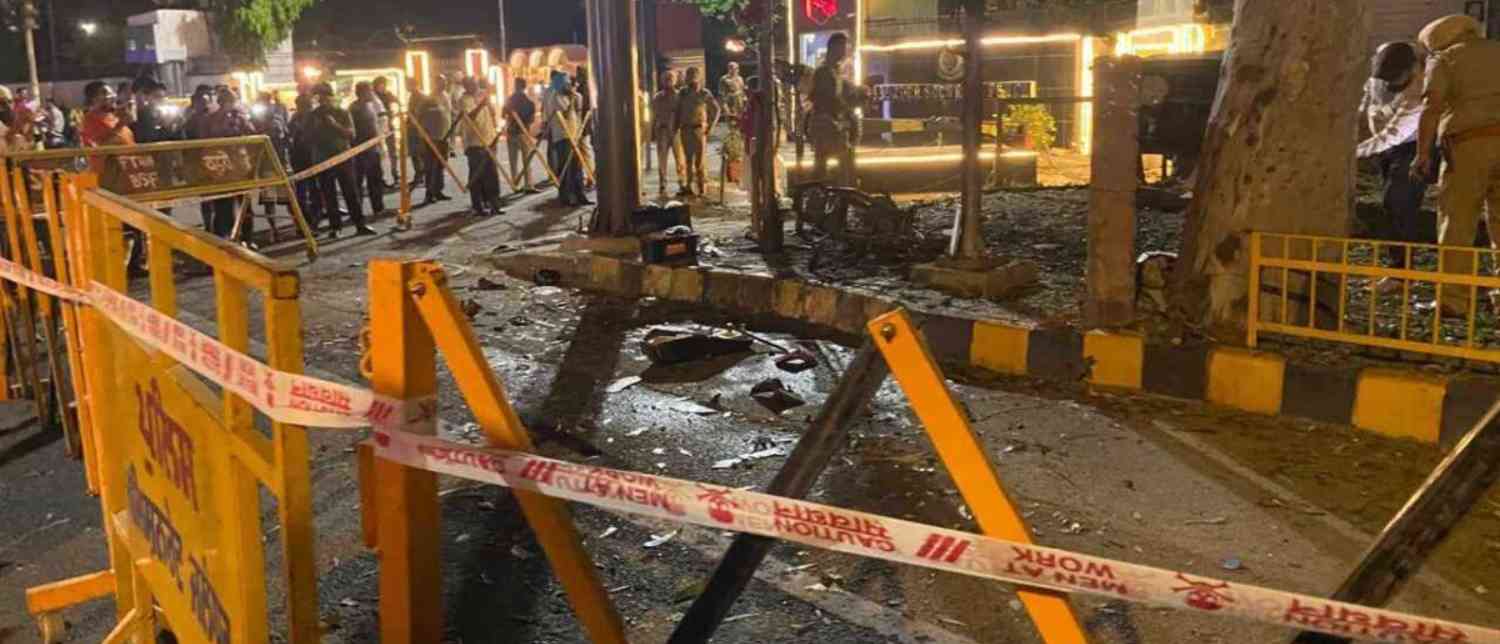
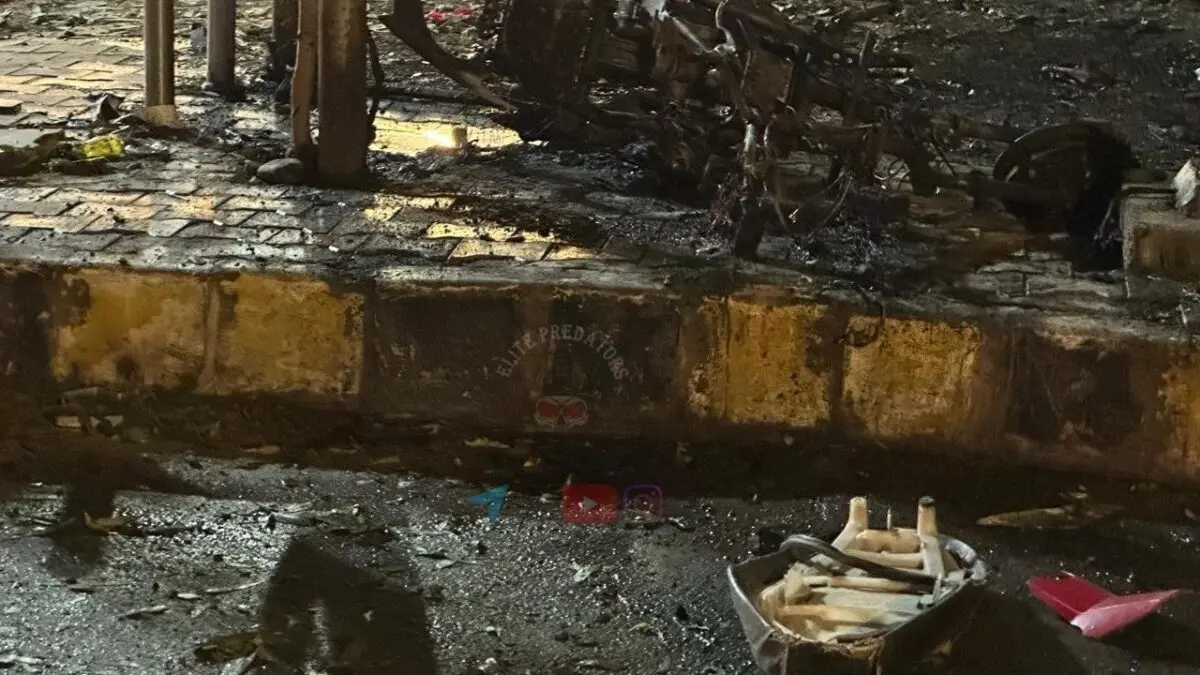
The first incident unfolded on Tuesday evening near the Border Security Force (BSF) headquarters in Jalandhar, a high-security zone that rarely witnesses civilian disruption. A scooter parked close to the BSF Chowk suddenly erupted in flames following what eyewitnesses described as a blast-like sound. Panic spread rapidly through the area, given the sensitive location and the proximity to paramilitary infrastructure.
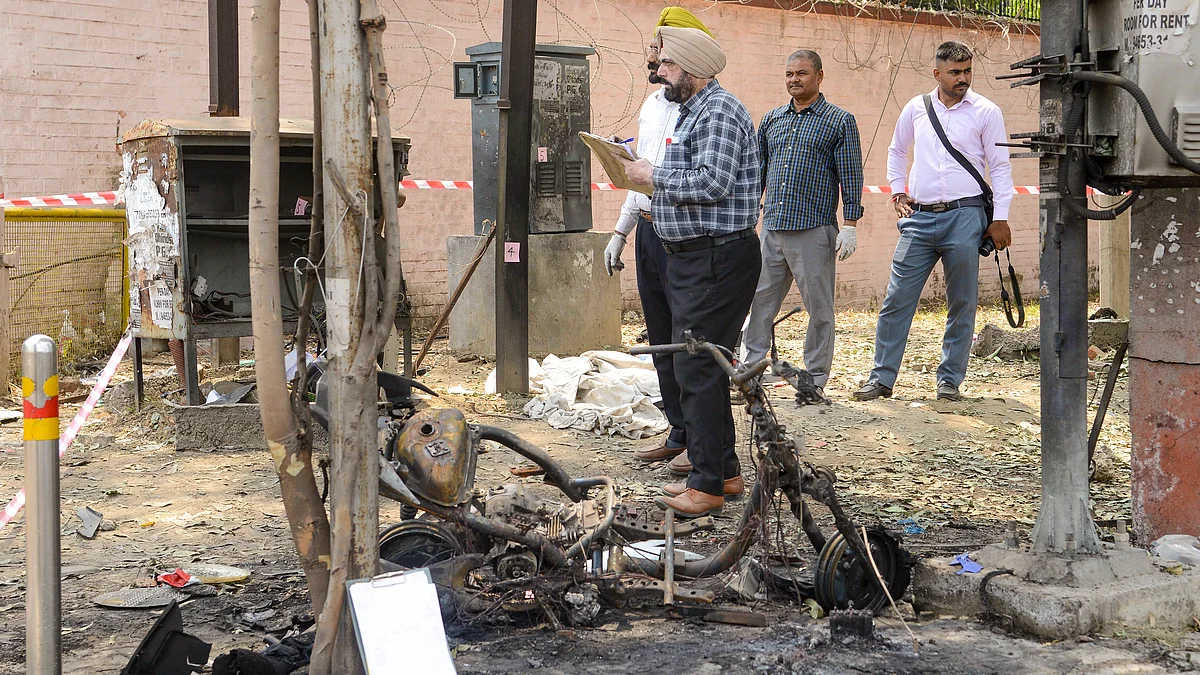
Initial reports indicated no casualties, but the nature of the explosion immediately raised alarm bells. Authorities began probing whether the incident was accidental or a deliberate act. As investigators combed the site, emerging evidence suggested the possibility of an IED being used in the explosion—an assessment that significantly escalated the seriousness of the situation.
The Jalandhar blast alone would have been enough to trigger concern. But within hours, a second explosion rocked the Khasa area near the Amritsar Cantonment, a zone that houses both Army and BSF installations. Occurring late at night, the blast was reportedly linked to a two-wheeler parked near a boundary wall, again pointing to a similar modus operandi.
Together, the twin incidents—occurring within a span of roughly 90 minutes—set off alarm across Punjab. While early reports suggested no major casualties, there were indications of minor injuries, including splinter wounds in the Jalandhar blast. The close timing, similar execution, and strategic targeting of security-linked zones have led investigators to explore the possibility of a coordinated attempt to breach or test security preparedness in the state.
IED angle and security implications
Perhaps the most alarming aspect of the twin blasts is the suspected use of improvised explosive devices. Officials have indicated that the nature of the explosions, combined with forensic findings, aligns with characteristics typically associated with IEDs—raising fears of a deliberate and potentially sophisticated attack strategy.
The locations chosen—near BSF headquarters in Jalandhar and close to an Army cantonment in Amritsar—are not random. Both are high-value, high-security installations, and any breach or attempted disruption carries serious national security implications. Security agencies, including bomb disposal squads and forensic teams, were swiftly deployed to both sites to collect evidence and reconstruct the sequence of events.
The use of parked two-wheelers as potential carriers of explosive devices also points to a method designed for concealment and accessibility, making detection more challenging in crowded or urban settings. Investigators are now tracing the ownership and movement of the vehicles involved, along with reviewing CCTV footage from surrounding areas.
VIDEO | Punjab: Explosion reported outside BSF camp in Amritsar, bomb disposal, FSL teams at spot.#PunjabNews
(Full video available on PTI Videos - https://t.co/n147TvrpG7) pic.twitter.com/RM3k1mx4fI— Press Trust of India (@PTI_News) May 6, 2026
State on high alert
In the immediate aftermath, Punjab was placed on high alert. Security has been tightened across major cities, particularly around military, paramilitary, and other sensitive installations. Checkpoints have been reinforced, surveillance intensified, and patrols increased as authorities attempt to preempt any further incidents.
Road closures and movement restrictions were implemented in parts of Jalandhar and Amritsar, while intelligence agencies began coordinating efforts to identify any larger network or conspiracy behind the blasts. The rapid succession of the incidents has heightened fears of a broader security threat, especially in a border state that has historically been vulnerable to cross-border infiltration and militancy.
Claims of responsibility and deeper concerns
Adding a new layer of complexity to the investigation, reports have surfaced that a Khalistani group has claimed responsibility for the attacks. While the authenticity of the claim is yet to be independently verified, it has intensified concerns about the possible resurgence of separatist elements and their operational capabilities.
Security agencies are now examining whether the incidents have any links to foreign-based networks or handlers, particularly given past instances where militant activities in Punjab were supported by external actors. The potential involvement of cross-border elements is also under scrutiny, although no official confirmation has been made so far.
Panic on the ground
For residents in both cities, the blasts triggered immediate panic. In Jalandhar, locals reported hearing a loud explosion followed by flames engulfing the scooter. The proximity to the BSF headquarters amplified fears, with many initially suspecting a direct attack on the facility.
In Amritsar’s Khasa area, the late-night explosion rattled neighborhoods near the cantonment, prompting residents to rush out of their homes amid uncertainty and fear. The fact that both incidents occurred in sensitive zones only added to the sense of unease.
Despite the panic, authorities have urged citizens to remain calm and avoid spreading rumors, emphasizing that investigations are underway and that all necessary precautions are being taken.
Political fallout intensifies
As security agencies race to piece together the puzzle, the incidents have already sparked a political storm. Leaders across party lines have traded accusations over alleged security lapses, with questions being raised about the preparedness of the state government.
Punjab Chief Minister Bhagwant Mann has gone as far as alleging a political conspiracy behind the blasts, claiming that they could be linked to attempts to influence the state’s political climate ahead of upcoming elections. Opposition parties, in turn, have demanded accountability and a thorough probe, accusing the government of failing to ensure adequate security.
The political blame game has added another dimension to the crisis, even as investigators focus on uncovering the facts.

A pattern or coincidence?
One of the key questions confronting investigators is whether the twin blasts were part of a coordinated plan or merely coincidental incidents. The similarities—timing, location, method, and targets—suggest a pattern that is difficult to ignore.
The fact that both explosions involved two-wheelers parked near sensitive installations has particularly caught the attention of security experts. If confirmed as a coordinated attack, it would indicate a level of planning and reconnaissance that goes beyond isolated acts.
The road ahead
For now, Punjab remains on edge. Security forces are maintaining heightened vigilance, and intelligence agencies are working around the clock to trace leads. The coming days are likely to be crucial in determining whether the blasts were isolated disruptions or part of a larger, more organized threat.
What is clear, however, is that the incidents have once again brought security in Punjab into sharp focus. From the immediate panic on the streets of Jalandhar and Amritsar to the wider political and strategic implications, the twin blasts have underscored the fragile balance between normalcy and threat in a region that sits at the frontline of India’s security landscape.
As investigators dig deeper, the answers they uncover will not only determine accountability but also shape the state’s security response in the days and weeks to come.
With inputs from agencies
Image Source: Multiple agencies
© Copyright 2026. All Rights Reserved. Powered by Vygr Media.