 By

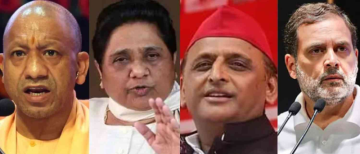
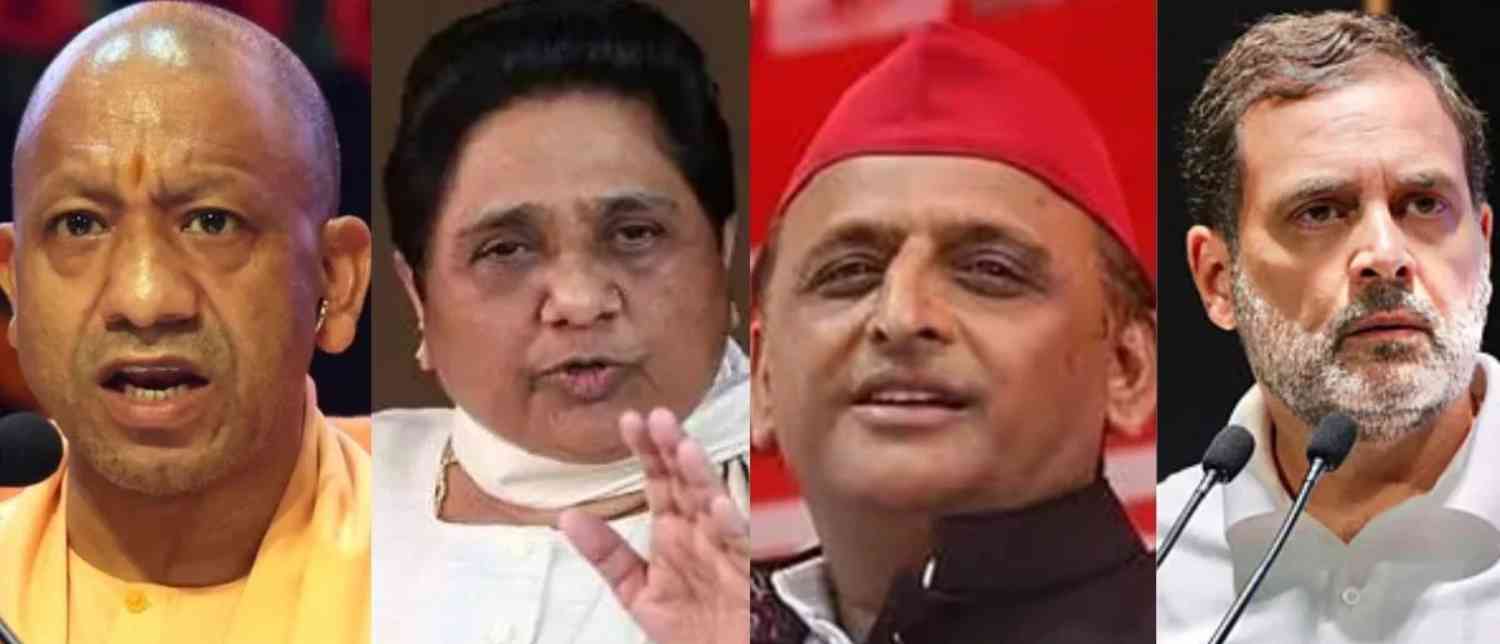
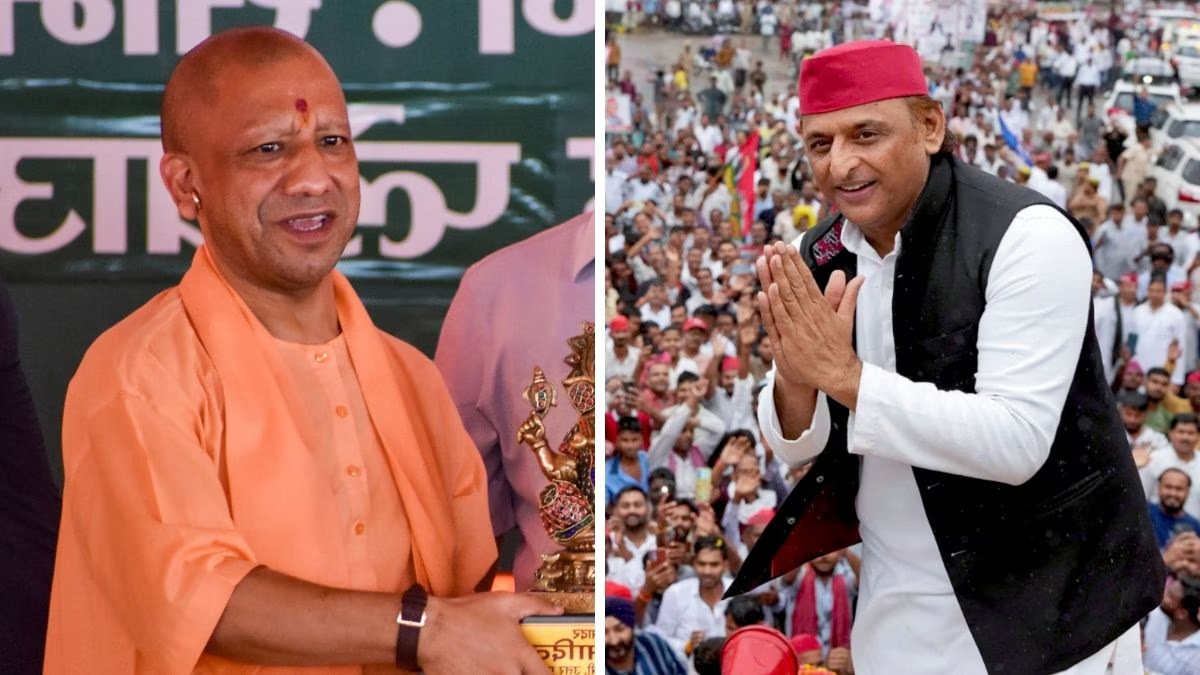
Uttar Pradesh Assembly Election 2027 is shaping up to be a crucial political battle, with Chief Minister Yogi Adityanath and the BJP eyeing an unprecedented third consecutive term in the country's most politically significant state. With a formidable electoral organisation, a strong Hindutva narrative and a governance pitch centred on law and order, the BJP appears to have several advantages. However, the political landscape is no longer as straightforward as it once seemed.
The 2024 Lok Sabha election demonstrated that the Samajwadi Party (SP), led by Akhilesh Yadav, could seriously challenge the BJP's dominance. The opposition's improved performance, changing caste equations, youth dissatisfaction, unemployment concerns and the possible revival of the Bahujan Samaj Party (BSP) have added new dimensions to the upcoming contest.
Recent Legislative Council election results have further strengthened the argument that Uttar Pradesh is heading towards a closely watched BJP-SP confrontation. Yet, with the Assembly election approaching, one question remains central to the state's political future: Can Yogi Adityanath's electoral machinery deliver a third consecutive victory for the BJP, or is Uttar Pradesh preparing for another political shift?
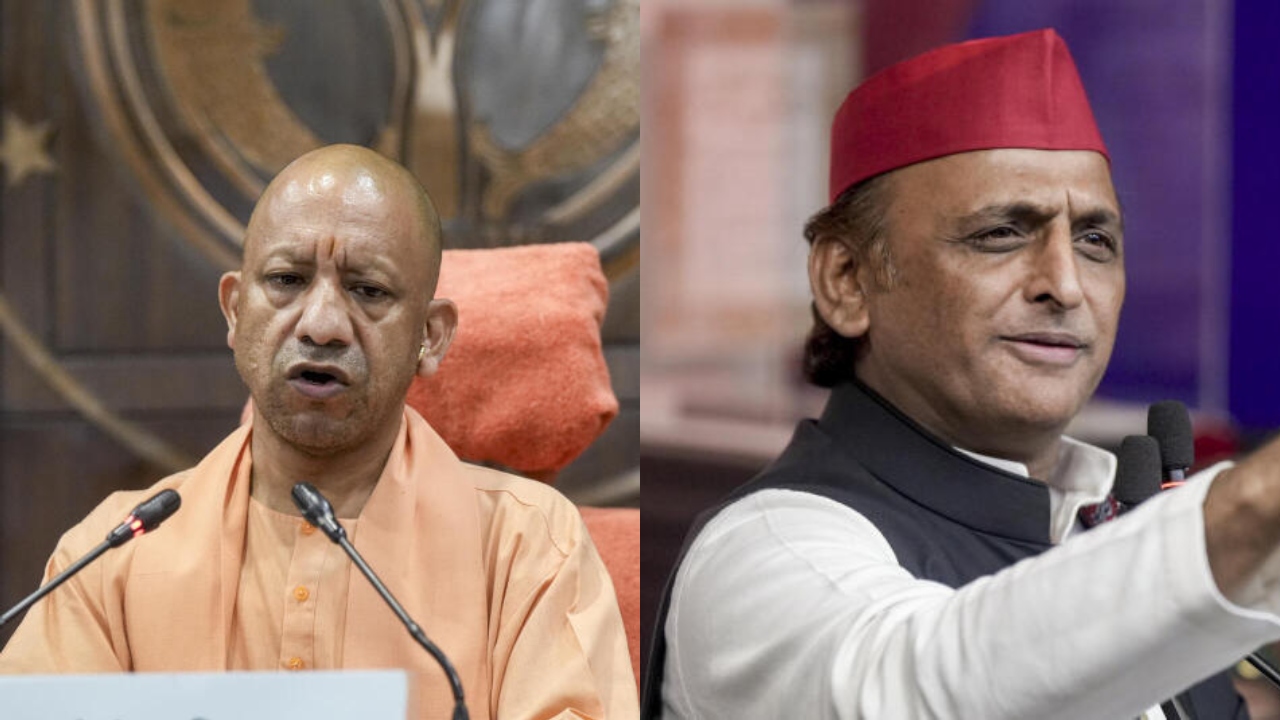
Yogi Adityanath: The BJP's Biggest Electoral Asset in Uttar Pradesh
Few regional leaders have become as closely associated with their party's political identity as Yogi Adityanath has with the BJP in Uttar Pradesh. Since becoming Chief Minister in 2017, he has built a distinct political image around Hindutva, law and order, administrative control and a strong leadership style.
For the BJP, Yogi is not merely the incumbent Chief Minister seeking another term. He is arguably its most recognisable political face in the state and a central figure in its election strategy.
His government's emphasis on controlling organised crime, improving policing, expanding infrastructure and implementing welfare schemes has helped the BJP establish a narrative of administrative stability. Supporters frequently contrast this approach with the law-and-order problems associated with previous governments, particularly the Samajwadi Party's tenure.
The law-and-order narrative could become particularly important in 2027. Public opinion surveys conducted ahead of the election have identified crime and the fear of a return to what is commonly described as 'gunda raj' among the leading concerns influencing voters.
However, Yogi's political advantage should not be mistaken for an absence of challenges.
Unemployment, recruitment controversies, paper leaks, concerns among young voters and caste-related dissatisfaction remain potential vulnerabilities. The government has announced employment initiatives, recruitment drives and measures aimed at supporting outsourced workers, but the electoral impact will ultimately depend on whether people experience meaningful improvements in their everyday lives.
A leader's popularity can provide a political party with momentum, but governance performance determines whether that momentum survives the test of an election.
BJP's Winning Machine: Can Its Organisation Overcome Political Discontent?
One of the BJP's biggest strengths in Uttar Pradesh is its ability to turn political messaging into an extensive election campaign.
Its electoral machinery extends beyond major rallies, prominent leaders and television appearances. Booth-level committees, local representatives, panna pramukhs, voter outreach programmes and constituency-specific caste calculations form the foundation of its election strategy.
The party's organisational strength became particularly important after its disappointing performance in the 2024 Lok Sabha elections in Uttar Pradesh.
The BJP won 33 of the state's 80 parliamentary constituencies, a considerable decline from its 62 seats in 2019. Meanwhile, the Samajwadi Party emerged as the largest party in the state with 37 seats, while the Congress won six.
The outcome forced the BJP to reconsider its electoral strategy, examine local grievances and address organisational weaknesses.
Since then, the party has intensified its efforts to rebuild its grassroots network, strengthen booth-level coordination and reconnect with sections of its traditional support base.
Its strategy also involves identifying potentially unpopular candidates, managing internal disagreements and improving communication with communities that may have drifted away.
The BJP's leadership understands that winning elections in Uttar Pradesh requires more than a popular Chief Minister. It requires a coordinated organisation capable of mobilising voters across 403 Assembly constituencies.
Nevertheless, organisational discipline cannot automatically compensate for public dissatisfaction. If unemployment, inflation, recruitment controversies or local anti-incumbency become significant electoral issues, even a formidable political machine could face difficulties.
The real test for the BJP will be whether it can convert its organisational strength into renewed voter confidence.
Akhilesh Yadav's Revival: Is the Samajwadi Party Ready for a Bigger Fight?
If the BJP has Yogi Adityanath, the opposition's strongest political face in Uttar Pradesh is undoubtedly Akhilesh Yadav.
The Samajwadi Party's performance in the 2024 Lok Sabha elections changed the political conversation around the state's opposition. Its success demonstrated that the BJP could be challenged even in constituencies where it had previously enjoyed considerable electoral influence.
More importantly, the SP's performance raised questions about whether its traditional political limitations were gradually disappearing.
Akhilesh Yadav's PDA strategy, representing Pichhda, Dalit and Alpsankhyak communities, has been central to this effort.
Rather than relying exclusively on its traditional Muslim-Yadav support base, the SP has attempted to build a broader coalition involving Other Backward Classes (OBCs), Dalits, minorities and other communities.
This strategy has the potential to weaken the BJP's carefully constructed caste coalition, particularly if the SP succeeds in attracting non-Yadav OBC and non-Jatav Dalit voters.
However, expanding a political coalition is considerably easier than maintaining it during an election.
Different communities have different expectations, political priorities and demands for representation. The SP must demonstrate that its PDA formula offers meaningful political participation rather than functioning primarily as an election slogan.
Candidate selection, constituency-level leadership, ticket distribution and organisational expansion will be critical.
Akhilesh Yadav has demonstrated that he can challenge the BJP's political narrative. The bigger question is whether he can build an electoral organisation capable of converting that challenge into an Assembly majority.
SP-Congress Alliance: An Opportunity or a Political Complication?
The Congress-Samajwadi Party alliance could become one of the most decisive factors in the Uttar Pradesh Assembly election 2027.
Their partnership produced encouraging results in the 2024 Lok Sabha election, suggesting that coordinated opposition voting could create serious difficulties for the BJP.
However, translating that understanding into a stable Assembly-level alliance will require considerably more negotiation.
The SP and Congress have different organisational strengths, electoral ambitions and expectations regarding constituency distribution.
The Congress would prefer to contest a substantial number of seats, while the SP, as the stronger regional party, has reasons to retain control over constituencies where it believes its candidates have better prospects.
This creates an uncomfortable political calculation.
Akhilesh Yadav must decide whether the Congress brings enough additional votes and political credibility to justify conceding a significant number of constituencies.
For Congress, accepting a smaller share of seats could mean compromising its long-term organisational ambitions in Uttar Pradesh.
But contesting too many constituencies without a realistic chance of winning could weaken the alliance's collective electoral prospects.
The opposition also cannot afford to spend too much time negotiating seats while the BJP continues strengthening its grassroots organisation.
Ultimately, the success of the SP-Congress partnership will depend on whether both parties can prioritise electoral cooperation over individual political ambitions.
A divided opposition would provide the BJP with a significant advantage. A coordinated alliance, on the other hand, could make the 2027 election considerably more competitive.
Mayawati and the BSP: The Third Factor That Could Change the Election
Any serious discussion about Uttar Pradesh politics would remain incomplete without examining Mayawati and the Bahujan Samaj Party.
Although the BSP's electoral influence has declined considerably over the years, its political significance should not be dismissed.
The party, which secured an overwhelming majority of 206 Assembly seats in 2007, won just one seat in the 2022 Uttar Pradesh Assembly election. Its vote share also fell below 13 per cent.
Nevertheless, the BSP retains an identifiable support base, particularly among Jatav Dalits, and could influence electoral outcomes in several constituencies.
Mayawati's attempts to revive the party through organisational restructuring, district-level outreach and renewed engagement with Brahmin voters indicate that she has not abandoned the possibility of rebuilding the BSP's political influence.
Her potential electoral strategy could become particularly important because of the competition among the BJP, SP and BSP for Dalit and backward-caste support.
If the BSP manages to recover even a portion of its traditional vote bank, it could complicate the SP's PDA calculations.
In constituencies where the contest is closely fought, a relatively small shift in votes could determine the winner.
This creates an interesting possibility: Mayawati may not need to win the election to influence its outcome.
Whether the BSP emerges as a serious electoral force or remains a marginal player will depend on its ability to mobilise voters, identify competitive candidates and rebuild its organisational presence.
Caste Equations, Youth and Unemployment: The Issues BJP Cannot Ignore
Uttar Pradesh elections have rarely been determined by a single issue. Caste identity, religious mobilisation, leadership, welfare delivery, local development and economic concerns frequently interact to shape voting behaviour.
The BJP's political success has partly depended on building a broad social coalition that combines upper-caste voters with sections of non-Yadav OBCs and non-Jatav Dalits.
The Samajwadi Party, meanwhile, is attempting to challenge this arrangement through its PDA strategy.
The BSP is looking to recover its traditional Dalit support, while smaller political organisations are also attempting to attract communities that feel inadequately represented by the larger parties.
Consequently, caste calculations could become one of the defining features of the 2027 election.
However, reducing the entire election to caste arithmetic would be a mistake.
Employment, inflation, education, recruitment examinations, infrastructure and access to government services could also influence voter behaviour.
Young voters deserve particular attention. Uttar Pradesh has a substantial youth population, and their expectations extend beyond political slogans and identity-based mobilisation.
Government recruitment opportunities, transparent examinations, paper-leak controversies, private-sector employment and entrepreneurship are likely to remain important subjects.
The Yogi government has announced several initiatives aimed at employment generation and youth entrepreneurship. Yet the difference between announcing opportunities and creating sustainable employment will matter considerably.
The BJP may retain an advantage on law and order and welfare delivery, but it will need to address the concerns of voters who judge the government through their personal economic experiences.
SIR and Voter List Controversies: Another Challenge Ahead of 2027
The Special Intensive Revision (SIR) of electoral rolls has introduced another politically significant dimension to the Uttar Pradesh election.
The revision process, along with disputes concerning voter additions, deletions and corrections, has generated considerable political debate.
Opposition parties have questioned aspects of the exercise and raised concerns about potential irregularities, while electoral authorities have undertaken scrutiny and issued clarifications on specific allegations.
The political significance of this issue extends beyond the technical process of preparing electoral rolls.
For political parties, ensuring that their supporters are correctly registered and eligible to vote is an important organisational exercise.
The opposition could attempt to turn voter-list concerns into a broader campaign about electoral fairness. However, whether such arguments influence voting behaviour remains uncertain.
The BJP, meanwhile, will seek to prevent the controversy from becoming a major political liability.
Ultimately, the credibility of the electoral process, transparent verification and public confidence in the Election Commission will be essential.
MLC Election Results: An Early Warning for the BJP?
The recent Uttar Pradesh Legislative Council elections have added fresh momentum to the political discussion surrounding 2027.
The results declared on October 29 saw the BJP retain six of the 11 seats contested, while the Samajwadi Party increased its tally from three to five.
The SP retained both its Varanasi seats, won the Lucknow Graduates' constituency from the BJP and secured the Agra Teachers' seat, previously held by an independent candidate.
For the BJP, the outcome was mixed. It maintained its overall tally and performed strongly in the teachers' constituencies, but its defeat in Lucknow's graduates' constituency provided the opposition with an important political talking point.
The results suggest that the SP's electoral revival has not necessarily disappeared after the 2024 Lok Sabha election.
However, these elections must be interpreted carefully.
The electorate consisted of registered graduates and teachers, representing a relatively small and specialised section of Uttar Pradesh's population. Their voting preferences cannot be treated as a direct reflection of the wider Assembly electorate.
Nevertheless, the results provide an indication of the political mood among a section of educated and organised voters.
For Akhilesh Yadav, they offer an opportunity to project the SP as a credible challenger. For the BJP, they underline the need to strengthen its organisation and address areas of potential dissatisfaction.
Uttar Pradesh Election 2027: A Third BJP Term Is Possible, But Not Guaranteed
The BJP enters the Uttar Pradesh Assembly election 2027 with several important advantages.
Yogi Adityanath remains its strongest political face in the state. The party has an established organisational network, a recognisable governance narrative and considerable experience in managing large-scale election campaigns.
Recent opinion polling has also indicated strong support for the ruling government. However, survey findings should be treated as snapshots of public opinion rather than definitive predictions, particularly when the election is still months away.
The opposition, meanwhile, has its own opportunities.
Akhilesh Yadav has demonstrated that the SP can challenge the BJP's dominance. The PDA strategy offers a possible route towards expanding the party's social base, while an effective alliance with Congress could strengthen the opposition's electoral prospects.
Mayawati's political decisions, caste realignments and the economic concerns of young voters could further influence the contest.
There is also an important distinction between winning two consecutive Assembly elections and securing a third term. Incumbency brings visibility and political advantages, but it also brings accumulated expectations, unresolved grievances and greater scrutiny of governance.
The BJP cannot rely indefinitely on its previous electoral victories. It must convince voters that its achievements justify another mandate.
Similarly, the SP cannot assume that its 2024 Lok Sabha performance will automatically translate into an Assembly victory.
The coming months will test the organisational strength, political judgement and electoral strategies of both parties.
For now, Yogi Adityanath remains the BJP's biggest electoral asset in Uttar Pradesh. But whether he can turn that advantage into another decisive victory will depend on more than his personal popularity.
The BJP may have the winning machine. The real question is whether it can keep every part of that machine working when Uttar Pradesh votes in 2027.
© Copyright 2026. All Rights Reserved. Powered by Vygr Media.