 By

New Delhi, November 1, 2026: India's political temperature rose sharply on Sunday as the Opposition INDIA bloc and the ruling Bharatiya Janata Party (BJP) took out rival marches in the national capital, turning Delhi into the centre of a high-voltage political confrontation. While Congress leader Rahul Gandhi led the INDIA bloc's 'Chalo Dilli' march to Ramlila Maidan, demanding accountability over alleged electoral irregularities and the resignation of Chief Election Commissioner (CEC) Gyanesh Kumar, the BJP organised counter-protests targeting the Congress over the 1984 anti-Sikh riots.
The INDIA bloc's protest, organised under the broader message of 'Vote Bachao, Desh Bachao' (Save Votes, Save the Nation), brought together several prominent Opposition leaders, including Mallikarjun Kharge, Sonia Gandhi, Rahul Gandhi, Mamata Banerjee, Akhilesh Yadav and Tejashwi Yadav. The gathering focused primarily on allegations of voter-list manipulation, concerns surrounding the Special Intensive Revision (SIR) exercise and what the Opposition described as a threat to India's democratic institutions.
However, the BJP rejected the Opposition's allegations, accusing it of creating political unrest and undermining constitutional institutions. With both sides taking their arguments to the streets, the rival demonstrations triggered a fresh political confrontation, while Delhi's traders expressed concerns about potential business losses during the crucial pre-Diwali shopping period.
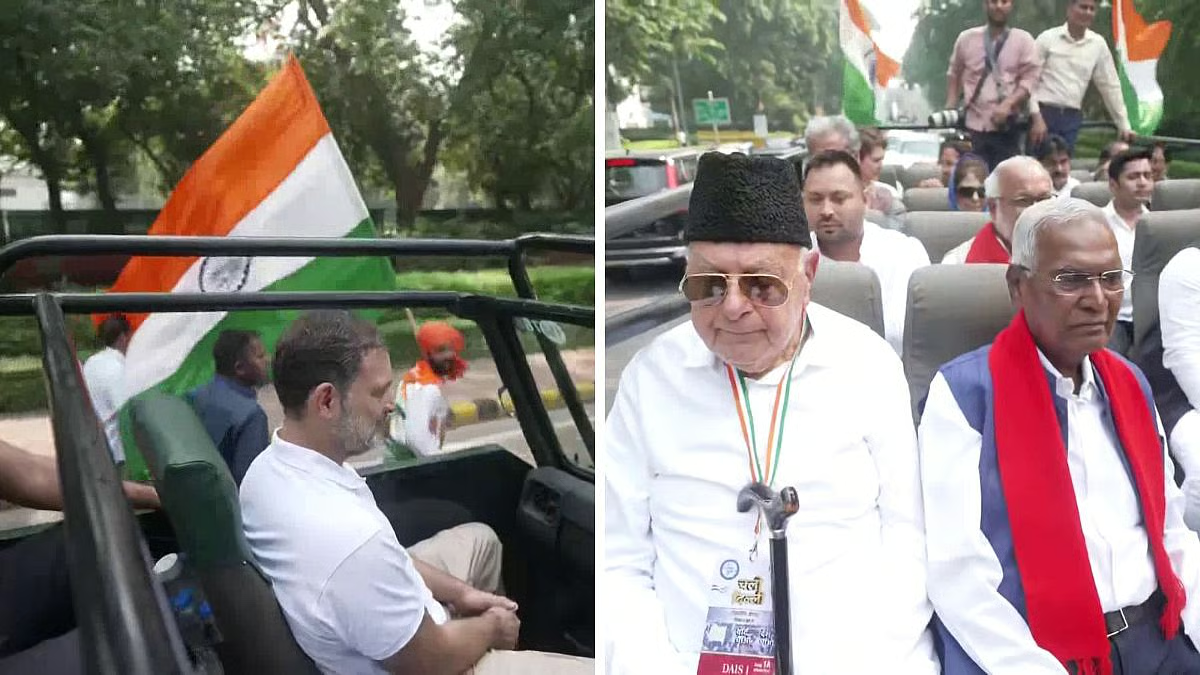
INDIA Bloc's 'Chalo Dilli' March Draws Opposition Leaders to Ramlila Maidan
The INDIA bloc's mega rally began with senior Opposition leaders gathering at Congress president Mallikarjun Kharge's residence before proceeding towards the Minto Road-Connaught Place junction. Rahul Gandhi, Priyanka Gandhi Vadra, Akhilesh Yadav, Mamata Banerjee, Abhishek Banerjee, Tejashwi Yadav and several other leaders joined the procession.
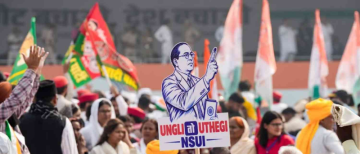
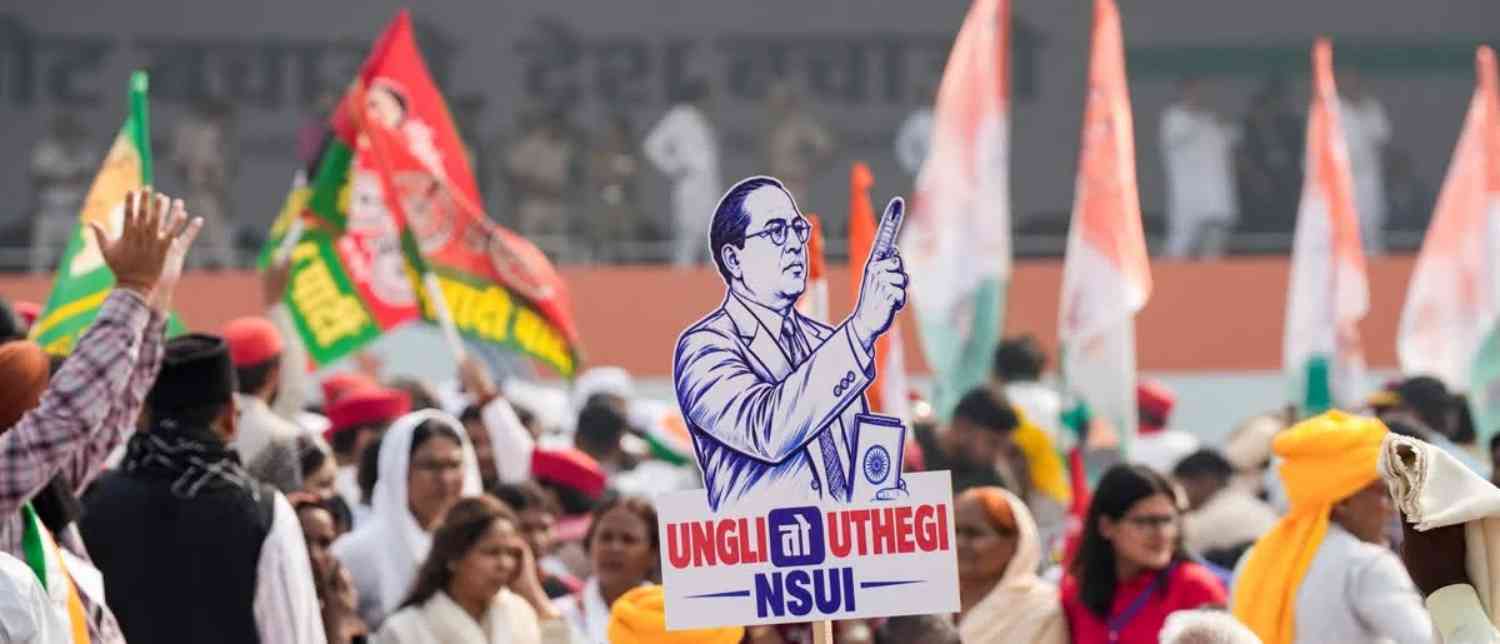
Travelling in an open vehicle, the leaders moved towards Ramlila Maidan as party workers and supporters marched alongside them, carrying flags, banners and placards highlighting allegations of 'vote chori'.
The rally witnessed participation from multiple Opposition parties, including the Congress, Samajwadi Party, Rashtriya Janata Dal, Trinamool Congress and Left parties. Supporters had travelled to Delhi from several states, including Uttar Pradesh, Uttarakhand and Haryana, to participate in the demonstration.
The INDIA bloc's primary demand was the resignation of Chief Election Commissioner Gyanesh Kumar, whom Opposition leaders accused of presiding over serious irregularities in the electoral roll revision process.
The protest also followed a symbolic public impeachment programme organised by Opposition leaders a day earlier, during which they passed a resolution outlining their allegations against the CEC.
Why Is the INDIA Bloc Demanding Gyanesh Kumar's Resignation?
At the heart of the INDIA bloc rally in Delhi is the controversy surrounding alleged irregularities in the Special Intensive Revision of electoral rolls.
The Opposition has repeatedly questioned the Election Commission's handling of voter registration and deletion procedures, arguing that the removal of eligible voters' names could undermine the fairness of elections.
During the symbolic resolution adopted on October 31, Opposition leaders levelled six allegations against Gyanesh Kumar. These included claims of conspiring to influence elections, deleting approximately 13.2 crore voters' names, making changes to Form 6 without parliamentary oversight and exercising control over electoral rolls through the ECINET platform.
The resolution also raised questions about the alleged exclusion of the other two Election Commissioners from important decisions.
These remain allegations made by the Opposition and have not been established as findings of wrongdoing.
Congress general secretary K.C. Venugopal described the movement as a campaign to prevent electoral manipulation and protect democratic institutions. He alleged that approximately 13 crore names had been removed from electoral rolls across different states and called for accountability from the authorities.
The Opposition has maintained that its campaign will continue until its concerns are addressed and Gyanesh Kumar steps down from his position.
Rahul Gandhi's Sharp Attack on PM Modi, Amit Shah and CEC Gyanesh Kumar
Addressing the massive gathering at Ramlila Maidan, Rahul Gandhi launched a strong attack on Prime Minister Narendra Modi, Union Home Minister Amit Shah and Chief Election Commissioner Gyanesh Kumar.
The Congress leader alleged that voter manipulation had taken place across several states, including Haryana, Madhya Pradesh, Chhattisgarh, Maharashtra and Karnataka, as well as during the 2024 Lok Sabha elections.
He claimed that votes were being stolen through electronic voting machines and by manipulating electoral rolls through the addition and deletion of voters' names.
Rahul Gandhi described the alleged electoral manipulation as a serious attack on democracy and the Constitution. He asserted that no government or political leader was bigger than the Constitution and warned that the Opposition would continue pursuing accountability.
In a particularly sharp message directed at the Prime Minister and Home Minister, Gandhi indicated that they would also face scrutiny after the Opposition's campaign against Gyanesh Kumar.
He further declared that the movement was not limited to one political party or individual leader but represented the concerns of India's youth, women, farmers and workers.
His central message was that democratic institutions and constitutional principles must remain stronger than those holding political power.
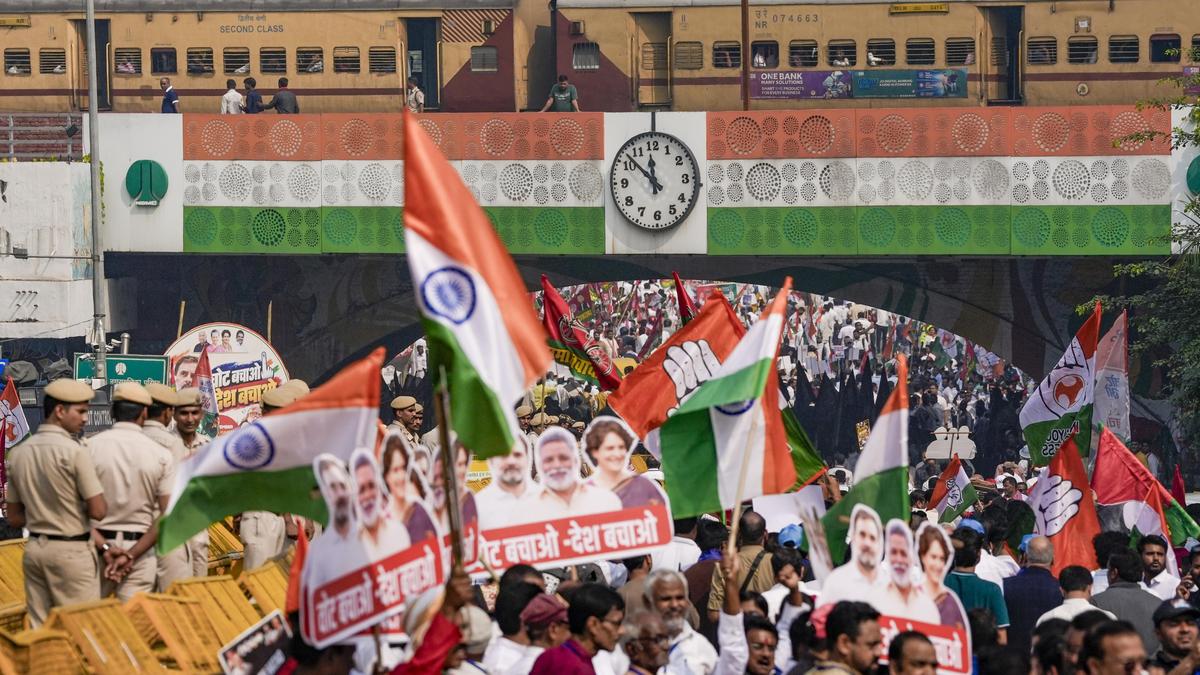
Mamata Banerjee, Akhilesh Yadav and Tejashwi Yadav Intensify Attack
Other prominent INDIA bloc leaders also used the Ramlila Maidan platform to criticise the BJP and raise concerns about electoral transparency.
Former West Bengal Chief Minister Mamata Banerjee strongly criticised the Special Intensive Revision exercise, alleging that West Bengal was among the states affected by the process.
Taking a direct swipe at Gyanesh Kumar, Banerjee used the phrase "Vanish Kumar ji, when will you vanish?" to question his continuation as Chief Election Commissioner.
She also accused the BJP of undermining democratic institutions and claimed that the party had benefited from alleged electoral manipulation. Calling for a united Opposition movement, she appealed to young people, students and citizens across communities to participate in the fight to protect democracy.
Congress president Mallikarjun Kharge also addressed the gathering, accusing the BJP leadership of attempting to manipulate the votes of women, young people and Dalits. He reiterated that the INDIA bloc would continue its campaign until Gyanesh Kumar resigned.
Samajwadi Party chief Akhilesh Yadav described Ramlila Maidan as the 'Haldighati of democracy', suggesting that the massive gathering reflected growing public concern about electoral transparency.
He also raised the issue of alleged voter deletions in Uttar Pradesh. Referring to claims involving approximately 1.27 crore Hindu voters, Yadav questioned the electoral roll revision process and argued that the issue affected citizens beyond political affiliations.
He additionally predicted a major political setback for the BJP in the 2027 Uttar Pradesh Assembly elections.
Meanwhile, RJD leader Tejashwi Yadav invoked the Mahabharata while attacking what he described as vote thieves. He also questioned an alleged software arrangement involving TCS and demanded transparency regarding the tendering process and relevant documents.
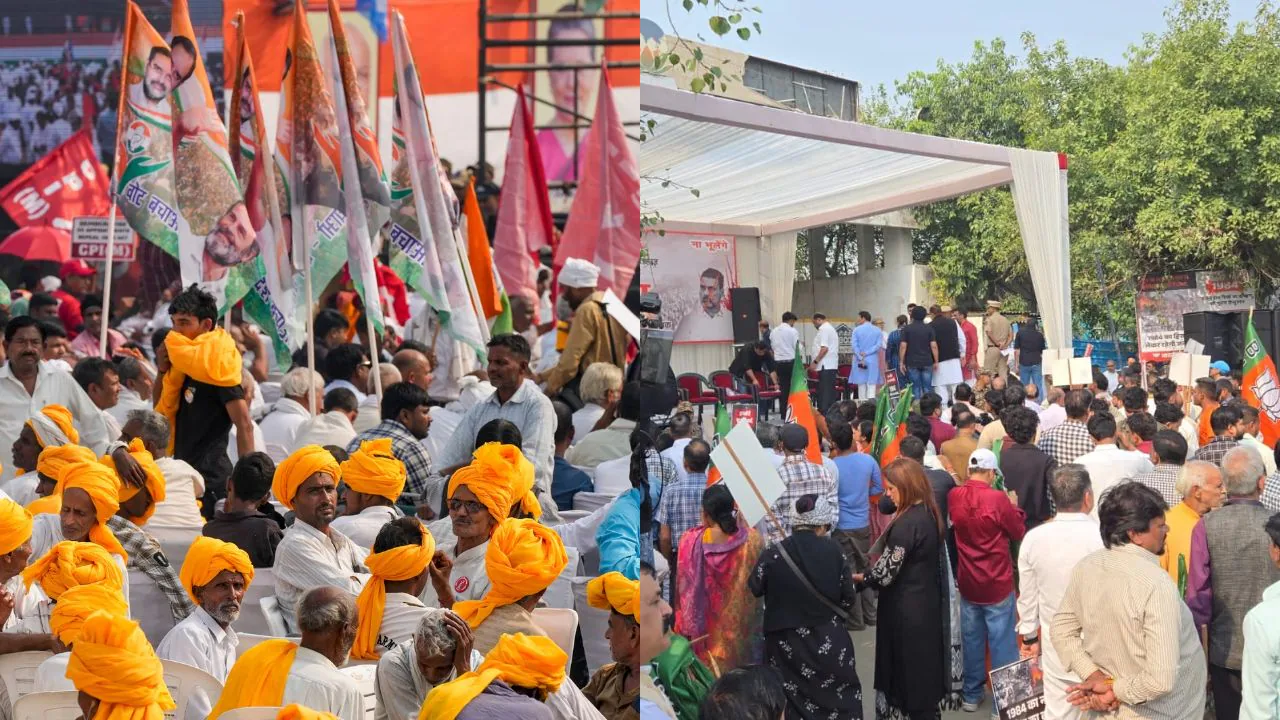
BJP Organises Counter-March, Accuses Congress of Disrespecting 1984 Riot Victims
While the Opposition's primary focus remained on alleged voter irregularities, the BJP launched its own counter-campaign, shifting attention towards the 1984 anti-Sikh riots.
The party accused the Congress of organising its protest on November 1, the anniversary of the violence that followed the assassination of former Prime Minister Indira Gandhi in 1984.
The BJP's counter-march in West Delhi began from the Hari Nagar area and was scheduled to conclude near Tilak Nagar Metro Station. Several senior party leaders, including Union Minister Hardeep Singh Puri, Delhi Chief Minister Rekha Gupta, Harsh Malhotra, Manjinder Singh Sirsa and Bansuri Swaraj, participated in the demonstration.
BJP national president Nitin Nabin also led a 'Loktantra Bachao, Arajakta Hatao' march in Haryana's Rohtak, countering the INDIA bloc's allegations and defending the ruling party's position.
Nabin accused the Congress of using democratic institutions to target the government after failing to secure the people's mandate. He also questioned why the party had chosen the anniversary of the 1984 anti-Sikh riots to organise its protest.
Union Minister J.P. Nadda similarly dismissed the INDIA bloc's demonstration as political theatre, describing it as an orchestrated attempt to create unrest and destabilise an elected government.
The BJP maintained that the Opposition's allegations were politically motivated and rejected the suggestion that democratic institutions were being manipulated.
Delhi Chief Minister Rekha Gupta also criticised the Congress rally, accusing the Opposition of ignoring the significance of November 1 and putting local businesses at risk.
The competing demonstrations highlighted how both political camps were attempting to shape the national conversation around democracy, electoral accountability and historical responsibility.
Delhi Traders Fear Business Losses Ahead of Diwali
Beyond the political confrontation, the rival marches raised concerns among Delhi's trading community, particularly businesses operating around central Delhi's busy commercial districts.
With Diwali approaching, traders feared that road closures, traffic diversions and security arrangements could discourage customers and outstation buyers from visiting wholesale markets.
Business associations pointed out that important commercial areas, including Chandni Chowk, Sadar Bazaar, Daryaganj, Mori Gate and Kashmere Gate, were located within approximately three kilometres of the protest venue.
Vinay Narang, president of the Automotive Parts Merchant Association, said traders were not opposed to democratic demonstrations but questioned the timing and location of the rally.
He warned that traders travelling from outside Delhi often avoided the city for several days around major demonstrations because of anticipated traffic disruption.
The potential impact on daily-wage workers was another major concern. According to the association's vice-president, Ravinder Singh Kohli, porters, coolies and cart-pullers earning approximately Rs 200-300 a day could be among the worst affected.
The association's general secretary, Dharampal Ratra, also estimated that traders could face losses exceeding Rs 2,000.
Rahul Gandhi, however, rejected the suggestion that the INDIA bloc rally would necessarily damage businesses. He appealed to supporters attending the demonstration to shop in Delhi and support local traders, arguing that their participation could also benefit the commercial community.
The disagreement highlighted a familiar dilemma surrounding large political demonstrations: balancing the democratic right to protest with the economic interests of people whose livelihoods depend on uninterrupted business activity.
Heavy Security and Traffic Restrictions Across Delhi
Given the scale of the rival demonstrations, authorities implemented extensive security arrangements across central and New Delhi.
Nearly 10,000 police and paramilitary personnel, including Delhi Police, Central Armed Police Forces, the Central Reserve Police Force and the Rapid Action Force, were deployed.
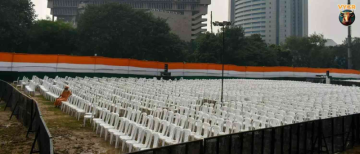
Around 4,000 personnel were stationed at Ramlila Maidan and along the route connecting Minto Bridge to the rally venue.
Multi-layered barricading and additional security arrangements were introduced around Connaught Place, Jantar Mantar, Bhagwan Das Road and areas surrounding the Supreme Court and Election Commission offices.
Traffic diversions and restrictions were also imposed across several parts of central Delhi, with commuters advised to plan their journeys accordingly. Heavy vehicles faced restrictions on selected routes, while movement around Minto Road was expected to experience disruption.
Authorities also deployed CCTV surveillance across the affected areas to monitor crowd movement and maintain law and order.
The INDIA bloc rally was scheduled to conclude by 5 pm under the permission granted by the authorities.
INDIA Bloc vs BJP: A Political Battle That Goes Beyond One Rally
The November 1 demonstrations represent more than a confrontation between two political camps. They reflect a deeper disagreement over the functioning of democratic institutions, the credibility of electoral processes and the political narrative surrounding India's recent elections.
For the INDIA bloc, the 'Chalo Dilli' march is an attempt to turn allegations of voter-list manipulation into a nationwide political campaign, with Gyanesh Kumar's resignation emerging as its central demand.
For the BJP, the counter-marches are an opportunity to challenge the Opposition's credibility, defend constitutional institutions and remind voters of the Congress's historical record, particularly its association with the 1984 anti-Sikh riots.
Meanwhile, Delhi's traders and daily-wage workers are left dealing with the practical consequences of the political showdown, particularly at a time when commercial activity is especially important.
Whether the INDIA bloc's 'Vote Bachao, Desh Bachao' campaign translates into sustained political momentum remains to be seen. However, Sunday's INDIA Bloc rally in Delhi has once again placed electoral transparency, the Special Intensive Revision exercise and the role of the Election Commission at the centre of India's political debate.
As both sides continue to defend their positions, the larger question remains whether the growing confrontation will lead to greater transparency and accountability or further deepen the political divide.
© Copyright 2026. All Rights Reserved. Powered by Vygr Media.