 By
By 
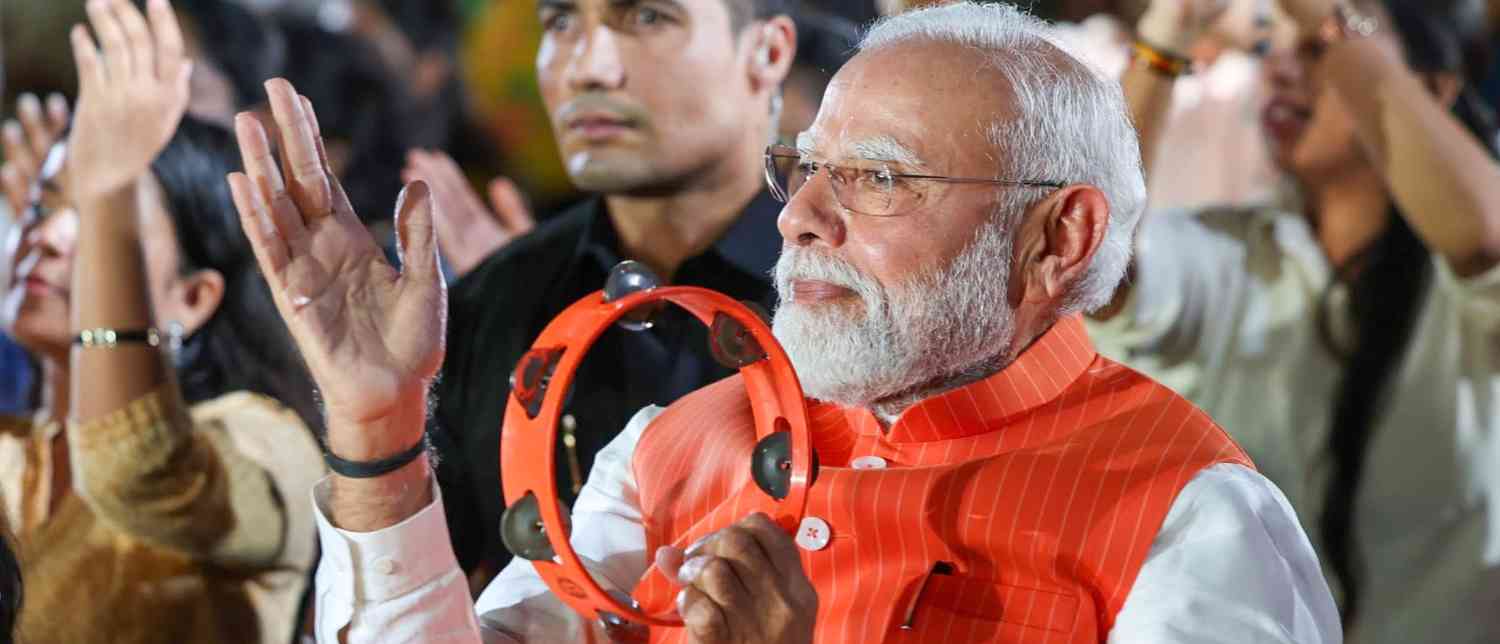
New Delhi: Prime Minister Narendra Modi on Friday joined a gathering of young people at a ‘Bhajan Clubbing’ event in Delhi, bringing an unusual contemporary twist to the commemoration of Bharatiya Jana Sangh leader Pandit Deendayal Upadhyaya’s 110th birth anniversary.
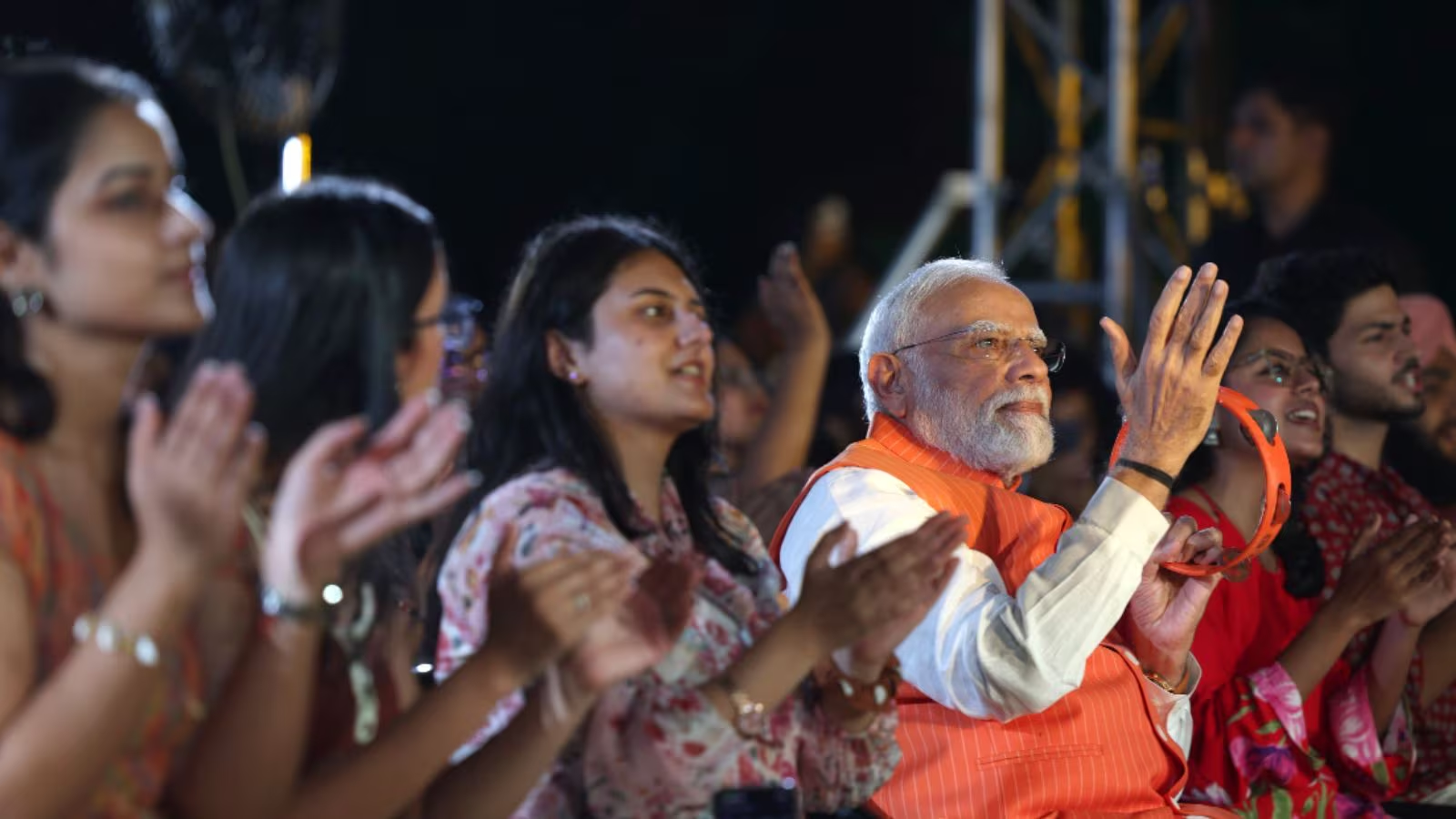
Held at Deen Dayal Upadhyay Park, the event brought together devotional music and the atmosphere of a modern live concert. Instead of a conventional religious gathering, the programme featured young participants singing, clapping and moving along to bhajans performed with contemporary musical arrangements.
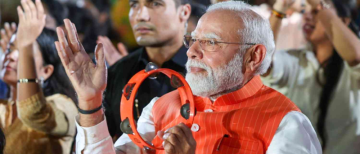
Modi was seated among the audience during the programme and was seen clapping along with the performers. He also played a small tambourine-like percussion instrument during a devotional rendition dedicated to Lord Ram. His participation added a high-profile dimension to what has increasingly emerged as a youth-oriented cultural trend.
The Prime Minister later described the Delhi programme as “Spectacular!” in a post on social media.
What is ‘Bhajan Clubbing’?
The phrase ‘Bhajan Clubbing’ may sound unusual at first, but the concept is relatively straightforward. It brings together traditional devotional music and the energy, staging and social atmosphere normally associated with contemporary music events.
Large groups, particularly young people, gather to sing bhajans and devotional chants. The performances can feature amplified sound, modern arrangements, lighting and an energetic presentation, creating an environment that feels closer to a live concert than a conventional religious programme.
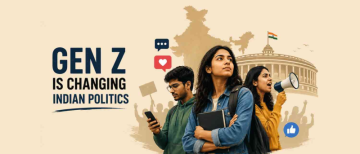
The format has been gaining attention among younger audiences, particularly Gen Z, as devotional music moves into cafés, community spaces, college campuses and concert-style venues.
Rather than treating spirituality as something confined to traditional settings, these gatherings present it through music and collective participation.
That shift is significant because the appeal lies not only in the religious content but also in the experience of being part of a large, energetic community.
PM Modi had earlier highlighted the trend
Modi’s appearance in Delhi was not his first public engagement with the idea of Bhajan Clubbing.
Earlier this year, while speaking about the trend during his monthly radio programme, the Prime Minister had highlighted the growing participation of young people in devotional music gatherings. He described the format as a combination of devotion, culture, spirituality and modernity and said such events had found resonance among Gen Z.
He had also compared the scale and energy of these gatherings with major global concerts, while emphasising that the devotional character of the music remained central.
His participation in Friday’s programme therefore came against the backdrop of an already growing public conversation around how traditional cultural practices are being reinterpreted for younger audiences.
A different setting for a Deendayal Upadhyaya anniversary
The timing of the event added another layer to the programme.
September 25 marks the birth anniversary of Deendayal Upadhyaya, a prominent leader of the Bharatiya Jana Sangh, the political organisation that preceded the Bharatiya Janata Party.
Earlier in the day, Modi paid tribute to Upadhyaya and referred to his philosophy of ‘Antyodaya’, which broadly centres on ensuring that development and welfare reach the person at the bottom of the social and economic pyramid.
The Prime Minister said Upadhyaya’s vision continued to provide inspiration for public welfare and grassroots empowerment. He also called for his ideals to be incorporated into social and national responsibilities.
The evening’s musical programme placed that commemoration in a markedly different setting.
Instead of a conventional speech-driven tribute, the event used devotional music and youth participation as its central format.
For the audience, it meant an evening of music and collective singing. For the broader cultural conversation, it also highlighted how familiar traditions are increasingly being presented through formats designed to appeal to younger Indians.
#WATCH | Prime Minister Narendra Modi attends 'Bhajan Clubbing' at Deen Dayal Upadhyaya Park in Delhi, on the occasion of Bharatiya Jana Sangh leader Pandit Deendayal Upadhyaya's birth anniversary.
(Source: DD News) pic.twitter.com/cSMCyrfIKg— ANI (@ANI) September 25, 2026
Why Bhajan Clubbing is attracting young Indians
The rise of Bhajan Clubbing comes at a time when devotional music is experiencing renewed visibility among younger audiences.
Social media has played a major role in this change. Short videos showing young crowds singing devotional songs, chanting together and dancing to rhythmic arrangements have increasingly circulated online.
The appeal is partly musical. Traditional bhajans and chants can be arranged with acoustic instruments, contemporary beats and concert-style production without completely abandoning their original devotional character.
But there is also a social element.
A young person attending such an event is not necessarily participating in a formal religious ceremony. The gathering can also function as a shared cultural experience — a place to meet friends, sing together and step away from the pace of everyday digital life.
This has helped create a new space between traditional religious gatherings and modern music events.
The result is a format in which spirituality and entertainment are not necessarily treated as opposing ideas.
From traditional gatherings to college campuses
The trend has also moved beyond independent community events.
Earlier this year, a series of Bhajan Clubbing programmes was organised across several Delhi University colleges as part of Vasantotsav celebrations. The events featured different performers and devotional music groups, with organisers describing the initiative as an effort to connect students with Indian cultural and spiritual traditions through a contemporary musical format.
The move into college campuses is particularly notable because it places devotional music directly within spaces dominated by younger audiences.
For organisers, the format offers a way to present familiar cultural traditions without relying entirely on conventional religious programming. For students, the events can resemble the social experience of attending a live music performance while retaining a devotional theme.
That combination may explain why the phrase ‘Bhajan Clubbing’ has gained visibility so quickly.
Modi’s participation puts the trend in the spotlight
The Prime Minister’s presence at the Delhi event has inevitably drawn additional attention to the format.
Modi was not merely present as a guest. His participation — clapping with the audience and playing the percussion instrument during the performance — made for highly visual moments that were subsequently shared online.
The event also gave the emerging trend a prominent national platform.
At the same time, Bhajan Clubbing itself predates Friday’s programme and has been developing independently as a cultural phenomenon. Its growing popularity among young people reflects a broader experimentation with how devotional traditions can be experienced and presented.
The Delhi event brought these two developments together: a prominent political leader publicly participating in a format that is increasingly associated with younger audiences.
The changing language of cultural expression
The significance of Friday’s gathering extends beyond the unusual combination of a Prime Minister, devotional music and a concert-style setting.
It reflects a wider change in the way cultural and spiritual experiences are being packaged for younger generations.
For decades, bhajans and kirtans were often associated with temples, family gatherings, religious ceremonies and older generations. Today, the same musical traditions can appear on social media feeds, college campuses and professionally produced stages.
The music may remain traditional, but the environment surrounding it is changing.
That evolution does not necessarily mean younger audiences are abandoning conventional forms of devotion. Instead, it suggests that some are finding new ways to engage with familiar traditions.
The Bhajan Clubbing phenomenon sits precisely at that intersection — between heritage and contemporary culture, individual spirituality and collective entertainment, traditional music and modern presentation.
A cultural trend with growing visibility
Friday’s event in Delhi has given Bhajan Clubbing another burst of visibility, but the larger story is the trend’s continuing evolution.
As devotional music reaches new audiences through concerts, social media and youth-focused cultural programmes, its presentation is changing rapidly. The songs may be centuries old, but the way people encounter them is increasingly shaped by contemporary music culture.
For Gen Z audiences, a devotional gathering does not necessarily have to look like a traditional religious programme. It can involve live performances, modern sound systems, energetic participation and a large community of peers — while still retaining its spiritual core.
PM Modi’s appearance at Deen Dayal Upadhyay Park offered a striking snapshot of that transformation.
On an evening meant to commemorate Deendayal Upadhyaya, traditional devotional music was presented through a format designed for a new generation. And as the crowd sang, clapped and moved to the music, the event demonstrated how an old cultural form can acquire a distinctly modern rhythm.
With input from agencies
Image Source: Multiple agencies
© Copyright 2026. All Rights Reserved. Powered by Vygr Media.